TR
TR EN
EN

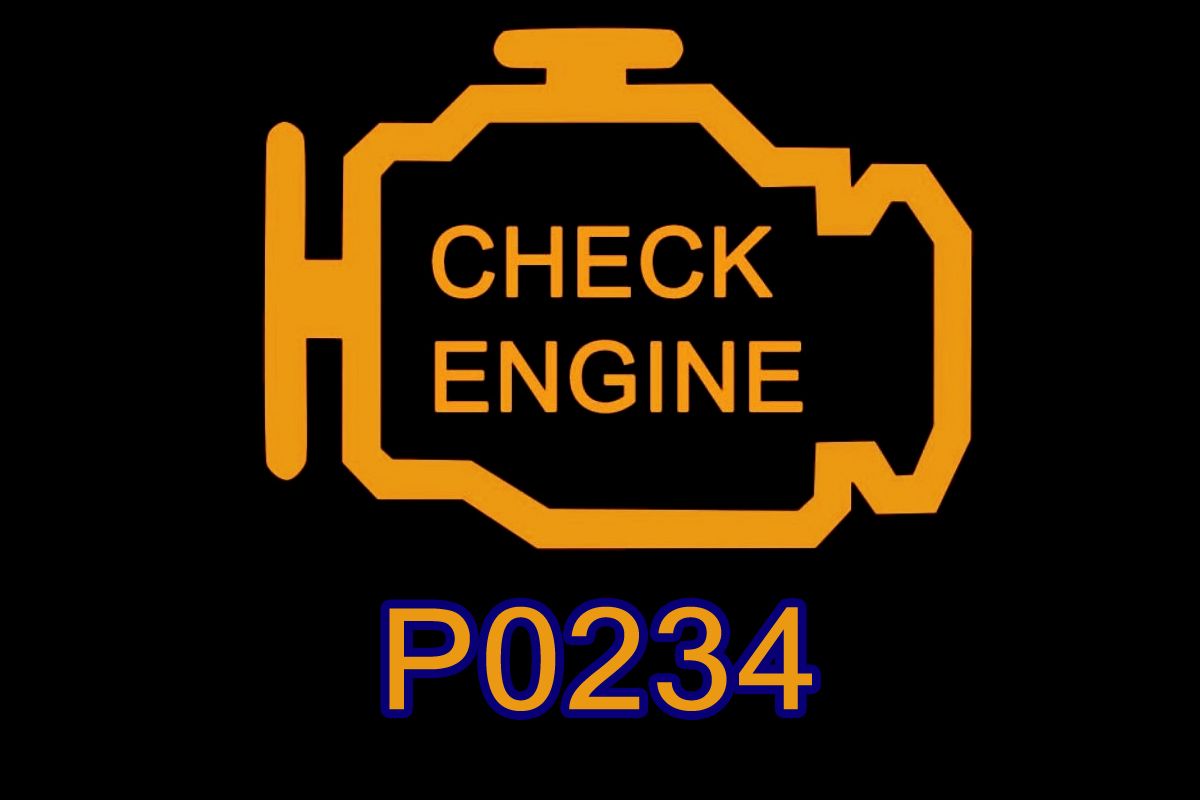
P0234 Turbocharger / Supercharger "A" Overboost Condition
P0234 means the engine control module (ECM/PCM) has detected that turbocharger or supercharger boost pressure has exceeded the level the system considers acceptable.
Unlike P0235, P0237 and P0238, which focus on the electrical circuit or signal of a boost sensor, P0234 describes an actual boost-control condition.
The ECU is essentially seeing this situation:
“The engine is producing more boost pressure than I am commanding or allowing.”
This is commonly referred to as an overboost condition.
It does not automatically mean that the turbocharger itself is defective. In many cases, the turbocharger is capable of producing the required boost, but the system responsible for controlling that boost is no longer regulating it correctly.
What Happens During an Overboost Condition?
A turbocharger compresses intake air so the engine can receive more oxygen.
As boost rises, the ECU needs a way to prevent pressure from becoming excessive.
Depending on the turbocharger design, boost may be controlled through:
-
A wastegate
-
A wastegate actuator
-
A boost control solenoid
-
Vacuum pressure
-
Electronic actuator control
-
Variable turbine geometry
-
Electronic turbocharger control
When the ECU commands a certain boost level, it continuously monitors pressure.
If the measured pressure rises significantly beyond the expected limit, the ECU can store P0234.
The ECU may then reduce engine torque or boost to protect the engine and turbocharger.
Why Is Too Much Boost a Problem?
More boost is not automatically better.
Increasing intake pressure increases the amount of air entering the engine. The engine management system must maintain the correct relationship between air, fuel, ignition timing, combustion temperature and cylinder pressure.
If boost becomes excessive, it can create conditions such as:
-
Excessive cylinder pressure
-
Increased combustion temperature
-
Detonation or knock on suitable gasoline engines
-
Excessive exhaust temperature
-
Turbocharger overspeed
-
Increased mechanical stress
-
Abnormal combustion
-
Reduced engine reliability
The exact consequences depend heavily on the engine design and how severe the overboost condition is.
For this reason, the ECU may enter a protective mode when P0234 is detected.
P0234 Is Not a Boost Sensor Circuit Code
This distinction is worth making because several turbocharger DTCs look very similar.
P0235 concerns a Boost Sensor “A” circuit malfunction.
P0237 indicates a low input from Boost Sensor “A.”
P0238 indicates a high input from Boost Sensor “A.”
P0234 is different.
It says that the turbocharger/supercharger “A” system has experienced an overboost condition.
In other words, the problem is about the relationship between commanded boost and actual boost, rather than simply saying that a sensor's electrical signal is low or high.
The Wastegate Is One of the First Things to Investigate
On many turbocharged engines, the wastegate is one of the primary mechanisms used to control boost.
When the wastegate opens, some exhaust gases can bypass the turbine.
This reduces the energy driving the turbocharger and helps prevent boost from continuing to rise.
If the wastegate cannot open when required, the turbocharger may continue generating boost beyond the desired level.
Possible reasons include:
-
Sticking wastegate
-
Seized actuator linkage
-
Carbon buildup
-
Corrosion
-
Damaged actuator
-
Incorrect actuator adjustment
-
Vacuum-control problem
-
Faulty electronic actuator
This is one reason P0234 should not immediately be blamed on the turbocharger itself.
Common Causes of P0234
Sticking or restricted wastegate
A wastegate that cannot move freely may remain too closed.
The turbocharger then continues building pressure when the ECU is trying to reduce it.
Faulty wastegate actuator
The actuator physically moves the wastegate.
Depending on the system, it may be vacuum-operated, pressure-operated or electronically controlled.
If it cannot respond correctly, boost regulation can be lost.
Faulty boost control solenoid
The boost control solenoid regulates the pressure or vacuum used to control the wastegate or actuator.
If the solenoid sticks or fails electrically, the actuator may not receive the correct control pressure.
Blocked or damaged vacuum lines
On vacuum-controlled systems, a split, blocked, incorrectly connected or restricted hose can change actuator behavior.
A seemingly small vacuum problem can therefore create a significant boost-control problem.
Variable geometry mechanism sticking
Many diesel engines and some other applications use variable-geometry turbochargers.
The vanes change the effective exhaust flow through the turbine.
If the mechanism becomes restricted by carbon or corrosion, it may remain in a position that produces excessive boost.
Electronic actuator problem
Modern turbochargers can use electronic actuators rather than traditional vacuum-operated mechanisms.
A faulty actuator, position sensor, wiring problem or calibration issue can prevent the turbocharger from following the ECU's commands.
Incorrect turbocharger control
A control problem can cause the system to produce more boost than requested.
This may involve the actuator, solenoid, control logic or feedback system.
Boost pressure sensor problem
The ECU needs accurate pressure information to determine whether actual boost is too high.
A sensor that reports an incorrect pressure can therefore contribute to an apparent overboost condition.
However, a sensor fault should be proven rather than assumed.
Restricted exhaust or intake system
In some circumstances, restrictions or unusual airflow conditions can affect turbocharger operation and produce abnormal pressure behavior.
These should be considered according to the specific engine design.
Incorrect modifications
Aftermarket turbochargers, boost controllers, ECU tuning, actuator changes or other modifications can alter the expected boost characteristics.
If the ECU calibration and the hardware no longer agree, overboost faults can occur.
Turbocharger mechanical problem
A turbocharger itself can develop mechanical problems that affect boost control.
However, P0234 does not automatically mean the turbocharger must be replaced.
What Does the Driver Usually Notice?
P0234 can produce very different driving symptoms depending on how quickly the overboost occurs and how the ECU responds.
Common symptoms include:
-
Check Engine Light
-
Sudden loss of power
-
Limp-home mode
-
Reduced turbocharger performance
-
Hesitation
-
Surging during acceleration
-
Poor throttle response
-
Engine entering protection mode
-
Unstable boost
-
Reduced acceleration after initially producing strong boost
A particularly interesting symptom is strong acceleration followed by sudden power reduction.
The vehicle may initially feel unusually powerful because boost is rising too far. Once the ECU recognizes the overboost condition, it may intervene and dramatically reduce engine output.
Why Does the Car Sometimes Go Into Limp Mode?
The ECU has to protect the engine when boost pressure becomes excessive.
If actual boost continues to exceed the expected limit, allowing the engine to keep operating normally may increase mechanical and thermal stress.
The ECU may therefore respond by:
-
Reducing fuel
-
Closing the throttle on suitable engines
-
Changing ignition timing
-
Changing injection strategy
-
Reducing requested boost
-
Limiting engine torque
-
Entering limp-home mode
The exact strategy depends on the manufacturer and engine management system.
In some vehicles, switching the ignition off and restarting the engine temporarily restores normal operation.
That does not mean the problem has disappeared. If the underlying boost-control problem remains, P0234 can return when the same operating conditions occur again.
A Useful Clue: When Does P0234 Appear?
The conditions under which the code occurs can be extremely helpful.
If P0234 appears:
During hard acceleration
The investigation should pay particular attention to wastegate operation, actuator response, boost control and actual-vs-commanded boost.
At high engine RPM
A control mechanism that works at moderate load may fail to regulate boost correctly at higher turbocharger speed.
After ECU tuning or modifications
The calibration and hardware should be investigated.
Intermittently
A sticking actuator, variable-geometry mechanism, solenoid or intermittent sensor/control problem becomes more interesting.
After the engine warms up
Heat-related actuator, vacuum or mechanical problems should be considered.
This is why freeze-frame data and live data can be much more useful than simply reading the stored code.
How P0234 Should Be Diagnosed
The most effective diagnosis is to determine why actual boost is exceeding the target.
Start with the scan tool
Read all stored and pending codes.
Record the freeze-frame data associated with P0234.
If there are additional codes involving boost pressure sensors, wastegate control, turbo actuators or engine management, they may provide an important clue.
Compare requested boost with actual boost
If the diagnostic system provides these parameters, this is one of the most valuable tests.
The technician wants to know:
What boost did the ECU request?
and
What boost did the engine actually produce?
If actual boost rises substantially above the commanded value, the boost-control system becomes the primary area of investigation.
Check the Boost Pressure Sensor
Because the ECU relies on pressure information, the sensor should be verified.
Check:
-
Sensor connector
-
Wiring
-
Reference/supply
-
Ground
-
Signal
-
Live pressure data
The sensor should produce a plausible signal under changing operating conditions.
If the sensor reports excessive boost but an independent pressure measurement shows otherwise, the sensor or its circuit becomes a strong suspect.
Inspect the Wastegate
The wastegate should move through its intended range.
Depending on the system, this may require checking:
-
Actuator movement
-
Rod/linkage movement
-
Vacuum supply
-
Solenoid control
-
Electronic actuator commands
-
Position feedback
A wastegate that sticks closed or cannot reach the commanded position can produce genuine overboost.
Check Vacuum Systems Carefully
On engines using vacuum-operated turbocharger controls, inspect the complete vacuum circuit.
Look for:
-
Cracked hoses
-
Disconnected hoses
-
Incorrect hose routing
-
Restricted lines
-
Vacuum leaks
-
Faulty vacuum control valves
-
Insufficient vacuum
A small hose problem can prevent the actuator from reaching the required position.
Variable-Geometry Turbochargers Need Special Attention
A variable-geometry turbocharger does not necessarily use a conventional wastegate.
Instead, adjustable vanes control exhaust gas flow through the turbine.
If these vanes become contaminated with carbon or mechanically restricted, they may not move correctly.
If they remain in a high-boost position when the ECU is trying to reduce boost, the turbocharger can produce excessive pressure.
This is a common reason why a vehicle may show an overboost condition without having a completely destroyed turbocharger.
Don't Forget the Actuator Position
On electronically controlled turbochargers, the ECU may command a specific actuator position and receive feedback about where the actuator actually is.
If the ECU commands the actuator to reduce boost but the actuator does not reach the expected position, the difference between commanded and actual behavior can become an important diagnostic clue.
Possible causes include:
-
Actuator failure
-
Mechanical binding
-
Wiring problems
-
Position sensor problems
-
Calibration issues
Can a Boost Leak Cause P0234?
A conventional boost leak generally causes loss of boost, not genuine overboost.
However, turbocharger systems are complex, and a fault elsewhere can cause the ECU to respond in unexpected ways.
For P0234, priority should generally be given to the components that control and measure boost, especially when the live data clearly shows actual boost exceeding the requested value.
A cracked intercooler hose should still be inspected, but it should not automatically be declared the cause of an overboost code.
Is P0234 Serious?
Yes, P0234 deserves more attention than many minor sensor codes.
The reason is simple: excessive boost can place additional stress on the engine and turbocharger.
If the vehicle repeatedly enters overboost under acceleration, continuing to drive it aggressively is not advisable.
Particular caution is warranted if you notice:
-
Severe power surging
-
Loud turbocharger noises
-
Heavy smoke
-
Engine knocking or abnormal combustion
-
Oil-pressure warnings
-
Overheating
-
Repeated limp-mode events
-
Very strong boost followed by sudden power loss
If the vehicle is behaving abnormally, it is safer to diagnose the fault before continuing normal high-load driving.
P0234 Does Not Automatically Mean “Replace the Turbo”
This is perhaps the most expensive misunderstanding associated with this code.
A turbocharger may be mechanically sound while its boost-control mechanism is malfunctioning.
For example:
The turbocharger is capable of producing the correct pressure.
The wastegate actuator becomes stuck.
The wastegate cannot open.
Boost continues rising.
The ECU detects excessive pressure.
P0234 is stored.
The ECU limits engine power.
The driver assumes the turbocharger is broken.
But the actual repair may simply involve the actuator, wastegate mechanism, vacuum circuit or boost-control solenoid.
Of course, the turbocharger can also have a genuine mechanical fault. The point is that the code alone cannot distinguish these possibilities.
What About an ECU Tune?
If the vehicle has aftermarket tuning, P0234 deserves additional attention.
An ECU calibration that requests boost levels outside the original hardware's intended operating range can contribute to overboost.
Similarly, changing the turbocharger, actuator or boost-control hardware without appropriate calibration can alter the relationship between commanded and actual boost.
In a modified vehicle, the diagnostic process should therefore include the vehicle's current hardware and software configuration.
P0234 Compared With P0235, P0237 and P0238
These codes describe different problems even though they all involve turbocharger boost information.
P0234 – Turbocharger/Supercharger “A” Overboost Condition
Actual boost has exceeded the permitted or expected level.
P0235 – Boost Sensor “A” Circuit Malfunction
The electrical circuit associated with Boost Sensor “A” is malfunctioning.
P0237 – Boost Sensor “A” Circuit Low Input
The sensor circuit is producing an electrically low input.
P0238 – Boost Sensor “A” Circuit High Input
The sensor circuit is producing an electrically high input.
This distinction is extremely useful during diagnosis.
P0234 directs attention toward boost control and actual overboost.
P0235–P0238 direct more attention toward the boost sensor and its electrical signal.
What Is the Correct Repair?
The repair depends on what caused the overboost.
Possible repairs include:
-
Freeing a sticking wastegate
-
Replacing a damaged wastegate actuator
-
Repairing vacuum lines
-
Replacing a faulty boost-control solenoid
-
Repairing electronic actuator wiring
-
Replacing a defective boost-pressure sensor
-
Cleaning or repairing a restricted variable-geometry mechanism
-
Correcting incorrect actuator adjustment
-
Repairing turbocharger mechanical problems
-
Correcting ECU calibration or inappropriate modifications
The correct repair should follow the test results rather than the DTC alone.
The Diagnostic Logic Behind P0234
A useful way to approach the code is to ask four questions:
Is the ECU requesting normal boost?
If not, investigate the control strategy, calibration and related faults.
Is the pressure sensor reporting the pressure correctly?
If not, diagnose the sensor and its circuit.
Is the actuator responding to the ECU's command?
If not, investigate the actuator, solenoid, vacuum circuit, wiring or mechanical linkage.
Is the turbocharger mechanically capable of controlling boost?
If the control system is functioning but boost remains excessive, the turbocharger and its mechanical mechanism need closer examination.
This approach separates the measurement problem, control problem and mechanical problem instead of treating them as one fault.
The Bottom Line on P0234
P0234 means the engine management system has detected a turbocharger/supercharger “A” overboost condition.
The engine is producing more boost than the ECU considers acceptable or expected.
The most important areas to investigate are the wastegate or variable-geometry mechanism, actuator, boost-control solenoid, vacuum/electronic control system and boost-pressure feedback.
A faulty pressure sensor can also mislead the ECU, while aftermarket modifications or calibration changes can create an overboost condition that did not exist with the original configuration.
So the right question is not simply:
“Is the turbocharger bad?”
It is:
“Why is actual boost exceeding the boost the ECU is requesting?”
Once requested boost, actual boost, sensor accuracy and actuator movement are compared, the real cause of P0234 can usually be narrowed down without unnecessarily replacing the turbocharger.