TR
TR EN
EN

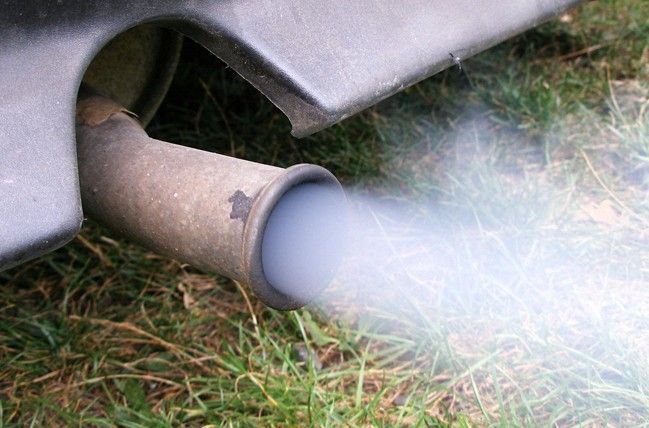
Why Does White Smoke Come From the Exhaust?
White smoke from the exhaust does not always mean that the engine has a serious problem. Especially in cold weather, thin white vapor coming from the exhaust when the engine is first started is often completely normal. However, if thick white smoke continues after the engine reaches operating temperature, it may indicate that a fluid that should not enter the combustion chamber is being burned.
When diagnosing white exhaust smoke, when it appears, how long it lasts, how dense it is, and what it smells like are all important clues.
White Smoke From a Cold Engine Can Be Normal

When an engine is running, combustion naturally produces water vapor. When the exhaust system is cold, this vapor can condense and become visible as a thin white mist.
This is especially common when:
-
The weather is cold
-
Humidity is high
-
The vehicle has been parked overnight
-
The exhaust system is completely cold
-
The vehicle is mainly used for short trips
As the engine and exhaust system warm up, this white vapor should gradually decrease or disappear.
If it disappears after a few minutes, there is usually no reason to assume that the engine has an internal failure.
What If White Smoke Continues After the Engine Warms Up?
This is the situation that deserves more attention.
If thick white smoke continues even after the engine has reached normal operating temperature, coolant entering the combustion chamber should be considered as one possible cause.
When coolant enters a cylinder, it can vaporize during combustion and leave the exhaust as dense white smoke.
Possible causes include:
-
Head gasket failure
-
A cracked cylinder head
-
A cracked engine block
-
Intake manifold gasket problems on engines where coolant passages are incorporated into the manifold
-
Certain turbocharger coolant-related failures
-
Other internal coolant leaks depending on the engine design
However, seeing white smoke alone does not automatically mean that the head gasket has failed.
White Smoke Combined With Coolant Loss

If the exhaust produces persistent white smoke and the coolant level is also falling without an obvious external leak, the situation becomes more concerning.
For example, the combination of:
-
Continuous white smoke
-
Unexplained coolant loss
-
Rising engine temperature
-
Abnormal pressure in the coolant expansion tank
-
Rough engine operation
-
Misfire during startup
can point toward coolant entering one or more combustion chambers.
An important point is that an internal coolant leak may not leave a visible puddle under the vehicle. If coolant is entering a cylinder, it may be consumed during combustion and leave little or no obvious external evidence.
Can a Blown Head Gasket Cause White Smoke?
Yes, it can.

The head gasket separates the combustion chambers from the engine's coolant and oil passages. If the gasket fails in a location that allows coolant to enter a cylinder, the coolant can be burned or vaporized during combustion and produce thick white exhaust smoke.
A head gasket problem may also cause:
-
Coolant loss
-
Engine overheating
-
Rough running
-
Misfires
-
Difficult starting
-
Excessive pressure in the cooling system
-
Coolant contamination of the engine oil
However, the symptoms depend on exactly where the gasket has failed.
For example, a head gasket can fail between two cylinders and cause compression loss without producing obvious white exhaust smoke. Therefore, the gasket should not be replaced simply because white smoke is visible.
White Smoke Can Be Confused With Oil Smoke
Engine oil being burned is more commonly associated with blue or blue-gray exhaust smoke, but exhaust colors are not always perfectly clear in real-world conditions.
Oil consumption can be caused by problems such as:
-
Worn piston rings
-
Valve stem seals
-
Turbocharger problems
-
Crankcase ventilation system faults
-
Cylinder wear
The smell, amount of oil consumption, operating conditions, and engine behavior should all be considered together instead of relying only on the apparent color of the smoke.
The Difference Between White, Black, and Blue Smoke
Exhaust color can provide an initial clue about what is happening inside the engine.
White smoke or vapor is commonly associated with water vapor, coolant entering the combustion chamber, or—in some diesel engines—poor combustion and unburned fuel.
Black smoke generally indicates excessive fuel or insufficient air. Common causes include injector problems, restricted airflow, boost problems, EGR-related issues, and fuel-system faults.
Blue or blue-gray smoke is more commonly associated with engine oil entering the combustion chamber.
These are general diagnostic clues, not absolute rules. Modern engines can produce unusual-looking exhaust under different operating conditions.
White Smoke From a Diesel Engine
White smoke has several possible causes on diesel engines, and coolant contamination is only one of them.
A diesel engine needs sufficient temperature, compression, correct injection timing, and properly atomized fuel to achieve good combustion. If one of these conditions is not met, unburned or partially burned fuel can leave the exhaust as white or gray-white smoke.
Possible causes include:
Glow plug problems
If one or more glow plugs are not working properly, cold starting can become difficult and the engine may produce white smoke during startup.
Injector problems
A faulty injector may not deliver fuel correctly. Poor atomization or an incorrect injection quantity can result in incomplete combustion and white or whitish-gray exhaust.
Injection timing problems
Incorrect injection timing can significantly affect diesel combustion and may result in smoke, rough running, poor performance, or difficult starting.
Low compression
If one cylinder has insufficient compression, the temperature inside that cylinder may not become high enough for proper combustion, particularly during cold starts.
For this reason, white smoke from a diesel engine should not automatically be interpreted as a head gasket failure.
What If the White Smoke Has a Sweet Smell?
A noticeably sweet-smelling exhaust combined with unexplained coolant loss can increase suspicion of coolant entering the combustion chamber.
However, smell alone is not a reliable diagnostic method.
Different coolant formulations and antifreeze products can have different odors, and exhaust conditions can also affect what you smell. A cooling-system pressure test or combustion-gas test provides much stronger evidence.
Water Dripping From the Exhaust Is Not the Same as White Smoke
A small amount of water dripping from the exhaust pipe is often completely normal.
Combustion naturally produces water vapor. When the exhaust system is cold, some of this vapor condenses inside the exhaust and eventually leaves the tailpipe as liquid water.
Therefore, seeing a few drops of water from the exhaust during startup does not automatically indicate an engine problem.
The important factors are:
-
How much water is being produced
-
Whether the engine is cold or fully warmed up
-
Whether white vapor continues afterward
-
Whether coolant level is falling
-
Whether the engine is running normally
How Is the Cause of White Exhaust Smoke Diagnosed?
The first step is to determine the exact conditions under which the smoke appears.
Does it happen only when the engine is cold?
Does it disappear after reaching operating temperature?
Does it occur only during startup?
Does it become heavier when the accelerator is pressed?
Does it continue at idle?
Is the coolant level decreasing?
Is the engine oil level decreasing?
Is the engine misfiring?
Is the engine overheating?
These observations can narrow down the possible causes considerably.
If an internal coolant leak is suspected, the cooling system can be pressure-tested. A combustion-gas test can also be performed to determine whether combustion gases are entering the cooling system.
A compression test can provide information about cylinder sealing, while a leak-down test can help identify where compression is escaping.
In some cases, a borescope inspection can also be useful for examining the inside of the cylinders.
Can an OBD Scanner Help?
Modern vehicles continuously monitor many engine-management parameters. White smoke itself may not generate a specific diagnostic trouble code, but OBD data can still be useful.
For example, on a diesel engine, fault codes related to glow plugs, injection, sensors, or engine-management systems may help direct the diagnosis.
Live data can also be useful when investigating fuel delivery, coolant temperature, air-fuel control, and other operating parameters.
It is important to remember that an OBD trouble code does not automatically identify the failed component. A code should be interpreted together with the vehicle's symptoms, live data, wiring checks, and physical tests.
When Should White Exhaust Smoke Be Taken Seriously?
White exhaust smoke deserves closer attention when one or more of these symptoms are present:
-
Thick white smoke continues after the engine is fully warm
-
Coolant level keeps falling
-
The engine overheats
-
The engine misfires during startup
-
Abnormal pressure builds in the expansion tank
-
Engine oil shows unusual contamination
-
Engine performance has decreased
-
The check engine light is illuminated
-
White smoke is accompanied by a noticeable coolant odor
-
The exhaust continues producing dense smoke under normal operating conditions
White smoke combined with rapid coolant loss or overheating is particularly important. Continuing to drive under these conditions can turn a relatively contained problem into much more expensive engine damage.
What Should You Do If Your Car Produces White Smoke?
First, determine whether the engine has actually reached normal operating temperature. A thin white mist that disappears as the engine warms up is very different from dense white smoke that continues from a fully warmed engine.
Next, check the coolant and engine oil levels when the engine is safely cool. Never open a pressurized cooling-system cap while the engine is hot.
If the smoke continues, the cooling system, engine mechanical condition, and—on diesel vehicles—the fuel injection and glow plug systems should be properly inspected.
The most important point is that white exhaust vapor is often normal during cold startup, while persistent dense white smoke from a fully warmed engine can indicate a coolant leak, combustion problem, or diesel fuel-system issue. The color of the exhaust provides an important clue, but accurate diagnosis requires looking at the complete set of symptoms rather than replacing parts based on smoke color alone.