TR
TR EN
EN

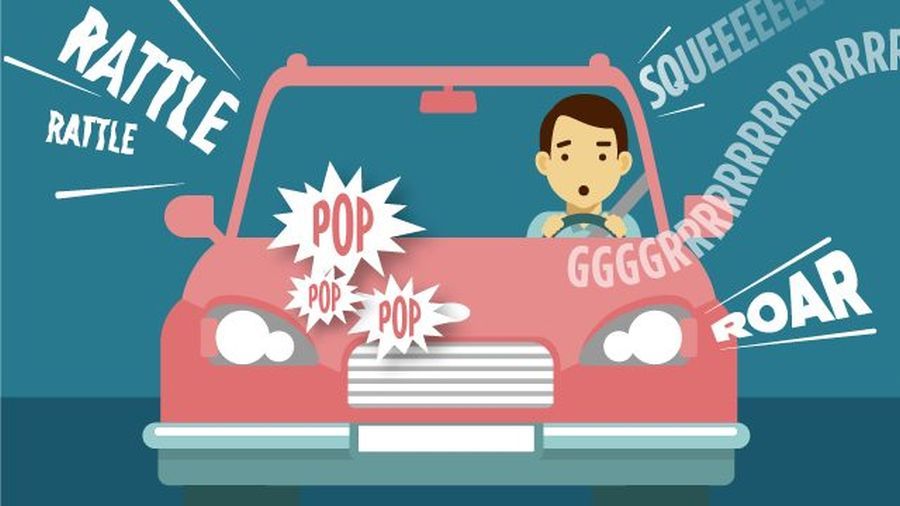
5 Car Noises You Should Never Ignore
Cars naturally produce many different sounds while they are running. Engine noise, tire noise, cooling fan noise, and occasional brake noises can all be normal.
However, when a vehicle develops a new or unusual sound, it should not automatically be ignored. A noise that appears at a certain speed, during braking, while turning, accelerating, or after the engine reaches operating temperature can sometimes indicate a developing problem.
Some noises are caused by relatively minor issues, while others can affect vehicle safety or lead to expensive repairs if they are ignored.
1- Squeaking, Whining, or Humming Noise Coming From a Wheel
A squeaking, whining, humming, or rubbing noise coming from the wheel area can have several possible causes.
If the noise changes with vehicle speed and becomes louder as the car accelerates, the wheel bearing or hub bearing should be inspected.
A worn wheel bearing may produce a continuous humming or whining sound. The noise can sometimes become more noticeable when driving next to a wall, barrier, or another vehicle because the sound is reflected back toward the cabin.
However, not every wheel noise is caused by a bearing.
Brake pads, brake discs, tires, loose components, wheel-well liners, or other suspension and wheel-related parts can also produce similar noises.
Moisture can also cause temporary brake noises. After rain or when a vehicle has been parked in humid conditions, a thin layer of surface rust can form on the brake discs. This may cause a light scraping sound during the first few applications of the brakes and usually disappears after the brakes clean the disc surface.
A noise that continues or becomes progressively louder should not be ignored.
If the wheel area also develops vibration, excessive play, abnormal tire wear, or steering changes, the vehicle should be inspected as soon as possible.
A Clicking Noise Only When Turning
A repetitive “click-click” or “knock-knock” sound that appears mainly when turning at low speed, particularly with the steering wheel turned sharply, can indicate a problem with a CV joint or axle shaft joint.
An outer CV joint is a common source of rhythmic clicking during tight turns and acceleration.
This is different from the humming noise typically associated with a wheel bearing. The axle, CV joint, or CV boot should be inspected to determine the actual cause.
2- Grinding or Scraping Noise When Braking
Not every brake noise means that the brake system is failing. Some brake pads can squeak when they are cold or wet, and certain pad compounds are naturally noisier than others.
However, a persistent metallic grinding or scraping noise while braking should never be ignored.
If the friction material on a brake pad has become excessively worn, the metal backing plate can eventually contact the brake disc. At this point, the problem is no longer limited to the brake pad.
The disc can also become damaged, turning a relatively simple brake pad replacement into a much more expensive repair.
More importantly, problems with the braking system can affect stopping performance and vehicle safety.
Other brake-related warning signs include:
-
Grinding or metallic scraping
-
Brake pedal vibration
-
Steering-wheel vibration while braking
-
Increased stopping distance
-
The vehicle pulling to one side under braking
-
An unusual brake pedal feel
-
Burning or overheated brake smell
-
Brake warning lights
If you hear metal-on-metal contact from the brakes, have the system inspected as soon as possible rather than continuing to drive and allowing the damage to spread.
3- Hissing Noise From the Engine Compartment
A hissing sound coming from the engine compartment, especially when the engine is hot or shortly after the vehicle has been switched off, deserves attention.
One possible cause is pressure escaping from the cooling system because of a coolant leak.
When an engine becomes hot, pressure builds inside the cooling system. A damaged hose, radiator, connection, expansion tank, water pump, or another cooling-system component can allow coolant or pressure to escape and create a hissing sound.
The first thing to check is the engine temperature gauge.
If the engine temperature is higher than normal or an overheating warning appears, do not continue driving.
If you see steam coming from the engine compartment, stop the vehicle in a safe location and allow the engine to cool.
Never Open a Hot Cooling System
Do not remove the radiator cap or the cap of a pressurized coolant reservoir while the engine is extremely hot.
Hot coolant and steam may be under significant pressure. Opening the system can cause severe burns.
Allow the engine and cooling system to cool sufficiently before inspecting the coolant level.
If the coolant level is low, simply adding more coolant does not solve the underlying problem if there is a leak.
The leak may come from:
-
The radiator
-
Cooling-system hoses
-
Hose connections
-
Water pump
-
Thermostat housing
-
Expansion tank
-
Radiator cap
-
Heater system
-
Other cooling-system components
Some cooling-system sealants may temporarily slow certain small leaks, but they should not be considered a permanent solution for a significant leak.
The source of the leak should be identified and the damaged component repaired or replaced.
4- Ticking, Knocking, or Metallic Noise From the Engine
Engines naturally produce a variety of mechanical sounds, but a new metallic ticking, knocking, or tapping noise can sometimes indicate a serious problem.
A regular ticking sound from the upper part of the engine may be related to the valve train, hydraulic lifters, camshaft components, or the engine lubrication system.
Low engine oil level or insufficient oil pressure can prevent certain engine components from receiving adequate lubrication.
If you suddenly hear an unusual ticking noise, check the engine oil level using the procedure specified by the manufacturer.
Park the vehicle on a level surface, switch off the engine, wait several minutes, and then check the oil level.
If the oil level is low, add the correct engine oil until it reaches the proper level. Do not overfill the engine.
You should also check for visible oil leaks around the engine.
Do Not Ignore an Oil Pressure Warning
If the oil pressure warning light comes on, especially together with a new engine noise, continuing to drive can result in severe engine damage.
Low oil pressure can be caused by problems such as:
-
Low oil level
-
Oil pump failure
-
Oil filter problems
-
Blocked oil passages
-
Internal engine wear
-
Excessive bearing clearance
-
Other lubrication-system problems
Continued operation with inadequate oil pressure can damage bearings, camshafts, crankshaft components, and other internal engine parts.
A deeper metallic knocking sound from the lower part of the engine can be particularly concerning because it may be associated with internal engine wear.
Knocking During Acceleration
If the noise appears only while accelerating, climbing a hill, or driving under heavy engine load, the cause may be different.
Engine knock or detonation can be related to several factors, including:
-
Low-octane fuel
-
Excessive engine temperature
-
Carbon deposits in the combustion chamber
-
Incorrect ignition timing
-
Air-fuel mixture problems
-
EGR system problems
-
Knock sensor problems
Modern engine management systems can detect knock and adjust ignition timing, but repeated knocking sounds should still be investigated.
5- Loud Exhaust Noise or Humming While Driving
If your vehicle suddenly becomes much louder during acceleration, there may be a leak or damage in the exhaust system.
A deep humming, roaring, rattling, or blowing sound coming from underneath the vehicle can be caused by problems with the exhaust pipe, muffler, catalytic converter, exhaust connections, or other exhaust components.
Common signs of an exhaust problem include:
-
Louder-than-normal exhaust noise
-
Hissing or blowing sounds
-
Deep exhaust rumbling
-
Metallic rattling
-
Increased noise during acceleration
-
Exhaust smell
-
Visible damage underneath the vehicle
A small exhaust leak can become larger over time.
However, the main concern is not simply the additional noise.
Exhaust Gas Inside the Cabin Can Be Dangerous
Exhaust gases contain carbon monoxide (CO) and other harmful substances.
Carbon monoxide is particularly dangerous because it is colorless and odorless. This means it may enter the passenger compartment without being immediately noticed.
An exhaust leak near the passenger compartment or air intake system can potentially allow exhaust gases to enter the cabin.
Carbon monoxide exposure can cause symptoms such as:
-
Headache
-
Dizziness
-
Nausea
-
Weakness
-
Confusion
-
Loss of consciousness
High levels of carbon monoxide can be fatal.
If you smell exhaust inside the vehicle or suspect an exhaust leak, do not ignore it. Have the exhaust system inspected and repaired as soon as possible.
Not Every New Noise Means a Major Failure
It is important not to assume that every sound coming from a vehicle indicates a serious mechanical problem.
For example:
-
Light brake noise after rain
-
Temporary brake squeaking when cold
-
Normal engine operating sounds
-
Cooling fan operation
-
Tire noise that changes with the road surface
can all be normal under certain conditions.
The important question is whether the noise is new, unusual, persistent, or becoming progressively louder.
It is also useful to pay attention to exactly when the sound occurs.
Does it change with vehicle speed? Does it appear only when braking? Does it happen during turns? Is it louder when the engine is cold or hot? Does it occur only during acceleration?
These details can make diagnosing the problem much easier.
Learn to Recognize the Sounds Your Car Makes
The sounds produced by a vehicle can provide valuable clues about its condition.
A humming noise from a wheel may point toward a bearing or tire problem. Clicking during tight turns can indicate a CV joint issue. Grinding during braking may indicate excessive brake wear. Hissing from the engine compartment can point toward a cooling-system problem, while abnormal engine knocking may indicate a lubrication, combustion, or internal mechanical issue.
The goal is not to panic every time you hear an unfamiliar noise.
Instead, try to identify when the sound occurs, where it comes from, and whether it changes under different driving conditions.
This information can help a technician diagnose the problem more accurately and prevent unnecessary parts replacement.
A Small Noise Can Prevent a Major Repair Bill
Many serious vehicle problems do not appear completely without warning. In many cases, the vehicle gives the driver an early warning through a new sound, vibration, smell, change in performance, or warning light.
That is why unusual noises should not simply be ignored.
This is especially important when the noise involves the brakes, wheels, steering, engine temperature, oil pressure, or exhaust system.
Having an unusual sound inspected early can improve safety and may also prevent a relatively small problem from turning into a major and expensive repair.
Sometimes, a few minutes spent investigating a strange noise can save you from a much larger repair bill later.