TR
TR EN
EN

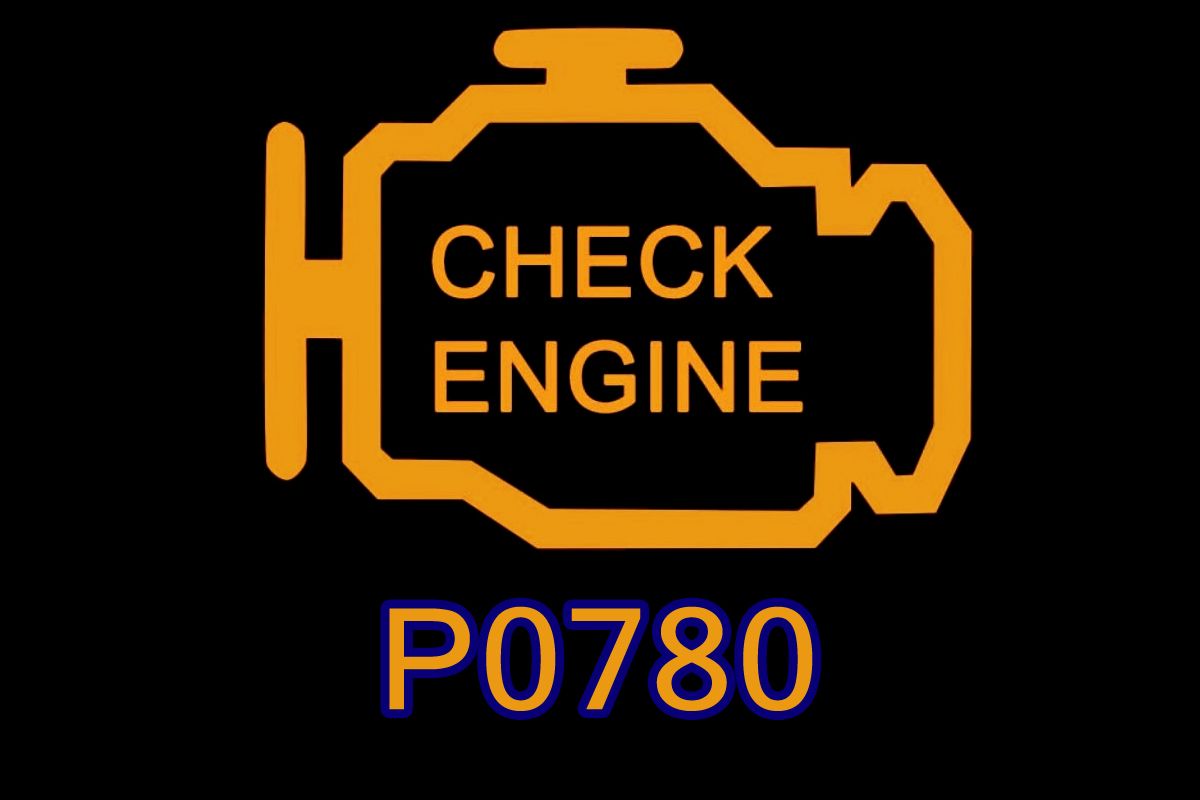
P0780 Shift Malfunction
The P0780 – Shift Malfunction diagnostic trouble code (DTC) indicates that the transmission control module (TCM) has detected a problem with the way the automatic transmission is changing gears.
Unlike codes such as P0781 or P0782, which identify a specific shift event, P0780 is a general shift malfunction code. The TCM has determined that the transmission did not respond to a shift command in the expected manner.
The problem can involve the electronic control system, shift solenoids, hydraulic pressure, valve body, transmission fluid, speed sensors, or internal mechanical components.
In some cases, the transmission may still operate relatively normally when P0780 is stored. In other cases, the vehicle may experience harsh shifting, delayed gear changes, slipping, or limp mode.
P0780 does not automatically mean that the transmission is mechanically damaged or needs to be replaced. A proper diagnosis is necessary to determine what caused the shift malfunction.
What Does P0780 Mean?
The code can be interpreted as:
-
P – Powertrain-related fault
-
07 – Transmission control system
-
80 – General shift malfunction
-
Shift Malfunction – The transmission did not complete or control a gear change as expected
In simple terms:
The TCM commanded or expected a gear change, but the transmission's actual behavior did not match the expected result.
The code itself does not tell you which component has failed.
How Does the TCM Know That a Shift Failed?
The TCM continuously monitors the transmission while the vehicle is moving.
It can compare information from:
-
Engine RPM
-
Input shaft speed
-
Intermediate shaft speed
-
Output shaft speed
-
Vehicle speed
-
Throttle position
-
Transmission fluid temperature
-
Solenoid commands
-
Gear ratio calculations
-
Hydraulic pressure information on systems that provide it
For example, the TCM may command a shift from one gear to another and expect the transmission speed ratio to change within a specific period.
If the expected change does not occur, the TCM may determine that a shift malfunction has occurred and store P0780.
What Can a Shift Malfunction Look Like?
A transmission does not necessarily have to completely refuse to change gears for P0780 to appear.
The shift may be:
-
Too slow
-
Too fast
-
Too harsh
-
Too soft
-
Incomplete
-
Erratic
-
Accompanied by slipping
-
Followed by an incorrect gear ratio
This is why P0780 can sometimes appear even when the vehicle is still capable of driving.
Symptoms of P0780
The symptoms depend on the underlying problem and the transmission design.
Harsh shifting
Gear changes may feel harder than normal.
Delayed shifting
The transmission may hesitate before changing gears.
Erratic shifting
The transmission may shift at unexpected times.
Transmission slipping
Engine RPM may rise without a proportional increase in vehicle speed.
Shift flare
Engine RPM may briefly increase during a gear change.
Failure to shift
The transmission may remain in one gear.
Incorrect gear selection
The transmission may select a gear that does not match the driving conditions.
Limp mode
The TCM may restrict transmission operation.
Check Engine Light
The malfunction indicator lamp may illuminate.
Transmission warning
Some vehicles may display a transmission warning message.
Why Does P0780 Occur?
There is no single cause of P0780.
The transmission's shifting process depends on several systems working together, so a problem in any of them can potentially trigger the code.
Common causes include:
Low transmission fluid
Insufficient fluid can prevent the transmission from generating the hydraulic pressure required for proper clutch operation.
Incorrect or degraded transmission fluid
The wrong fluid or badly degraded fluid can affect hydraulic and solenoid operation.
Faulty shift solenoid
A solenoid may stick, respond slowly, or fail electrically.
Pressure-control solenoid problem
Incorrect hydraulic pressure can interfere with clutch application.
Valve-body problems
A sticking valve or worn valve bore can disrupt hydraulic fluid flow.
Speed sensor failure
Incorrect speed information can cause the TCM to calculate the wrong gear ratio.
Wiring problems
An open circuit, short circuit, high resistance, or damaged connector can interfere with transmission control.
Internal hydraulic leakage
Worn seals or other internal components can prevent the required pressure from reaching the correct circuit.
Worn clutch components
A transmission clutch may not hold properly even when the electronic controls are functioning.
Transmission pump problems
Insufficient line pressure can affect multiple shift operations.
TCM problems
A control-module problem is possible, although it should generally be considered after the basic electrical and mechanical checks.
Can Low Transmission Fluid Cause P0780?
Yes.
Automatic transmissions depend on hydraulic pressure to apply clutches and control shift valves.
When the fluid level is too low, the transmission may experience:
-
Delayed shifts
-
Harsh shifts
-
Slipping
-
Shift flare
-
Incomplete gear engagement
Low fluid can also cause the transmission to overheat.
If the fluid level is low, the source of the fluid loss should be identified rather than simply adding fluid repeatedly.
Can Dirty Transmission Fluid Cause P0780?
Yes.
Transmission fluid carries contaminants and wear particles away from sensitive hydraulic components.
When fluid becomes heavily contaminated, it can interfere with:
-
Shift solenoids
-
Valve-body valves
-
Hydraulic passages
-
Pressure-control circuits
A strong burnt odor or significant metallic debris in the fluid can be a warning sign of internal transmission wear.
Can a Bad Shift Solenoid Cause P0780?
Yes.
Shift solenoids are responsible for controlling hydraulic fluid flow inside electronically controlled transmissions.
A defective solenoid may:
-
Fail to open
-
Fail to close
-
Stick
-
Respond slowly
-
Have an electrical fault
If the appropriate hydraulic circuit is not activated at the correct time, the transmission may not complete the shift correctly.
Can a Pressure-Control Solenoid Cause P0780?
Yes.
The transmission must maintain appropriate hydraulic pressure while changing gears.
If pressure is too low, a clutch may slip or engage too slowly.
If pressure is too high or applied at the wrong time, the shift may become harsh.
Pressure-control problems can therefore produce a general shift malfunction such as P0780.
Can a Speed Sensor Cause P0780?
Yes.
Speed sensors are extremely important for automatic transmission control.
The TCM uses their signals to determine how quickly various shafts are rotating and whether the commanded gear has actually engaged.
A faulty:
-
Input speed sensor
-
Intermediate shaft speed sensor
-
Output speed sensor
can provide incorrect information.
The TCM may then interpret the transmission behavior as a shift malfunction.
Can Wiring Cause P0780?
Yes.
Transmission wiring carries signals between the TCM, sensors, and solenoids.
Possible problems include:
-
Broken wires
-
Short circuits
-
Corrosion
-
Loose terminals
-
Damaged insulation
-
Water intrusion
-
High resistance
If P0780 appears together with other electrical transmission codes, the wiring harness should be investigated carefully.
Can the Valve Body Cause P0780?
Yes.
The valve body is responsible for routing hydraulic fluid to the appropriate transmission circuits.
A valve that sticks or a worn valve bore can alter the amount and timing of hydraulic pressure.
This may produce:
-
Delayed shifts
-
Harsh shifts
-
Shift flare
-
Intermittent shift problems
-
Multiple gear-change problems
Can Internal Transmission Wear Cause P0780?
Yes.
Internal mechanical wear is one possible cause, particularly when the vehicle has significant mileage or a history of transmission problems.
Potentially affected components include:
-
Clutch packs
-
Seals
-
Pistons
-
Valve bores
-
Bushings
-
Transmission pump components
If a clutch cannot hold properly, the TCM may detect a shift that does not produce the expected gear ratio.
Does P0780 Mean the Transmission Is Bad?
No.
This is one of the most important points about the code.
P0780 identifies a shift-control problem, not a specific failed component.
The cause could be as simple as a solenoid or electrical connection.
It could also be a hydraulic or internal mechanical problem.
Therefore, the transmission should not be condemned solely because P0780 is stored.
Can P0780 Cause Limp Mode?
Yes.
If the TCM determines that transmission shifting is unreliable, it may activate a protective strategy.
Depending on the vehicle, this can cause:
-
Limited gears
-
Fixed-gear operation
-
Increased line pressure
-
Disabled manual mode
-
Reduced transmission performance
The exact behavior varies between manufacturers.
Can P0780 Cause Transmission Slipping?
Yes.
If a clutch does not receive or maintain the correct hydraulic pressure, it can slip during a gear change.
Typical signs include:
-
Engine RPM rising suddenly
-
Poor acceleration
-
Delayed gear engagement
-
Fluctuating RPM
-
Burning transmission-fluid smell
If significant slipping is present, continued driving should be avoided.
Can P0780 Cause Transmission Overheating?
Yes, potentially.
Repeated slipping creates friction and heat.
If the transmission continues to slip during gear changes, temperatures can rise significantly.
Excessive heat can accelerate deterioration of:
-
Transmission fluid
-
Clutch material
-
Seals
-
Other internal components
How Is P0780 Diagnosed?
Because P0780 is a general shift code, diagnosis should not begin by replacing a random solenoid.
A proper diagnostic process is more useful.
1. Scan for all transmission codes
Look for additional codes relating to:
-
Shift solenoids
-
Pressure-control solenoids
-
Speed sensors
-
Gear ratios
-
Transmission temperature
-
Communication
Additional codes can provide a major clue.
2. Examine freeze-frame data
Find out what was happening when P0780 was stored.
Check:
-
Vehicle speed
-
Engine RPM
-
Transmission temperature
-
Throttle position
-
Commanded gear
-
Other available transmission parameters
3. Check transmission fluid
Verify fluid level and condition according to the manufacturer's procedure.
4. Analyze live data
Monitor transmission speed sensors and commanded gear information.
5. Determine which shift is affected
Even though P0780 is a general code, the problem may occur consistently during a particular shift.
For example, it may appear during:
-
1-2
-
2-3
-
3-4
-
4-5
Identifying the affected shift can greatly narrow the diagnosis.
6. Test the relevant solenoids
Check electrical resistance and control signals according to manufacturer specifications.
7. Inspect wiring and connectors
Look for damaged wiring, corrosion, loose terminals, and short circuits.
8. Test hydraulic pressure
If electrical testing does not reveal the problem, hydraulic pressure should be evaluated.
9. Inspect the valve body
If hydraulic pressure or shift behavior is abnormal, valve-body problems may need to be investigated.
10. Evaluate internal components
Internal transmission wear should be considered when electrical and hydraulic systems test correctly but the shift malfunction remains.
Why Is Identifying the Affected Gear Important?
P0780 itself does not identify a specific gear.
However, the technician can often determine whether the fault consistently happens during a particular shift.
For example:
P0780 + 1-2 shift problem
may lead toward one group of solenoids or hydraulic circuits.
P0780 + 2-3 shift problem
may point toward a different clutch or hydraulic circuit.
This is why road-test data and live transmission data are valuable.
What If P0780 Appears Only When the Transmission Is Cold?
A temperature-dependent fault can provide a useful clue.
Possible causes include:
-
Fluid viscosity
-
Solenoid response
-
Valve-body sticking
-
Cold hydraulic pressure behavior
The transmission should be monitored while cold and again after reaching normal operating temperature.
What If P0780 Appears Only When the Transmission Is Hot?
A hot-only fault can point toward:
-
Solenoid thermal failure
-
Internal hydraulic leakage
-
Valve-body wear
-
Fluid degradation
-
Clutch wear
If possible, the vehicle should be tested under the same temperature conditions in which the code normally appears.
What If P0780 Appears After a Transmission Service?
If the code appeared immediately after transmission work, inspect the serviced components before assuming an internal failure.
Check:
-
Transmission connectors
-
Internal wiring
-
Fluid level
-
Correct fluid specification
-
Solenoid connections
-
Harness routing
A connector that was not fully seated or wiring that was damaged during service can create transmission-control problems.
What If P0780 Appears With Several Solenoid Codes?
Multiple solenoid codes may indicate a broader electrical problem.
Possible causes include:
-
Transmission connector failure
-
Shared power supply problem
-
Shared ground problem
-
Internal harness damage
-
TCM power problem
-
Low system voltage
Replacing multiple solenoids without testing the common circuits can lead to unnecessary repairs.
What If P0780 Appears With Speed Sensor Codes?
The speed-sensor codes should be taken seriously.
The TCM needs accurate shaft-speed information to determine whether gear changes are successful.
If a speed sensor is providing incorrect data, P0780 may be a secondary code.
In such a case, repairing the speed-sensor problem may resolve the shift malfunction as well.
Common Diagnostic Mistakes
Replacing the transmission immediately
P0780 does not prove internal mechanical failure.
Replacing a solenoid without testing
The actual problem may be wiring, fluid, a speed sensor, or the valve body.
Ignoring transmission fluid
Low or degraded fluid can create significant shifting problems.
Ignoring speed sensors
Incorrect speed information can cause the TCM to misinterpret transmission operation.
Assuming P0780 identifies a specific solenoid
Unlike some solenoid-specific codes, P0780 is a general shift malfunction code.
Clearing the code without reproducing the fault
The code may return as soon as the problematic shift occurs again.
How Is P0780 Repaired?
The appropriate repair depends on the confirmed cause.
Possible repairs include:
-
Correcting transmission fluid level
-
Repairing transmission-fluid leaks
-
Using the correct transmission fluid
-
Replacing a faulty shift solenoid
-
Replacing a pressure-control solenoid
-
Repairing damaged wiring
-
Replacing damaged connector terminals
-
Replacing a faulty speed sensor
-
Servicing the valve body
-
Repairing hydraulic pressure problems
-
Repairing worn clutch components
-
Performing transmission adaptation or relearn procedures
-
Repairing or replacing the TCM when properly diagnosed
Does P0780 Require a Transmission Rebuild?
Not necessarily.
A transmission rebuild should not be recommended simply because P0780 is present.
Before considering major internal repairs, the following should be checked:
Fluid → Sensors → Wiring → Solenoids → Hydraulic pressure → Valve body → Internal components
If testing confirms worn clutches, damaged internal components, or serious hydraulic problems, then an internal transmission repair may be necessary.
Can You Drive With P0780?
It depends on the symptoms.
If the vehicle is shifting normally and P0780 is stored without noticeable drivability problems, a short trip to a repair facility may be possible.
However, continued driving is not recommended if you notice:
-
Severe slipping
-
Strong shift flare
-
Violent shifting
-
Loss of gears
-
Limp mode
-
Transmission overheating
-
Burning transmission-fluid smell
Driving with a slipping transmission can significantly increase internal wear.
How Do You Clear P0780?
The code should not simply be erased without finding the cause.
Once the underlying problem has been repaired, the DTC can be cleared with a suitable diagnostic scanner.
Some vehicles may also require:
-
Transmission adaptation
-
Shift relearn
-
Clutch calibration
-
A specific road-test procedure
After the repair, the vehicle should be driven through the relevant shift patterns and rescanned to confirm that P0780 does not return.
Final Thoughts on P0780
P0780 – Shift Malfunction is a general transmission fault indicating that the TCM has detected an abnormal gear-changing event.
Unlike a code that identifies a specific shift, P0780 does not tell you exactly which component has failed. The underlying cause can be found in the transmission fluid, speed sensors, wiring, shift solenoids, pressure-control system, valve body, hydraulic system, or internal transmission components.
The symptoms are particularly useful when diagnosing this code. A delayed shift, harsh engagement, shift flare, or slipping transmission can help determine which part of the transmission system should be investigated first.
Most importantly, P0780 does not automatically mean that the transmission needs to be rebuilt or replaced.
The best approach is to identify the exact shift in which the malfunction occurs and then work through the system methodically:
Scan all codes → Check fluid → Analyze live data → Identify the affected shift → Test sensors and solenoids → Inspect wiring → Check hydraulic pressure → Evaluate the valve body → Inspect internal components only when necessary.
This prevents unnecessary parts replacement and provides a much better chance of finding the actual cause of the shift malfunction.