TR
TR EN
EN

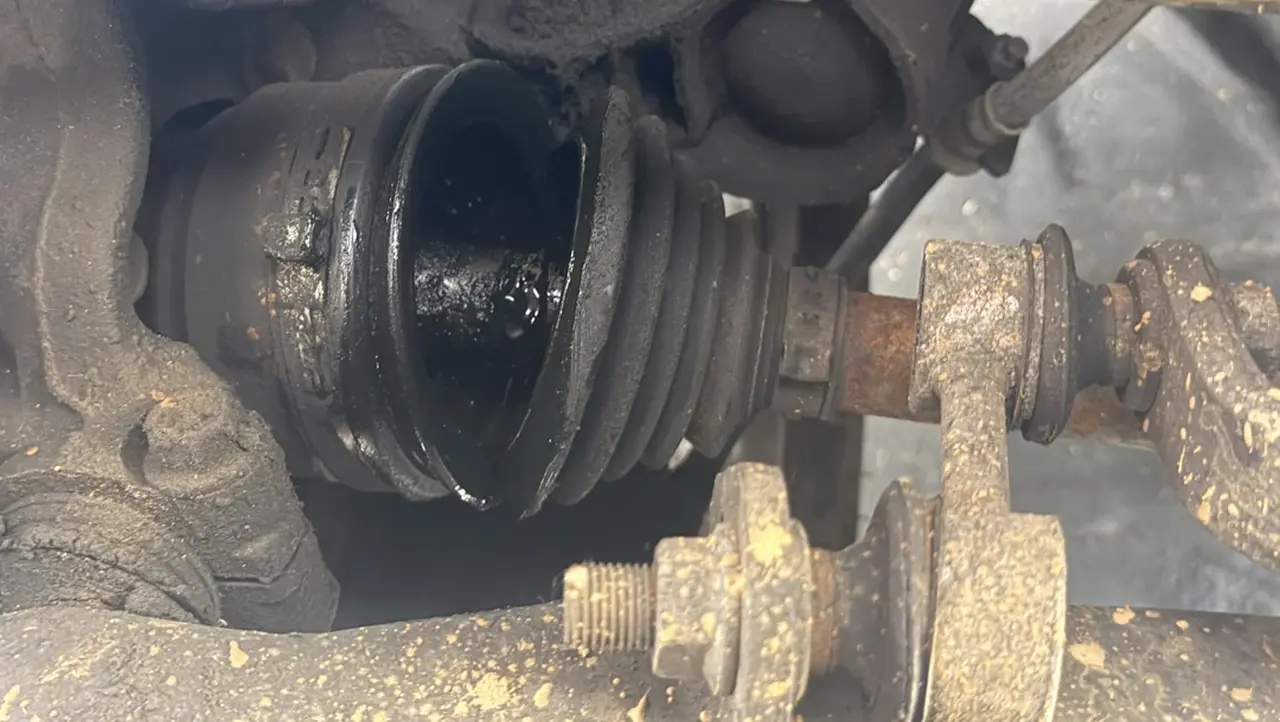
What Is an Axle Boot? What Happens If an Axle Boot Tears?
One of the most important components that transfers power from the transmission to the wheels in automobiles is the axle shaft. The axle joint (CV joint) located at the end of the axle ensures continuous power transmission during steering movements and suspension operation. For the axle joint to operate for a long time, it must be continuously lubricated with grease. The rubber component that keeps this grease inside and prevents water, mud, and dust from entering from outside is called an axle boot.
What Is an Axle Boot?
An axle boot is a protective component made of flexible rubber or thermoplastic material that protects the axle joint from external factors.
Its main functions are:
-
Keeping the grease inside
-
Preventing water entry
-
Preventing dust and sand from entering
-
Extending the lifespan of the axle joint
-
Ensuring quiet and trouble-free operation
Vehicles generally have two axle boots on each axle: an inner boot and an outer boot. In front-wheel-drive vehicles, having a total of four axle boots is common.
How Does an Axle Boot Work?
Inside the axle joint, there are many ball bearings and moving surfaces.
These components continuously rub against each other during:
-
Rotation
-
Steering movements
-
Suspension movement
The special grease inside reduces friction, while the axle boot keeps this grease contained without allowing it to escape.
At the same time, it prevents harmful substances such as:
-
Water
-
Sand
-
Dust
-
Mud
-
Salt
from reaching the axle joint.
Why Does an Axle Boot Tear?
Axle boots are components that can wear out over time.
The most common causes are:
-
Rubber hardening due to aging
-
Impact from stones
-
Contact with sharp objects
-
Constant hot and cold temperature changes
-
Low-quality materials
-
Incorrect installation
-
Loose clamps
Especially in vehicles older than 5-10 years, the risk of cracking increases due to the hardening of the rubber structure.
What Happens If an Axle Boot Tears?
Although a torn axle boot may seem like a small problem at first, ignoring it can lead to expensive repairs.
Grease leaks out
When the axle boot tears, the first thing that happens is that the grease lubricating the axle joint escapes.
Black grease stains are usually visible on the inner side of the wheel rim or around the shock absorber area.
Water and dust enter
As grease leaks out, contaminants such as:
-
Water
-
Sand
-
Dust
-
Mud
begin to enter the axle joint.
These contaminants cause rapid wear on the sensitive surfaces inside the axle joint.
The axle joint wears out
Ball bearings and tracks operating without sufficient lubrication wear out quickly.
This can eventually lead to irreversible damage.
Clicking noise occurs
When turning the steering wheel fully to the right or left, sounds such as:
-
Click-click
-
Tick-tick
-
Crackling sounds
may begin to occur.
These noises usually indicate that the axle joint has worn out.
Vibration may occur
In advanced stages of wear, vibration may be felt during:
-
Starting
-
Acceleration
-
Cornering
Can You Drive a Car with a Torn Axle Boot?
If a small crack has just formed, the vehicle may be driven carefully for short distances. However, this is not a permanent solution.
Because with every kilometer:
-
More grease is lost.
-
More dirt enters the joint.
-
Wear on the axle joint accelerates.
Therefore, long-distance driving with a torn axle boot is not recommended.
Is Axle Boot Replacement Urgently Necessary?
Yes.
Although the axle boot is a low-cost component, neglecting it can lead to much more expensive failures.
For example:
-
Replacing only the axle boot is usually an economical repair.
-
If the boot is not replaced in time, the axle joint may also become damaged.
-
In advanced cases, a complete axle replacement may be required.
For this reason, when a torn axle boot is detected, replacement should be carried out as soon as possible.
How Can You Tell If an Axle Boot Is Torn?
The following signs may indicate axle boot damage:
-
Black grease stains on the inside of the wheel rim
-
Cracks or tears on the axle boot
-
Clicking noises when the steering wheel is turned fully
-
Noise during cornering
-
Grease around the axle area
-
A torn boot detected during vehicle inspection
It is beneficial to visually inspect axle boots during periodic maintenance or tire changes.
How Is an Axle Boot Replaced?
The process generally consists of the following steps:
-
The vehicle is lifted.
-
The related wheel is removed.
-
Axle connections are separated.
-
The old boot is removed.
-
Old grease is cleaned.
-
New grease is applied.
-
A new boot and clamps are installed.
-
Components are reassembled.
In some vehicles, the axle must be completely removed, while in some models the process can be completed in a shorter time.
How Long Does Axle Boot Replacement Take?
Depending on the vehicle model, the replacement usually takes between 30 minutes and 1.5 hours at an experienced repair shop.
If the axle joint is damaged, the repair time may be longer.
What Happens If the Axle Boot Is Not Replaced?
If the problem is ignored, the following failures may occur:
-
Grease completely runs out.
-
The axle joint wears out.
-
Noise occurs when turning the steering wheel.
-
Vibrations begin.
-
Power transmission may be affected.
-
The axle joint may need to be replaced.
-
In some cases, complete axle replacement may be required.
A problem that could have been solved with a simple boot replacement can turn into a much more expensive repair if not addressed in time.
How Long Does an Axle Boot Last?
There is no fixed replacement mileage.
Depending on usage conditions:
-
It may wear out at 80,000 km.
-
It may operate without problems for 200,000 km.
Regular inspection for cracks, hardening, or grease leakage during maintenance is sufficient.
The axle boot is a small and low-cost component, but it plays an important role in protecting the vehicle’s drivetrain components. When it tears, grease leaks out, and dirt and water reach the axle joint, accelerating wear. If the problem is not fixed in time, not only the boot but also the axle joint or, in some cases, the entire axle may need to be replaced.
For this reason, if you notice oily marks under your vehicle or hear “click-click” or “crackling” sounds when turning the steering wheel fully, having the axle boot inspected without delay is important both for your safety and for preventing higher repair costs.