TR
TR EN
EN

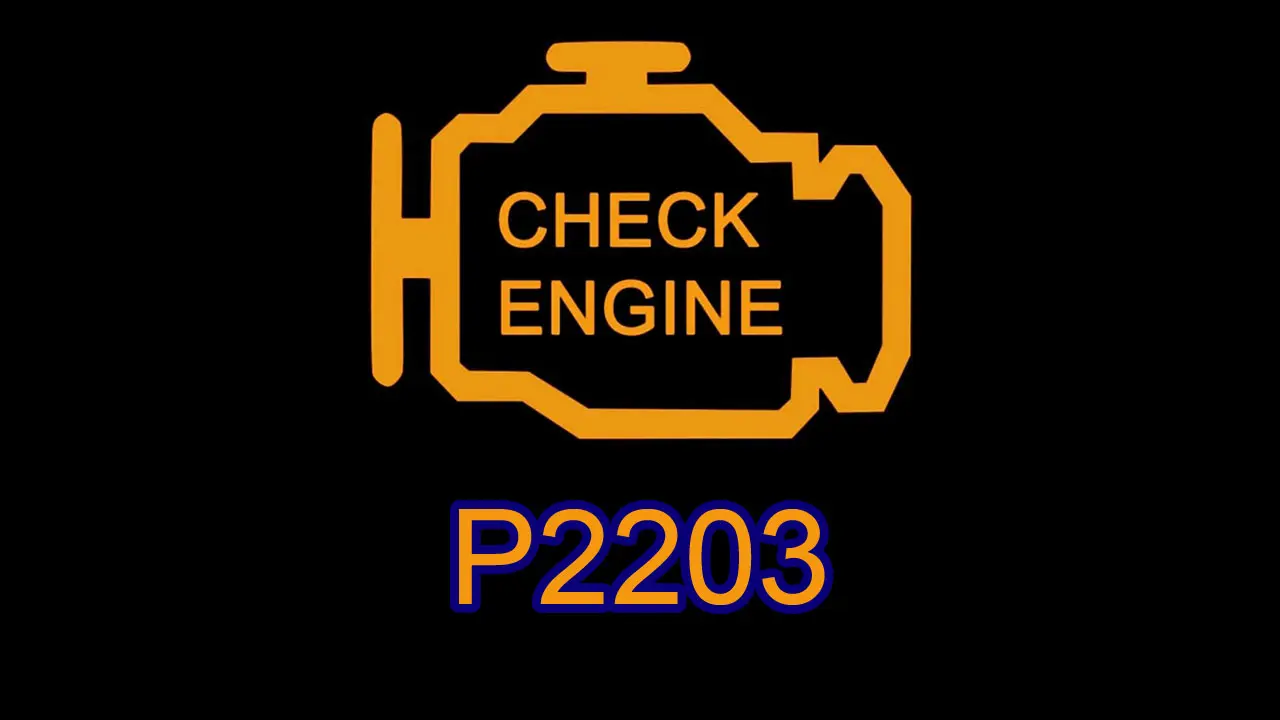
P2203 NOx Sensor Circuit High Input (Bank 1)
P2203 NOx Sensor Circuit High Input (Bank 1) is a generic OBD-II diagnostic trouble code that indicates the Engine Control Module (ECM) has detected a higher-than-expected input signal from the Bank 1 NOx sensor circuit.
The NOx sensor is responsible for measuring nitrogen oxide (NOx) levels in exhaust gases and sending this information to the ECM. The vehicle uses this data to control emission systems such as SCR (Selective Catalytic Reduction) and DEF (Diesel Exhaust Fluid) / AdBlue injection.
When the ECM detects that the NOx sensor circuit signal voltage is above the specified range, it stores the P2203 fault code and may activate the Check Engine Light.
This fault is commonly related to diesel vehicles equipped with advanced emission control systems.
What Does P2203 NOx Sensor Circuit High Input Mean?
The NOx sensor is an electronic exhaust sensor that monitors nitrogen oxide levels produced during combustion.
The sensor communicates with the ECM and provides information used to manage:
-
NOx emission levels
-
SCR catalyst efficiency
-
DEF/AdBlue injection
-
Exhaust emission control strategies
The term "High Input" means the ECM is receiving a signal that is higher than the expected operating range.
This does not always mean the sensor itself is producing excessive voltage. The problem may also be caused by:
-
Signal wire shorted to voltage
-
Faulty NOx sensor electronics
-
Wiring problems
-
Connector issues
-
Communication faults
Bank 1 Explained
Bank 1 refers to the side of the engine where cylinder number one is located.
What Does the NOx Sensor Circuit Do?
The NOx sensor circuit allows the sensor and ECM to communicate.
The system monitors exhaust conditions and helps the vehicle reduce harmful emissions.
The NOx sensor circuit provides data for:
-
Measuring NOx concentration
-
Controlling SCR operation
-
Adjusting DEF injection
-
Monitoring emission system efficiency
If the circuit signal is too high, the ECM may receive incorrect NOx information and cannot control the emission system correctly.
Symptoms of P2203
Symptoms may vary depending on the vehicle and the severity of the circuit problem.
Check Engine Light
The most common symptom is the Check Engine Light being activated after the ECM detects an abnormal NOx sensor signal.
Emission system warning messages
The vehicle may display warnings such as:
-
Emissions System Fault
-
Exhaust System Malfunction
-
AdBlue/DEF System Warning
-
Engine Management Warning
SCR system problems
A faulty NOx sensor circuit can affect SCR operation.
Possible effects:
-
Incorrect DEF injection
-
Reduced NOx conversion efficiency
-
Increased emissions
Reduced engine performance
Some vehicles may activate protection modes:
-
Reduced engine power
-
Limited torque
-
Limp mode
Incorrect DEF consumption
Incorrect NOx data may cause the system to calculate DEF injection incorrectly.
Failed emissions inspection
An active P2203 fault may cause the vehicle to fail emissions testing.
Common Causes of P2203
Several problems can cause a high input condition in the NOx sensor circuit.
Faulty NOx Sensor
A defective NOx sensor is one of the most common causes.
Possible internal failures include:
-
Sensor electronic failure
-
Incorrect signal output
-
Internal circuit damage
-
Communication problems
Because NOx sensors operate in extreme exhaust temperatures, internal failures can occur over time.
Signal Wire Short to Voltage
A short between the NOx sensor signal wire and a power source can create a high input condition.
Possible causes:
-
Damaged wiring insulation
-
Melted wires near exhaust components
-
Incorrect electrical repairs
-
Harness damage
Damaged Wiring Harness
The NOx sensor wiring is exposed to:
-
High exhaust temperatures
-
Vibration
-
Moisture
-
Road conditions
Possible wiring problems:
-
Broken wires
-
Damaged insulation
-
Corrosion
-
Short circuits
Electrical Connector Problems
Poor connections can affect NOx sensor signals.
Common issues:
-
Corroded terminals
-
Loose connectors
-
Damaged pins
-
Water contamination
NOx Sensor Control Module Problems
Some vehicles use a separate NOx sensor control module.
A faulty module may cause:
-
Incorrect signal processing
-
Communication faults
-
High input readings
ECM Problems
Although rare, ECM faults may cause incorrect sensor input readings.
Possible causes:
-
Internal ECM circuit failure
-
Software problems
-
Communication errors
How Is P2203 Diagnosed?
Proper diagnosis requires testing the NOx sensor circuit and related components.
Check for additional fault codes
A diagnostic scan should check related codes involving:
-
NOx sensors
-
SCR system
-
DEF system
-
Exhaust sensors
-
Communication faults
Additional codes can help identify the source of the problem.
Inspect the NOx Sensor
The Bank 1 NOx sensor should be checked for:
-
Physical damage
-
Heat damage
-
Corrosion
-
Incorrect installation
Inspect Wiring and Connectors
The circuit should be inspected for:
-
Short circuits
-
Damaged insulation
-
Broken wires
-
Loose connectors
-
Corroded terminals
Test Sensor Signal Voltage
Technicians should verify:
-
Signal voltage
-
Power supply
-
Ground connection
-
Circuit continuity
A signal voltage higher than the manufacturer's specification confirms the fault.
Perform a Wiring Movement Test
Because wiring faults may change with vibration or movement, technicians may inspect the harness while monitoring sensor signals.
This can reveal:
-
Loose connections
-
Internal wire damage
-
Connector faults
Monitor Live Data
A professional scan tool can monitor:
-
NOx sensor readings
-
Sensor communication
-
SCR operation
-
DEF injection activity
How Is P2203 Fixed?
The repair depends on the actual cause of the high input condition.
Replace the NOx Sensor
If the sensor electronics are faulty, replacement of the NOx sensor may be required.
Repair Damaged Wiring
Possible repairs include:
-
Repairing short circuits
-
Replacing damaged wires
-
Restoring insulation
-
Protecting wiring from heat sources
Repair Electrical Connectors
Possible repairs:
-
Cleaning corrosion
-
Replacing damaged terminals
-
Repairing connector pins
-
Ensuring secure connections
Repair NOx Sensor Control Module Problems
If the control module is causing incorrect readings, replacement or programming may be required.
Update Vehicle Software
Some vehicles may require ECM or NOx module software updates.
After repairs:
-
Clear the fault code.
-
Start the engine.
-
Monitor NOx sensor operation.
-
Complete a drive cycle.
-
Confirm that the fault does not return.
Can You Drive With P2203?
A vehicle with P2203 may continue operating, but the problem should be diagnosed as soon as possible.
Possible consequences include:
-
Increased emissions
-
Reduced SCR efficiency
-
Incorrect DEF operation
-
Reduced engine performance
-
Possible limp mode activation
The vehicle may appear to operate normally while the emission system is not functioning correctly.
Is P2203 a Serious Code?
P2203 is considered a moderate to serious diagnostic trouble code because it affects the vehicle's emission control system.
Although the engine may continue running, incorrect NOx sensor signals can prevent the SCR system from operating efficiently.
Ignoring the fault may lead to:
-
Poor emission control
-
Incorrect DEF management
-
Increased emissions
-
Additional emission-related faults
How to Prevent P2203
Preventive maintenance can help reduce NOx sensor circuit problems.
Inspect Exhaust Wiring Regularly
Check wiring near the exhaust system for:
-
Heat damage
-
Melting
-
Mechanical damage
Protect Electrical Connectors
Keep connectors protected from:
-
Water
-
Dirt
-
Corrosion
Maintain the SCR System
Use the correct DEF/AdBlue fluid and follow manufacturer maintenance recommendations.
Repair Exhaust Problems Quickly
Exhaust leaks and emission system faults can affect NOx sensor performance.
Address Warning Lights Early
Early diagnosis can prevent further emission system problems.
Final Thoughts
P2203 NOx Sensor Circuit High Input (Bank 1) indicates that the ECM has detected an excessively high signal from the Bank 1 NOx sensor circuit.
The most common causes include:
-
Faulty NOx sensor
-
Signal wire short to voltage
-
Damaged wiring
-
Connector problems
-
NOx sensor control module faults
-
ECM communication issues
A complete inspection of the NOx sensor circuit, wiring harness, connectors, and emission control system is required to restore accurate NOx monitoring and proper SCR system operation.