TR
TR EN
EN

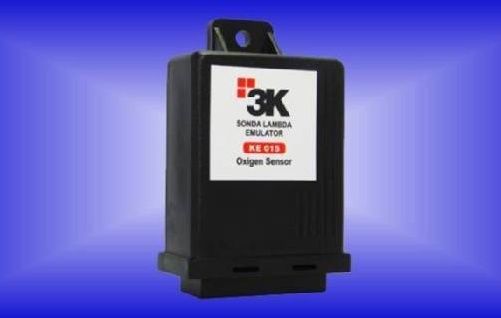
What Is a Lambda Emulator?
A lambda emulator is an electronic device used in some LPG conversion systems to manage or modify the signal associated with the vehicle's lambda (oxygen) sensor.
The lambda sensor measures the amount of oxygen in the exhaust gas and sends information to the engine ECU. The ECU uses this information to adjust fuel delivery and maintain the desired air-fuel mixture.
Lambda emulators were particularly important in older LPG systems, especially systems where the LPG fuel-control strategy could interfere with the original gasoline ECU's fuel corrections.
However, a separate lambda emulator is not required in every LPG system. Modern sequential LPG systems generally use more sophisticated control strategies and can manage LPG injection without the traditional type of lambda emulator.
What Does a Lambda Sensor Do?
The lambda sensor monitors oxygen in the exhaust gas.
Based on its signal, the engine ECU can determine whether the mixture is generally:
-
Rich
-
Lean
-
Near the desired operating range
During closed-loop operation, the ECU uses this information to make fuel corrections.
The lambda sensor is therefore an important part of the original engine-management system.
Why Is a Lambda Emulator Used in LPG Systems?
A lambda emulator may be used to help coordinate the LPG system with the vehicle's original fuel-control strategy.
This was particularly relevant in older LPG installations where the gasoline ECU could continue reacting to the lambda signal while the engine was running on LPG.
Depending on the system design, an emulator may be used to:
-
Manage the lambda signal during LPG operation
-
Reduce unwanted interaction between the LPG system and gasoline ECU
-
Control how the original ECU responds to the lambda signal
-
Support the transition between gasoline and LPG operation
The exact function depends on the LPG system and emulator design.
Does Every LPG System Need a Lambda Emulator?
No.
This is an important distinction.
Older LPG systems may use a dedicated lambda emulator, while many modern sequential LPG systems do not require one.
Modern LPG ECUs can use information such as:
-
Gasoline injector duration
-
Engine RPM
-
LPG pressure
-
LPG temperature
-
Engine load
-
Sensor inputs
-
Fuel-trim behavior
to calculate the appropriate LPG injection strategy.
Therefore, installing a traditional lambda emulator on every LPG vehicle is not a universal requirement.
Is a Lambda Emulator the Same as a Lambda Sensor?
No.
The two components have completely different functions.
Lambda sensor:
Measures oxygen in the exhaust and sends a signal to the engine-management system.
Lambda emulator:
An electronic interface used in certain LPG systems to manage the lambda signal or the way the original ECU responds to it.
The lambda sensor is part of the vehicle's original engine-management system, while the emulator is associated with the LPG installation.
How Does a Lambda Emulator Work?
The basic concept can be represented as:
Lambda sensor → lambda signal → emulator/LPG system → engine ECU
The actual wiring and operating strategy vary considerably between LPG systems.
Some older systems can alter or control the lambda signal during LPG operation so that the gasoline ECU does not make inappropriate corrections based on LPG combustion characteristics.
This does not necessarily mean that the lambda sensor is physically disabled.
Instead, the signal management is modified according to the LPG system's strategy.
Does a Lambda Emulator Disable the Oxygen Sensor?
Not necessarily.
A lambda emulator does not simply mean that the oxygen sensor has been removed or permanently disabled.
Depending on the LPG system, the emulator may modify, manage, or reproduce the signal that the gasoline ECU sees during LPG operation.
The original lambda sensor can remain installed and continue measuring exhaust oxygen.
The important point is that the exact behavior depends on the specific LPG system.
Which LPG Systems Use Lambda Emulators?
Lambda emulators are more commonly associated with older LPG technologies, including certain:
-
Mixer-type LPG systems
-
Older electronically controlled LPG systems
-
Lambda-controlled LPG applications
-
Early-generation conversion systems
Modern sequential LPG systems generally use a different approach.
Instead of relying on a traditional lambda emulator, the LPG ECU can control the gas injectors according to the original engine-management strategy and its own calibration.
What Happens If a Lambda Emulator Fails?
The symptoms depend on the LPG system and the type of emulator failure.
Possible symptoms include:
-
Poor LPG operation
-
Unstable idle
-
Problems during the switch from gasoline to LPG
-
Increased fuel consumption
-
Check engine light
-
Lambda-related fault codes
-
Rich or lean mixture symptoms
-
Poor throttle response
-
LPG performance problems
-
Abnormal fuel-trim values
However, these symptoms do not automatically prove that the lambda emulator is defective.
The same symptoms can be caused by the lambda sensor, LPG injectors, reducer pressure, vacuum leaks, ignition problems, wiring, or incorrect LPG calibration.
How Is a Lambda Emulator Diagnosed?
A proper diagnosis should begin with the vehicle's actual operating data.
Useful checks include:
-
OBD fault codes
-
Lambda sensor signal
-
Short-term fuel trim
-
Long-term fuel trim
-
Engine operation on gasoline
-
Engine operation on LPG
-
LPG pressure
-
LPG injector operation
-
Lambda sensor wiring
-
Emulator wiring
-
LPG ECU connections
-
Vacuum and intake leaks
One of the most useful comparisons is to observe how the engine behaves on gasoline versus LPG.
For example, if fuel trims are normal on gasoline but become significantly abnormal after switching to LPG, the LPG calibration, fuel pressure, injector operation, or related control strategy should be investigated.
Can a Lambda Emulator Increase Fuel Consumption?
The emulator itself does not inherently increase fuel consumption.
However, if it is incorrectly configured, incorrectly installed, or malfunctioning, it can affect how the engine ECU responds to the lambda signal.
This can contribute to:
-
Rich mixture
-
Lean mixture
-
Excessive fuel corrections
-
Increased LPG consumption
-
Abnormal gasoline fuel trims
Therefore, increased fuel consumption should not automatically be blamed on the lambda emulator.
The entire fuel-control system should be evaluated.
Can a Lambda Emulator Cause the Check Engine Light?
Yes, depending on the system.
If the lambda signal seen by the engine ECU is inconsistent with the expected operating behavior, the ECU may detect a fuel-control or oxygen-sensor-related problem.
Possible consequences include:
-
Lambda-related diagnostic trouble codes
-
Fuel-mixture codes
-
Fuel-trim-related codes
-
Check engine light
But a check engine light does not prove that the emulator itself has failed.
Other possible causes include:
-
Faulty lambda sensor
-
Vacuum leak
-
MAF sensor problem
-
MAP sensor problem
-
LPG pressure problems
-
LPG injector problems
-
Incorrect calibration
-
Ignition problems
-
Exhaust leaks
-
Wiring faults
Lambda Emulator and LPG Calibration
On older systems that use a lambda emulator, the emulator and LPG calibration need to work together.
An incorrect emulator configuration can affect the way the gasoline ECU reacts to the engine while running on LPG.
This may lead to:
-
Unstable fuel corrections
-
Poor LPG drivability
-
Check engine light
-
Rich or lean operation
-
Differences between gasoline and LPG performance
Therefore, replacing or changing an emulator may require the LPG system to be checked and recalibrated.
Can a Lambda Emulator Be Installed on Any Vehicle?
No.
A lambda emulator should not be treated as a universal LPG component.
The correct solution depends on:
-
Vehicle model
-
Engine type
-
Engine ECU
-
Fuel-injection system
-
LPG system generation
-
LPG ECU
-
Lambda sensor type
-
Existing wiring
-
Calibration strategy
A system designed for an older engine-management system may not be appropriate for a modern vehicle.
Incorrectly modifying the original lambda circuit can create additional diagnostic problems.
What Should Be Checked Before Replacing a Lambda Emulator?
Before replacing the emulator, the following should be inspected:
Lambda sensor:
Verify that the sensor itself is producing an appropriate signal.
Wiring:
Inspect the lambda sensor, emulator, LPG ECU, power, ground, and signal connections.
LPG pressure:
Unstable or incorrect LPG pressure can create mixture problems that may be incorrectly blamed on the emulator.
LPG injectors:
Injector flow and response should be evaluated.
Vacuum system:
An intake or vacuum leak can create lean-mixture symptoms.
Fuel trims:
Compare short- and long-term fuel trims on gasoline and LPG.
LPG calibration:
An incorrect LPG map can produce lambda-related problems even when the hardware is functioning correctly.
Lambda Emulator vs. Modern Sequential LPG Systems
The difference between older and modern LPG technology is important.
Older systems often had to work around the limitations of the original fuel-control strategy. A lambda emulator could therefore have an important role in managing the interaction between LPG operation and the gasoline ECU.
Modern sequential systems are generally much more integrated.
The LPG ECU can calculate gas injection quantities based on the original gasoline injection behavior and other engine parameters.
As a result, the traditional lambda emulator has become less important in many modern LPG applications.
Is a Lambda Emulator Necessary Today?
In many modern LPG conversions, no separate lambda emulator is necessary.
However, this does not mean that lambda feedback is unimportant.
Modern LPG systems still need to maintain an appropriate air-fuel mixture, and lambda sensors remain an important part of the original engine-management system.
The difference is that modern LPG ECUs can handle fuel control without necessarily requiring the traditional signal-emulation method used by older systems.
What Are the Most Common Lambda Emulator Problems?
The most common problems can be divided into several categories.
Electrical problems
-
Broken wiring
-
Poor connections
-
Bad grounds
-
Damaged connectors
-
Incorrect installation
Signal problems
-
Incorrect lambda signal
-
Unstable signal
-
Poor emulator operation
-
Incorrect signal management
Calibration problems
-
Incorrect LPG mixture
-
Incorrect LPG map
-
Poor fuel-trim behavior
-
Improper switching strategy
Related engine problems
-
Vacuum leaks
-
Faulty oxygen sensor
-
MAF/MAP problems
-
Ignition problems
-
Exhaust leaks
-
LPG pressure problems
This is why replacing the emulator without testing the surrounding system is often an ineffective repair strategy.
Is a Lambda Emulator Still Important?
A lambda emulator can still be important on an older LPG installation that was specifically designed to use one.
However, it should not be assumed that every LPG vehicle needs one.
If an older LPG system has lambda-related problems, the emulator should be evaluated as part of the complete system.
If a modern sequential LPG system has a lambda or fuel-trim problem, the diagnosis should instead focus on the LPG ECU, calibration, injector behavior, gas pressure, engine sensors, and the original engine-management system.
What Is a Lambda Emulator, in Simple Terms?
A lambda emulator is an electronic device used in certain LPG systems to manage the lambda sensor signal and the interaction between LPG operation and the vehicle's original engine ECU.
It is mainly associated with older LPG technologies, while many modern sequential LPG systems can operate without a separate traditional lambda emulator.
The most important point is that a lambda-related fault should never automatically lead to emulator replacement.
The lambda sensor, LPG pressure, injectors, wiring, fuel trims, vacuum system, LPG ECU, and calibration should all be considered before replacing any component.