TR
TR EN
EN

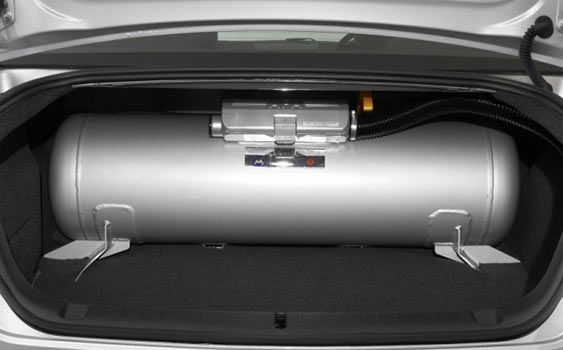
Are Automotive LPG Tanks Safe?
Automotive LPG tanks are generally safe when they are manufactured to the appropriate standards, correctly installed in the vehicle, properly maintained, and regularly inspected.
Because LPG is stored as a pressurized liquid, an LPG tank has different safety requirements from a conventional gasoline fuel tank. However, this does not mean that an LPG tank is constantly at risk of exploding during normal use.
The overall safety of an LPG tank depends on several factors, including tank quality, manufacturing standards, the multivalve, installation, connections, corrosion condition, and how the system is used.
Why Can an LPG Tank Withstand Pressure?
An automotive LPG tank is not an ordinary fuel container. Since LPG is stored as a pressurized liquid, the tank is specifically designed to withstand internal pressure.
The steel used for the tank, its shape, welds, connection points, and safety equipment are designed and tested according to applicable requirements.
A modern LPG tank is also designed with abnormal situations such as overheating, excessive pressure, impact, and accidents in mind.
Therefore, a properly manufactured and correctly installed LPG tank can safely store LPG under normal operating conditions.
Can an LPG Tank Explode?
In theory, no pressurized container should ever be described as completely incapable of failure.
However, automotive LPG systems are designed to minimize this risk and to manage abnormal pressure conditions through dedicated safety equipment.
For example, if the temperature rises significantly, the pressure inside the tank can increase. The safety components associated with the LPG tank are designed to help manage such conditions.
This is why LPG tank safety should not be evaluated by looking only at the tank itself.
The complete system includes the:
Tank + multivalve + safety devices + fuel lines + connections + installation
All of these components contribute to overall safety.
Why Is an LPG Tank Not Filled 100%?
LPG expands as its temperature increases.
For this reason, automotive LPG tanks are normally filled only to a controlled level, leaving space for the liquid LPG to expand.
The automatic fill limiter helps prevent the tank from being filled beyond its intended safe level.
This unused space becomes particularly important when the vehicle is exposed to high temperatures.
Trying to fill the tank beyond its normal automatic shut-off point is therefore not a safety improvement. The filling system should be allowed to operate as designed.
What Does the LPG Multivalve Do?
The multivalve is one of the most important safety-related components installed on an LPG tank.
Depending on the particular system, it can provide several functions, including:
-
Controlling LPG filling
-
Controlling LPG outlet flow
-
Shutting off LPG flow
-
Providing excess-flow protection
-
Monitoring fuel level
-
Supporting pressure-related safety functions
The exact design and functions can vary between LPG systems.
For this reason, inspecting an LPG tank without considering the multivalve does not provide a complete safety assessment.
Is an LPG Tank Safe During an Accident?
Automotive LPG tanks are installed with vehicle safety and mounting requirements in mind.
The tank must be securely fixed to the vehicle. It should not be able to move excessively, detach from its mounting points, or make damaging contact with other components.
Important installation considerations include:
-
Strong mounting points
-
Suitable brackets and fasteners
-
Correct tank positioning
-
Protection against impact
-
Appropriate clearance from the exhaust system
-
Adequate protection from road debris and ground contact
After a serious accident, an LPG tank should not be considered safe simply because it looks normal from the outside.
The tank, multivalve, mounting system, and LPG lines should be professionally inspected.
Is Corrosion on an LPG Tank Dangerous?
Yes. Corrosion is an important issue when evaluating an LPG tank.
The protective coating on the outside of a tank can deteriorate over time, particularly when the vehicle is exposed to:
-
Road salt
-
Moisture
-
Water accumulation
-
Stone impacts
-
Incorrect installation
-
Damaged protective coatings
-
Contact with other metal components
Minor surface rust is not necessarily equivalent to serious structural corrosion.
However, deep corrosion, pitting, deformation, cracks, or significant metal loss should be treated seriously.
If there is substantial corrosion, the tank should be professionally evaluated rather than simply cleaned and put back into service.
Can a Cracked LPG Tank Still Be Used?
No.
If an LPG tank has a crack, serious deformation, or suspected structural damage, it should not continue to be used.
An LPG tank is a pressure vessel, so delaying inspection because the vehicle still appears to operate normally is not a good approach.
A damaged tank should be assessed by an appropriately qualified professional and replaced when required.
Is an LPG Tank Vulnerable to Impact From Below?
Yes.
This is particularly important for tanks installed underneath the vehicle.
Road debris, rocks, curbs, uneven surfaces, severe speed bumps, or accidents can damage the tank or its mounting points.
Toroidal LPG tanks installed in the spare-wheel well may have some protection from external impacts, but this does not mean they are completely protected.
The tank area should still be inspected after a significant impact.
Should an LPG Tank Be Kept Away From the Exhaust?
Yes.
The LPG tank and associated fuel-system components should not be unnecessarily exposed to high exhaust-system temperatures.
Excessive heat can affect the operating conditions of LPG components.
During installation, appropriate clearance should be maintained between:
LPG tank → LPG lines → multivalve → other LPG components → exhaust system
Where heat exposure cannot be avoided, appropriate thermal protection may be required.
Is an LPG Tank in the Trunk Safe?
An LPG tank installed in the trunk or spare-wheel well is not automatically unsafe.
What matters is whether the tank is correctly selected, securely mounted, protected, and installed according to the requirements of the vehicle and LPG system.
If LPG components are located within or adjacent to an enclosed luggage compartment, sealing and ventilation arrangements become particularly important.
The system should be designed so that a potential gas leak does not simply accumulate in an enclosed space.
Is It Normal to Smell LPG?
No.
A strong LPG smell around the vehicle should not be considered normal.
A leak can potentially occur around:
-
Tank connections
-
Multivalve fittings
-
Filling lines
-
LPG pipes
-
Reducer connections
-
Injectors
-
Solenoid valves
-
Seals and O-rings
-
Filling connections
If LPG odor is detected, the vehicle should be kept away from ignition sources and enclosed areas, and the system should be inspected by a qualified professional.
Trying to locate a gas leak with an open flame or other unsafe method is extremely dangerous.
What Happens When an LPG Tank Gets Old?
LPG tanks are not designed for unlimited service life.
The production date, approval markings, certification information, and applicable regulations are important when determining whether a tank remains suitable for use.
An old tank that looks visually good is not automatically suitable for continued service.
Over time, factors such as:
-
Corrosion
-
Material fatigue
-
Damaged mounting points
-
Multivalve deterioration
-
Previous accident damage
-
Damaged protective coating
may affect the condition of the system.
The applicable service-life and inspection requirements depend on the tank, certification, and local regulations.
Does an LPG Tank Require Maintenance?
An LPG tank is not normally a component that receives routine maintenance in the same way as engine oil or an air filter.
However, the tank and its surrounding components should be inspected periodically.
Important inspection points include:
-
Tank surface
-
Corrosion
-
Mounting brackets
-
Multivalve
-
LPG lines
-
Filling system
-
Connections
-
Seals
-
Protective enclosure
-
Areas where the tank contacts or is mounted to the vehicle
Regular inspection becomes especially important as the vehicle and LPG system age.
Can an LPG Tank Be Repaired or Welded?
Improvised repairs to an LPG tank should never be attempted.
Grinding, cutting, welding, drilling, or modifying a pressurized LPG tank can create a serious safety hazard.
If the tank has significant corrosion or structural damage, the appropriate solution may be replacement with a suitable approved tank rather than attempting an on-site repair.
Any work involving the tank itself should be handled according to the applicable technical and safety requirements.
What Should You Pay Attention to During LPG Refueling?
The LPG filling system is designed to stop filling at a controlled level.
Drivers should not attempt to increase the amount of LPG that can be added by:
-
Shaking the vehicle
-
Manipulating the tank
-
Interfering with the filling system
-
Bypassing the automatic fill limiter
The automatic filling limitation is part of the safety design of the LPG system.
Trying to force additional fuel into the tank provides little benefit while potentially creating unnecessary safety risks.
What Happens to an LPG Tank in a Fire?
A vehicle fire is one of the most serious situations involving an LPG system.
When an LPG tank is exposed to intense heat, the temperature and pressure inside the tank can rise.
The tank and its safety equipment are designed to take abnormal pressure conditions into account. Safety devices are intended to help manage dangerous pressure increases rather than allowing an uncontrolled failure.
However, this does not mean that approaching or remaining near a burning LPG vehicle is safe.
A vehicle fire involving an LPG system should be treated as an emergency and handled by trained emergency personnel.
What Can Make an LPG Tank Unsafe?
In practice, serious risks can arise not only from the tank itself but also from incorrect installation, neglected damage, and poor maintenance.
Particular attention should be given to:
Incorrect installation:
The tank is not securely mounted or the mounting system is unsuitable.
Corrosion:
The tank has significant rust, pitting, or structural deterioration.
Impact damage:
The tank or mounting system has been damaged in an accident or by a road impact.
Gas leakage:
Connections, valves, seals, or LPG lines are leaking.
Excessive age:
The tank no longer meets its applicable service-life or certification requirements.
Improper refueling:
The filling system or automatic limiter is deliberately bypassed or manipulated.
Unauthorized modifications:
The tank or multivalve has been modified or repaired using inappropriate methods.
Are Automotive LPG Tanks Safe?
Yes. A properly manufactured, correctly installed, undamaged, and appropriately maintained automotive LPG tank can be safely used in a vehicle.
The fact that LPG is stored under pressure does not automatically make the tank dangerous. The entire LPG system is designed around controlled storage, fuel delivery, pressure management, and safety protection.
However, safety depends on the complete system rather than the tank alone.
Tank + multivalve + filling system + LPG lines + connections + mounting + inspection + correct use
must all work together.
Deep corrosion, cracks, serious deformation, accident damage, loose mounting, or LPG odor should never be ignored. A tank looking normal from the outside is not, by itself, proof that it is safe.
Ultimately, the safety of an automotive LPG tank comes from proper manufacturing, correct installation, appropriate safety equipment, regular inspection, and responsible use.