TR
TR EN
EN

What Are the Symptoms of an Exhaust Leak?
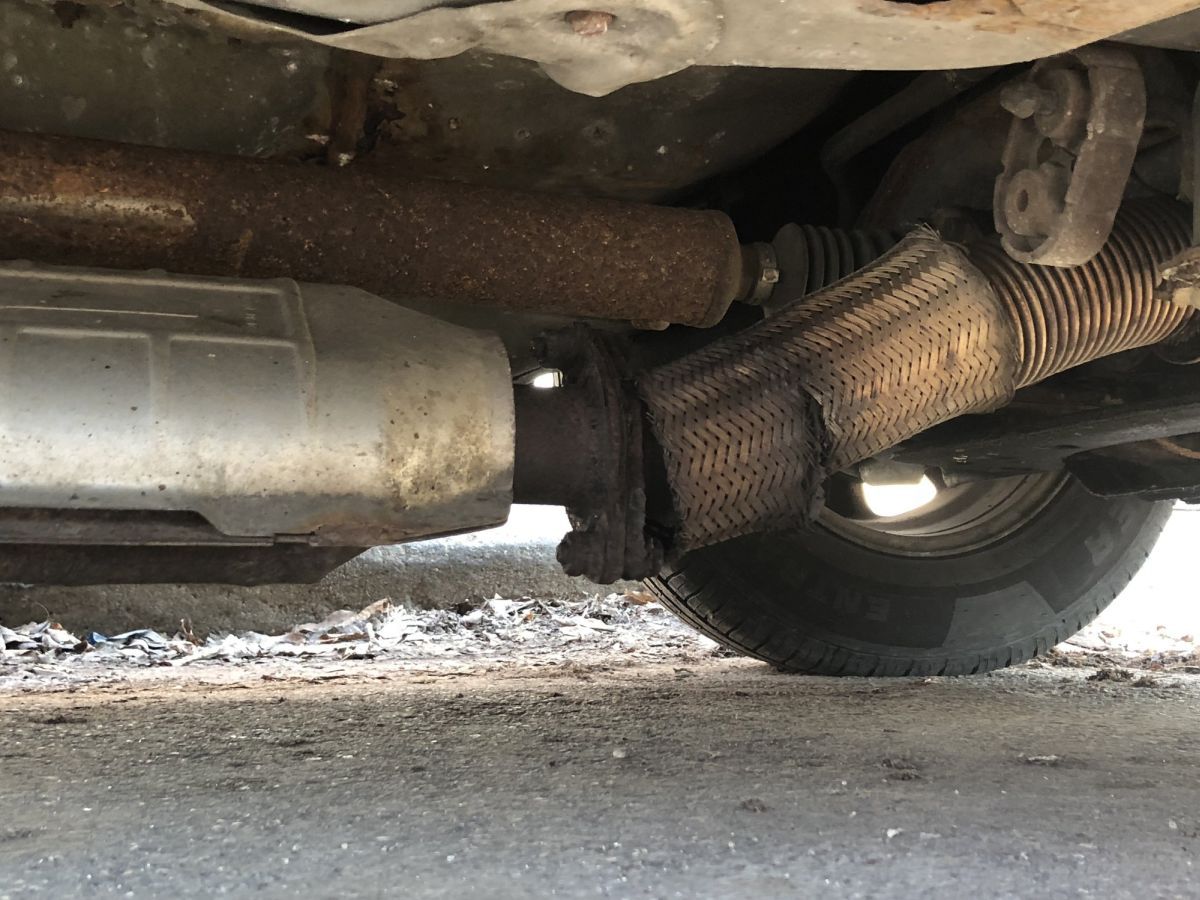
An exhaust leak occurs when exhaust gases escape from the exhaust system before reaching the intended outlet. The leak can develop in the exhaust manifold, manifold gasket, turbocharger connections, exhaust pipes, catalytic converter, flexible pipe, or muffler.
Some exhaust leaks produce only a noticeable change in sound, while others can cause loss of engine performance, increased fuel consumption, Check Engine Light, exhaust fumes inside the cabin, and potentially dangerous carbon monoxide exposure.
The location and size of the leak are important because an exhaust leak close to the engine can create very different symptoms from a small hole near the rear muffler.
What Does an Exhaust System Do?
The exhaust system collects combustion gases from the engine and carries them safely away from the vehicle.
Depending on the vehicle, it may include:
-
Exhaust manifold
-
Turbocharger exhaust housing
-
Exhaust manifold gasket
-
Downpipe
-
Flexible exhaust section
-
Catalytic converter
-
Oxygen sensors
-
Diesel particulate filter
-
Resonator
-
Muffler
-
Exhaust pipes
-
Tailpipe
The system also helps control emissions, reduce noise, and maintain the pressure and gas-flow characteristics expected by the engine.
Loud or Unusual Exhaust Noise
One of the most obvious symptoms of an exhaust leak is a change in exhaust sound.
A leak may produce:
-
Hissing
-
Ticking
-
Popping
-
Chuffing
-
Rattling
-
A deeper or louder exhaust note
A small leak near the exhaust manifold can sometimes sound like a rapid ticking noise, particularly during a cold start.
A larger hole in the exhaust pipe or muffler usually produces a noticeably louder exhaust sound.
Ticking Noise From the Engine Bay
A ticking sound coming from the front of the engine can indicate a leak around the exhaust manifold or its gasket.
This noise is often more noticeable immediately after starting the engine because the exhaust manifold and surrounding components are cold.
As the engine warms up, thermal expansion can change the size of the leak, causing the noise to become quieter or sometimes louder.
This symptom can easily be confused with:
-
Valve-train noise
-
Injector noise
-
Hydraulic lifter noise
-
Timing-chain noise
The location of the sound is therefore important.
Exhaust Smell
An exhaust leak can cause a noticeable exhaust smell around the vehicle.
If the leak is located near the engine compartment, gases may enter areas where they normally should not be present.
Exhaust gases should never be considered harmless simply because the smell is mild.
Modern exhaust systems can contain carbon monoxide and other harmful combustion products.
Exhaust Fumes Inside the Cabin
This is one of the most serious symptoms.
If exhaust gases enter the passenger compartment, occupants may experience:
-
Headache
-
Dizziness
-
Nausea
-
Fatigue
-
Confusion
Carbon monoxide is particularly dangerous because it is colorless and odorless.
Exhaust gases can enter the cabin through openings in the body, ventilation system, floor areas, or other paths, especially when the leak is located toward the front of the vehicle.
If exhaust fumes are entering the cabin, the vehicle should not be driven until the problem has been properly inspected.
Check Engine Light
An exhaust leak can sometimes trigger the Check Engine Light.
This is especially likely when the leak occurs before or near an oxygen sensor.
An oxygen sensor measures the oxygen content of the exhaust. If outside air is drawn into the exhaust system through a leak, the sensor may detect a condition that does not accurately represent the engine's actual air-fuel mixture.
This can lead to diagnostic trouble codes related to:
-
Oxygen sensor readings
-
Fuel mixture
-
Fuel trims
-
Catalyst efficiency
However, an exhaust-related fault code does not automatically mean that the oxygen sensor itself has failed.
P0171 or Lean Mixture Codes
A significant exhaust leak located upstream of an oxygen sensor can sometimes contribute to lean-mixture codes such as P0171.
The leak may allow outside air to enter the exhaust stream. The oxygen sensor can then report excess oxygen, potentially causing the engine control system to interpret the condition as lean.
This is why intake, fuel, and exhaust systems should all be considered when diagnosing a lean condition.
Increased Fuel Consumption
An exhaust leak can contribute to increased fuel consumption, particularly if it affects oxygen-sensor readings.
If the engine control module receives incorrect information about the exhaust oxygen content, it may adjust fuel delivery incorrectly.
However, increased fuel consumption has many other possible causes, including:
-
Faulty oxygen sensor
-
Dirty air filter
-
Fuel-system problems
-
Faulty injectors
-
Thermostat problems
-
MAF or MAP sensor problems
-
Ignition problems
An exhaust leak should therefore be confirmed rather than assumed.
Reduced Engine Performance
A small exhaust leak may have little effect on engine power.
A larger leak, particularly one near the exhaust manifold or turbocharger, can have a greater effect.
The driver may notice:
-
Poor acceleration
-
Reduced throttle response
-
Less power
-
Poor high-RPM performance
-
Increased turbo lag
On turbocharged engines, an exhaust leak before the turbocharger can be especially important because exhaust energy is used to drive the turbocharger turbine.
If exhaust gases escape before reaching the turbine, the turbocharger may not receive the expected amount of energy.
Turbocharged Engines and Exhaust Leaks
Exhaust leaks can be particularly important on turbocharged engines.
The turbocharger relies on exhaust-gas energy to spin its turbine. A leak between the exhaust manifold and turbocharger can reduce the amount of exhaust energy reaching the turbine.
Possible symptoms include:
-
Increased turbo lag
-
Lower boost pressure
-
Poor acceleration
-
Hissing or ticking sounds
-
Reduced engine power
-
Higher exhaust temperatures in some conditions
A leak after the turbocharger can still cause noise and emissions problems, but its effect on boost generation can be different.
Exhaust Leak Near the Oxygen Sensor
The location of an exhaust leak relative to the oxygen sensor matters greatly.
A leak upstream of the sensor can allow outside air into the exhaust stream and potentially alter sensor readings.
A leak farther downstream generally has less influence on the mixture calculation but can still create:
-
Excessive noise
-
Exhaust fumes
-
Emissions problems
-
Heat-related issues
This distinction is useful when diagnosing oxygen-sensor or fuel-trim fault codes.
Poor Engine Performance at Low RPM
Some exhaust leaks are particularly noticeable at idle or low engine speed.
You may hear a ticking or hissing sound that changes as the engine speed increases.
The engine itself may continue to run normally because a relatively small exhaust leak does not necessarily interfere with combustion.
This is why a vehicle can have an exhaust leak even when there is no obvious loss of power.
Popping or Backfiring Sounds
An exhaust leak can sometimes produce popping sounds, particularly during deceleration.
However, popping from the exhaust does not automatically mean the exhaust system itself is leaking.
Unburned fuel caused by:
-
Misfires
-
Ignition problems
-
Incorrect fueling
-
Valve-timing problems
can also enter the exhaust and create popping or afterfire.
The exhaust system should therefore be inspected alongside the engine-management system.
Black Soot Around an Exhaust Joint
A visible black or dark soot mark around an exhaust connection can be a useful clue.
Exhaust gases escaping from a joint can leave carbon deposits around:
-
Exhaust manifold connections
-
Flanges
-
Gaskets
-
Cracked pipes
-
Turbocharger connections
A soot trail does not always appear, particularly with small leaks, but when present it can help identify the source.
Exhaust Leak During Cold Start
A leak can sometimes be easier to detect immediately after starting a cold engine.
Cold metal contracts, which can increase gaps around:
-
Exhaust manifold cracks
-
Gaskets
-
Flanges
-
Pipe connections
As the exhaust system heats up, the metal expands and the leak may change.
If the ticking noise is strongest during the first few minutes after startup and then decreases, an exhaust manifold or gasket leak is worth investigating.
Can an Exhaust Leak Cause Engine Misfire?
An exhaust leak does not normally cause a true ignition or mechanical misfire by itself.
However, a leak near an oxygen sensor can affect oxygen readings and fuel control, potentially contributing to drivability problems.
It is also possible for a vehicle to have both an exhaust leak and a genuine engine misfire.
This distinction is important because replacing exhaust components will not fix a misfire caused by an ignition coil, spark plug, injector, compression problem, or valve issue.
Can an Exhaust Leak Damage the Catalytic Converter?
An exhaust leak itself does not necessarily destroy the catalytic converter.
However, an exhaust leak can be associated with conditions that affect catalyst operation.
For example, an engine misfire can send unburned fuel into the catalytic converter. The resulting excessive heat can damage or melt the catalyst substrate.
An exhaust leak near an oxygen sensor can also interfere with sensor readings and fuel control.
Therefore, if an exhaust leak is found together with a damaged catalytic converter, the underlying engine and fueling condition should also be investigated.
How Is an Exhaust Leak Diagnosed?
Diagnosis should begin with a visual and auditory inspection.
A technician may look for:
-
Cracks
-
Soot marks
-
Broken studs
-
Loose bolts
-
Damaged gaskets
-
Corroded pipes
-
Damaged flexible sections
-
Holes in the muffler
-
Cracked exhaust manifolds
-
Loose exhaust connections
The exhaust system can also be checked for escaping gases while the engine is running.
A smoke test can be particularly useful for finding small leaks that are difficult to hear or see.
On some vehicles, scan-tool data can also help determine whether an exhaust leak is affecting oxygen-sensor readings or fuel trims.
Can You Repair an Exhaust Leak?
The correct repair depends on where the leak is located and how badly the component is damaged.
Possible repairs include:
-
Replacing an exhaust gasket
-
Tightening or replacing fasteners
-
Replacing a flexible pipe
-
Welding a suitable crack
-
Replacing a damaged exhaust section
-
Replacing a cracked manifold
-
Repairing or replacing a damaged flange
A small hole in a suitable section of pipe may sometimes be repairable.
However, severely corroded or structurally damaged exhaust components are usually better replaced than repeatedly patched.
Is It Safe to Drive With an Exhaust Leak?
It depends on the location and severity of the leak, but an exhaust leak should not be ignored.
A small leak near the rear of the vehicle may initially cause mostly noise and emissions problems.
A leak near the engine or under the passenger compartment is more concerning because exhaust gases can enter the cabin.
If you smell exhaust inside the vehicle, notice severe exhaust noise, or suspect a major leak, the safest option is to stop driving and have the vehicle inspected.
Final Thoughts
The symptoms of an exhaust leak can range from a simple change in exhaust sound to serious drivability and safety problems.
Common symptoms include hissing or ticking noises, louder exhaust sound, exhaust smell, fumes inside the cabin, Check Engine Light, unusual fuel consumption, reduced performance, turbo lag, popping sounds, and soot around exhaust connections.
The exact location of the leak is critical. A leak near the exhaust manifold, turbocharger, or oxygen sensor can have a greater effect on engine operation than a small hole near the rear muffler.
Most importantly, exhaust fumes inside the passenger compartment should never be ignored. An exhaust system that is leaking should be properly diagnosed and repaired rather than simply masking the noise or symptoms.