TR
TR EN
EN

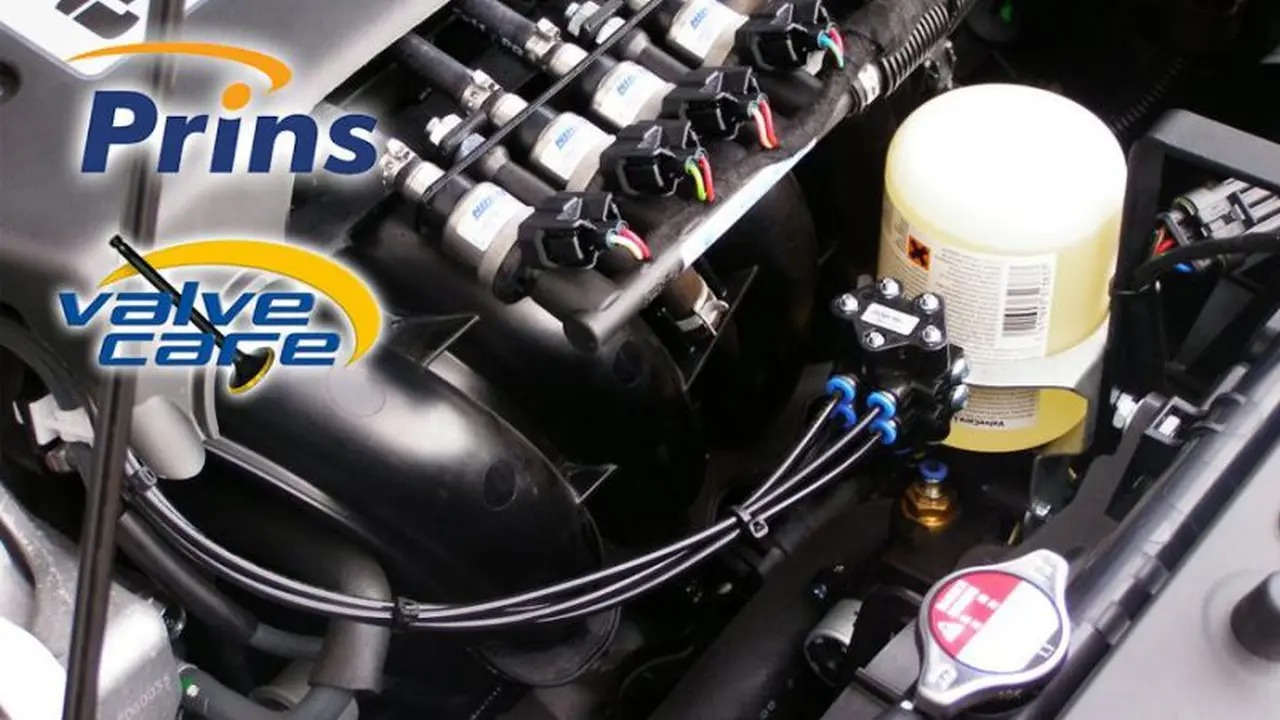
What Is the Prins ValveCare System?
Prins ValveCare is an electronically controlled additive dosing system designed to help reduce excessive and premature wear of valves and valve seats in certain gasoline engines running on LPG or CNG.
The system delivers a special ValveCare additive to the engine in controlled amounts according to operating conditions. It is primarily intended for engines that may be more sensitive to valve and valve-seat wear during long-term LPG or CNG operation.
One of the important features of ValveCare is that the additive is not simply delivered at a fixed rate. The system controls the dosage according to engine operating conditions, helping provide the appropriate amount of additive under different loads.
Why Is ValveCare Used?
LPG and CNG have different combustion characteristics from gasoline. In some engines, long-term operation on LPG or CNG can create conditions in which the valves and valve seats are more susceptible to wear.
This does not apply to every engine.
Engine design, valve-seat material, operating temperature, LPG calibration, engine load and driving conditions can all affect the risk of valve-seat wear.
As wear progresses, several problems may occur:
-
Changes in valve clearance
-
Rough idle
-
Misfires
-
Reduced engine performance
-
Increased fuel consumption
-
Check Engine Light
-
Loss of compression
-
Cylinder-head damage in advanced cases
The purpose of ValveCare is not to repair these problems after they occur, but to help reduce the risk of excessive valve and valve-seat wear in engines where additional protection may be beneficial.
How Does Prins ValveCare Work?
The ValveCare system uses an electronically controlled dosing mechanism.
Depending on the system generation, the main components include:
-
ValveCare additive reservoir
-
Electronic control system
-
Dosing components
-
Additive delivery lines
-
Electrical connections
-
Level monitoring system
When the vehicle operates on LPG or CNG, the system activates and delivers a controlled amount of ValveCare additive.
The dosing strategy is designed to take engine operating conditions into account. In this way, the system can provide different amounts of additive depending on how the engine is being used.
This makes ValveCare different from simple systems that continuously drip an additive into the intake at a fixed rate.
Where Is the ValveCare Additive Delivered?
The ValveCare fluid is delivered through the system's dedicated dosing mechanism and is integrated into the LPG/CNG conversion system.
The purpose is to ensure that the additive reaches the engine in a controlled manner during operation.
ValveCare fluid should not be added to:
-
Engine oil
-
Coolant
-
The LPG tank
-
The gasoline fuel tank
The additive is stored in its own reservoir and is delivered by the ValveCare system.
How Does ValveCare Help Protect the Valves?
The main purpose of ValveCare is to help reduce excessive wear on valves and valve seats.
Some engines can be more sensitive to valve-seat wear when operating on LPG or CNG for long periods. Controlled dosing of the ValveCare additive is intended to provide additional protection under these conditions.
However, ValveCare is a preventive support system, not a mechanical repair system.
If a valve is already burned or a valve seat is seriously worn, installing ValveCare will not restore the damaged components.
Does Every LPG Vehicle Need ValveCare?
No.
This is one of the most important points about the system.
Not every LPG-equipped vehicle necessarily requires ValveCare. Some engines are more sensitive to valve and valve-seat wear than others, and ValveCare is particularly useful in applications where additional protection is recommended.
The need for ValveCare should therefore be evaluated according to the specific engine.
Factors such as:
-
Valve and valve-seat design
-
Valve-seat material
-
LPG/CNG compatibility
-
Engine operating temperature
-
Driving conditions
-
Engine load
-
LPG calibration
-
Expected annual mileage
should all be considered.
Which Engines May Benefit More From ValveCare?
ValveCare may be particularly relevant to engines known to be more sensitive to valve and valve-seat wear when operated on LPG or CNG.
It can be worth considering for vehicles that are expected to run on LPG for many years, accumulate high mileage or frequently operate under high engine loads.
However, simply having a high-mileage engine or a turbocharger does not automatically mean that ValveCare is required.
The important question is how the particular engine responds to long-term LPG or CNG operation.
Can ValveCare Be Used on Turbocharged Engines?
Yes. ValveCare can be used with suitable turbocharged engine applications when the LPG/CNG system and ValveCare installation are properly configured.
Turbocharged engines can experience higher cylinder loads under boost, making correct fuel calibration and thermal management particularly important.
ValveCare may provide additional protection in applications where valve-seat wear is a concern, but having a turbocharger alone does not mean that ValveCare is mandatory.
What Is ValveCare-3?
ValveCare-3 is a newer generation of Prins ValveCare technology.
It is an electronically controlled dosing system designed for gasoline engines converted to LPG or CNG.
The system combines electronic control with a dedicated additive reservoir and dosing components to deliver the ValveCare fluid according to the operating requirements of the engine and fuel system.
ValveCare-3 has been developed for use with different types of gasoline injection systems, including applications involving MPI, DPI, DI and DI-MPI engines.
How Much ValveCare Fluid Is Used?
According to Prins system information, 1 liter of ValveCare additive is sufficient for approximately 1,000 liters of fuel under the specified operating conditions.
Actual consumption can vary depending on the system, engine and operating conditions.
The additive is consumed while the vehicle is operating with the LPG or CNG system according to the ValveCare dosing strategy.
What Happens When the ValveCare Fluid Runs Low?
The ValveCare system monitors the additive level.
When the fluid level becomes low, the system can provide a warning to the driver, depending on the ValveCare generation and LPG/CNG system configuration.
The exact warning behavior can differ between older ValveCare systems and newer ValveCare-3 installations.
The important point is that the additive reservoir should be refilled before it becomes empty.
Can Another Additive Be Used Instead of ValveCare Fluid?
It should not be.
ValveCare is designed to operate with its specified additive and dosing system.
Using an unrelated valve-protection additive in the ValveCare reservoir can affect the dosing system and its intended operation.
Different products should not be mixed with the original ValveCare fluid unless specifically approved for the system.
Can ValveCare Fluid Be Added to Engine Oil?
No.
ValveCare fluid is not an engine oil additive.
It must not be poured into the engine oil, coolant, LPG tank or gasoline tank.
The system has its own reservoir and dosing mechanism, which delivers the additive through the intended ValveCare installation.
Does ValveCare Replace Proper LPG Calibration?
Absolutely not.
Having ValveCare installed does not eliminate the need for correct LPG calibration.
The LPG system still needs:
-
Correct gas pressure
-
Proper injector selection
-
Correct injector operating times
-
Proper fuel mapping
-
Correct air-fuel mixture
-
Healthy sensors
-
A properly functioning ignition system
An excessively lean or excessively rich LPG mixture can create engine problems regardless of whether ValveCare is installed.
ValveCare should therefore never be used as a way to compensate for incorrect LPG calibration.
Does ValveCare Reduce Fuel Consumption?
No.
ValveCare is not a fuel-saving device.
Its purpose is to help protect valves and valve seats in suitable engines. It is not designed to increase fuel economy or engine efficiency.
In fact, because ValveCare fluid is consumed as part of the system's operation, the vehicle also uses a small amount of additive in addition to LPG or CNG.
Does ValveCare Increase Engine Power?
No.
ValveCare is not a performance upgrade.
Installing the system does not directly increase horsepower, torque or acceleration.
Its purpose is preventive protection rather than performance enhancement.
Can ValveCare Prevent Valve Adjustment?
No.
If a particular engine requires periodic valve-clearance inspection or adjustment, those maintenance procedures are still necessary.
ValveCare does not prevent valve clearances from changing over time.
For engines with mechanically adjustable valves, the manufacturer's recommended inspection and adjustment schedule should still be followed.
Can LPG Damage an Engine Without ValveCare?
There is no universal answer.
Some engines can operate on LPG for very high mileage without ValveCare and without significant valve-seat problems.
Other engines can be more sensitive to valve-seat wear under LPG or CNG operation.
Therefore, it is incorrect to say that every LPG engine will suffer damage without ValveCare.
At the same time, it is also incorrect to say that ValveCare is never useful.
The engine's specific design and its operating conditions should be evaluated.
Does ValveCare Repair Burned Valves?
No.
ValveCare cannot repair:
-
Burned valves
-
Severely worn valve seats
-
Low compression
-
Damaged valve guides
-
Cylinder-head damage
-
Existing mechanical engine faults
If these problems already exist, the engine must first be properly diagnosed and repaired.
For example, if an LPG vehicle develops a persistent misfire, compression loss or valve-clearance problem, installing ValveCare without identifying the mechanical cause will not solve the underlying fault.
How Is ValveCare Installed?
ValveCare is installed as part of the Prins LPG/CNG system.
Depending on the system generation, the installation involves components such as:
-
ValveCare reservoir
-
Electronic control system
-
Dosing components
-
Electrical wiring
-
Additive delivery lines
The system must be correctly integrated with the LPG/CNG conversion system so that dosing takes place under the intended operating conditions.
For this reason, ValveCare installation should not be viewed simply as fitting a bottle and connecting a hose.
Correct dosing and proper integration with the vehicle's fuel system are essential.
How Should ValveCare Be Maintained?
ValveCare maintenance is relatively straightforward, but several points should be checked regularly.
Check the additive level
The reservoir should not be allowed to remain empty.
Check the dosing system
The dosing mechanism should be inspected if a warning occurs or if the system does not appear to be operating correctly.
Inspect electrical connections
Wiring, connectors and electronic components can affect system operation.
Use the correct additive
Only the appropriate ValveCare fluid should be used.
Maintain the LPG/CNG system separately
ValveCare does not replace LPG/CNG filter replacement, regulator maintenance, injector inspection, pressure checks or calibration.
Is Prins ValveCare Really Necessary?
Whether ValveCare is necessary depends primarily on the specific engine and its sensitivity to valve and valve-seat wear.
If an engine is known to be more sensitive to valve-seat wear during long-term LPG or CNG operation, ValveCare can provide an additional layer of protection.
However, simply owning an LPG vehicle does not automatically make ValveCare mandatory.
The best approach is to consider the engine's design, its LPG/CNG compatibility, expected usage, operating conditions and the quality of the fuel-system installation and calibration.
What Is the Main Purpose of Prins ValveCare?
In simple terms, Prins ValveCare is an electronically controlled additive dosing system designed to help reduce excessive valve and valve-seat wear in certain gasoline engines operating on LPG or CNG.
Its main advantage is controlled dosing rather than simply adding a fixed amount of fluid continuously.
However, ValveCare is not a substitute for proper LPG calibration, regular maintenance or mechanical engine repairs. It cannot repair existing valve damage and it is not required for every LPG-equipped vehicle.
When used on an engine where additional valve and valve-seat protection is appropriate, and when combined with a correctly installed and calibrated LPG/CNG system, ValveCare can be a useful part of a long-term engine protection strategy.