TR
TR EN
EN

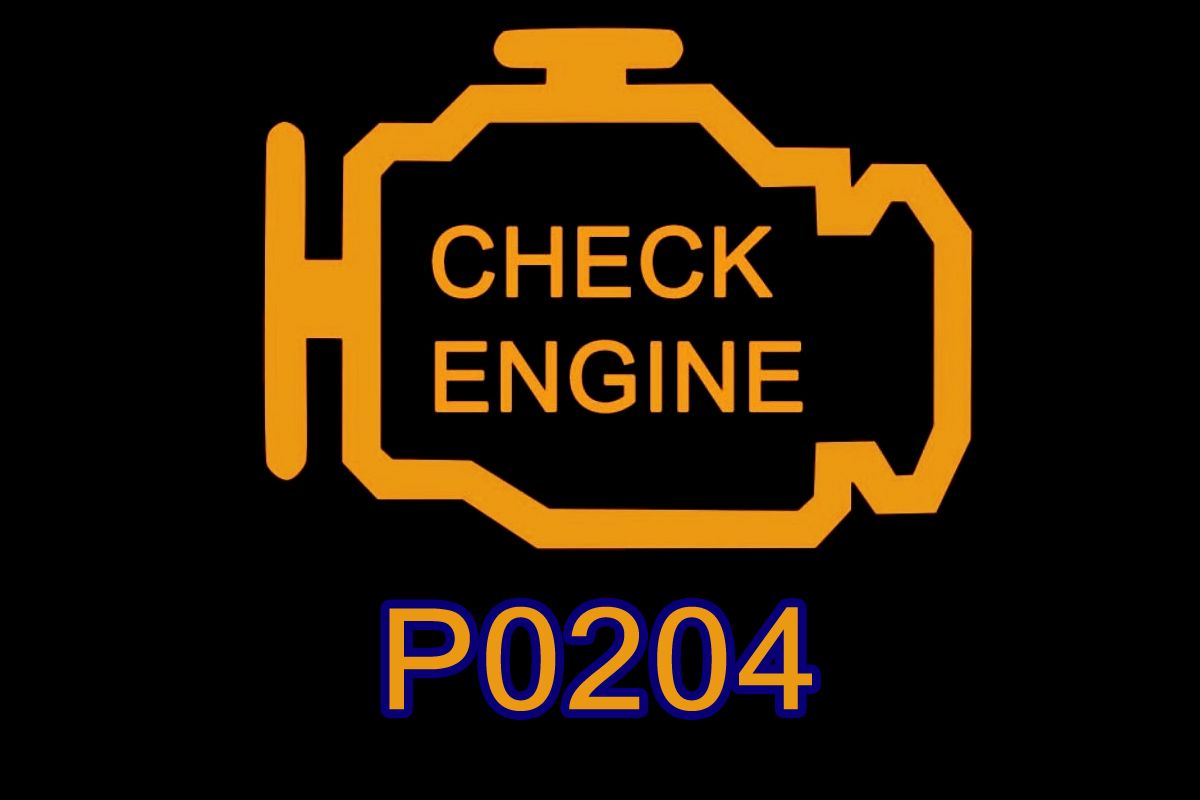
P0204 Cylinder 4 Injector Circuit Malfunction
P0204 is an OBD-II diagnostic trouble code indicating that the engine control module (ECM/PCM) has detected an abnormal electrical condition in the fuel injector circuit associated with cylinder 4.
The fuel injector is controlled electronically so the engine can receive the correct amount of fuel at the correct time. The ECM does not simply command the injector and forget about it. It also monitors the electrical response of the circuit.
When that response does not behave as expected, the ECM can store P0204 and illuminate the Check Engine Light.
Despite the wording of the code, P0204 does not automatically mean that the cylinder 4 injector needs to be replaced. The fault may be inside the injector, but it can also be caused by a connector, wiring harness, power supply, short circuit, open circuit, or the injector driver inside the ECM.
Understanding the “Injector Circuit” in P0204
The injector circuit is more than just the injector itself.
Depending on the engine, the circuit can include:
-
Cylinder 4 fuel injector
-
Injector electrical connector
-
Injector power supply
-
Injector control wire
-
Engine wiring harness
-
Shared injector power circuit
-
Fuse or relay
-
ECM/PCM injector driver
-
Relevant power and ground connections
During normal operation, the ECM controls the injector for a precisely calculated period.
If the electrical current, voltage, switching behavior, or circuit response is outside the expected range, the ECM can recognize a malfunction.
The word “malfunction” makes P0204 a relatively broad code. It does not specifically tell you that the circuit is low, high, open, or intermittent.
Cylinder 4 Does Not Always Mean the Fourth Injector You See
Cylinder numbering is determined by the engine manufacturer.
On a four-cylinder inline engine, cylinder 4 is generally straightforward to identify. On V6, V8, V10, and V12 engines, however, cylinder numbering can vary between manufacturers.
This means the physical location of cylinder 4 should be confirmed using the vehicle's service information rather than relying on a general cylinder-numbering assumption.
The same applies when tracing the wiring harness to the injector.
What Can Trigger P0204?
A number of electrical and component-related problems can cause this code.
A faulty fuel injector
The internal electrical element of the cylinder 4 injector may be damaged.
An injector can develop an open circuit, an internal short, or an electrical characteristic that no longer matches the expected range.
Mechanical injector problems such as sticking or restricted flow can also affect engine operation, although a purely mechanical problem does not necessarily produce an injector circuit code.
Damaged injector wiring
The wiring harness operates in a difficult environment.
Engine heat, vibration, oil, moisture, and contact with surrounding components can damage the wires.
A conductor can break internally while the outside insulation still looks completely normal.
Loose or damaged connector
The connector at the cylinder 4 injector can develop:
-
Corrosion
-
Loose terminals
-
Bent pins
-
Poor terminal tension
-
Water contamination
-
Oil contamination
-
Broken locking tabs
-
Terminals pushed backward
An intermittent connection can be especially difficult to diagnose because the injector may work normally at one moment and fail at another.
Open circuit
A broken wire, disconnected connector, damaged terminal, or internally open injector can interrupt the electrical path.
Short circuit
The injector control circuit can potentially short to ground, battery voltage, another circuit, or another injector circuit depending on the vehicle's electrical architecture.
Shared power supply problem
Several injectors may receive power from a common circuit.
If that common supply has a problem, multiple injector-related codes may appear at the same time.
ECM injector driver problem
The ECM contains electronic drivers that switch and control the injectors.
A damaged driver can cause P0204, although the ECM should generally be investigated only after the injector and external wiring have been properly tested.
What Does the Driver Usually Notice?
P0204 can produce different symptoms depending on what has happened to the circuit.
Possible symptoms include:
-
Check Engine Light
-
Rough idle
-
Engine vibration
-
Misfire
-
Hesitation
-
Poor acceleration
-
Reduced engine power
-
Increased fuel consumption
-
Difficult starting
-
Engine stalling
-
Limp-home mode
-
Unstable engine operation
-
Increased exhaust emissions
If the cylinder 4 injector stops operating completely, cylinder 4 may receive little or no fuel.
The engine can then run as though one cylinder has stopped contributing properly to combustion.
On a four-cylinder engine, this can be particularly obvious because losing one cylinder represents a significant portion of the engine's total combustion events.
Why P0204 Can Produce a Misfire
An injector circuit problem can directly affect combustion.
If the ECM cannot activate the injector correctly, the cylinder may not receive enough fuel.
If the injector is stuck open or receives an incorrect control signal, excessive fuel may enter the cylinder instead.
Both conditions can disturb the air-fuel mixture.
This can result in:
-
Misfire
-
Rough running
-
Poor acceleration
-
Increased emissions
-
Fuel smell
-
Reduced fuel economy
P0204 may therefore appear alongside a cylinder 4 misfire code.
However, these codes should not be treated as identical.
P0204 describes an injector circuit problem.
A cylinder 4 misfire code describes a combustion problem.
The injector circuit fault may be responsible for the misfire, but other ignition, fuel, compression, valve, or timing problems can also create a cylinder 4 misfire.
Start With the Complete Code Picture
A useful diagnosis begins by looking at everything the ECM has reported.
Scan for:
-
Stored codes
-
Pending codes
-
Misfire codes
-
Other injector circuit codes
-
Fuel-pressure codes
-
Engine voltage-related codes
-
Communication or power-supply codes
The pattern can be more informative than P0204 alone.
If P0204 is the only injector circuit code, the problem may be isolated to cylinder 4.
If several injector circuit codes appear together, a shared electrical supply, harness, fuse, relay, or power/ground problem deserves closer attention.
Check the Conditions When P0204 Appeared
Freeze-frame data can show what the engine was doing when the ECM detected the fault.
Useful parameters include:
-
Engine RPM
-
Engine load
-
Coolant temperature
-
Vehicle speed
-
Battery voltage
-
Fuel-system status
Suppose P0204 appears only when the engine is hot. Heat-sensitive wiring or a connector problem becomes more plausible.
If it appears when the engine is vibrating heavily or during acceleration, harness movement may be relevant.
An intermittent fault should not be dismissed simply because the injector works normally while the vehicle is stationary.
Inspect the Cylinder 4 Connector
The injector connector is one of the simplest places to begin.
With the appropriate ignition and safety procedures followed, inspect the connector carefully.
Look for:
-
Corrosion
-
Bent terminals
-
Loose terminals
-
Damaged locking mechanisms
-
Moisture
-
Oil
-
Broken wires near the connector
-
Terminals that have moved backward inside the housing
The wiring immediately behind the connector deserves particular attention.
Repeated engine movement can stress the wires at this point.
Follow the Wiring Harness
Trace the cylinder 4 injector wiring through the engine bay.
Pay attention to areas where the harness is close to:
-
Exhaust components
-
Sharp brackets
-
Moving engine components
-
High-temperature surfaces
-
Other wiring
-
Areas previously repaired
A wire can sometimes develop an internal break without obvious external damage.
A harness that changes condition when moved or warmed up can create an intermittent P0204.
Test the Injector Correctly
The injector should be tested according to the manufacturer's specifications.
On a conventional gasoline port-injection system, electrical resistance can be a useful part of the diagnosis.
But resistance should not be treated as a universal test.
Different injection systems use different technologies, including:
-
Conventional gasoline solenoid injectors
-
Gasoline direct injectors
-
Diesel common-rail injectors
-
Other electronically controlled injector designs
Their electrical characteristics can be very different.
For that reason, there is no universal injector resistance or voltage specification for P0204.
The correct values and testing procedure should come from the specific vehicle or injector manufacturer.
Comparing Cylinder 4 With Other Injectors
When the system allows it, comparison testing can be particularly helpful.
A technician can compare cylinder 4's injector electrical characteristics with another injector of the same type.
On some vehicles, the injector can also be swapped with another cylinder as a diagnostic procedure.
If the problem follows the injector, the injector becomes a much stronger suspect.
For example, if a fault originally associated with cylinder 4 appears on another cylinder after a proper injector swap, the injector itself may be responsible.
However, this procedure should not be performed blindly.
Some modern injectors require coding, calibration, flow classification, new seals, or specific installation procedures.
High-pressure gasoline and diesel injection systems also require appropriate safety precautions.
Checking the Injector Control Signal
If the injector itself appears to be healthy, attention should move toward the control circuit.
A technician may use an oscilloscope, current probe, or other appropriate diagnostic equipment to examine the injector signal while the engine is operating.
This can reveal:
-
Missing control pulses
-
Abnormal current
-
Electrical dropouts
-
Short-circuit behavior
-
Driver abnormalities
-
Intermittent operation
This type of testing is particularly valuable when a basic resistance or continuity check appears normal.
Why Continuity Does Not Prove the Circuit Is Good
A wire can pass a simple continuity test and still fail during actual engine operation.
For example, a conductor may have enough contact to show continuity with a multimeter but become unstable when:
-
The engine moves
-
The harness vibrates
-
Temperature increases
-
Electrical load is applied
This is why difficult injector circuit faults sometimes require dynamic testing rather than a simple resistance measurement.
Could Low Fuel Pressure Cause P0204?
Low fuel pressure can certainly cause poor engine performance and misfires, but it is not the same thing as an injector circuit malfunction.
P0204 primarily concerns the electrical control of the cylinder 4 injector.
If fuel pressure is low, the engine may run poorly even though the injector circuit is electrically healthy.
Conversely, an electrically faulty injector circuit can exist while overall fuel pressure is normal.
If other fuel-system codes are present, both systems should be investigated separately.
This distinction is particularly important on gasoline direct-injection and diesel common-rail systems, where fuel pressures can be extremely high.
What If the Injector Works but P0204 Returns?
This is where intermittent faults become important.
If the injector passes a bench or static electrical test but P0204 returns during driving, the problem may be related to:
-
Harness movement
-
Connector terminal tension
-
Engine temperature
-
Vibration
-
Electrical interference
-
Shared power supply
-
Intermittent short
-
Intermittent open circuit
-
ECM driver behavior
In such cases, reproducing the conditions that trigger the code can be more useful than repeatedly replacing parts.
When Should the ECM Be Suspected?
The ECM can cause P0204 if its injector driver has failed.
However, replacing the ECM should normally be a last-stage diagnostic decision.
Before blaming the control module, the technician should verify:
-
Injector condition
-
Connector condition
-
Wiring integrity
-
Power supply
-
Control circuit
-
Short-to-ground or short-to-power conditions
-
ECM power and grounds
-
Injector control waveform
If all external components and circuits are confirmed to be correct and the ECM output is still abnormal, the injector driver becomes a credible suspect.
An ECM replacement may also require programming, configuration, immobilizer procedures, and other vehicle-specific setup.
P0204 on Different Injection Systems
The basic meaning of P0204 remains the same, but the hardware behind it can vary considerably.
On a traditional gasoline engine, the injector may be a relatively simple solenoid controlled by the ECM.
Gasoline direct injection uses more sophisticated injectors and significantly higher fuel pressures.
Diesel common-rail systems use high-pressure injectors with very precise electronic control. Injector correction values or coding may be required after replacement.
Therefore, the correct P0204 diagnostic procedure depends on the actual engine and injection system rather than the DTC alone.
Can You Drive With P0204?
A vehicle with P0204 may still start and move, but that does not mean the problem should be ignored.
If the engine is running smoothly and the Check Engine Light is steady, a short drive to a repair facility may sometimes be possible.
Driving should be minimized if the engine has:
-
Severe shaking
-
A major misfire
-
Flashing Check Engine Light
-
Significant power loss
-
Strong fuel odor
-
Heavy smoke
-
Repeated stalling
A severe misfire can send unburned fuel into the exhaust system and overheat or damage the catalytic converter.
If an injector is stuck open, excessive fuel can also create additional engine problems.
How P0204 Is Repaired
The repair depends on what testing reveals.
Possible repairs include:
-
Replacing the cylinder 4 injector
-
Repairing damaged injector wiring
-
Replacing the injector connector
-
Repairing loose or corroded terminals
-
Restoring the injector power supply
-
Repairing an open circuit
-
Repairing a short circuit
-
Correcting a shared injector power problem
-
Repairing the ECM injector driver
-
Programming or coding the injector when required
-
Programming or replacing the ECM when properly confirmed
After the repair, the DTC should be cleared and the vehicle tested.
The technician should verify that cylinder 4 is contributing normally and that P0204 does not return.
P0204 Should Be Diagnosed as a Circuit, Not a Guess
P0204 tells you that the ECM has detected abnormal electrical behavior in the cylinder 4 injector circuit.
It does not tell you which physical component has failed.
The most reliable approach is to work through the circuit methodically: confirm cylinder identification, inspect the injector and connector, examine the harness, verify power and control signals, test the injector, and evaluate the ECM driver only after the external circuit has been proven healthy.
That process can distinguish a failed injector from something as simple as a loose terminal or damaged wire—and can prevent unnecessary parts replacement.