TR
TR EN
EN

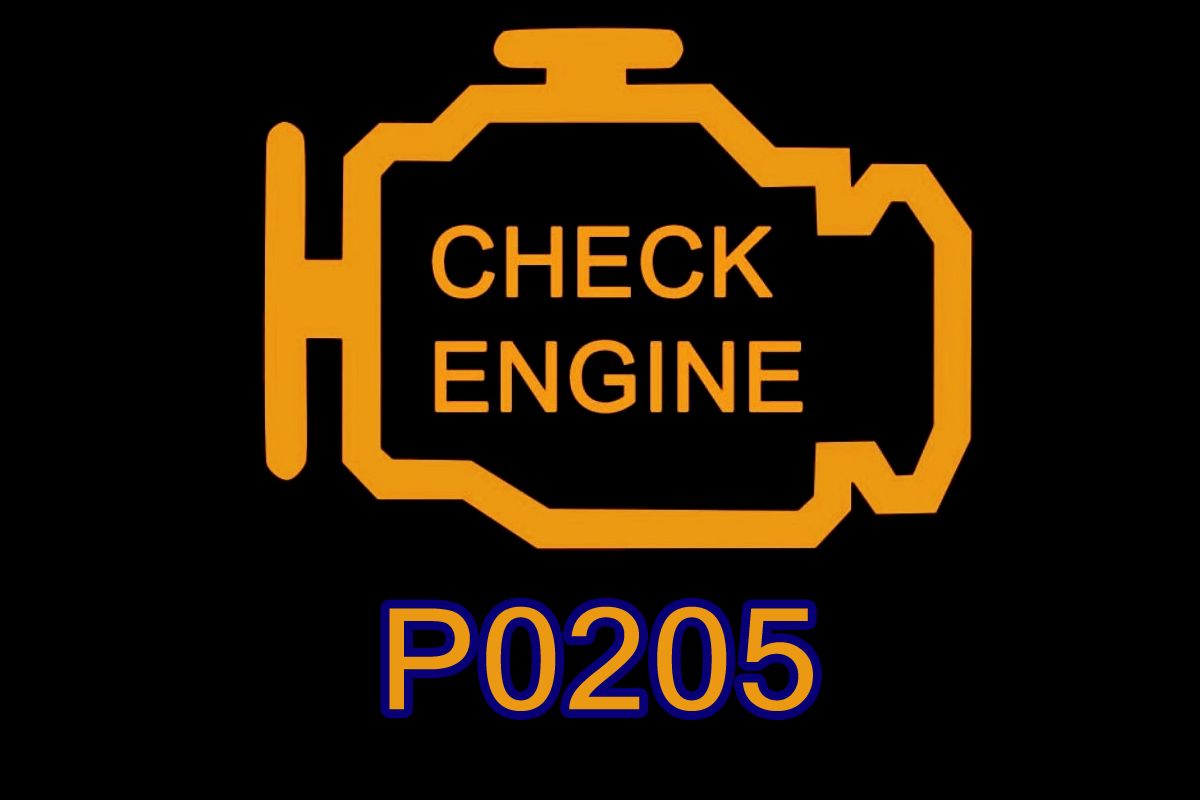
P0205 Cylinder 5 Injector Circuit Malfunction
P0205 is an OBD-II diagnostic trouble code indicating that the engine control module (ECM) has detected an abnormal electrical condition in the fuel injector circuit for cylinder 5.
The code sounds as though it identifies a bad injector, but that interpretation is too narrow.
P0205 is a circuit malfunction code. The cylinder 5 injector may be defective, but the actual fault can also be found in the injector connector, wiring harness, power supply, control circuit, ECM connector, or injector driver.
That distinction is the starting point for diagnosing this code correctly.
Think of P0205 as a Broken Electrical Chain
The ECM has to control the injector precisely. It must provide the appropriate electrical command and monitor the resulting circuit behavior.
A simplified way of looking at the system is:
ECM → injector control wiring → connector → injector → electrical return/power circuit
The exact arrangement varies between engines.
If any part of this chain behaves abnormally, the ECM can recognize the problem and store P0205.
Therefore, the diagnostic question should not simply be:
“Is cylinder 5 injector bad?”
A better question is:
“Where in the cylinder 5 injector circuit is the electrical behavior no longer correct?”
What P0205 Does Not Tell You
P0205 does not directly tell you:
-
How much fuel the injector is delivering
-
Whether the injector nozzle is clogged
-
Whether cylinder 5 has low compression
-
Whether cylinder 5 is mechanically damaged
-
Whether the ECM itself is faulty
-
Whether the injector is permanently or intermittently disconnected
It only tells you that the ECM has detected an abnormality associated with the cylinder 5 injector circuit.
This is why replacing the injector immediately can be an expensive mistake.
Cylinder 5 Must Be Identified Correctly
Cylinder numbering is manufacturer-specific.
This becomes especially important on V6, V8, V10, V12, and other multi-cylinder engines.
The physical location of cylinder 5 should be confirmed using the manufacturer's service information rather than assuming that it is simply the fifth cylinder from one end.
Before testing the circuit, identify:
-
Cylinder 5
-
Cylinder 5 injector
-
Injector connector
-
Injector power supply
-
Injector control wire
-
ECM connector pin
-
Related fuse or relay
A mistake at this stage can result in diagnosing the wrong injector.
Symptoms You May Experience
P0205 can produce anything from a barely noticeable drivability problem to a severe engine-running issue.
Possible symptoms include:
-
Check Engine Light
-
Rough idle
-
Engine vibration
-
Misfire
-
Hesitation
-
Poor acceleration
-
Reduced engine power
-
Increased fuel consumption
-
Hard starting
-
Extended cranking
-
Engine stalling
-
Limp mode
-
Uneven engine operation
If cylinder 5 receives no fuel because its injector has completely lost electrical control, the cylinder may effectively stop contributing to engine power.
Common Causes Behind P0205
There is no single component that causes every P0205.
Cylinder 5 injector failure
The injector itself can develop an internal electrical fault.
Depending on the design, this could involve:
-
An open internal circuit
-
An internal short
-
Damaged coil
-
Internal electronic failure
Injector connector problem
The connector may have:
-
Corrosion
-
Loose terminals
-
Poor terminal tension
-
Bent pins
-
Water contamination
-
Oil contamination
-
Broken locking mechanism
-
Terminals pushed backward
A connector problem can be particularly difficult when the fault is intermittent.
Damaged wiring
The wiring harness can suffer from:
-
Chafing
-
Heat damage
-
Vibration
-
Oil exposure
-
Previous repair damage
-
Rodent damage
-
Broken conductors
A wire can appear intact externally while being partially broken internally.
Open circuit
An interruption anywhere between the injector and its power or control source can prevent normal injector operation.
Short circuit
The injector control circuit can potentially short to ground, battery voltage, or another circuit.
The exact electrical result depends on the vehicle's injector-control architecture.
Shared injector power problem
Some engines supply multiple injectors through a common power circuit.
A fuse, relay, connection, or shared wire failure can therefore affect multiple injectors.
ECM driver problem
The ECM contains electronic drivers that control the injectors.
If the external circuit is proven correct, an internal driver failure becomes possible.
However, the ECM should not be condemned until the external circuit has been thoroughly tested.
Start With a Complete Scan
The first step should be a full diagnostic scan.
Record:
-
Stored codes
-
Pending codes
-
Freeze-frame information
-
Misfire information
-
Fuel-pressure-related codes
-
Other injector codes
-
Engine synchronization codes
-
Low-voltage codes
The other codes can change the entire diagnostic direction.
For example, P0205 by itself suggests a cylinder-specific circuit problem.
P0205 accompanied by P0201, P0203, P0207, or other injector circuit codes suggests that a shared electrical supply or harness problem deserves immediate attention.
Freeze-Frame Data Can Be Extremely Valuable
Look at the operating conditions under which P0205 was stored.
Useful parameters may include:
-
Engine RPM
-
Engine load
-
Coolant temperature
-
Vehicle speed
-
Battery voltage
-
Fuel pressure
A fault occurring only after the engine becomes hot suggests a different diagnostic direction from a fault that occurs immediately after starting.
Likewise, a code that appears specifically during acceleration may point toward wiring movement, vibration, or an injector that fails under increased operating demand.
Inspect the Cylinder 5 Connector
Before reaching for expensive components, inspect the connector carefully.
Look for physical damage and contamination.
Pay particular attention to the terminals.
A connector can look perfectly normal while a terminal inside has lost enough tension to create an intermittent connection.
If the connector is loose or the terminals move excessively, the connector itself may be the cause.
Check the Injector Power Circuit
The exact circuit arrangement depends on the engine.
Some injectors receive a common power feed while the ECM controls the other side.
Other systems use high-side control, low-side control, or more sophisticated current-control strategies.
Because of this, there is no universal injector voltage specification that can safely be applied to every engine.
The correct wiring diagram and manufacturer specifications should determine:
-
Expected supply voltage
-
Control strategy
-
Ground/reference arrangement
-
Driver behavior
-
Test points
Test the Wiring, Not Just Continuity
One of the most common diagnostic mistakes is relying exclusively on a continuity test.
A damaged wire can show continuity with a multimeter but still have excessive resistance when the circuit is operating.
For this reason, the technician should consider:
-
Voltage-drop testing
-
Resistance testing under appropriate conditions
-
Short-to-ground testing
-
Short-to-voltage testing
-
Dynamic harness testing
The goal is to establish that the circuit can actually carry and control the required electrical load.
Pay Attention to Harness Movement
Intermittent P0205 faults often become easier to understand when the harness is observed while the engine is running.
Engine movement during acceleration can pull the wiring.
Heat can change the resistance or physical condition of a damaged conductor.
Vibration can cause a weak terminal to lose contact momentarily.
Inspect areas around:
-
Cylinder 5 injector
-
Engine harness branches
-
Brackets
-
Exhaust components
-
Hot surfaces
-
Harness retaining clips
-
ECM connectors
A wire rubbing against a bracket can eventually create an intermittent injector circuit fault.
Test the Injector Itself
Once the wiring and power supply have been verified, the injector should be evaluated.
Depending on the application, tests may include:
-
Injector resistance
-
Current-draw measurement
-
Electrical activation
-
Oscilloscope testing
-
Injector balance testing
-
Fuel delivery testing
-
Return-flow testing on applicable diesel systems
Resistance is useful, but it should not be treated as a complete injector health test.
An injector can have normal resistance and still have:
-
Mechanical sticking
-
Restricted flow
-
Poor spray pattern
-
Internal leakage
-
A temperature-dependent electrical fault
Compare the Injector Electrical Signal
An oscilloscope can be particularly useful when the basic tests do not reveal the cause.
The electrical pattern of cylinder 5 can be compared with a known-good injector.
Depending on the system, waveform analysis may reveal:
-
Open circuit
-
Short circuit
-
Abnormal current rise
-
Abnormal current decay
-
Driver problems
-
Inconsistent injector activation
This can help determine whether the problem is located at the injector or further upstream in the control circuit.
P0205 and Engine Misfire
If cylinder 5's injector is not being controlled correctly, a misfire can occur.
The ECM may therefore store P0205 together with a cylinder 5 misfire code.
However, the presence of a misfire does not prove that the injector is mechanically defective.
Other possibilities include:
-
Ignition failure
-
Low compression
-
Valve problems
-
Intake leaks
-
Fuel-pressure problems
-
Timing problems
-
Variable valve timing problems
-
Mechanical engine damage
P0205 specifically directs attention toward the injector's electrical circuit.
When P0205 Is Intermittent
An intermittent P0205 can be more difficult than a permanent failure.
The vehicle may run normally for days and then suddenly develop a rough idle or Check Engine Light.
Possible causes include:
-
Loose connector terminal
-
Partially broken wire
-
Harness movement
-
Heat expansion
-
Water intrusion
-
Corrosion
-
Injector internal fault
-
ECM connector problem
In these cases, freeze-frame data and dynamic testing become particularly important.
The objective is to reproduce the conditions under which the ECM detected the fault.
What If the Injector Tests Normally?
This does not eliminate the injector circuit as a suspect.
Imagine that cylinder 5's injector measures within specification when the engine is cold.
The vehicle is then driven until the engine reaches full operating temperature.
P0205 returns.
A static resistance measurement performed in the workshop may never reveal the problem.
The injector may have a temperature-dependent internal failure, or the wiring may change behavior as the engine compartment heats up.
This is why difficult electrical faults often require testing under actual operating conditions.
Multiple Injector Codes Are a Major Clue
If P0205 appears together with multiple injector circuit codes, think about what those circuits have in common.
Potential common points include:
-
Injector fuse
-
Injector relay
-
Shared power feed
-
Common ground
-
Engine harness
-
ECM power supply
-
ECM connector
-
Low system voltage
It is much less logical to assume that several injectors independently failed at exactly the same time.
Gasoline and Diesel Systems Need Different Procedures
Injector electrical systems vary considerably.
A gasoline injector may use a conventional electromagnetic coil and a relatively straightforward control strategy.
A modern diesel common-rail injector can require much more sophisticated current and voltage control.
Consequently, the testing procedure must be matched to the specific engine.
Do not apply battery voltage directly to the injector unless the manufacturer's procedure specifically calls for it.
An incorrect test can damage the injector or the ECM injector driver.
Could Low System Voltage Be Responsible?
Low battery or charging voltage can interfere with electronic control systems.
If P0205 appears together with several unrelated electrical codes, check:
-
Battery voltage
-
Charging system
-
Battery terminals
-
Engine grounds
-
ECM power supply
However, if P0205 repeatedly affects only cylinder 5 while system voltage is stable, a cylinder-specific injector circuit problem becomes more likely.
Could the ECM Be Faulty?
Yes, but the ECM should generally be the final suspect rather than the first.
An internal injector driver can fail and prevent the ECM from controlling cylinder 5 correctly.
Before replacing the ECM, prove that:
-
The injector is within specification
-
Injector power is correct
-
Control wiring is intact
-
There are no unwanted shorts
-
Voltage drop is acceptable
-
Injector connector terminals are sound
-
ECM power and grounds are correct
-
ECM connector terminals are not damaged
Only after these checks should an ECM driver fault become a serious conclusion.
A Diagnostic Example From the Workshop
Consider a vehicle with P0205, rough idle, and an occasional Check Engine Light.
The technician measures the cylinder 5 injector and finds a normal resistance value.
The connector also looks clean.
Instead of replacing the injector, the technician monitors the injector circuit while moving the harness.
The fault suddenly appears when the harness is moved near a mounting bracket.
Inspection reveals that the control wire has been rubbing against the bracket for a long period. Several strands inside the conductor are damaged.
At idle, the remaining strands maintain electrical contact.
When the engine moves under acceleration, the damaged section opens momentarily.
The ECM detects the abnormal circuit behavior and stores P0205.
The injector was good.
The real problem was the wiring.
How P0205 Should Be Repaired
The repair depends on the test results.
Possible repairs include:
-
Replacing the cylinder 5 injector
-
Repairing damaged wiring
-
Replacing the injector connector
-
Repairing loose terminals
-
Restoring injector power
-
Repairing a shorted control circuit
-
Repairing the engine harness
-
Correcting an ECM connector problem
-
Repairing or replacing the ECM after confirming an internal driver failure
After the repair, clear the DTC and verify the vehicle under the operating conditions that originally produced the fault.
A final scan should confirm that P0205 does not return.
Final Diagnosis
P0205 – Cylinder 5 Injector Circuit Malfunction means the ECM has detected an abnormal electrical condition in the circuit controlling the cylinder 5 injector.
It does not, by itself, prove that the injector has failed.
The correct diagnosis should move through the complete circuit:
Identify cylinder 5 → inspect the connector → verify power → test the control circuit → perform voltage-drop checks → inspect the harness dynamically → test the injector → compare injector signals if necessary → evaluate the ECM driver last.
The key principle is:
P0205 is a circuit diagnosis, not an automatic injector replacement instruction.
A damaged wire, loose terminal, corroded connector, shared power problem, or ECM driver fault can produce the same code as a defective injector.