TR
TR EN
EN

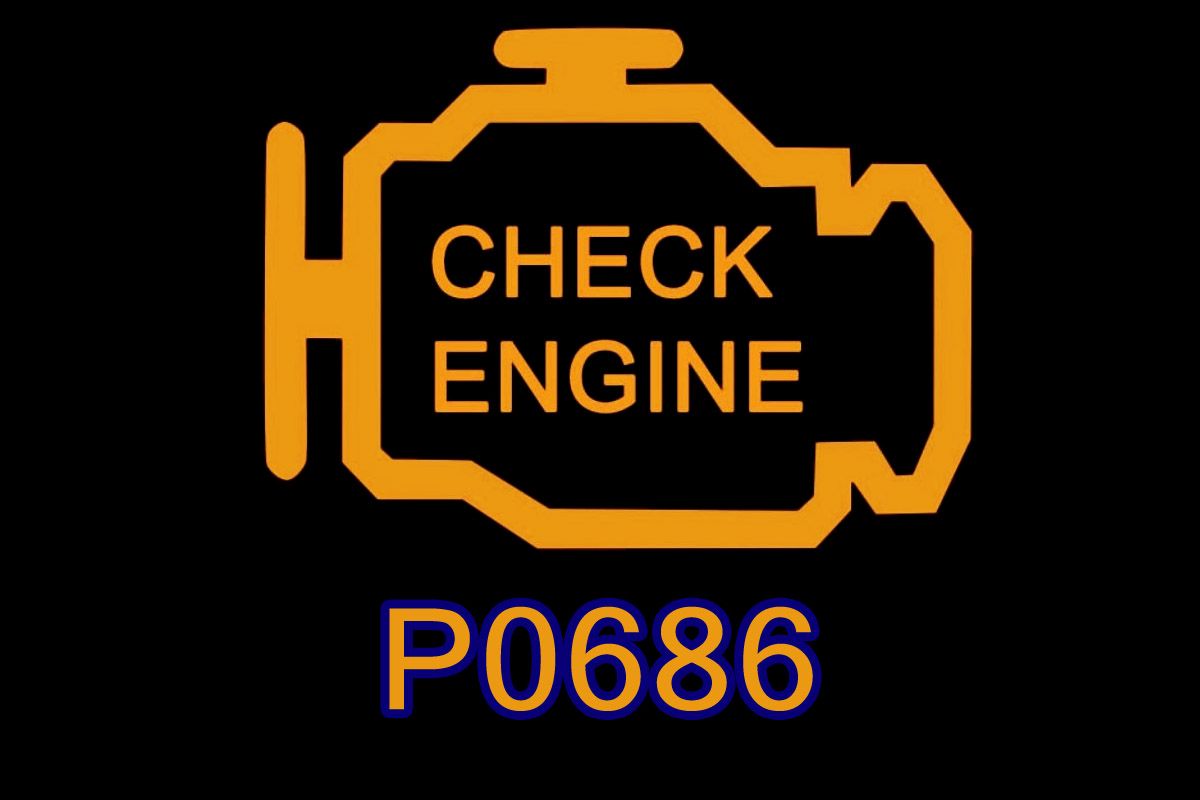
P0686 ECM/PCM Power Relay Control Circuit Low
The P0686 trouble code is a generic OBD-II diagnostic trouble code related to the electrical control circuit of the ECM/PCM power relay.
P0686 – ECM/PCM Power Relay Control Circuit Low
This code means that the ECM/PCM has detected an unexpectedly low voltage or electrical condition in the control circuit used to operate the ECM/PCM power relay.
The ECM/PCM requires a stable electrical power supply to control the engine. A power relay is used to switch battery voltage to the ECM/PCM and, depending on the vehicle, to other engine-management components.
When the control module commands the power relay and monitors its control circuit, it expects to see a particular electrical response. If the control signal is lower than expected, the module can store P0686.
It is important to understand that P0686 does not automatically mean the ECM/PCM itself is defective. The problem can be caused by the relay, wiring, fuse box, ignition circuit, connectors, power supply or a short to ground.
What Does P0686 Mean?
P0686 can be understood as:
P = Powertrain
0 = Generic OBD-II code
6 = Computer output/control-related fault
86 = ECM/PCM power relay control circuit low
The key phrase is:
ECM/PCM Power Relay Control Circuit Low
In simple terms:
The ECM/PCM is detecting a lower-than-expected electrical signal in the circuit that controls its power relay.
What Does "Circuit Low" Mean?
The word Low refers to the electrical signal in the relay control circuit.
It does not necessarily mean:
-
The battery is completely dead
-
The ECM/PCM has failed
-
The relay output voltage is low
-
The engine has low power
It specifically means that the control module has detected a lower-than-expected electrical condition in the relay control circuit.
Depending on the vehicle's design, possible causes include:
-
Short to ground
-
Faulty relay
-
Damaged control wire
-
Corroded connector
-
Poor electrical connection
-
Incorrect relay
-
Faulty ignition circuit
-
PCM driver problem
What Is the ECM/PCM Power Relay?
The ECM/PCM power relay is an electrically controlled switch that supplies power to the engine control module.
It may be called:
-
ECM Power Relay
-
PCM Power Relay
-
ECU Power Relay
-
Engine Control Relay
-
Main Relay
-
EFI Main Relay
The relay allows the control module to control a high-current power circuit using a relatively low-current control signal.
Depending on the vehicle, the relay may supply power to:
-
ECM/PCM
-
Fuel injectors
-
Ignition components
-
Sensors
-
Solenoids
-
Emissions components
-
Other engine-management circuits
The exact circuits supplied by the relay vary by vehicle.
Symptoms of P0686
Possible symptoms include:
-
Check Engine Light
-
Engine may not start
-
Intermittent starting problems
-
Engine stalling
-
Engine shutting off unexpectedly
-
Loss of communication with the ECM/PCM
-
Multiple warning lights
-
Random diagnostic trouble codes
-
Rough engine operation
-
Intermittent loss of engine control
-
Electrical problems that appear and disappear
In some cases, the vehicle may continue to operate normally despite storing P0686.
Can P0686 Cause a No-Start Condition?
Yes.
If the ECM/PCM power relay cannot be controlled correctly, the engine control module may not receive the required power.
Without proper ECM/PCM operation, systems such as:
-
Fuel injection
-
Ignition
-
Electronic throttle
-
Sensor processing
-
Engine communication
may not function correctly.
However, P0686 does not always cause a no-start condition.
Can P0686 Cause Engine Stalling?
Yes.
If ECM/PCM power is interrupted while the engine is running, the engine can stall.
An intermittent relay-control problem can produce a particularly difficult symptom:
The vehicle starts and drives normally, but suddenly shuts off.
Is P0686 Serious?
Yes.
P0686 can affect the power supply of the primary engine control module.
A vehicle with this fault may:
-
Fail to start
-
Stall while driving
-
Lose communication with diagnostic equipment
-
Generate multiple unrelated fault codes
If the engine stalls unexpectedly while driving, the problem should be repaired before continued normal use.
Common Causes of P0686
Short to ground in the relay control circuit
This is an important possibility with a circuit-low code.
Faulty ECM/PCM power relay
The relay coil or internal contacts may be damaged.
Damaged relay control wiring
A wire may be:
-
Chafed
-
Crushed
-
Melted
-
Broken
-
Incorrectly repaired
Corroded relay connector
Corrosion can alter the relay-control circuit.
Loose relay terminal
A loose terminal can cause intermittent voltage problems.
Damaged relay socket
Heat can damage the terminals inside the fuse/relay box.
Incorrect relay
An incorrect relay can have a different coil resistance or internal configuration.
Ignition-switch problem
Depending on the vehicle, the ignition circuit may control or influence the ECM/PCM power relay.
Low system voltage
A weak battery or charging problem can interfere with relay operation.
Poor ground
A bad ground can affect both the control module and relay circuit.
Fuse-box problem
Internal corrosion, water intrusion or damaged terminals can cause control-circuit problems.
PCM control-driver failure
The ECM/PCM may contain the electronic driver responsible for controlling the relay.
Aftermarket electrical modifications
Poorly installed accessories can interfere with the ECM/PCM power circuit.
Can a Short to Ground Cause P0686?
Yes.
A short to ground can pull the relay control circuit below the expected voltage.
This is one of the first possibilities that should be investigated.
Inspect the wiring for:
-
Chafed insulation
-
Pinched wires
-
Melted insulation
-
Incorrect repairs
-
Water intrusion
-
Contact with metal components
Can a Bad Relay Cause P0686?
Yes.
A faulty ECM/PCM power relay can cause an abnormal control-circuit response.
Possible relay problems include:
-
Open relay coil
-
Internal short
-
Excessive coil resistance
-
Stuck contacts
-
Heat-related failure
-
Corrosion
The relay should be tested according to the manufacturer's specifications.
Can a Bad Battery Cause P0686?
Potentially.
A weak battery can cause low system voltage during starting and other high-load conditions.
However, a battery problem is not necessarily the direct cause of the relay control-circuit fault.
The battery and charging system should nevertheless be checked because unstable system voltage can produce misleading electronic fault codes.
Can a Bad Alternator Cause P0686?
Potentially, indirectly.
An alternator that produces insufficient or unstable voltage can affect the entire electrical system.
Check:
-
Charging voltage
-
Voltage stability
-
Alternator output
-
Battery condition
before replacing the ECM/PCM.
Can a Bad Ground Cause P0686?
Yes.
A poor ground can cause abnormal voltage readings and interfere with relay and ECM/PCM operation.
Check:
-
Battery negative connection
-
Engine ground
-
Chassis ground
-
ECM/PCM grounds
-
Fuse-box grounds
Voltage-drop testing is more useful than simply checking whether a ground wire has continuity.
Can a Blown Fuse Cause P0686?
A completely blown ECM/PCM power fuse will generally cause more severe symptoms, such as a no-start condition or loss of module communication.
However, a damaged fuse terminal or intermittent fuse-box connection can contribute to power-relay problems.
Can an Ignition Switch Cause P0686?
Yes, depending on the vehicle.
If the ignition switch or its related circuit provides the signal that controls the ECM/PCM relay, an abnormal ignition signal can cause the relay control circuit to behave incorrectly.
This possibility becomes more important if there are other ignition-related electrical problems.
Can P0686 Be Caused by Wiring?
Yes.
Wiring faults are common possibilities with relay-control circuit codes.
Inspect for:
-
Broken wires
-
Shorted wires
-
Chafed insulation
-
Corrosion
-
Loose terminals
-
Melted wiring
-
Poor previous repairs
-
Water damage
Intermittent wiring faults can be particularly difficult to find.
How to Diagnose P0686
A systematic electrical diagnosis should be used rather than immediately replacing the ECM/PCM.
1. Scan all modules
Look for additional codes involving:
-
Battery voltage
-
ECM/PCM communication
-
Ignition
-
Power supply
-
CAN communication
-
Immobilizer
-
Other control modules
Additional codes may reveal the original fault.
2. Check battery condition
Test the battery under load.
Do not rely only on the battery's resting voltage.
3. Check battery terminals
Inspect for:
-
Corrosion
-
Loose connections
-
Damaged terminals
A voltage-drop test can identify excessive resistance.
4. Check charging voltage
Verify that the alternator provides the correct charging voltage according to manufacturer specifications.
5. Locate the ECM/PCM power relay
Use the vehicle-specific wiring diagram to identify:
-
Relay power terminals
-
Relay control terminals
-
ECM/PCM power outputs
-
Ignition inputs
-
Related fuses
6. Inspect the relay
Check:
-
Correct relay part number
-
Coil resistance
-
Contact condition
-
Signs of overheating
-
Corrosion
7. Inspect the relay socket
Check for:
-
Loose terminals
-
Burn marks
-
Melted plastic
-
Corrosion
-
Water intrusion
8. Measure the relay control circuit
Measure the voltage at the relay control terminal while the system is commanded on.
The expected voltage depends on the circuit design.
Some vehicles use a ground-side switched relay, while others use a positive-side switched relay.
This distinction is critical.
9. Check for a short to ground
Because P0686 indicates a low control-circuit condition, test the control wire for an unwanted connection to ground.
Follow the manufacturer's test procedure rather than applying power blindly to the circuit.
10. Check relay power
Verify that the relay receives the required battery voltage at its power terminals.
11. Check ECM/PCM power
Verify that the ECM/PCM receives stable power when the ignition is switched on and while the engine is running.
12. Check ECM/PCM grounds
Perform voltage-drop testing on the module grounds.
A ground may appear good with a continuity test but fail under load.
13. Check the ignition circuit
Verify that the ignition switch or ignition-control module provides the expected signal.
14. Inspect wiring
Trace the circuit between:
-
ECM/PCM
-
Power relay
-
Fuse box
-
Ignition circuit
-
Ground points
Look carefully for damage near the engine compartment and fuse box.
15. Check CAN communication
If several communication codes are stored, investigate the CAN network.
An ECM/PCM power problem can generate multiple communication faults.
16. Test the PCM control driver
If the relay, wiring, power supply, ignition circuit and grounds all test correctly, the PCM's internal relay-control driver may be defective.
How to Diagnose an Intermittent P0686
If P0686 appears intermittently, monitor the relay-control circuit while:
-
Starting the engine
-
Turning the ignition on and off
-
Moving the wiring harness
-
Operating electrical loads
-
Driving the vehicle
An oscilloscope can be especially useful for detecting short voltage drops or electrical interruptions that a conventional multimeter may miss.
How to Distinguish a Bad Relay From a Wiring Problem
If the relay control circuit is correct but the relay does not operate according to specification, the relay is suspicious.
If the relay operates correctly but the control voltage is incorrect, investigate:
-
Wiring
-
Ignition signal
-
PCM control driver
-
Ground
If the relay works but the ECM/PCM does not receive proper power, investigate the relay's output circuit and associated wiring.
Can P0686 Cause Multiple Other Codes?
Yes.
If ECM/PCM power becomes unstable, the vehicle can store multiple seemingly unrelated codes.
You may see codes associated with:
-
Sensors
-
Communication
-
Throttle control
-
Fuel systems
-
Ignition
-
Transmission communication
This is why the first occurrence or lowest-level power-supply fault should be investigated before replacing individual sensors.
Can P0686 Be Caused by Aftermarket Equipment?
Yes.
Aftermarket equipment connected to ignition or engine-control wiring can interfere with the relay circuit.
Examples include:
-
Remote starters
-
Alarm systems
-
Tracking systems
-
Audio installations
-
Additional lighting
-
Other electrical accessories
If P0686 appeared after an electrical modification, inspect that installation carefully.
Can P0686 Return After Clearing the Code?
Yes.
If the underlying circuit problem remains, the ECM/PCM can detect it again and store P0686.
Clearing the code does not repair the electrical fault.
Should You Replace the ECM/PCM for P0686?
No—not based on P0686 alone.
The ECM/PCM should generally be considered only after the following have been tested:
-
Battery
-
Charging system
-
Power relay
-
Relay socket
-
Fuses
-
Wiring
-
Connectors
-
Ignition circuit
-
Grounds
-
Relay-control circuit
A faulty PCM is possible, but it is not the first component that should be replaced.
Common Diagnostic Mistakes With P0686
Replacing the ECM/PCM immediately
The relay-control circuit should be tested first.
Replacing the relay without checking the socket
A damaged socket can cause the same problem with a new relay.
Ignoring the battery
Low system voltage can create confusing electrical symptoms.
Ignoring grounds
Poor grounds can cause abnormal control-module behavior.
Testing only continuity
Continuity does not necessarily reveal intermittent faults, voltage drops or short circuits under load.
Applying battery voltage to the control circuit without knowing the design
Some relay-control circuits are controlled directly by a PCM output driver. Incorrect testing can damage the module.
Ignoring other diagnostic codes
Additional codes may reveal a broader power or communication problem.
What Is the Correct Repair for P0686?
The correct repair depends on the confirmed cause.
Possible repairs include:
-
Replacing the ECM/PCM power relay
-
Repairing a short to ground
-
Repairing damaged wiring
-
Repairing an open circuit
-
Replacing damaged relay terminals
-
Repairing relay socket damage
-
Cleaning or replacing corroded connectors
-
Repairing ignition-switch wiring
-
Repairing battery connections
-
Repairing engine/chassis grounds
-
Repairing the fuse/relay box
-
Repairing aftermarket electrical modifications
-
Updating ECM/PCM software where applicable
-
Replacing the ECM/PCM if its internal relay-control driver is confirmed faulty
How to Test the Vehicle After Repair
After completing the repair, verify the entire ECM/PCM power circuit.
Check:
-
Battery voltage
-
Charging voltage
-
ECM/PCM power voltage
-
Relay operation
-
Relay control voltage
-
Ignition signal
-
Ground voltage drop
-
Fuse condition
-
ECM/PCM communication
Then clear the stored codes and perform several ignition cycles.
The vehicle should be tested under normal operating conditions to confirm that the relay operates correctly and P0686 does not return.
Frequently Asked Questions About P0686
What does P0686 mean?
P0686 means the ECM/PCM has detected a low electrical condition in the ECM/PCM power relay control circuit.
Does P0686 mean the ECM/PCM is bad?
No. The relay, wiring, ignition circuit, connectors, battery or grounds may be responsible.
Can P0686 cause a no-start?
Yes. If ECM/PCM power is not supplied correctly, the engine may not start.
Can P0686 cause stalling?
Yes. An intermittent loss of ECM/PCM power can cause engine stalling.
Can a bad relay cause P0686?
Yes.
Can a short to ground cause P0686?
Yes. A short to ground is an important possible cause of a circuit-low condition.
Can a weak battery cause P0686?
Potentially. Low system voltage can interfere with relay and control-module operation.
Can a bad alternator cause P0686?
Potentially, through unstable system voltage.
Can a bad ground cause P0686?
Yes.
Can an ignition-switch problem cause P0686?
Yes, depending on the vehicle's electrical architecture.
Can P0686 cause multiple unrelated trouble codes?
Yes. An ECM/PCM power problem can generate additional communication and sensor-related codes.
Can I drive with P0686?
If the vehicle is operating normally, it may be possible to drive it to a repair facility. However, if the engine is stalling, failing to start or losing power intermittently, continued driving is not recommended.
Should I replace the ECM/PCM because of P0686?
No. Test the power relay, wiring, battery, charging system, ignition circuit and grounds first.
Final Thoughts on P0686
P0686 – ECM/PCM Power Relay Control Circuit Low indicates that the ECM/PCM has detected an unexpectedly low electrical condition in the circuit used to control its power relay.
The important point is that P0686 does not automatically mean the ECM/PCM has failed.
The problem may be caused by:
-
Faulty ECM/PCM power relay
-
Short to ground
-
Damaged wiring
-
Corroded connectors
-
Damaged relay socket
-
Ignition-switch problem
-
Weak battery
-
Charging-system problem
-
Poor ground
-
Fuse-box fault
-
Aftermarket electrical modification
-
PCM control-driver failure
A logical diagnostic sequence is:
Scan All Modules → Test Battery → Check Charging System → Inspect Fuses → Test ECM/PCM Power Relay → Inspect Relay Socket → Measure Control Circuit → Check for Short to Ground → Check Ignition Circuit → Inspect Wiring and Connectors → Test Grounds → Verify ECM/PCM Power → Test PCM Driver
The safest approach is to diagnose the electrical circuit before replacing the relay or ECM/PCM. A relatively simple wiring or relay problem can otherwise lead to unnecessary and expensive component replacement.