TR
TR EN
EN

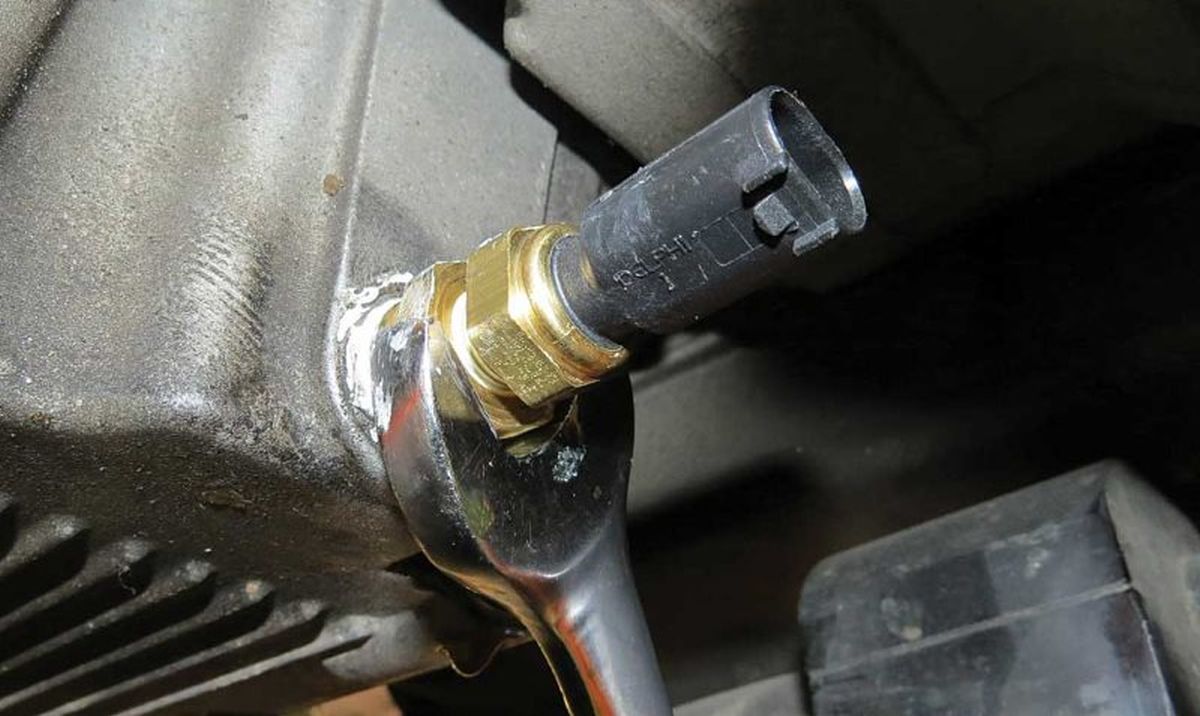
What Is an Engine Oil Temperature (EOT) Sensor? Symptoms of a Faulty EOT Sensor
The Engine Oil Temperature (EOT) Sensor is a component that measures the temperature of the engine oil and sends this information to the engine control module (ECU/PCM).
Engine oil does much more than lubricate moving components. Its temperature affects oil viscosity, lubrication efficiency, engine operating conditions, and, depending on the vehicle, various engine management and emission-control functions.
The ECU uses the EOT sensor signal together with information from other sensors to determine how the engine is operating. When the engine is cold, the oil temperature should be relatively low. As the engine warms up, the oil temperature should gradually increase.
If the EOT sensor provides an incorrect signal, the ECU may interpret the engine oil temperature incorrectly. This can affect engine management and, on some vehicles, may contribute to warning lights, incorrect cooling strategies, fuel-management problems, or other drivability issues.
How Does the EOT Sensor Work?
Most EOT sensors use a thermistor, usually an NTC (Negative Temperature Coefficient) type.
With an NTC thermistor:
As temperature increases, electrical resistance decreases.
The ECU supplies a reference voltage to the sensor circuit and monitors the resulting voltage. Based on this electrical signal, the ECU calculates the approximate engine oil temperature.
For example, when the engine is cold, the oil temperature is low and the sensor resistance is relatively high. As the engine warms up, the resistance decreases and the electrical signal changes accordingly.
The ECU then converts this changing signal into a temperature value that can be used by the engine management system.
The exact voltage, resistance and temperature relationship varies between vehicles. Therefore, a universal resistance or voltage value should not be used to determine whether an EOT sensor is good or bad. The manufacturer's specifications for the specific engine should be followed.
Where Is the Engine Oil Temperature Sensor Located?
The location of the EOT sensor varies considerably depending on the engine design.
It may be installed in or around:
-
The engine block
-
The oil pan
-
The oil filter housing
-
The oil cooler
-
An engine oil passage
-
A combined oil pressure and temperature sensor assembly
On some engines, the EOT sensor is integrated into another sensor or installed as part of a larger oil-management assembly.
Because of these differences, the exact location should be confirmed using the vehicle's service information rather than assuming that every engine uses the same sensor location.
What Does the EOT Sensor Control?
The EOT sensor itself does not normally control engine components. Its primary job is to provide temperature information.
The ECU may use this information for different purposes depending on the vehicle.
Possible applications include:
-
Engine warm-up calculations
-
Fuel injection strategy
-
Ignition timing adjustments
-
Cooling fan strategy
-
Variable valve timing control
-
Oil-pressure or oil-management strategies
-
Emission control
-
Cold-start operation
-
Protection strategies when oil temperature becomes excessive
Not every vehicle uses the EOT signal for all of these functions. The exact role depends on the engine management system.
Symptoms of a Faulty EOT Sensor
An EOT sensor problem can produce very different symptoms depending on whether the sensor signal is completely lost, intermittently incorrect, or simply inaccurate.
Common symptoms can include:
Check Engine Light
A malfunctioning EOT sensor or its circuit can cause the ECU to store a diagnostic trouble code (DTC) and illuminate the Check Engine Light.
Incorrect Oil Temperature Reading
If the vehicle displays engine oil temperature to the driver, the reading may be obviously incorrect or may remain fixed at an unrealistic value.
Poor Cold-Start Behavior
An incorrect oil temperature signal can affect engine-management calculations during cold starts. In some vehicles this may result in rough running, extended cranking or unstable idle.
Changes in Engine Performance
If the ECU uses oil temperature as part of its control strategy, an incorrect signal can influence fuel, ignition, valve timing or other parameters.
Cooling Fan Behavior
Depending on the vehicle, an implausible temperature signal may cause the ECU to activate a protective cooling strategy.
Reduced Fuel Economy
If the ECU receives an incorrect temperature value and adjusts engine operation incorrectly, fuel consumption may increase.
Engine Protection or Reduced Performance
Some engines use temperature information as part of their protection strategy. If the ECU believes that the oil is excessively hot, it may alter engine operation to protect the engine.
Common Causes of EOT Sensor Failure
A diagnostic trouble code related to the EOT sensor does not automatically mean that the sensor itself has failed.
Several different problems can produce the same type of fault.
1. Defective EOT Sensor
The sensor's internal thermistor can deteriorate over time. Its resistance may no longer correspond correctly to the actual oil temperature.
This can cause the ECU to receive a temperature signal that is too high, too low, or inconsistent.
2. Damaged Wiring
The wiring between the sensor and ECU can become damaged because of:
-
Heat
-
Vibration
-
Oil contamination
-
Chafing
-
Previous repairs
-
Contact with moving components
-
Rodent damage
An open circuit or short circuit can produce a fault even when the sensor itself is perfectly functional.
3. Corroded or Loose Connector
Oil, water, dirt and corrosion can affect the electrical connection at the EOT sensor.
A connector that looks acceptable externally may still have poor terminal contact internally.
4. Poor Electrical Ground or Reference Circuit
Depending on the circuit design, problems with the sensor's reference voltage, ground or signal circuit can affect the temperature reading.
This is particularly important when multiple sensors share a reference or ground circuit.
5. Oil Contamination or Incorrect Installation
In some applications, contamination or physical damage around the sensor can interfere with proper operation.
An improperly installed sensor can also cause problems if it does not make the correct contact with the oil or oil passage.
6. Engine Wiring Harness Problems
A fault farther away from the sensor can produce the same symptoms as a defective sensor.
For example, a damaged harness section near the engine may intermittently disconnect when the engine moves under acceleration.
7. ECU/PCM Problem
A control module problem is possible, but it should normally be considered only after the sensor, wiring, connector, power supply and reference circuits have been properly tested.
Replacing the ECU simply because an EOT sensor code is present is generally not a sound diagnostic approach.
EOT Sensor Failure: High vs. Low Signal
Diagnostic trouble codes may describe an EOT circuit as High, Low, Open, Intermittent, or Range/Performance.
These descriptions need to be interpreted correctly.
An EOT Sensor Circuit High code generally means that the ECU is detecting an electrical signal higher than the expected range.
It does not necessarily mean that the engine oil is physically too hot.
Likewise, an EOT Sensor Circuit Low code generally refers to an electrical signal lower than expected. It does not automatically mean that the engine oil is physically cold.
The actual cause could be the sensor, wiring, reference circuit, ground circuit or another electrical problem.
What Does an EOT Sensor Range/Performance Code Mean?
A Range/Performance fault is slightly different from a simple circuit-high or circuit-low fault.
In this situation, the ECU may be receiving a signal, but the temperature value does not make sense compared with what the ECU expects.
For example, the ECU may see an oil temperature that changes too quickly, remains implausible, or does not agree with other temperature measurements.
The ECU can compare the EOT value with other information such as:
-
Engine coolant temperature
-
Intake air temperature
-
Ambient temperature
-
Engine operating time
-
Engine load
-
Engine speed
If these values are inconsistent, the ECU may determine that the EOT signal is implausible.
How Is an EOT Sensor Diagnosed?
A proper diagnosis should begin with a complete scan of the vehicle.
First, the stored DTCs and freeze-frame information should be checked. Freeze-frame data can show the conditions under which the fault occurred, including engine speed, load, coolant temperature and other parameters.
The EOT value should then be checked using live data.
A useful diagnostic comparison is the temperature reading when the engine has been sitting cold for several hours. The EOT value should generally be reasonably close to other ambient-related temperature readings.
As the engine warms up, the oil temperature should also change progressively.
If the scan tool shows an obviously impossible value, such as an extremely high or extremely low temperature immediately after a cold start, the sensor circuit deserves close inspection.
The technician should then inspect:
-
Sensor connector
-
Wiring harness
-
Reference voltage
-
Sensor ground
-
Signal circuit
-
Terminal condition
-
Continuity where appropriate
-
Short circuits
-
Open circuits
-
Live-data response
The sensor can then be tested against the manufacturer's specified temperature/resistance characteristics where applicable.
Can You Drive With a Bad EOT Sensor?
The answer depends on the type of failure and how the vehicle responds to it.
If the vehicle is running normally and the fault is only an inaccurate temperature signal, it may still be possible to drive for a short period. However, the problem should not be ignored indefinitely.
The situation becomes more serious if there are signs of genuine engine overheating, low oil pressure, severe loss of power, unusual engine noise, smoke, or other indications of a lubrication problem.
A faulty EOT sensor can also make it more difficult for the ECU to correctly determine engine operating conditions.
Does a Bad EOT Sensor Mean the Engine Oil Is Overheating?
Not necessarily.
This is one of the most important distinctions when diagnosing an EOT-related fault.
An EOT sensor code can be caused by an electrical or sensor problem, while the actual oil temperature may be completely normal.
On the other hand, an accurate EOT sensor can report a genuinely excessive oil temperature caused by a separate mechanical or cooling problem.
Therefore, the diagnosis should establish two things separately:
Is the oil actually too hot?
and
Is the sensor accurately reporting the actual oil temperature?
These are not always the same problem.
What Can Cause Excessively High Engine Oil Temperature?
If testing confirms that the oil really is overheating, the EOT sensor may simply be reporting a symptom rather than causing the problem.
Possible causes include:
-
Low engine oil level
-
Incorrect engine oil
-
Degraded or contaminated oil
-
Excessive engine load
-
Cooling system problems
-
Oil cooler problems
-
Restricted oil passages
-
Turbocharger-related heat
-
Excessive engine friction
-
Internal engine problems
-
Extended high-speed or heavy-load operation
The cooling and lubrication systems should therefore be evaluated if the measured oil temperature is genuinely excessive.
EOT Sensor Replacement
If testing confirms that the sensor is defective, replacement is normally straightforward, but the procedure varies by engine.
The correct replacement part should be used because sensors that appear physically identical can have different electrical characteristics.
After replacement, the technician may need to:
-
Clear stored fault codes
-
Start the engine
-
Monitor EOT live data
-
Confirm that the temperature changes normally
-
Check for leaks
-
Perform a road test if necessary
-
Recheck for diagnostic trouble codes
Some vehicles may require additional procedures after sensor replacement.
EOT Sensor vs. Coolant Temperature Sensor
The EOT sensor and Engine Coolant Temperature (ECT) sensor perform different jobs.
The EOT sensor measures engine oil temperature.
The ECT sensor measures engine coolant temperature.
These values are related because both increase as the engine warms up, but they are not interchangeable.
Oil and coolant can reach different temperatures depending on engine load, cooling system operation, oil circulation and engine design.
For this reason, an ECT reading should not automatically be used as proof that the EOT sensor is functioning correctly.
Final Diagnostic Perspective
The Engine Oil Temperature Sensor may be a relatively small component, but its information can be important to modern engine management.
When an EOT-related fault appears, replacing the sensor immediately is not always the correct solution. The diagnostic code tells you what the ECU has detected; it does not necessarily identify the failed component.
A reliable diagnosis involves comparing the EOT live-data value with actual engine conditions, checking the sensor circuit and connector, inspecting the wiring, verifying the reference and ground circuits, and determining whether the oil temperature is genuinely abnormal.
That approach separates a bad EOT sensor from a wiring problem, an electrical circuit fault, or a genuine engine oil overheating condition.