TR
TR EN
EN

What Is a Rain Sensor? What Are the Symptoms of Failure?
A rain sensor is an electronic system used in modern vehicles to detect water or moisture on the windshield and automatically control the windshield wipers.
Its main purpose is to reduce the need for the driver to manually adjust the wiper speed when rain starts, stops, or changes in intensity.
When the system detects only a small amount of water on the windshield, it may activate the wipers intermittently or at a low speed. When heavier rain is detected, the system can increase the wiping frequency or switch to a higher wiper speed.
In many modern vehicles, the rain sensor is combined with an ambient light sensor in a single module. This means the same sensor assembly can provide information for both automatic windshield wipers and automatic headlights.
Despite its name, a rain sensor does not simply detect "rain." It actually detects changes in the optical properties of the windshield surface caused by water droplets.
Where Is the Rain Sensor Located?
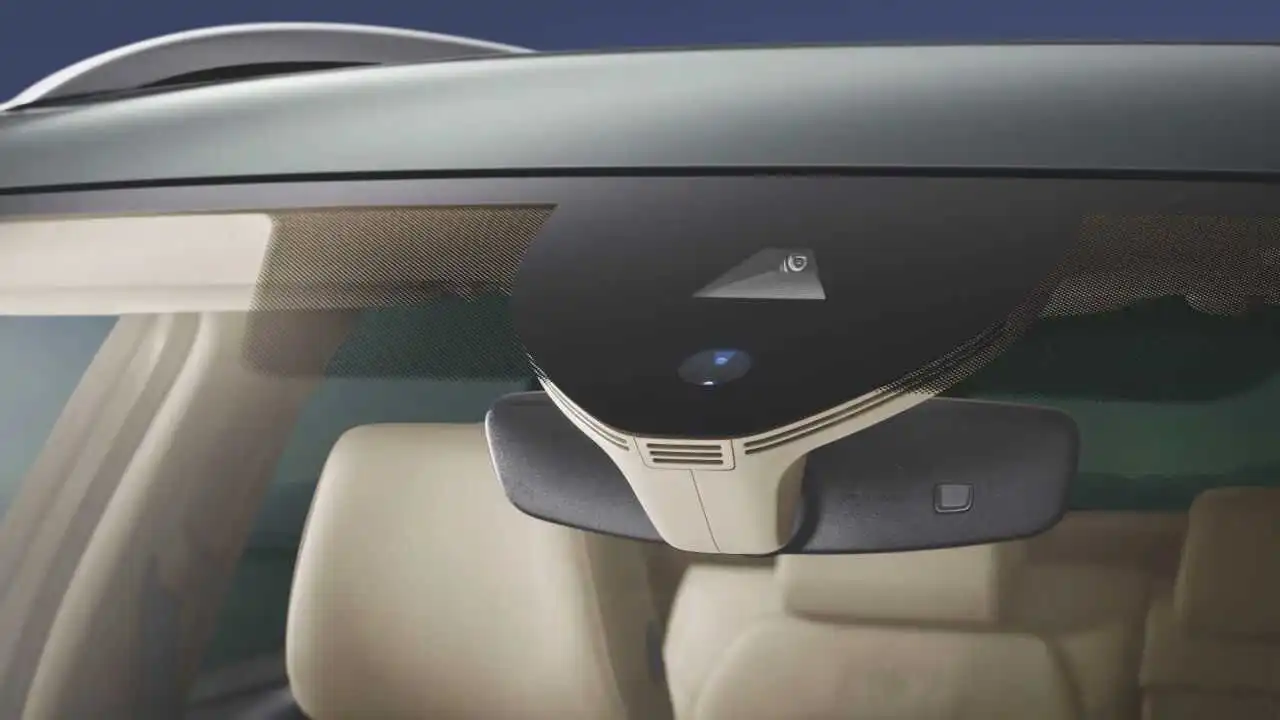
The rain sensor is usually mounted on the inside of the windshield, commonly behind the interior rear-view mirror.
From outside the vehicle, the sensor is often located in the dark or black area around the mirror mounting point.
This position provides several advantages:
-
It gives the sensor a clear view of the windshield.
-
It is protected from direct contact with rain.
-
It remains relatively unobtrusive to the driver.
-
It allows the system to monitor a specific area of the windshield.
The exact design varies between manufacturers.
Some vehicles use a dedicated rain sensor, while others use a combined rain/light sensor.
How Does a Rain Sensor Work?
Most automotive rain sensors use an optical principle.

The sensor contains one or more light-emitting elements and light-sensitive receivers. The system sends infrared light toward the windshield and monitors how that light behaves.
When the windshield surface is dry, a significant portion of the infrared light is reflected back toward the sensor.
When water droplets are present on the outside surface of the windshield, the optical conditions change. Some of the light that would normally be reflected back is instead transmitted through the glass and scattered or refracted differently because water has optical properties closer to glass than air does.
The sensor detects this change.
The electronic control system interprets the change as an indication that water is present on the windshield.
The basic process can be simplified as:
Infrared light → Windshield → Reflection changes when water is present → Sensor detects the change → Wiper control system reacts
This is why the rain sensor does not need to physically touch the water.
Why Does the Rain Sensor Use Infrared Light?
Infrared light is particularly useful because it is outside the visible range of human vision.
The driver does not normally notice the sensor's optical operation.
The system can continuously monitor the windshield without producing distracting visible light.
The sensor's electronics measure the amount or pattern of returned infrared light and use this information to estimate the amount of water affecting the monitored area.
Does the Rain Sensor Measure the Amount of Rain?
Not exactly.
The sensor does not normally measure rainfall in millimeters or determine the precise amount of water falling from the sky.
Instead, it detects the optical effect of water on the windshield.
The control system then uses this information to determine how frequently the windshield needs to be wiped.
For example, a few isolated water droplets may produce a relatively small change in the optical signal, while a windshield covered with a larger amount of water produces a much greater change.
The vehicle's software converts these changes into wiper commands.
How Does Automatic Wiper Speed Change?
The automatic wiper system continuously evaluates the sensor signal.
If the windshield is mostly dry, the wipers may remain inactive.
When the system detects water, it can activate the wipers.
As the amount of water increases, the system may increase the wiping frequency.
Depending on the vehicle, the system can select:
-
Intermittent wiping
-
Low-speed wiping
-
High-speed wiping
-
Single wiping cycles
-
Different wiping intervals
The exact strategy is controlled by the vehicle's software.
This means two different vehicles may respond differently to exactly the same amount of rain.
What Is the AUTO Position on the Wiper Switch?
Vehicles equipped with a rain sensor generally have an AUTO position on the windshield wiper control.
When the switch is placed in this position, the rain sensor and its associated control system are allowed to determine when the wipers should operate.
Some vehicles also provide an adjustment ring or sensitivity control.
This does not necessarily change the physical sensitivity of the sensor itself. Instead, it can change how aggressively the control system responds to the detected moisture.
For example, a higher sensitivity setting may cause the wipers to react sooner to smaller amounts of water.
What Is a Rain-Light Sensor?
Many modern vehicles use a combined rain/light sensor.
This module can contain separate optical functions for:
-
Rain detection
-
Ambient light detection
The rain detection function monitors water on the windshield.
The light detection function measures the surrounding light level and can be used to control automatic headlights.
Because both systems are often located behind the rear-view mirror, they may appear to be a single sensor.
However, their operating principles and functions are different.
What Happens When the Rain Sensor Fails?
A faulty rain sensor can produce several different symptoms.
The most common include:
-
Automatic wipers do not work
-
Wipers do not activate when rain starts
-
Wipers activate when the windshield is dry
-
Wipers operate continuously
-
Wipers operate too frequently
-
Wipers operate too slowly in heavy rain
-
Wiper speed does not respond correctly to changing rain intensity
-
A rain sensor warning appears
-
Automatic headlights may also malfunction if the vehicle uses a combined rain/light sensor
A failure does not always cause the wipers to stop completely.
In many vehicles, the driver can still operate the wipers manually.
Wipers Do Not Turn On Automatically
One of the most common complaints is that the wipers work normally in manual mode but do not work correctly in AUTO mode.
Possible causes include:
-
Rain sensor failure
-
Incorrect sensor mounting
-
Damaged sensor wiring
-
Connector problems
-
Incorrect windshield installation
-
Damaged optical coupling material
-
Dirt or contamination
-
Calibration or initialization problems
-
Faulty wiper control module
-
Communication problems
-
Incorrect vehicle configuration
If manual wiping works correctly but automatic operation does not, the rain-sensing system becomes an important area to investigate.
However, the sensor should not automatically be blamed.
Wipers Stay On Even When the Windshield Is Dry
Another possible symptom is continuous or excessive wiper operation in AUTO mode.
This can happen when the sensor incorrectly interprets the windshield condition.
Possible causes include:
-
Contamination on the windshield
-
Incorrect sensor installation
-
Optical coupling problems
-
Sensor malfunction
-
Damaged windshield in the sensor area
-
Software or control-module problems
-
Incorrect sensitivity setting
A dirty windshield can sometimes create behavior that looks like a sensor failure.
Therefore, cleaning the windshield around the sensor area is a simple first step.
Can Windshield Dirt Affect the Rain Sensor?
Yes.
Because the system relies on optical measurements, contamination can interfere with its operation.
The area of the windshield directly in front of the sensor should be kept clean.
Possible sources of interference include:
-
Dirt
-
Mud
-
Wax
-
Oil film
-
Road grime
-
Cleaning-product residue
-
Insects
-
Water spots
The sensor does not "see" the entire windshield in the same way a human does. It monitors a specific optical area.
Therefore, contamination in that particular area can have a disproportionate effect on automatic wiper operation.
Windshield Replacement and Rain Sensor Problems
Windshield replacement is one of the most important factors to consider when diagnosing a rain sensor problem.
The sensor must be correctly positioned against the windshield.
Many systems use a special transparent optical coupling gel, pad, or similar material between the sensor and the glass.
This interface is important because the sensor's optical system is designed around a specific relationship between the sensor and windshield.
If the coupling material is damaged, incorrectly installed, contains air bubbles, or does not make proper contact with the glass, the sensor may receive abnormal optical signals.
The result can be:
-
Wipers activating incorrectly
-
Wipers failing to detect rain
-
Erratic automatic operation
-
Rain sensor fault codes
-
Automatic headlight problems on combined systems
If the problem began immediately after windshield replacement, sensor installation should be checked carefully.
Does the Rain Sensor Need Calibration?
Some vehicles require initialization or calibration after sensor replacement, windshield replacement, or related repairs.
The exact procedure depends on the manufacturer and system.
Some systems may automatically initialize under certain conditions, while others may require a diagnostic scan tool.
Calibration requirements can also vary according to the sensor design and the type of windshield installed.
Therefore, there is no universal rain sensor calibration procedure that applies to every vehicle.
Common Causes of Rain Sensor Failure
A rain sensor problem can originate from several areas.
Sensor electronics
The internal optical or electronic components can fail due to age, electrical problems, moisture, or physical damage.
Wiring problems
A broken, shorted, or damaged wire can interrupt power, ground, or communication.
Connector failure
Loose, corroded, contaminated, or damaged connectors can cause intermittent or permanent faults.
Incorrect sensor mounting
A sensor that is not correctly positioned against the windshield may not operate correctly.
Optical coupling problems
A damaged or incorrectly installed optical coupling interface can interfere with the sensor's measurements.
Windshield damage
Cracks, chips, incorrect glass specifications, or problems around the sensor mounting area can affect operation.
Calibration or initialization problems
A replacement sensor may require vehicle-specific initialization before it can operate correctly.
Control module problems
The wiper control module, body control module, or another electronic control unit may be responsible for the fault.
Can a Bad Rain Sensor Cause the Wipers to Stop Completely?
It depends on the vehicle.
In many vehicles, a rain sensor failure mainly affects the automatic mode while manual wiper control remains available.
However, the exact system architecture varies.
Some vehicles integrate the rain sensor closely with the wiper control electronics, so a communication or control-module fault can affect more than just the AUTO function.
For this reason, it is important to determine whether:
Manual wipers work normally but AUTO does not
or
Both manual and automatic wiper functions are affected.
This distinction can significantly narrow down the diagnostic possibilities.
How Is a Faulty Rain Sensor Diagnosed?
Diagnosis should begin with the simplest checks.
First, verify that the wiper switch is actually set to the AUTO position.
Then inspect the windshield around the sensor.
Look for:
-
Dirt
-
Stickers
-
Air bubbles
-
Sensor displacement
-
Cracks
-
Incorrect mounting
-
Damage to the sensor housing
If the windshield was recently replaced, the sensor installation should receive particular attention.
The next step is to scan the vehicle for diagnostic trouble codes.
Depending on the vehicle, the scan tool may provide information about:
-
Sensor status
-
Rain detection values
-
Communication status
-
Wiper control status
-
Calibration status
-
Stored fault codes
Why Should You Check Live Data?
Live data can be extremely useful when diagnosing modern rain sensors.
A diagnostic tool may show the signal or status that the control module is receiving from the sensor.
If the sensor value changes when water is applied to the correct sensor area of the windshield, the sensor may be responding correctly.
If the value remains fixed or is obviously implausible, further electrical and sensor testing may be necessary.
This helps prevent unnecessary replacement.
A diagnostic code associated with a rain sensor does not automatically prove that the sensor itself is defective.
Can a Rain Sensor Be Repaired?
The answer depends on what has failed.
The internal electronic components of a rain sensor are generally not repaired individually during normal vehicle service. If the sensor has an internal failure, replacement is often the practical solution.
However, many apparent sensor failures are actually caused by:
-
Wiring
-
Connectors
-
Mounting
-
Optical coupling
-
Windshield problems
-
Calibration
-
Communication faults
These issues can often be corrected without replacing the sensor.
Can You Clean the Rain Sensor?
You can clean the windshield around the sensor area, but the sensor itself should not be disassembled or treated with cleaning chemicals unless the manufacturer specifies an appropriate procedure.
The optical interface between the sensor and windshield is especially important.
Removing or damaging the optical coupling material can create additional problems.
For this reason, cleaning the exterior windshield surface is usually preferable to attempting to clean the sensor internally.
Can Rain Sensor Problems Affect Automatic Headlights?
Yes, if the vehicle uses a combined rain/light sensor.
In such vehicles, a problem with the sensor module, wiring, power supply, communication, or mounting may affect both:
-
Automatic windshield wipers
-
Automatic headlights
For example, if automatic wipers and automatic headlights begin malfunctioning at the same time, the common sensor module or its associated circuit becomes an important diagnostic consideration.
However, this does not necessarily mean both functions have separate failures.
Why Do Automatic Wipers Sometimes Behave Strangely?
Automatic wipers are not designed to respond exactly like a human driver.
The system may intentionally delay wiping or perform a single wipe when only a small amount of water is detected.
The control software may also use filtering to prevent the wipers from reacting to every tiny change in the sensor signal.
Therefore, occasional differences between what the driver expects and what the automatic system does do not necessarily indicate a fault.
For example, the system may wait briefly before increasing wiping speed when rainfall suddenly becomes heavier.
The behavior depends on the vehicle's programming.
Can Wax or Rain-Repellent Products Affect the Rain Sensor?
They can.
Windshield coatings and hydrophobic products change the way water spreads across the glass.
Instead of forming a continuous film, water may form small droplets and move differently across the windshield.
This can alter the optical conditions observed by the sensor.
Depending on the vehicle and the product used, automatic wiper behavior may therefore change.
This does not automatically mean that the sensor is defective.
If unusual wiper behavior begins after applying a windshield coating or water-repellent product, the product should be considered as part of the diagnosis.
Can a Cracked Windshield Affect the Rain Sensor?
Yes, especially if the damage is close to the sensor's optical area.
A crack, chip, incorrect glass type, or optical distortion in the sensor area can interfere with the light transmission and reflection used by the sensor.
The severity of the effect depends on the location and design of the sensor.
If automatic wiper problems appear after windshield damage, the glass should be inspected.
How Long Does a Rain Sensor Last?
There is generally no fixed replacement interval for a rain sensor.
It is not normally considered a routine maintenance component.
A properly functioning sensor can remain in service for many years.
Replacement is usually required only when a confirmed fault, physical damage, or another system-related problem makes it necessary.
Its service life can be affected by:
-
Vehicle age
-
Electrical system condition
-
Moisture exposure
-
Windshield repairs
-
Physical damage
-
Sensor mounting problems
-
Component quality
Is It Safe to Drive With a Faulty Rain Sensor?
A failed rain sensor does not necessarily make the vehicle mechanically unsafe to drive.
However, it can become a visibility and safety issue if the driver relies on automatic wipers and does not realize that the system is not functioning correctly.
If the automatic function is unreliable, the driver should operate the windshield wipers manually.
This is particularly important during heavy rain, spray from other vehicles, or rapidly changing weather conditions.
The driver should always ensure that the windshield remains clear enough for safe visibility.
Rain Sensor Failure After Windshield Replacement: What Should You Check?
If the rain sensor worked correctly before windshield replacement but became unreliable afterward, several points should be checked before purchasing a new sensor.
First, check the sensor mounting.
The sensor must be correctly positioned.
Next, inspect the optical coupling interface.
Air gaps, damage, contamination, or incorrect installation can interfere with optical measurements.
Then check the windshield.
The replacement glass must be compatible with the vehicle's sensor system.
Finally, check calibration or initialization.
Some vehicles require a specific procedure after windshield or sensor replacement.
These checks can prevent an unnecessary sensor replacement.
Rain Sensor vs. Simple Intermittent Wiper System
A rain sensor should not be confused with a traditional intermittent wiper system.
A conventional intermittent system uses a selected time interval.
For example, the driver chooses a delay and the wipers operate according to that interval.
A rain-sensing system is different because it continuously monitors windshield conditions and can adjust wiping behavior according to the detected moisture.
This allows the wipers to respond to changing rain intensity without requiring constant driver adjustment.
Final Thoughts
The rain sensor is an important part of modern automatic windshield wiper systems.
Instead of physically detecting falling rain, it generally uses an optical system to detect changes caused by water droplets on the windshield.
When the windshield becomes wet, the sensor detects a change in the behavior of infrared light and sends information to the vehicle's electronic control system. The control system then determines whether the wipers should operate and how frequently they should wipe.
A faulty rain sensor can cause automatic wipers to stop working, operate continuously, activate unnecessarily, or respond incorrectly to changing rain intensity.
However, the sensor itself is only one possible source of the problem.
Windshield contamination, incorrect mounting, damaged optical coupling material, windshield replacement, wiring, connectors, calibration, communication faults, and control-module problems can all produce similar symptoms.
This is why proper diagnosis is more important than simply replacing the sensor.
If the vehicle uses a combined rain/light sensor, the same diagnostic process is even more important because a problem in the shared sensor assembly can potentially affect both automatic wipers and automatic headlights.
In short, the rain sensor is a relatively small component, but it plays a significant role in modern vehicle visibility systems. When it works correctly, the driver can largely forget about adjusting the wiper speed. When it fails, however, accurate diagnosis is necessary to determine whether the actual problem is the sensor, windshield, optical interface, wiring, calibration, or another part of the vehicle's electronic system.