TR
TR EN
EN

What Is a Headlight Sensor? What Are the Symptoms of Failure?
A headlight sensor is an electronic sensor used in modern vehicles to detect the ambient light level around the vehicle. It allows the vehicle's lighting control system to determine whether the surrounding environment is bright or dark and, depending on the vehicle's equipment, automatically turn the headlights or other exterior lights on and off.
The system is commonly associated with automatic headlights, where the driver does not need to manually switch the headlights on when entering a tunnel, driving at night, or moving through a dark area.
Depending on the vehicle design, the sensor may also be integrated with other functions. On many modern vehicles, the same sensor assembly or sensor module can work together with the automatic windshield wiper system, particularly when a combined rain/light sensor is installed behind the windshield.
Although the sensor itself is relatively small, its information can influence several vehicle functions and is therefore an important part of the vehicle's body electronics and lighting control system.
Where Is the Headlight Sensor Located?
The location depends on the vehicle manufacturer and model.
A common location is the upper area of the windshield, usually behind or near the interior rear-view mirror. From inside the vehicle, the sensor may appear as a small dark plastic module attached to the windshield.
This location is useful because the sensor has a relatively unobstructed view of the outside environment.
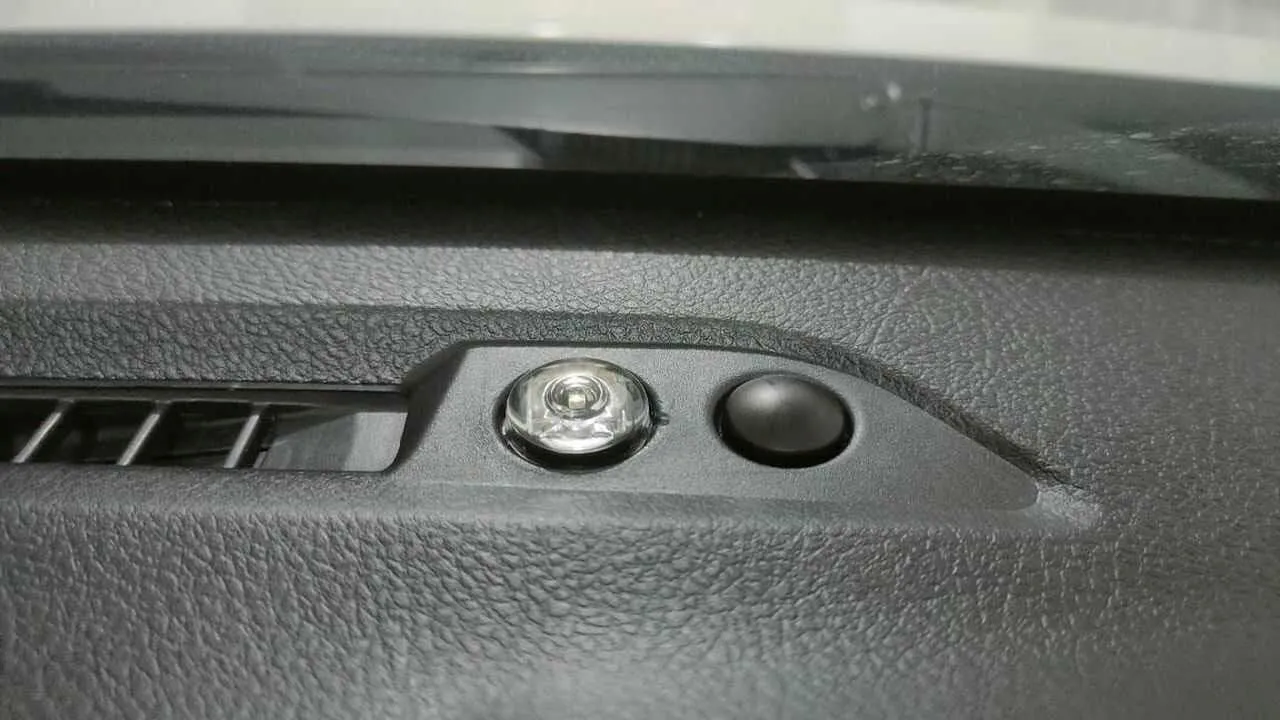
Some vehicles use a dedicated ambient light sensor on the dashboard or another exposed area. Other vehicles use a combined rain/light sensor mounted against the windshield.
The exact sensor arrangement can therefore vary considerably between manufacturers.
Important: The small sensor area behind the windshield should not be confused with a camera used for lane departure warning, traffic sign recognition, or automatic emergency braking. Some modern vehicles have several optical sensors and cameras installed in the same general area.
How Does a Headlight Sensor Work?
The basic operating principle is relatively simple.
The sensor detects the intensity of light reaching it and converts that information into an electrical signal. The vehicle's body control module or lighting control unit then evaluates this signal.
If the detected ambient light level falls below a predetermined threshold, the control system can command the headlights to switch on.
When the ambient light level increases again, the system can switch the headlights off, depending on the vehicle's software logic and operating conditions.
A simplified sequence looks like this:
Ambient light → Light sensor → Electrical signal → Body/lighting control module → Headlight control
The important point is that the sensor usually does not directly supply power to the headlights.
Instead, it provides information to an electronic control unit. The control unit decides what action should be taken.
What Type of Sensor Is Used?
Many automotive light sensors use a photodiode, phototransistor, or another light-sensitive semiconductor device.
These components respond to changes in light intensity.
The sensor's electrical characteristics change according to the amount of light reaching it. The vehicle's electronics can then interpret this change and determine whether the surrounding conditions are bright, dim, or dark.
The exact electrical design differs between vehicles.
Some systems may provide an analog signal, while others may communicate digitally with the vehicle's electronic control network.
Therefore, there is no single universal electrical specification that applies to every headlight sensor.
How Does Automatic Headlight Control Decide When to Turn the Lights On?
The system normally does not simply use one fixed value such as "below this light level, turn on the headlights."
Modern vehicles can use several pieces of information.
For example, the lighting control system may consider:
-
Ambient light intensity
-
Ignition status
-
Engine status
-
Vehicle speed
-
Parking brake status on some vehicles
-
Tunnel detection logic
-
Daytime running light configuration
-
Wiper operation
-
Vehicle configuration
-
Lighting switch position
-
Delayed switching strategies
-
Signals from other vehicle control modules
The software is programmed by the manufacturer to prevent the headlights from switching on and off unnecessarily.
For example, driving under a bridge for a few seconds should not necessarily cause the headlights to turn on immediately.
Similarly, when driving through a tunnel, the system may recognize the significant reduction in ambient light and activate the headlights.
Headlight Sensor vs. Rain Sensor
These two sensors are often confused because some vehicles combine their functions.
A light sensor detects ambient light.
A rain sensor detects water droplets or changes in the optical characteristics of the windshield surface caused by rain.
Many modern vehicles use a combined rain/light sensor mounted behind the windshield.
In such systems, one module can provide information for both:
-
Automatic headlights
-
Automatic windshield wipers
However, the light detection and rain detection functions are technically different.
A problem with one part of the system does not necessarily mean that the entire sensor module has failed.
What Happens When the Headlight Sensor Fails?
When the sensor provides incorrect information or stops communicating with the vehicle, the lighting system may no longer be able to determine the correct ambient light conditions.
The symptoms depend heavily on the vehicle's design and the type of failure.
Possible symptoms include:
-
Automatic headlights do not turn on
-
Automatic headlights remain on
-
Headlights turn on during daylight
-
Headlights switch on and off unexpectedly
-
Headlights react too slowly to darkness
-
Headlights turn on when entering shaded areas
-
Automatic lighting operates inconsistently
-
A warning message appears on the instrument cluster
-
A diagnostic trouble code is stored
-
Automatic wipers may also malfunction on vehicles with a combined rain/light sensor
A faulty sensor does not always cause the headlights to stop working completely.
The driver may still be able to control the headlights manually using the lighting switch.
Headlights Staying On All the Time
One possible symptom of a sensor or sensor-related problem is that the automatic headlights remain on even when the vehicle is in bright daylight.
However, this does not automatically mean that the sensor itself is defective.
The system may intentionally keep the lights on because of:
-
A sensor signal outside the expected range
-
A communication problem
-
Incorrect sensor calibration
-
A windshield or sensor mounting problem
-
Software logic
-
A configuration issue
-
A faulty body control module
-
Wiring or connector problems
The lighting switch position should also be checked before replacing any component.
Headlights Not Turning On Automatically
Another common complaint is that automatic headlights do not activate when the vehicle enters a dark environment.
Possible causes include:
-
Failed ambient light sensor
-
Dirty or obstructed sensor area
-
Incorrect sensor installation
-
Damaged sensor wiring
-
Poor electrical connection
-
Communication failure
-
Incorrect vehicle configuration
-
Fault in the body control module
-
Software-related problems
-
Incorrect calibration on systems that require calibration
A simple visual inspection of the sensor area is therefore a good starting point.
Can a Dirty Windshield Affect the Headlight Sensor?
Yes.
This is particularly relevant for vehicles that use a rain/light sensor mounted directly against the windshield.
The sensor depends on optical information passing through the windshield. Dirt, stickers, coatings, damaged glass, or incorrect installation around the sensor area can interfere with the system.
Problems can occur after windshield replacement if the sensor is not correctly positioned or if the optical coupling material between the sensor and windshield is damaged or incorrectly installed.
This is one reason why a sensor problem should not automatically lead to sensor replacement.
The installation area should be inspected first.
Headlight Sensor Problems After Windshield Replacement
Windshield replacement is an important consideration on vehicles equipped with a rain/light sensor.
The sensor is normally mounted in a specific position and may require a special optical coupling pad, gel, or similar interface between the sensor and the glass.
If this interface is damaged, contains air gaps, or is installed incorrectly, the sensor may receive incorrect optical information.
Depending on the vehicle, calibration or initialization may also be required after replacement.
Therefore, if automatic headlights or automatic wipers begin behaving abnormally immediately after windshield replacement, the sensor installation should be investigated before replacing the sensor.
Headlight Sensor Calibration
Some modern vehicles require calibration or initialization after certain repairs.
Calibration requirements vary according to the manufacturer and system design.
For example, calibration may be necessary after:
-
Windshield replacement
-
Sensor replacement
-
Camera or sensor bracket replacement
-
Changes to the sensor mounting position
-
Certain body repairs
Not every vehicle requires the same procedure.
A diagnostic scan tool may be necessary to perform the required initialization or calibration.
Common Causes of Headlight Sensor Failure
A headlight sensor can fail for several different reasons.
Electrical failure
The internal electronic components can fail due to age, electrical faults, moisture, or other damage.
Connector problems
Loose, corroded, contaminated, or damaged connectors can interrupt the sensor's power supply or communication.
Wiring damage
Broken, shorted, or damaged wires can prevent the sensor from communicating correctly with the control module.
Windshield-related problems
Incorrect windshield installation, damaged optical coupling material, or contamination around the sensor can interfere with sensor operation.
Physical damage
The sensor housing or mounting bracket can become damaged during windshield work, interior repairs, or accidents.
Incorrect calibration
A sensor that is physically functional may still provide incorrect results if the system requires calibration and the calibration has not been completed correctly.
Control module problems
The problem may originate from the body control module or lighting control unit rather than the sensor itself.
Can a Headlight Sensor Cause a Warning Light?
It can, depending on the vehicle.
Some vehicles detect an abnormal sensor signal and store a diagnostic trouble code.
Others may simply display a message such as:
-
Automatic lighting system fault
-
Check lighting system
-
Light sensor malfunction
-
Automatic headlights unavailable
The exact warning depends on the manufacturer.
A diagnostic scan can provide much more useful information than the warning message alone.
How Is a Faulty Headlight Sensor Diagnosed?
Proper diagnosis should begin with a visual and functional inspection.
First, check whether the automatic headlight function is enabled and whether the lighting switch is in the correct position.
Then inspect the sensor area.
Look for:
-
Dirt
-
Stickers
-
Cracks
-
Incorrectly installed components
-
Windshield damage
-
Sensor displacement
-
Connector problems
-
Signs of moisture
If the problem remains, the vehicle should be scanned for diagnostic trouble codes.
A technician can then check the sensor's live data, depending on the capabilities of the diagnostic equipment.
For example, the scan tool may show the ambient light value or the status interpreted by the body control module.
This can help determine whether the sensor is reporting a plausible value.
Why Live Data Is Important
A diagnostic trouble code does not necessarily mean that the sensor itself needs to be replaced.
For example, a code related to an ambient light sensor may be caused by:
-
Open circuit
-
Short circuit
-
Incorrect voltage
-
Communication failure
-
Implausible signal
-
Sensor failure
-
Control module problem
Live data can help distinguish between these possibilities.
If the sensor reports a reasonable change in light level when the surrounding conditions change, the sensor may be functioning correctly and the problem may be elsewhere in the system.
Can a Headlight Sensor Be Repaired?
In most cases, the sensor itself is treated as a replaceable electronic component rather than something that is repaired internally.
However, replacement should not be the first step in every case.
A faulty connector, damaged wire, incorrect mounting, dirty optical surface, or calibration problem can produce symptoms that look like sensor failure.
The correct repair depends on the actual cause.
If the sensor itself has an internal electrical failure, replacement may be necessary.
Can the Headlight Sensor Be Cleaned?
The sensor housing and the area around it can generally be kept clean, but care is necessary.
Do not aggressively disassemble the sensor or apply chemicals directly to optical components unless the manufacturer specifically permits it.
For a sensor mounted behind the windshield, keeping the relevant windshield area clean is usually more important than attempting to clean the sensor internally.
If the sensor uses a special optical coupling material, disturbing it can create additional problems.
Headlight Sensor and Daytime Running Lights
Automatic headlights should not be confused with Daytime Running Lights (DRLs).
DRLs are designed to improve vehicle visibility during daylight and can operate even when the ambient light sensor determines that the headlights are not required.
The exact relationship between DRLs and automatic headlights varies by vehicle.
Some vehicles operate DRLs during daylight and switch to low-beam headlights when ambient light decreases.
Others use different combinations of front and rear lighting depending on regulations, vehicle configuration, and manufacturer programming.
Does the Headlight Sensor Control High Beams?
Normally, the basic ambient light sensor does not directly control high-beam headlights.
Automatic high-beam systems generally require additional information, often from a forward-facing camera or dedicated optical system.
The camera analyzes traffic and lighting conditions to determine whether high beams can be used without dazzling other road users.
Some vehicles combine several sensors and cameras into one area behind the windshield, which can make the systems appear to be part of the same sensor.
Technically, however, automatic headlight activation and automatic high-beam control can be separate functions.
Headlight Sensor Failure and Automatic Wipers
If the vehicle uses a combined rain/light sensor, a sensor problem may affect both the automatic headlights and automatic windshield wipers.
For example, the driver may notice:
-
Automatic headlights behaving incorrectly
-
Automatic wipers behaving incorrectly
-
Both functions becoming unavailable
-
A warning message related to the rain/light sensor
When multiple functions fail simultaneously, the common sensor module, its power supply, wiring, communication network, or mounting should be investigated.
Does Replacing the Headlight Sensor Fix the Problem?
Only if the sensor is actually the source of the fault.
This is an important point in modern vehicle diagnostics.
Replacing a sensor without testing the rest of the circuit can result in unnecessary expense.
A proper diagnostic approach should determine:
-
Whether the sensor receives the required power.
-
Whether the ground connection is correct.
-
Whether the signal or communication is present.
-
Whether the sensor responds correctly to changes in light.
-
Whether the control module receives the expected information.
-
Whether calibration or initialization is required.
Only after these checks should sensor replacement be considered.
How Long Does a Headlight Sensor Last?
There is usually no universal replacement interval for a headlight sensor.
Unlike engine oil, air filters, or brake pads, the sensor is generally not considered a routine maintenance item.
It is normally replaced only when a confirmed fault occurs.
Its service life can depend on:
-
Vehicle age
-
Environmental conditions
-
Moisture exposure
-
Electrical system condition
-
Windshield repairs
-
Physical damage
-
Component quality
A properly functioning sensor can remain in service for many years.
Can a Faulty Headlight Sensor Cause a Battery Drain?
A faulty light sensor does not normally cause battery drain by itself.
However, if a sensor or control system incorrectly keeps the exterior lights activated, the lights could remain on longer than intended.
This can contribute to battery discharge, especially if the vehicle is parked for an extended period.
Other electrical faults can produce similar symptoms, so battery drain should not automatically be blamed on the light sensor.
Headlight Sensor Fault: What Should You Do?
If automatic headlights stop working correctly, start with the simplest checks.
Make sure the automatic lighting function is enabled.
Inspect the sensor area for dirt, stickers, damage, or anything that could obstruct the sensor.
If the problem started after a windshield replacement, pay particular attention to the sensor mounting and optical interface.
If a warning message or diagnostic trouble code is present, scan the vehicle using a suitable diagnostic tool.
If the fault cannot be identified through basic inspection, professional diagnosis is recommended.
This is especially important when the same sensor also controls automatic wipers or communicates with other vehicle systems.
Is It Safe to Drive With a Faulty Headlight Sensor?
A faulty automatic headlight sensor does not necessarily mean that the vehicle cannot be driven.
However, it can become a safety issue if the driver assumes the headlights will turn on automatically when they actually do not.
If the automatic function is unreliable, use the headlights manually until the fault has been diagnosed and repaired.
This is particularly important when entering tunnels, driving at night, or operating the vehicle in poor visibility.
Final Thoughts
The headlight sensor is a small but important component of modern vehicle lighting systems. Its primary task is to measure ambient light and provide this information to the vehicle's electronic control system.
The control module then uses the sensor information to determine when automatic headlights or other lighting functions should operate.
A failure can cause headlights to remain on, fail to activate automatically, switch on unexpectedly, or produce a lighting-system warning.
However, these symptoms do not prove that the sensor itself is defective.
Wiring, connectors, the body control module, windshield installation, sensor mounting, calibration, and vehicle configuration can all produce similar symptoms.
For this reason, the best approach is to diagnose the complete system rather than replacing the sensor immediately.
On vehicles equipped with a combined rain/light sensor, the diagnosis becomes even more important because one sensor module may influence both automatic headlights and automatic windshield wipers.
In short, a headlight sensor is not simply an "on/off switch." It is an input device that provides information to the vehicle's electronic control system, allowing modern vehicles to manage exterior lighting automatically and intelligently.