TR
TR EN
EN

What Is a Clutch Fork? What Are the Symptoms of Failure?
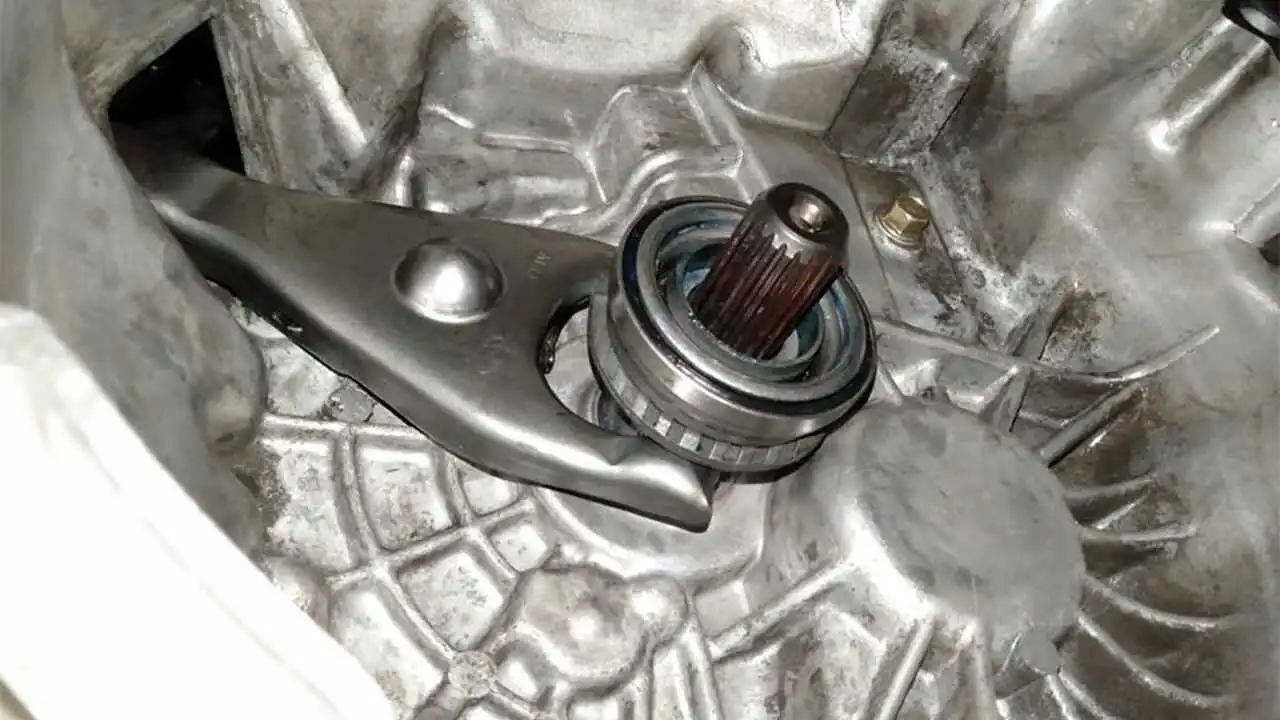
The clutch fork is a mechanical component found in many manual transmission systems. Its main job is to transfer the movement created by the clutch release mechanism to the clutch release bearing, allowing the clutch to disengage when the driver presses the clutch pedal.
Although the clutch fork is a relatively simple component, it plays a critical role in the operation of the clutch system. If the fork becomes worn, bent, cracked, or incorrectly positioned, the clutch may not disengage completely.
This can result in difficult gear changes, clutch noise, abnormal pedal behavior, and difficulty selecting gears.
The exact design of the clutch fork varies depending on the vehicle and clutch system. Some systems use a conventional fork operated by a clutch cable or hydraulic slave cylinder, while others use different release mechanisms integrated into the transmission.
Where Is the Clutch Fork Located?
The clutch fork is generally located inside or around the transmission bellhousing.
It connects the clutch release mechanism to the release bearing.
A simplified arrangement is:
Clutch pedal → Clutch cable or hydraulic system → Clutch fork → Release bearing → Clutch pressure plate
When the driver presses the clutch pedal, the movement is transferred through the clutch operating mechanism.
The clutch fork moves and pushes or pivots against the release bearing.
The release bearing then acts on the pressure plate, reducing the clamping force on the clutch disc.
This allows the engine and transmission to be temporarily disconnected so the driver can change gears.
How Does a Clutch Fork Work?
The clutch fork works essentially as a lever.
When force is applied to one side of the fork, the fork pivots around its mounting point.
The opposite end then applies force to the clutch release bearing.
When the driver releases the clutch pedal, the mechanism returns toward its original position and the pressure plate clamps the clutch disc again.
This operation happens every time the clutch pedal is pressed.
Consequently, the clutch fork can experience a very large number of operating cycles during the life of a vehicle.
What Is the Relationship Between the Clutch Fork and the Release Bearing?
The clutch fork and release bearing work together.
The fork provides the mechanical movement, while the release bearing transfers that movement to the rotating pressure plate assembly.
The release bearing must be able to apply force to the pressure plate while accommodating the rotational difference between the stationary release mechanism and the rotating clutch assembly.
If the fork's contact points are worn or damaged, the release bearing may not move correctly.
This can affect clutch engagement and disengagement.
What Happens When the Clutch Fork Wears Out?
A worn clutch fork may not be able to transfer the required movement efficiently.
The amount of movement reaching the release bearing can change, and the fork may develop excessive clearance at its pivot or contact points.
Depending on the severity of the wear, the driver may notice:
-
Difficulty shifting gears
-
Difficulty selecting first or reverse gear
-
Clutch engagement problems
-
Unusual clutch pedal feel
-
Clicking or knocking sounds
-
Squeaking or creaking noises
-
Increased clutch pedal effort
-
Excessive clutch pedal travel
-
Incomplete clutch disengagement
-
Clutch drag
-
Changes in clutch engagement point
These symptoms can overlap with other clutch problems, so they should not automatically be attributed to the fork.
Difficulty Selecting Gears
One of the most important symptoms of a clutch fork problem is difficulty selecting gears.
If the clutch fork does not move the release bearing far enough, the pressure plate may not release the clutch disc completely.
The clutch disc can continue rotating with the engine even though the clutch pedal is fully depressed.
This is known as clutch drag.
The result can be difficult or noisy gear selection.
First gear and reverse are often particularly noticeable because they are commonly selected from a stationary position.
However, worn synchronizers, hydraulic problems, incorrect clutch adjustment, a damaged clutch disc, or other clutch components can produce similar symptoms.
Difficulty Selecting Reverse Gear
A vehicle with a clutch that does not fully disengage may have particular difficulty selecting reverse.
The driver may experience:
-
Grinding when selecting reverse
-
Resistance when moving the gear lever into reverse
-
The vehicle trying to move with the clutch pedal fully depressed
-
Increased difficulty selecting first gear
If these symptoms occur, the clutch release system should be inspected.
The clutch fork is one possible cause, but it is not the only one.
Unusual Noise From the Clutch Area
A damaged or worn clutch fork can produce unusual sounds.
Depending on the type of damage, the driver may hear:
-
Clicking
-
Clunking
-
Squeaking
-
Creaking
-
Rattling
-
Metallic tapping
The noise may change when the clutch pedal is pressed or released.
However, clutch noise diagnosis can be complicated because the release bearing, pressure plate, pilot bearing, input shaft bearing, clutch disc, fork pivot, and other components can produce similar sounds.
Therefore, the location and timing of the noise are important.
Clutch Fork Clicking or Knocking
A clicking or knocking sound when pressing or releasing the clutch pedal can sometimes be associated with excessive clearance at the clutch fork or its pivot.
If the fork is loose on its mounting point, the change in direction of the applied force can produce a noticeable movement or noise.
A worn contact point between the fork and release bearing can produce similar behavior.
However, a clicking sound does not automatically mean that the clutch fork needs to be replaced.
The complete release mechanism should be inspected.
Clutch Pedal Feels Different
Changes in clutch pedal feel can sometimes occur when the clutch fork or its mounting mechanism becomes worn.
The driver may notice:
-
A heavier pedal
-
A lighter pedal
-
Jerky pedal movement
-
Increased pedal travel
-
A change in the engagement point
-
A pedal that does not return normally
A clutch pedal problem can also originate from the clutch cable, hydraulic system, slave cylinder, master cylinder, pressure plate, release bearing, or clutch itself.
Therefore, pedal feel should be considered together with other symptoms.
Clutch Fork Bent or Cracked
Physical damage is another possible clutch fork failure.
A fork can become bent or cracked due to excessive force, incorrect installation, component failure, or severe wear.
A cracked fork can be particularly serious because it may initially continue to function while gradually becoming weaker.
If the fork eventually breaks, the clutch release mechanism may stop working.
The driver may then be unable to disengage the clutch normally.
What Causes a Clutch Fork to Fail?
Several factors can contribute to clutch fork problems.
Normal wear
The fork moves every time the clutch is operated. Over a long period, contact surfaces and pivot points can wear.
Insufficient lubrication
Some clutch fork pivot and contact points require appropriate lubrication during assembly or service. Lack of lubrication can increase friction and wear.
However, not every modern clutch system uses the same lubrication requirements, so manufacturer instructions should be followed.
Excessive clutch force
A clutch system that requires unusually high pedal effort places additional load on the release mechanism.
A failing pressure plate can therefore contribute indirectly to clutch fork stress.
Incorrect installation
Incorrect positioning of the fork, release bearing, or pivot mechanism can cause abnormal loading.
Damaged release bearing
A release bearing that does not move correctly can place abnormal forces on the fork.
Worn pivot
The fork's pivot point can develop excessive clearance, changing the fork's movement.
Corrosion
Moisture and corrosion can weaken the fork or interfere with its movement.
Improper repair
Incorrect installation of clutch components can cause premature wear or abnormal operating geometry.
Can a Bad Clutch Fork Cause Clutch Slipping?
Usually, a clutch fork problem is more directly associated with clutch disengagement than clutch slipping.
A clutch that does not fully disengage can cause gear-selection problems.
Clutch slipping, on the other hand, usually occurs when the clutch does not transmit engine torque properly while the pedal is released.
Common causes of clutch slipping include:
-
Worn clutch disc
-
Contaminated clutch disc
-
Weak or damaged pressure plate
-
Incorrect clutch installation
-
Hydraulic or mechanical problems that prevent full clutch engagement
A damaged clutch fork could potentially contribute to abnormal clutch operation if it prevents the release mechanism from returning correctly, but it should not automatically be blamed for every slipping clutch.
Can a Clutch Fork Cause a Hard Clutch Pedal?
It can, but this symptom has many possible causes.
A hard clutch pedal may be related to:
-
Clutch fork friction
-
A damaged pivot
-
Release bearing problems
-
Pressure plate problems
-
Clutch cable friction
-
Hydraulic system issues
-
Incorrect clutch components
-
Mechanical binding
If the pedal suddenly becomes much harder than normal, the complete clutch operating mechanism should be inspected.
Continuing to operate the vehicle with an abnormal clutch pedal can place additional stress on the clutch release system.
Can a Clutch Fork Cause Clutch Judder?
A clutch fork problem is not normally the first component suspected when diagnosing clutch judder.
Clutch judder is often associated with problems such as:
-
Clutch disc contamination
-
Uneven clutch surfaces
-
Flywheel problems
-
Pressure plate irregularities
-
Engine or transmission mount problems
-
Incorrect clutch installation
However, abnormal clutch release movement can contribute to inconsistent clutch operation in some situations.
Proper diagnosis is therefore important before replacing components.
Clutch Fork vs. Clutch Release Bearing
These components are closely related but perform different jobs.
The clutch fork is the lever that transfers mechanical movement.
The release bearing transfers that movement to the rotating pressure plate.
If the release bearing is noisy, replacing only the clutch fork will not solve the underlying problem.
Likewise, replacing the release bearing will not necessarily correct a worn or damaged fork.
When the transmission is removed for clutch work, the condition of the entire release mechanism should be evaluated.
Clutch Fork vs. Clutch Slave Cylinder
On hydraulically operated clutch systems, the slave cylinder generates movement that acts on the clutch fork.
The relationship can be summarized as:
Clutch pedal → Master cylinder → Hydraulic fluid → Slave cylinder → Clutch fork → Release bearing
A failure anywhere in this chain can cause clutch disengagement problems.
For example, low hydraulic pressure can prevent the slave cylinder from moving the fork far enough.
The resulting symptom may look like a clutch fork problem even though the fork itself is perfectly functional.
Can a Clutch Fork Problem Be Diagnosed Without Removing the Transmission?
Sometimes a technician can identify signs of a clutch fork problem without completely removing the transmission.
Depending on the vehicle, it may be possible to inspect or observe:
-
Fork movement
-
External linkage
-
Slave cylinder movement
-
Abnormal free play
-
Unusual noises
-
Hydraulic operation
Some transmission designs provide relatively easy access to the clutch fork.
Others place the fork and release mechanism inside the bellhousing, making inspection considerably more difficult.
If the fork is located inside the bellhousing, definitive inspection may require transmission removal.
How Is a Clutch Fork Diagnosed?
Diagnosis should begin with the symptoms rather than immediately replacing the fork.
A technician may inspect the clutch pedal and operating mechanism first.
Then the hydraulic or cable system can be checked.
The movement of the clutch fork should be evaluated where access permits.
Important questions include:
-
Does the fork move smoothly?
-
Is the amount of movement correct?
-
Is there excessive free play?
-
Does the fork return properly?
-
Is there abnormal noise?
-
Is the pivot worn?
-
Is the release bearing moving correctly?
-
Does the clutch fully disengage?
If the external system operates correctly but the clutch still does not disengage properly, internal clutch components may need to be inspected.
Does a Clutch Fork Need Lubrication?
Some clutch fork designs use lubricated contact points, particularly around the pivot and areas where the fork contacts the release mechanism.
However, lubrication must be performed according to the vehicle manufacturer's specifications.
Using too much lubricant or applying the wrong type can cause problems.
For example, grease contamination of the clutch friction surfaces can cause clutch slipping.
Therefore, lubrication should never be treated as a universal cure for clutch noise.
When Should a Clutch Fork Be Replaced?
There is generally no universal mileage interval for replacing a clutch fork.
Unlike a clutch disc, which is a wear component, the clutch fork is normally replaced when inspection shows that it is damaged or excessively worn.
Replacement may be appropriate when the fork has:
-
Cracks
-
Bending
-
Excessive wear
-
Damaged contact surfaces
-
Excessive pivot clearance
-
Severe corrosion
-
Deformation
If the transmission is already removed for a clutch replacement, inspecting the fork is particularly important because accessing it later can require significant additional labor.
Should the Clutch Fork Be Replaced With the Clutch Kit?
Not necessarily in every vehicle.
A clutch kit normally contains components such as:
-
Clutch disc
-
Pressure plate
-
Release bearing
The clutch fork may be a separate component.
Whether it should be replaced depends on its condition.
If the fork is in good condition and within the manufacturer's specifications, it may not need replacement.
If it is worn, cracked, bent, or damaged, replacing it while the transmission is already removed can be a sensible repair decision.
What Happens If You Continue Driving With a Bad Clutch Fork?
The consequences depend on the severity of the fault.
A slightly worn fork may initially cause only noise or changes in pedal feel.
As wear progresses, the clutch may stop disengaging correctly.
This can lead to:
-
Increasingly difficult gear changes
-
Gear grinding
-
Clutch drag
-
Damage to synchronizers
-
Increased stress on the release bearing
-
Further damage to the clutch mechanism
-
Complete loss of clutch operation if the fork breaks
A fork that is cracked or severely damaged should therefore not be ignored.
Is a Clutch Fork a Common Failure?
The clutch fork is generally not one of the first components expected to fail in a clutch system.
The clutch disc and other friction components experience significant wear because they are designed to operate under friction.
The fork is primarily a mechanical lever and can often last for a long time.
Nevertheless, its service life depends on the vehicle, clutch design, operating conditions, maintenance, previous repairs, and component quality.
When a clutch problem occurs, the fork should be considered as part of the complete release mechanism rather than automatically assumed to be the cause.
Final Thoughts
The clutch fork may look like a simple metal lever, but it performs a critical function in a manual transmission clutch system.
Its job is to transfer movement from the clutch operating mechanism to the release bearing. When the driver presses the clutch pedal, the fork moves the release bearing, which acts on the pressure plate and allows the clutch disc to disengage from the engine's drive.
A faulty clutch fork can produce several symptoms, including unusual noises, abnormal clutch pedal feel, difficulty selecting gears, clutch drag, and incomplete clutch disengagement.
However, these symptoms are not unique to the clutch fork.
The clutch release bearing, pressure plate, clutch disc, clutch cable, hydraulic system, slave cylinder, master cylinder, pivot mechanism, and other components can create similar problems.
For this reason, replacing the clutch fork without proper diagnosis is not always the correct solution.
If the transmission has to be removed for clutch repairs, the clutch fork and its pivot points should be carefully inspected. A worn or damaged fork is relatively inexpensive compared with the labor required to access it, making inspection particularly valuable while the transmission is already out.
In short, the clutch fork is a small but essential link between the driver's clutch pedal and the clutch assembly. Keeping the entire release mechanism in good condition helps ensure smooth gear changes, correct clutch disengagement, and reliable manual transmission operation.