TR
TR EN
EN

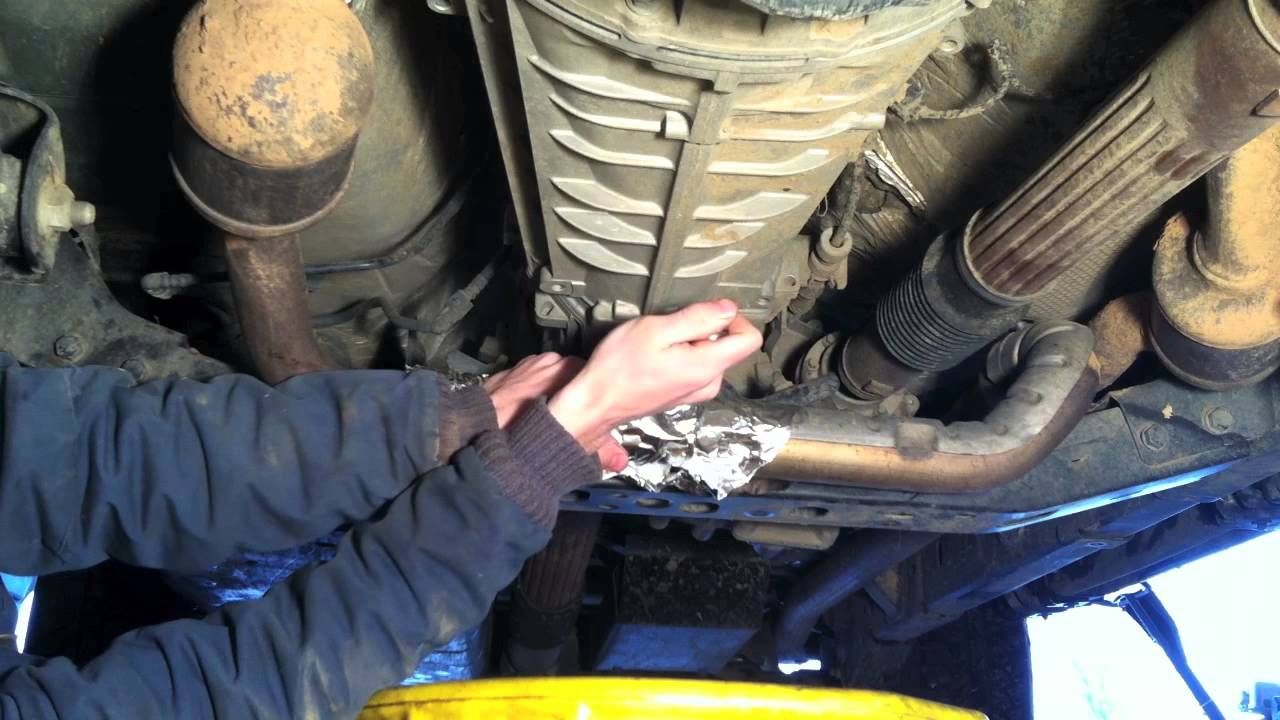
When Should Automatic Transmission Fluid Be Changed?
Automatic transmission fluid plays a much more important role than simply lubricating the transmission. It transfers hydraulic pressure, helps operate clutch packs and shift components, carries heat away from internal parts, and helps the transmission shift smoothly. As the fluid ages, its ability to perform these functions can gradually decrease.
The difficult part is that there is no single transmission fluid change interval that applies to every vehicle. The correct interval depends on the transmission type, vehicle manufacturer, driving conditions, fluid specification, and how the vehicle is used.
How Often Should Automatic Transmission Fluid Be Changed?
For many vehicles, a transmission fluid change may be recommended somewhere around 60,000–100,000 km or several years of use. However, some manufacturers specify longer intervals, while others recommend changing the fluid under severe driving conditions only.
Some modern transmissions are marketed as having “lifetime” fluid. This does not necessarily mean that the fluid can never deteriorate. It generally means that the manufacturer does not specify a routine replacement interval under normal operating conditions.
The safest approach is to check the vehicle manufacturer's maintenance schedule and the exact transmission specification rather than relying on a universal mileage figure.
Why Does Transmission Fluid Need to Be Changed?
Automatic transmission fluid is exposed to heat, pressure, friction, and constant mechanical movement. Over time, several things can happen:
-
The fluid can lose some of its original properties.
-
High temperatures can accelerate fluid degradation.
-
Friction material and clutch wear can contaminate the fluid.
-
Metal particles can accumulate inside the transmission.
-
Additives in the fluid can become depleted.
-
The fluid can become darker and develop a burnt odor.
-
Hydraulic performance can deteriorate.
As fluid condition worsens, the transmission may have more difficulty maintaining the correct hydraulic pressure and controlling internal components.
This can eventually contribute to delayed engagement, harsh shifting, slipping, overheating, or other transmission problems.
Signs That the Transmission Fluid May Need Attention
Mileage alone should not determine whether the fluid needs to be replaced. The transmission's behavior can also provide important clues.
Possible warning signs include:
Delayed engagement
There may be a noticeable delay after selecting Drive or Reverse before the vehicle begins to move.
Harsh gear changes
The transmission may shift with a noticeable jolt or impact instead of changing gears smoothly.
Shift hesitation
The transmission may hesitate before selecting the next gear, particularly when accelerating.
RPM flare
Engine RPM may suddenly increase during a gear change without a proportional increase in vehicle speed. This can indicate transmission slipping.
Transmission overheating
Old, degraded, or incorrect fluid can contribute to increased operating temperature.
Burnt-smelling fluid
A strong burnt smell can indicate that the fluid has been exposed to excessive heat or friction.
Transmission warning light or fault codes
Some transmission problems can trigger a warning light and store diagnostic trouble codes in the transmission control module.
These symptoms do not automatically mean that the fluid is the problem. Worn clutch packs, solenoids, valve-body problems, sensors, hydraulic leaks, or torque converter problems can produce similar symptoms.
Does the Transmission Type Affect the Fluid Change Interval?
Yes. This is one of the most important factors.
Traditional torque-converter automatic transmissions, CVTs, and dual-clutch transmissions do not necessarily use the same type of fluid or follow the same maintenance strategy.
A CVT, for example, requires a specific CVT fluid, while a dual-clutch transmission may require a dedicated transmission fluid designed for its clutch and hydraulic system.
Using the wrong fluid can cause serious problems even if the fluid appears to be of good quality.
The fluid specification should therefore always be checked before a transmission service.
CVT Fluid Change
CVT transmissions require special attention because they operate differently from conventional automatic transmissions.
Instead of using traditional fixed gears in the same way as a conventional automatic transmission, a CVT uses a continuously variable mechanism. Depending on the design, this can involve pulleys and a steel belt or chain.
CVT fluid performs several functions, including lubrication, cooling, and providing the correct friction characteristics.
A CVT should never be serviced with ordinary automatic transmission fluid simply because the fluid looks similar. The exact CVT fluid specification must be followed.
Dual-Clutch Transmission Fluid Change
Dual-clutch transmissions also require transmission-specific maintenance.
Some dual-clutch systems use separate fluid circuits for the transmission gears and clutch/control components, depending on their design. Others use different maintenance procedures altogether.
For this reason, the correct fluid type, quantity, filter procedure, and filling temperature can vary significantly between different DCT designs.
What Happens If Transmission Fluid Is Never Changed?
Continuing to use severely degraded fluid can increase the risk of transmission problems.
As fluid condition deteriorates, lubrication and hydraulic performance may decline. Contamination can also circulate through components such as valves, solenoids, bearings, and clutch assemblies.
In a transmission that is already experiencing wear, old fluid may not be the original cause of the problem, but continuing to drive with poor-quality fluid can contribute to further deterioration.
Eventually, a relatively simple maintenance issue can become an expensive repair involving the valve body, solenoids, torque converter, clutch packs, or other internal components.
Is Dark Transmission Fluid Always Bad?
Not necessarily.
Fluid color alone is not enough to determine its condition. Some transmission fluids naturally become darker as they age, and different fluid formulations can have different original colors.
However, very dark fluid combined with a burnt smell, excessive debris, overheating, or transmission symptoms deserves attention.
The fluid should be evaluated together with the transmission's operating condition, service history, and manufacturer specifications.
Should You Change the Transmission Fluid on a High-Mileage Vehicle?
This is where the situation becomes more complicated.
If a high-mileage transmission has been properly maintained and the fluid has been replaced at appropriate intervals, continuing the recommended maintenance is generally straightforward.
But if a vehicle has very high mileage and the transmission fluid has never been changed, especially if the transmission is already slipping or shifting abnormally, the situation should be evaluated carefully.
A fluid change cannot repair worn clutch packs or mechanically damaged components.
In some cases, replacing severely degraded fluid may improve operation temporarily, while in other cases it may expose an already existing transmission problem that was being masked by the old fluid.
Therefore, a high-mileage transmission with an unknown service history should be inspected before simply performing a fluid change.
Drain and Fill or Transmission Flush?
There are two common approaches to transmission fluid service.
Drain and fill
A certain amount of old fluid is drained and replaced with new fluid. Depending on the transmission design, the pan may also be removed and the filter replaced.
This is often a controlled approach because it does not attempt to exchange the entire fluid volume at once.
Fluid exchange or flush
A larger percentage of the old fluid can be exchanged using specialized equipment.
Whether this method is appropriate depends on the transmission manufacturer and the condition of the transmission. A “flush” should not be treated as automatically better than a conventional fluid change.
The correct service procedure is the one specified or approved for that particular transmission.
Should the Transmission Filter Be Changed?
If the transmission design uses a serviceable filter, replacing it can be an important part of transmission maintenance.
The filter helps prevent contaminants from circulating through the hydraulic system. A restricted filter can affect fluid flow and hydraulic performance.
However, not every automatic transmission has an externally or routinely serviceable filter. Some designs require different procedures.
Why Is the Correct Fluid So Important?
Automatic transmissions are highly sensitive to fluid characteristics.
Transmission fluid is not simply a generic lubricant. Its viscosity, friction characteristics, additive package, thermal stability, and compatibility with seals and clutch materials are all important.
For this reason, “it is an automatic transmission fluid” is not enough.
The fluid must meet the exact specification required by the transmission manufacturer.
Using an incorrect fluid can cause:
-
Poor shifting
-
Clutch shudder
-
Slipping
-
Delayed engagement
-
Overheating
-
Abnormal transmission behavior
-
Premature component wear
Can Changing the Fluid Fix a Slipping Transmission?
Sometimes a transmission that has a fluid-related problem may improve after the correct service, but a fluid change should not be considered a guaranteed repair for slipping.
If the clutch packs, valve body, solenoids, seals, or torque converter are already worn or damaged, new fluid cannot restore mechanically damaged components.
A slipping transmission should therefore be diagnosed before assuming that changing the fluid will solve the problem.
What Is the Best Time to Change Automatic Transmission Fluid?
The best time is generally before the transmission develops serious symptoms, provided that the manufacturer specifies or allows fluid servicing.
Rather than waiting for obvious slipping or harsh shifting, maintenance should be based on:
-
Manufacturer recommendations
-
Transmission type
-
Mileage
-
Vehicle age
-
Fluid specification
-
Previous service history
-
Driving conditions
-
Transmission operating temperature
-
Towing or heavy-load use
Vehicles used for frequent stop-and-go driving, towing, mountainous driving, high ambient temperatures, or other severe conditions may require more frequent maintenance than vehicles used primarily for gentle highway driving.
What Should Be Checked During a Transmission Fluid Service?
A proper service should involve more than simply removing old fluid and adding new fluid.
Depending on the transmission, the technician may need to check:
-
Fluid level
-
Fluid condition
-
Fluid specification
-
Transmission pan
-
Filter
-
Magnets and accumulated debris
-
Leaks
-
Drain plug and sealing components
-
Transmission temperature
-
Correct filling procedure
-
Diagnostic trouble codes
-
Shift quality after service
Some modern transmissions require the fluid level to be checked at a specific temperature. The vehicle may also need to be positioned in a particular way during the procedure.
Does Automatic Transmission Fluid Expire?
Transmission fluid does not necessarily have a simple expiration date like food, but its condition changes with age, heat, contamination, and use.
Even when a vehicle has relatively low mileage, prolonged exposure to high temperatures can affect fluid performance.
This is why both time and mileage can be relevant when determining transmission maintenance.
How Can You Extend Transmission Life?
Regular fluid maintenance is only one part of protecting an automatic transmission.
Good practices include using the correct transmission fluid, keeping the transmission at the correct fluid level, repairing leaks promptly, avoiding unnecessary overheating, and allowing the transmission to reach its normal operating conditions before demanding heavy performance.
If the vehicle is used for towing or severe-duty operation, following the manufacturer's severe-service maintenance schedule becomes particularly important.
Most importantly, abnormal transmission behavior should not be ignored. A small hydraulic or fluid-related problem can sometimes be addressed relatively easily, while continued operation with slipping or overheating can cause much more expensive internal damage.
Automatic Transmission Fluid Change Interval: The Important Point
There is no universal answer such as “change automatic transmission fluid every 50,000 km” that is correct for every vehicle.
Some transmissions have relatively short service intervals, some have longer intervals, and some are officially described as requiring no routine fluid replacement under normal operating conditions. The correct interval depends on the specific vehicle and transmission.
The safest rule is simple: follow the manufacturer's specified fluid type and service procedure, consider severe driving conditions, and do not wait for serious transmission symptoms before investigating fluid condition.