TR
TR EN
EN

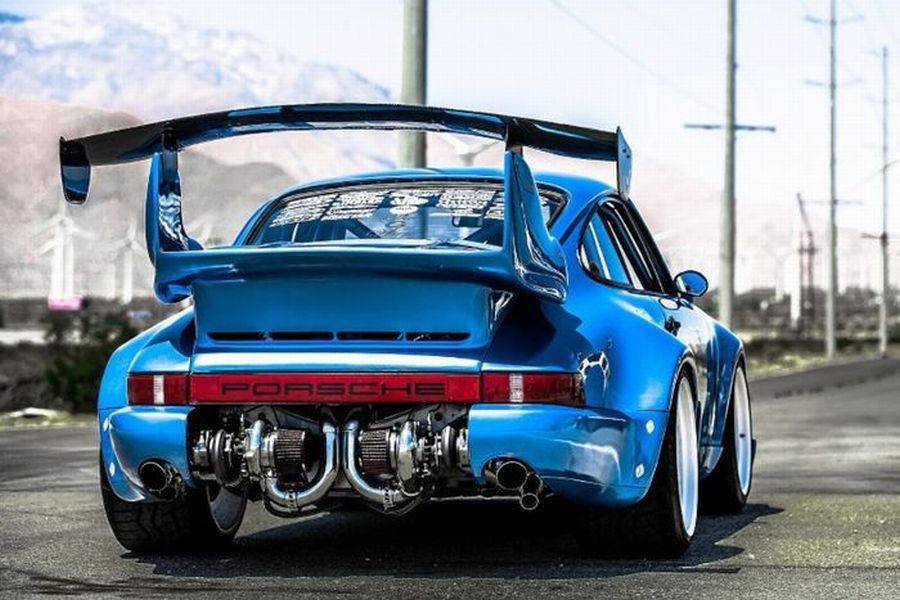
Types of Turbochargers and How They Work
A turbocharger is a forced-induction device designed to increase the amount of air entering an internal combustion engine. By supplying more air to the cylinders, the engine can burn more fuel and produce greater power and torque without necessarily increasing its displacement.
Turbochargers are widely used in both gasoline and diesel engines. Although their basic operating principle is similar, turbocharger designs differ considerably depending on engine size, performance requirements, response characteristics, emissions targets, and operating conditions.
How Does a Turbocharger Work?
A conventional turbocharger consists mainly of two connected sections:
-
Turbine
-
Compressor
These two sections are mounted on the same shaft.
The turbine is driven by exhaust gases leaving the engine. As the exhaust gases pass through the turbine housing, they spin the turbine wheel.
The turbine shaft transfers this rotational energy to the compressor wheel.
The compressor then draws in fresh air, compresses it, and sends the pressurized air toward the engine intake.
The basic energy path is:
Exhaust gas → Turbine → Shaft → Compressor → Pressurized intake air → Engine
Unlike a mechanically driven supercharger, the turbocharger does not normally require a direct mechanical connection to the engine crankshaft.
What Is the Purpose of a Turbocharger?
The main purpose of a turbocharger is to increase the engine's air mass flow.
A naturally aspirated engine relies primarily on atmospheric pressure to fill its cylinders.
A turbocharged engine uses the compressor to force additional air into the intake system.
More air allows the engine management system to introduce additional fuel while maintaining the required combustion conditions.
The result can be:
-
Higher engine power
-
Higher torque
-
Better torque at lower engine speeds
-
Smaller engine displacement for a given power output
-
Improved efficiency under certain operating conditions
This is one of the main reasons manufacturers use turbocharging to achieve higher output from relatively small engines.
Main Parts of a Turbocharger
Although turbocharger designs vary, the main components typically include:
Turbine wheel
The turbine wheel converts exhaust-gas energy into rotational energy.
Turbine housing
The housing directs exhaust gases toward the turbine wheel.
Compressor wheel
The compressor wheel draws in and compresses fresh intake air.
Compressor housing
The compressor housing directs compressed air toward the engine.
Shaft
The shaft connects the turbine and compressor wheels.
Bearings
The shaft is supported by a bearing system designed to operate at very high rotational speeds.
Center housing
The center housing contains the shaft, bearings, seals, and lubrication passages.
Wastegate or variable-geometry mechanism
This system controls turbine energy and therefore helps regulate boost pressure.
What Is a Wastegate Turbocharger?
A wastegate turbocharger is one of the most common turbocharger configurations.
A wastegate is a valve used to control how much exhaust gas reaches the turbine.
When the required boost pressure is reached, the wastegate can open and allow some exhaust gases to bypass the turbine.
This limits turbine speed and helps prevent excessive boost pressure.
The wastegate can be controlled using:
-
Pneumatic pressure
-
Vacuum
-
Electronic actuators
-
Electronic boost-control systems
Modern turbocharged engines often use electronically controlled wastegate actuators for more precise control.
How Does a Wastegate Work?
Imagine the engine is producing increasing exhaust flow during acceleration.
More exhaust energy reaches the turbine, causing the turbocharger to accelerate and increase boost pressure.
Once the desired boost level is approached, the engine control system can command the wastegate to open.
Some exhaust gases then bypass the turbine.
This reduces the amount of energy available to accelerate the turbocharger.
The ECU can continuously adjust the wastegate position according to operating conditions.
What Is a Variable Geometry Turbocharger?
A Variable Geometry Turbocharger (VGT), also known as a Variable Nozzle Turbocharger (VNT) in some applications, uses adjustable vanes around the turbine.
Instead of relying only on a simple wastegate, the turbocharger changes the effective exhaust-gas flow path through the turbine.
The vanes can change position according to engine speed and load.
At low engine speed, the vanes can be positioned to accelerate exhaust flow through the turbine.
This can help the turbocharger build boost more quickly.
At higher engine speeds, the vane position can be changed to prevent excessive exhaust restriction and control turbine speed.
How Does a VGT Turbocharger Work?
At low engine speed, exhaust flow is relatively limited.
The variable vanes can move toward a position that directs the available exhaust energy more effectively toward the turbine.
This can improve turbocharger response.
As engine speed and exhaust flow increase, the vanes progressively move toward a more open position.
This allows the turbocharger to continue producing the required boost without creating excessive exhaust restriction.
The ECU controls the vane position through an actuator.
Depending on the vehicle, the actuator may be:
-
Vacuum-operated
-
Pneumatic
-
Electronic
Advantages of Variable Geometry Turbochargers
VGT technology can provide several benefits:
-
Faster boost response
-
Better low-speed torque
-
Wider effective operating range
-
More precise boost control
-
Improved efficiency
-
Better emissions control
VGT systems are particularly common in diesel engines because they can provide strong low-speed torque while maintaining effective boost control at higher engine speeds.
What Is a Twin-Scroll Turbocharger?
A twin-scroll turbocharger uses separate exhaust-gas passages within the turbine housing.
Instead of combining all exhaust pulses into a single passage immediately, the exhaust flow can be divided into separate channels.
This allows exhaust pulses from different cylinders to reach the turbine in a controlled manner.
The goal is to preserve more of the energy contained in the exhaust pulses and reduce interference between cylinders.
How Does a Twin-Scroll Turbo Work?
The engine's cylinders are divided into groups according to the firing order.
Each group feeds a separate exhaust passage in the turbocharger.
The exhaust pulses can therefore reach the turbine more efficiently.
This can improve:
-
Turbocharger response
-
Low- and mid-range torque
-
Exhaust pulse energy utilization
-
Overall engine efficiency
Twin-scroll turbochargers are particularly useful for engines where manufacturers want good low-speed response without sacrificing high-speed performance.
What Is a Single Turbocharger?
A single turbocharger system uses one turbocharger to provide boost for the engine.
This is the simplest turbocharging configuration and is used in a huge range of vehicles.
A single turbo can be designed and sized according to the engine's intended operating range.
A relatively small turbo can provide rapid response at low RPM, while a larger turbo can provide greater airflow at high RPM.
The compromise between these characteristics is one of the central challenges in turbocharger design.
What Is a Twin-Turbo System?
A twin-turbo system uses two turbochargers.
There are several ways to configure two turbochargers, and the term "twin-turbo" does not necessarily describe one specific arrangement.
The two turbochargers may operate:
-
In parallel
-
Sequentially
-
With different cylinder banks
-
In combination with different exhaust groups
The configuration depends on the engine architecture and manufacturer's design.
What Is a Parallel Twin-Turbo System?
In a parallel twin-turbo system, two turbochargers operate simultaneously.
This arrangement is particularly common on V-type engines.
Each turbocharger may be responsible for one cylinder bank.
For example, a V6 or V8 engine can use one turbocharger for each bank.
This allows each turbocharger to handle a portion of the engine's exhaust and intake airflow.
What Is a Sequential Twin-Turbo System?
A sequential twin-turbo system uses two turbochargers at different stages of engine operation.
At low engine speeds, one turbocharger may provide most of the boost.
As engine speed and airflow increase, the second turbocharger is brought into operation.
The objective is to combine:
-
Strong low-speed response
-
High airflow at higher engine speeds
Sequential systems can be mechanically and electronically more complicated than simple single-turbo systems.
What Is a Compound Turbo System?
A compound turbo system uses two turbochargers arranged in series rather than simply splitting the engine's airflow between them.
One turbocharger compresses air and sends it toward the second turbocharger, which compresses it further.
This arrangement can achieve very high pressure ratios.
Compound turbocharging is found in some high-output diesel applications and specialized engines.
It should not be confused with a parallel twin-turbo arrangement.
What Is a Two-Stage Turbocharger?
A two-stage turbocharging system uses turbochargers or turbocharging stages arranged to provide different levels of compression depending on engine operating conditions.
The system can use different combinations of turbochargers and bypass valves to optimize airflow at both low and high engine speeds.
The main objective is to reduce the compromise between turbo response and maximum airflow.
What Is an Electric Turbocharger?
An electric turbocharger uses an electric motor to assist turbocharger acceleration.
The motor can accelerate the compressor independently of exhaust-gas energy.
This can significantly improve response when exhaust flow is insufficient to produce rapid turbocharger acceleration.
Electric assistance can help reduce:
-
Turbo lag
-
Delayed boost response
-
Low-RPM response limitations
Some modern systems use an electrically assisted turbocharger rather than relying exclusively on exhaust energy.
What Is an Electrically Driven Compressor?
An electrically driven compressor is technically different from a conventional exhaust-driven turbocharger.
Instead of using exhaust gases to spin the compressor, an electric motor directly drives the compressor.
The system can therefore generate intake pressure even when exhaust energy is relatively low.
These systems are sometimes used alongside a conventional turbocharger to improve transient response.
What Is a Ball-Bearing Turbocharger?
Turbochargers can use different bearing arrangements.
A ball-bearing turbocharger uses ball bearings to support the rotating shaft.
Compared with some traditional journal-bearing arrangements, ball bearings can reduce friction and improve transient response.
They are particularly popular in performance applications.
However, ball-bearing construction does not automatically make a turbocharger indestructible. Proper lubrication and operating conditions remain critical.
What Is a Journal-Bearing Turbocharger?
A journal-bearing turbocharger supports the shaft using a thin film of engine oil.
This design has been widely used because it is relatively simple and durable when properly lubricated.
The oil performs two critical functions:
-
Lubrication
-
Cooling
Oil quality, pressure, temperature, and cleanliness therefore have a major effect on turbocharger life.
What Is a Small Turbocharger?
A small turbocharger has a relatively small turbine and compressor.
Its main advantage is quick response.
Because the rotating components have relatively low inertia and the turbine can respond quickly to exhaust flow, a small turbo can provide boost at low engine speeds.
The disadvantage is that a small turbo may reach its airflow or speed limits at high engine RPM.
What Is a Large Turbocharger?
A large turbocharger can move significantly more air than a small turbocharger.
This makes it suitable for high-output engines and applications where maximum power is more important than immediate low-speed response.
However, a larger turbo generally requires more exhaust energy to accelerate.
This can contribute to greater turbo lag at low engine speeds.
Small Turbo vs. Large Turbo
The basic trade-off can be summarized simply.
A small turbocharger generally offers:
-
Faster response
-
Earlier boost
-
Strong low-RPM performance
-
Lower peak airflow capacity
A large turbocharger generally offers:
-
Greater airflow
-
Higher high-RPM power potential
-
Greater maximum boost potential depending on design
-
Slower response at low RPM
Modern turbocharger systems increasingly use variable geometry, twin-scroll housings, electronic actuators, and electric assistance to reduce this compromise.
What Is Turbo Lag?
Turbo lag is the delay between the driver requesting more engine torque and the turbocharger producing the required boost.
Several factors influence turbo lag:
-
Turbocharger size
-
Rotating mass
-
Exhaust manifold design
-
Engine displacement
-
Engine RPM
-
Wastegate strategy
-
VGT technology
-
Throttle control
-
ECU calibration
-
Intake-system volume
Modern turbocharged engines can significantly reduce turbo lag through advanced boost-control strategies.
What Is Boost Pressure?
Boost pressure is the pressure in the intake system above the pressure that would normally exist under naturally aspirated conditions.
For example, when a turbocharger compresses intake air, the pressure in the intake manifold can rise above atmospheric pressure.
The ECU monitors and controls this pressure according to engine operating conditions.
Boost pressure alone does not determine engine power. Air mass, intake temperature, engine efficiency, fuel delivery, ignition timing, and many other factors also matter.
Why Is an Intercooler Used With a Turbocharger?
Compressing air increases its temperature.
Hot intake air is less dense than cooler air, which can reduce the amount of oxygen entering the cylinders.
An intercooler reduces the temperature of compressed intake air before it enters the engine.
This can improve:
-
Air density
-
Combustion control
-
Engine performance
-
Knock resistance in gasoline engines
-
Thermal management
Intercoolers can be air-to-air or air-to-liquid depending on the vehicle design.
How Is Turbo Boost Controlled?
The ECU continuously adjusts turbocharger operation according to engine conditions.
Depending on the turbocharger design, control may involve:
-
Wastegate position
-
VGT vane position
-
Boost-control solenoid
-
Electronic actuator
-
Throttle position
-
Fuel delivery
-
Ignition timing
-
Exhaust gas recirculation
-
Bypass valves
The ECU compares requested boost with actual boost and makes continuous corrections.
What Happens If the Turbo Produces Too Much Boost?
Excessive boost is known as an overboost condition when it exceeds the permitted or expected range.
Possible causes include:
-
Sticking wastegate
-
Faulty wastegate actuator
-
Sticking VGT vanes
-
Faulty boost-control solenoid
-
Incorrect vacuum control
-
Faulty MAP sensor
-
Wiring problems
-
Incorrect ECU calibration
An ECU may respond by reducing engine power or activating limp mode.
What Happens If the Turbo Does Not Produce Enough Boost?
A low-boost condition can also occur.
Possible causes include:
-
Boost hose leakage
-
Intercooler leakage
-
Damaged turbocharger
-
Wastegate stuck open
-
VGT actuator problem
-
Exhaust restriction
-
Intake restriction
-
Faulty boost-control system
-
Faulty pressure sensor
-
Vacuum-system problem
A low-boost condition can cause:
-
Poor acceleration
-
Reduced torque
-
Increased fuel consumption
-
Smoke in some diesel applications
-
Check Engine Light
-
Limp mode
What Are the Common Signs of Turbocharger Failure?
A failing turbocharger can produce several symptoms:
-
Loss of engine power
-
Slow acceleration
-
Excessive smoke
-
Unusual turbocharger noise
-
Whistling or siren-like sounds
-
Increased oil consumption
-
Oil in the intake system
-
Excessive boost
-
Insufficient boost
-
Check Engine Light
-
Limp mode
However, not every boost-related symptom means that the turbocharger itself has failed.
A faulty sensor, hose, actuator, wastegate, or control solenoid can create similar symptoms.
Why Does a Turbocharger Need Engine Oil?
The turbocharger shaft can rotate at extremely high speed.
Its bearings therefore require continuous lubrication.
Engine oil also removes heat from the turbocharger's center housing.
If oil supply is restricted, contaminated, or of the wrong specification, the turbocharger can suffer severe damage.
Possible causes of turbocharger oil starvation include:
-
Blocked oil feed line
-
Low engine oil level
-
Low engine oil pressure
-
Contaminated oil
-
Incorrect installation
-
Carbon deposits in the oil passages
Why Does a Turbocharger Fail?
Turbocharger failure can have many causes.
Common causes include:
Oil starvation
Insufficient lubrication can damage the shaft and bearings.
Contaminated oil
Particles in the oil can damage bearing surfaces.
Foreign objects
A damaged air filter or intake system can allow debris to reach the compressor wheel.
Excessive exhaust temperature
Extreme thermal conditions can damage components.
Overspeed
Operating the turbocharger beyond its intended speed can cause mechanical failure.
Poor maintenance
Neglected engine oil and air filters can shorten turbocharger life.
Boost-control problems
Wastegate or VGT problems can cause excessive turbocharger stress.
Can a Turbocharger Be Repaired?
In some cases, yes.
Depending on the damage, a turbocharger may be rebuilt by replacing components such as:
-
Bearings
-
Seals
-
Shaft
-
Compressor wheel
-
Turbine components
-
Other internal parts
However, turbocharger rebuilding requires proper balancing and specialized equipment.
A turbocharger should not simply be disassembled and reassembled without checking shaft balance, clearances, and component condition.
Final Thoughts
Turbochargers come in many different configurations, but their basic purpose is the same: use available energy and advanced airflow control to force more air into the engine.
The most common turbocharger technologies include:
-
Wastegate turbochargers
-
Variable geometry turbochargers
-
Twin-scroll turbochargers
-
Twin-turbo systems
-
Sequential turbo systems
-
Compound turbo systems
-
Electrically assisted turbochargers
Each design attempts to balance boost response, airflow capacity, efficiency, temperature control, and engine performance.
A small turbocharger generally responds quickly but may have limited high-RPM airflow, while a large turbocharger can provide greater airflow but may respond more slowly. Variable geometry, twin-scroll designs, multiple turbochargers, and electric assistance are among the technologies developed to reduce these compromises.
Regardless of turbocharger type, proper engine oil, lubrication, cooling, air filtration, boost control, and regular maintenance are essential for long service life.