TR
TR EN
EN

What Is an Oxygen (Lambda) Sensor? What Are the Symptoms of Failure?
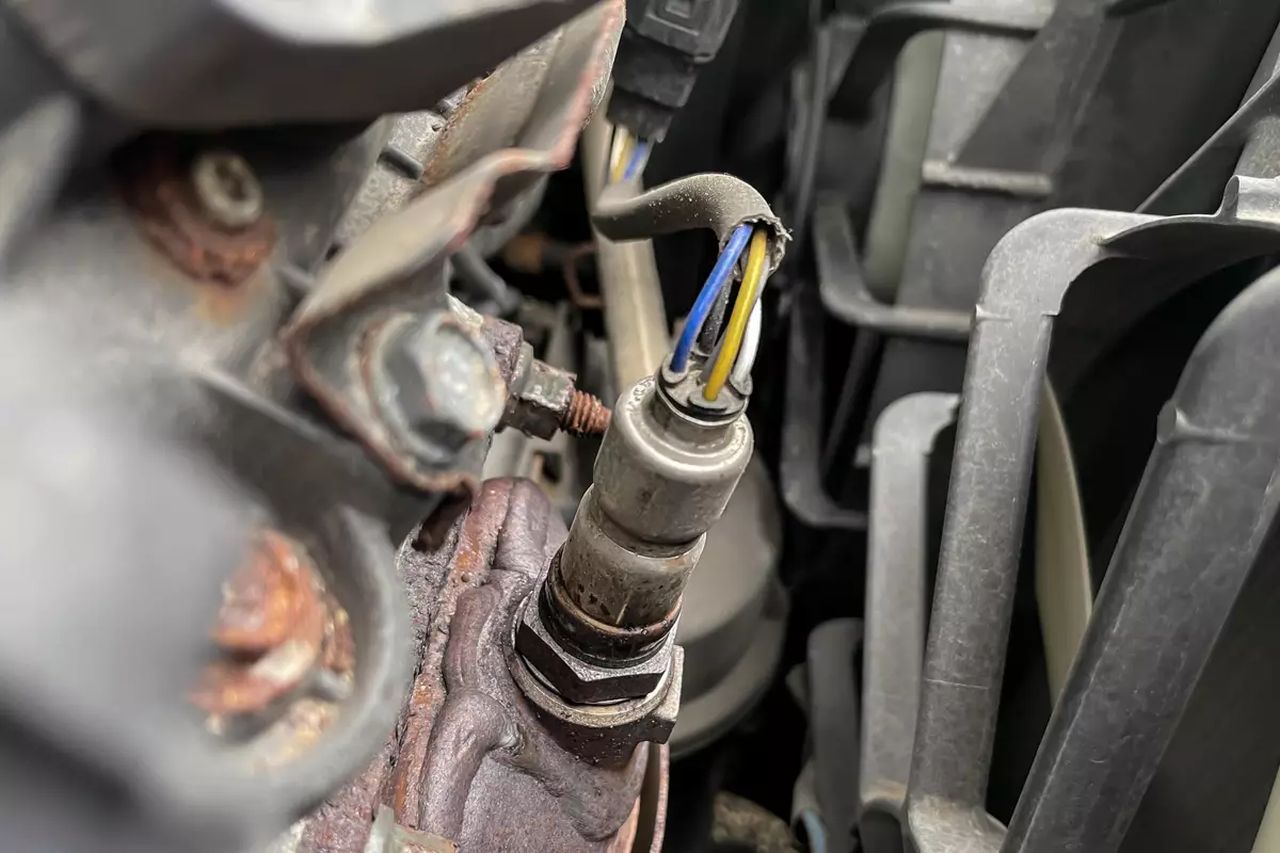
The oxygen sensor, commonly called an O2 sensor or Lambda sensor, is one of the most important components in a modern gasoline engine's emission and fuel-control system.
Its primary job is to measure the oxygen content in the exhaust gas and provide this information to the engine control unit (ECU). The ECU uses the sensor signal to determine whether the engine is running with too much or too little fuel relative to the available air.
This information allows the ECU to continuously adjust fuel injection and keep combustion close to the desired air-fuel ratio under operating conditions where closed-loop control is active.
A faulty oxygen sensor can therefore affect fuel economy, emissions, engine response and catalytic converter performance.
However, diagnosing an oxygen sensor is not as simple as seeing an O2-related fault code and replacing the sensor. Exhaust leaks, wiring faults, vacuum leaks, fuel-pressure problems, injector faults, ignition problems and catalytic converter issues can all produce symptoms that resemble an oxygen sensor failure.
What Is a Lambda Sensor?
The term Lambda describes the relationship between the actual air-fuel ratio and the theoretically ideal air-fuel ratio for complete combustion.
A Lambda value of approximately 1 indicates that the mixture is around the stoichiometric point.
For a conventional gasoline engine, the stoichiometric air-fuel ratio is commonly approximated as around 14.7 parts of air to 1 part of fuel by mass when using gasoline with a conventional reference composition.
The exact stoichiometric ratio can vary depending on the fuel composition.
The oxygen sensor does not simply tell the ECU "there is too much fuel" or "there is too little fuel." It measures exhaust-gas oxygen in a way that allows the ECU to infer combustion mixture conditions.
How Does an Oxygen Sensor Work?
The traditional narrowband oxygen sensor uses a ceramic sensing element, commonly based on zirconium dioxide.
The sensing element is exposed to exhaust gas on one side and a reference oxygen environment on the other side.
When there is a difference in oxygen concentration between the exhaust and reference side, the sensor generates an electrical signal.
The signal changes rapidly as the mixture crosses the stoichiometric region.
This is why a conventional narrowband oxygen sensor is especially useful for determining whether the mixture is richer or leaner than the stoichiometric point.
Why Does an Oxygen Sensor Need a Heater?
An oxygen sensor needs to reach a sufficiently high operating temperature before it can provide its intended signal.
Older sensors depended heavily on exhaust heat.
Modern oxygen sensors generally contain an integrated electrical heating element.
The heater allows the sensor to reach operating temperature more quickly after the engine starts.
This helps the ECU enter closed-loop fuel control sooner and reduces emissions during the warm-up period.
The heater circuit itself can fail, so an oxygen sensor fault does not necessarily mean that the sensing element has failed.
What Is a Narrowband Oxygen Sensor?
A narrowband oxygen sensor is designed primarily to indicate whether the exhaust mixture is on the rich or lean side of the stoichiometric point.
Its output changes relatively sharply around Lambda 1.
On many traditional zirconia sensors, the voltage may move between a relatively low and high range as the mixture changes.
A commonly encountered range is approximately 0.1 to 0.9 volts, but these values should not be treated as universal specifications for every sensor.
The ECU observes the switching behavior and uses it to make fuel corrections.
What Is a Wideband Oxygen Sensor?
A wideband oxygen sensor, also called an air-fuel ratio sensor in many applications, can provide much more detailed information about the mixture than a conventional narrowband sensor.
Instead of simply switching between rich and lean around stoichiometric operation, a wideband system can measure mixture conditions over a broader range.
Wideband sensors use a more complex sensing and control arrangement, typically involving a sensing cell and a pumping cell.
The ECU controls the pump current required to maintain a particular oxygen condition in the sensing chamber and uses this information to determine the air-fuel mixture.
Wideband systems are commonly found in modern engines because they provide more precise mixture control.
What Is the Difference Between an O2 Sensor and an Air-Fuel Ratio Sensor?
The terms are sometimes used interchangeably in everyday automotive discussions, but technically they are not always the same.
A traditional narrowband oxygen sensor primarily indicates whether the mixture is richer or leaner than stoichiometric.
A wideband air-fuel ratio sensor provides a more proportional measurement over a wider mixture range.
Both serve the broader purpose of helping the ECU control and monitor combustion.
The exact sensor technology depends on the engine and manufacturer.
Where Is the Oxygen Sensor Located?
Oxygen sensors are installed in the exhaust system.
Many vehicles have at least one sensor before the catalytic converter.
This is commonly called the upstream oxygen sensor, front O2 sensor, or Sensor 1.
Some vehicles also have a sensor after the catalytic converter.
This is commonly called the downstream oxygen sensor, rear O2 sensor, or Sensor 2.
Vehicles with multiple cylinder banks can have sensors identified by bank as well.
For example:
Bank 1 Sensor 1
This generally refers to the upstream sensor on the cylinder bank containing cylinder number 1.
Bank 1 Sensor 2
This generally refers to the downstream sensor after the catalytic converter on that bank.
The exact arrangement varies by engine design.
What Does the Upstream Oxygen Sensor Do?
The upstream sensor is primarily involved in fuel-control feedback.
The ECU uses its information to determine whether the combustion mixture needs correction.
If the exhaust indicates a lean condition, the ECU can increase fuel delivery.
If the exhaust indicates a rich condition, the ECU can reduce fuel delivery.
This process occurs continuously during closed-loop operation.
The upstream sensor therefore has a direct influence on fuel-trim corrections.
What Does the Downstream Oxygen Sensor Do?
The downstream sensor is generally used to monitor catalytic-converter performance rather than directly control the primary fuel mixture in the same way as the upstream sensor.
The ECU compares the behavior of the upstream and downstream sensors.
A properly functioning catalytic converter changes the oxygen-storage characteristics of the exhaust gas.
As a result, the downstream signal should generally behave differently from the upstream signal.
If the downstream sensor closely mirrors the upstream sensor over the relevant operating conditions, the ECU may determine that catalytic-converter efficiency has deteriorated.
What Are the Main Symptoms of a Faulty Oxygen Sensor?
An oxygen sensor problem can produce different symptoms depending on which sensor has failed and how it has failed.
Common symptoms include:
-
Check Engine Light
-
Increased fuel consumption
-
Rough idle
-
Hesitation during acceleration
-
Poor throttle response
-
Engine surging
-
Increased emissions
-
Difficult starting
-
Reduced engine performance
-
Unstable fuel trims
-
Failed emissions testing
-
Catalytic-converter problems
Some vehicles may show very few noticeable symptoms even when an oxygen sensor fault is present.
Check Engine Light
The Check Engine Light is one of the most common signs of an oxygen-sensor-related problem.
The ECU monitors sensor voltage, response speed, heater operation, electrical continuity and whether the signal is plausible compared with other engine data.
Possible diagnostic trouble codes include:
P0130 – O2 Sensor Circuit Malfunction
P0131 – O2 Sensor Circuit Low Voltage
P0132 – O2 Sensor Circuit High Voltage
P0133 – O2 Sensor Circuit Slow Response
P0134 – O2 Sensor Circuit No Activity Detected
P0135 – O2 Sensor Heater Circuit Malfunction
There are corresponding codes for other banks and sensors, including the P014x and P015x ranges.
The exact definition depends on the vehicle and diagnostic system.
Increased Fuel Consumption
A faulty upstream oxygen sensor can cause incorrect fuel-trim corrections.
If the ECU receives misleading information suggesting that the engine is running lean, it may increase fuel delivery.
If the mixture becomes unnecessarily rich, fuel consumption can rise.
However, poor fuel economy is not enough to prove an oxygen sensor failure.
Other possible causes include:
-
Faulty coolant temperature sensor
-
Dirty or faulty injectors
-
Incorrect fuel pressure
-
Vacuum leaks
-
MAF sensor problems
-
MAP sensor problems
-
Thermostat problems
-
Ignition faults
-
Low tyre pressure
-
Brake drag
A complete diagnosis is therefore necessary.
Rough Idle
An oxygen sensor problem can contribute to an unstable idle when the ECU is using its feedback signal for mixture control.
If the sensor signal is incorrect or excessively slow, fuel corrections may become inappropriate.
The engine can then develop an unstable or rough idle.
But vacuum leaks and ignition problems are often more direct causes of rough idle.
If the problem occurs before the engine reaches operating temperature, remember that the oxygen sensor may not yet be operating in closed-loop control.
Hesitation During Acceleration
A faulty mixture-control sensor can contribute to hesitation.
If the ECU receives incorrect information about the combustion mixture, fuel corrections may not match the engine's actual requirements.
This can become noticeable when the driver demands acceleration.
However, hesitation can also result from:
-
Fuel-pressure problems
-
Weak ignition
-
Injector problems
-
Throttle-body problems
-
MAF/MAP sensor faults
-
Intake leaks
-
Exhaust restrictions
The O2 sensor should therefore be confirmed as the cause rather than assumed to be the cause.
Engine Surging
Engine surging occurs when engine power repeatedly rises and falls without corresponding driver input.
An incorrect oxygen sensor signal can cause the ECU to make unnecessary fuel corrections.
This can contribute to unstable engine operation.
If the oxygen sensor signal itself is switching normally but the fuel trims are abnormal, another problem may be causing the mixture to change.
Poor Engine Performance
A faulty oxygen sensor can affect engine performance, particularly when the ECU is relying on its feedback for fuel control.
A severely incorrect mixture can cause poor combustion efficiency.
Possible symptoms include:
-
Sluggish acceleration
-
Reduced responsiveness
-
Poor low-speed operation
-
Uneven power delivery
The severity depends on the sensor type and failure mode.
Black Smoke From the Exhaust
Black exhaust smoke generally indicates excessive fuel relative to the available air.
An oxygen sensor fault can contribute to an excessively rich mixture if it causes the ECU to add unnecessary fuel.
However, black smoke should not automatically be blamed on the oxygen sensor.
Possible causes include:
-
Leaking injector
-
Excessive fuel pressure
-
MAF sensor error
-
MAP sensor error
-
Fuel-pressure regulator problem
-
Air-intake restriction
-
Incorrect ECU input
A rich-mixture diagnosis should therefore involve the entire fuel and air system.
White or Blue Smoke and the Oxygen Sensor
White or blue exhaust smoke should not normally be interpreted as an oxygen sensor failure.
White smoke can be associated with coolant entering the combustion chamber or condensation under certain conditions.
Blue smoke commonly indicates oil consumption.
The oxygen sensor may detect the resulting exhaust changes, but it is not necessarily the source of the problem.
This distinction is important because an oxygen sensor can be contaminated or damaged by an underlying engine problem.
Can a Vacuum Leak Damage the Oxygen Sensor?
A vacuum leak can cause the engine to run lean.
The upstream oxygen sensor may correctly detect the resulting lean exhaust condition.
The ECU may then increase fuel delivery, creating positive fuel trims.
In this situation, the oxygen sensor may be functioning correctly.
Replacing it would not repair the vacuum leak.
This is one of the most important principles in O2 sensor diagnosis:
An oxygen sensor can report a lean or rich condition without being the cause of that condition.
Can an Exhaust Leak Cause an Oxygen Sensor Code?
Yes.
An exhaust leak located upstream of the relevant oxygen sensor can allow outside air to enter the exhaust stream.
That additional oxygen can make the sensor detect a leaner condition than the engine actually produced.
The ECU may then respond by adding fuel.
An exhaust leak can therefore create misleading oxygen-sensor readings and abnormal fuel trims.
The exhaust system should be inspected carefully before replacing an O2 sensor.
Oxygen Sensor Heater Failure
Modern oxygen sensors normally include an integrated heater.
The heater allows the sensor to reach its operating temperature quickly.
A heater failure can be caused by:
-
Burned-out heater element
-
Blown fuse
-
Broken wiring
-
Poor connector
-
Corrosion
-
Short circuit
-
Open circuit
-
ECU control problem
A heater-related diagnostic code does not automatically mean that the sensing element itself has failed.
The heater circuit should be tested separately.
Oxygen Sensor Wiring Problems
Oxygen sensors are exposed to extreme temperatures and vibration.
Their wiring is routed close to the exhaust system, making heat damage a particular concern.
Possible wiring faults include:
-
Melted insulation
-
Broken wires
-
Short circuits
-
Open circuits
-
Corroded terminals
-
Loose connectors
-
Poor ground
-
Damaged sensor connector
An electrical problem can produce exactly the same diagnostic code as a failed sensor.
Can Engine Oil Damage an Oxygen Sensor?
Yes.
Excessive oil consumption can contaminate the oxygen sensor over time.
Oil entering the combustion process produces combustion by-products that can contaminate the sensor's sensing element.
If an oxygen sensor repeatedly becomes contaminated, simply replacing the sensor may only provide a temporary solution.
The cause of excessive oil consumption should also be investigated.
Can Coolant Damage an Oxygen Sensor?
Coolant contamination can also damage oxygen sensors.
If coolant enters the combustion chamber because of an internal engine problem, combustion by-products can reach the exhaust system.
This can contaminate the oxygen sensor and catalytic converter.
A sensor failure accompanied by unexplained coolant consumption should therefore be investigated together with the engine.
Can Fuel Additives Damage an Oxygen Sensor?
Certain fuel additives or contaminants can affect exhaust-system components.
Poor-quality fuel, excessive additives or inappropriate chemicals may contribute to sensor contamination depending on their composition.
Fuel-system products should therefore be used according to the manufacturer's recommendations.
How Do You Test an Oxygen Sensor?
Diagnosis should begin with a scan tool whenever possible.
Check:
-
Stored diagnostic trouble codes
-
Pending codes
-
Short-term fuel trim
-
Long-term fuel trim
-
Oxygen sensor voltage or current
-
Sensor response
-
Heater status
-
Engine coolant temperature
-
MAF/MAP data
-
Engine load
The goal is to determine whether the sensor signal is actually incorrect or whether it is accurately reporting a real engine condition.
How Does a Narrowband O2 Sensor Behave?
A conventional narrowband zirconia sensor operating in closed loop may switch repeatedly between a low-voltage lean indication and a higher-voltage rich indication.
The exact voltage and switching behavior depend on the sensor and ECU strategy.
A sensor that remains fixed at one extreme under conditions where switching should occur may indicate a problem.
However, a fixed reading can also be caused by a genuinely rich or lean engine condition.
Therefore, the sensor signal must be interpreted together with fuel trims and other data.
What Is Closed-Loop Fuel Control?
In closed-loop operation, the ECU uses feedback from the oxygen or air-fuel ratio sensor to adjust fuel delivery.
The basic process is:
Sensor measures exhaust condition → ECU evaluates mixture → fuel injection is adjusted → combustion changes → sensor reports the new condition
This feedback process allows the ECU to continuously correct small mixture errors.
During cold start and certain operating conditions, the ECU may use open-loop strategies instead.
What Are Short-Term and Long-Term Fuel Trims?
Fuel trims provide valuable information during oxygen-sensor diagnosis.
Short-Term Fuel Trim (STFT) represents relatively immediate fuel corrections.
Long-Term Fuel Trim (LTFT) represents learned corrections that develop over time.
Positive fuel trim generally means the ECU is adding fuel because it believes the engine is running lean.
Negative fuel trim generally means the ECU is removing fuel because it believes the engine is running rich.
Abnormal fuel trims do not automatically prove an oxygen sensor failure.
They are clues that help determine what is happening in the engine.
Can an O2 Sensor Cause a Rich Condition?
It can contribute to a rich condition if its signal causes the ECU to make inappropriate fuel corrections.
But the sensor may also be correctly reporting a genuinely rich mixture.
For example, a leaking injector can cause a rich mixture while the oxygen sensor accurately detects the resulting exhaust condition.
The correct diagnosis therefore requires determining whether the sensor is lying about the mixture or correctly reporting an actual mixture problem.
Can an O2 Sensor Cause a Lean Condition?
The same principle applies to lean conditions.
A faulty sensor may falsely indicate a lean condition and cause the ECU to add fuel.
But an engine can also genuinely run lean because of:
-
Vacuum leaks
-
Low fuel pressure
-
Restricted injectors
-
Intake leaks
-
MAF measurement errors
-
Exhaust leaks
The oxygen sensor may simply be reporting the result.
What Is O2 Sensor Response Time?
A healthy sensor should respond appropriately to changes in exhaust mixture.
A sensor that reacts too slowly may trigger a slow-response diagnostic code such as P0133 or a related code.
Sensor aging and contamination can slow response.
However, slow response can also be influenced by exhaust conditions, engine temperature, wiring problems and the ECU's control strategy.
How Long Does an Oxygen Sensor Last?
There is no single mileage figure that applies to every oxygen sensor.
Service life depends on:
-
Sensor technology
-
Fuel quality
-
Engine condition
-
Oil consumption
-
Coolant contamination
-
Exhaust temperature
-
Driving conditions
-
Sensor location
-
Manufacturer design
Modern sensors can last a long time, but they do eventually age.
A sensor can also become contaminated or electrically damaged before reaching the end of its expected service life.
Should Oxygen Sensors Be Replaced at a Fixed Mileage?
Not necessarily.
Some manufacturers may specify inspection or replacement intervals, while others rely on diagnostic condition rather than a universal replacement mileage.
Replacing a sensor simply because the vehicle has reached a certain mileage may be unnecessary if it is operating correctly.
Conversely, a sensor that is demonstrably slow or contaminated should not be left in service merely because it has not reached a particular mileage.
Should Upstream and Downstream Oxygen Sensors Be Replaced Together?
No.
The upstream and downstream sensors perform different roles and can have different failure rates.
If only one sensor has failed, there is normally no technical reason to automatically replace every oxygen sensor on the vehicle.
Each sensor should be diagnosed individually.
What Happens If You Drive With a Faulty Oxygen Sensor?
The vehicle may continue to operate, but prolonged driving with an unresolved oxygen-sensor problem can have consequences.
Possible effects include:
-
Increased fuel consumption
-
Higher emissions
-
Poorer engine performance
-
Incorrect fuel trims
-
Catalytic-converter overheating
-
Premature catalytic-converter damage
A severely rich mixture can be particularly harmful to the catalytic converter because excess fuel may enter the exhaust and increase catalyst temperature.
Can a Bad Oxygen Sensor Damage the Catalytic Converter?
Yes, indirectly.
If a faulty upstream sensor causes excessive fuel delivery, the engine can operate too rich.
Unburned fuel can enter the exhaust system.
The catalytic converter may then have to oxidize this excess fuel, potentially producing excessive heat.
A catalytic converter operating under repeated excessive thermal load can be damaged.
However, the reverse can also occur: an engine problem can damage the oxygen sensor.
The complete system should therefore be diagnosed.
What Is the Difference Between an Oxygen Sensor and a NOx Sensor?
These sensors measure different exhaust characteristics.
An oxygen sensor measures oxygen-related conditions used primarily for air-fuel control and catalyst monitoring.
A NOx sensor measures nitrogen oxides and is used in emissions-control systems designed to monitor and reduce NOx.
Some modern diesel and gasoline engines use several different exhaust sensors, so identifying the exact sensor is important before diagnosis or replacement.
Can an Oxygen Sensor Be Cleaned?
In general, oxygen sensors are not considered routine service items that should be cleaned as a normal maintenance procedure.
Contamination may be a symptom of another engine or fuel problem.
Attempts to clean the sensing element with unsuitable chemicals can damage the sensor.
If the sensor has internally failed or become permanently contaminated, replacement is usually the appropriate repair.
How Is an Oxygen Sensor Replaced?
Replacement begins by identifying the correct sensor.
The engine should be allowed to cool sufficiently because the exhaust system can become extremely hot.
The electrical connector is disconnected and the sensor is removed using the appropriate tool.
The replacement sensor must have the correct specification, connector and sensing technology.
The wiring should be routed exactly as intended to prevent contact with hot exhaust components.
After installation, diagnostic codes should be checked and cleared when appropriate, and live data should be monitored to confirm correct operation.
Why Is the Correct Oxygen Sensor Important?
Not all oxygen sensors are interchangeable.
Different sensors may have different:
-
Connector designs
-
Heater characteristics
-
Signal strategies
-
Thread dimensions
-
Cable lengths
-
Calibration
-
Sensing technology
A sensor that physically fits the exhaust system may still be electrically or electronically incorrect for the vehicle.
The correct part number should therefore be verified using reliable vehicle information.
Final Thoughts
The oxygen, or Lambda, sensor is a critical part of modern engine management.
It gives the ECU information about exhaust oxygen conditions, allowing the engine management system to adjust fuel delivery and monitor emissions performance.
A failing sensor can cause a Check Engine Light, increased fuel consumption, rough idle, hesitation, poor performance and increased emissions.
But one of the most important points in oxygen-sensor diagnosis is that an O2 sensor code does not automatically mean the sensor itself is defective.
A vacuum leak can create a genuine lean condition. An exhaust leak can introduce oxygen into the exhaust stream. A leaking injector can create a genuine rich condition. Wiring problems can distort the sensor signal. Engine oil or coolant contamination can damage the sensor.
For this reason, the correct diagnostic approach is to examine the oxygen-sensor signal together with fuel trims, engine temperature, intake measurements, exhaust condition and electrical-circuit integrity.
When the sensor is confirmed to be defective, replacing it with the correct specification can restore proper fuel-control feedback. When the sensor is only reporting another engine problem, replacing it without fixing the underlying cause will not solve the real problem.
The oxygen sensor is therefore best understood not simply as a component that "controls the fuel mixture," but as an important feedback device that tells the ECU what is happening in the combustion process.