TR
TR EN
EN

What Are ECU, ECM, and PCM? What Are the Symptoms of Failure?
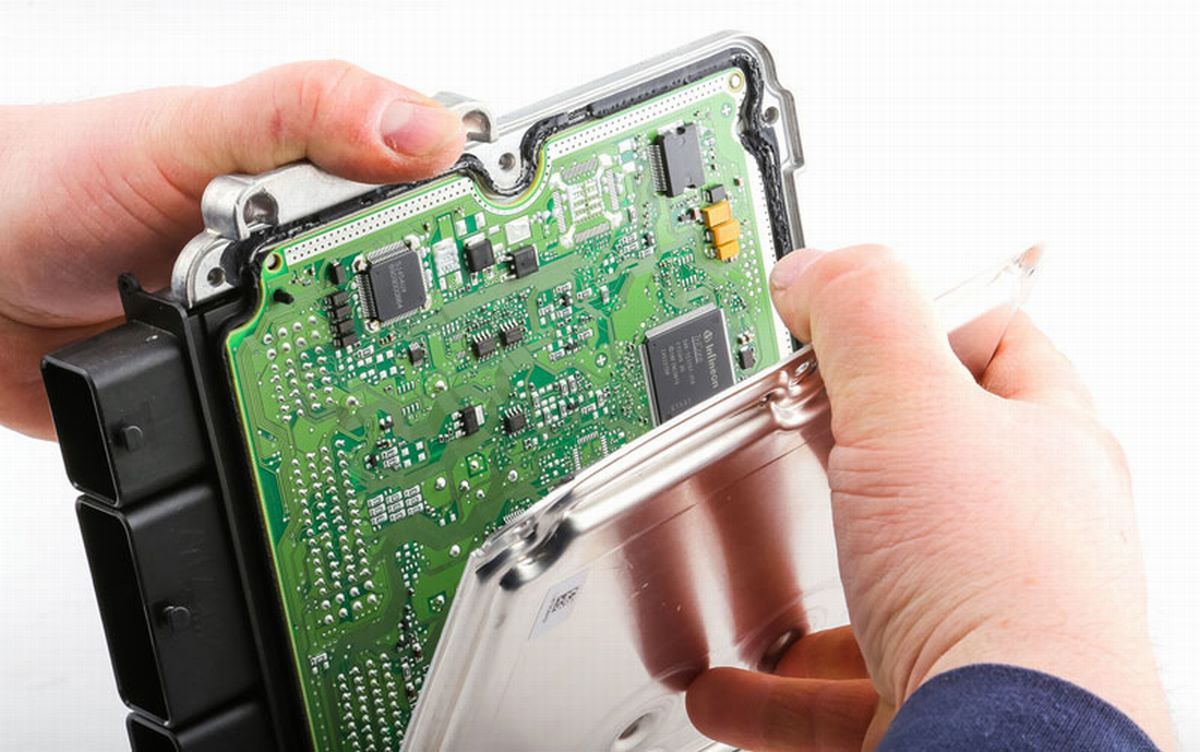
Modern vehicles rely on several electronic control units to manage the engine, transmission, emissions system, fuel system, ignition, and many other functions. Among the most commonly mentioned terms are ECU, ECM, and PCM.
These terms are sometimes used interchangeably, but they do not always refer to exactly the same thing. The terminology depends on the vehicle manufacturer, engine configuration, and control-system design.
When one of these control modules develops a fault, the symptoms can range from a simple warning light to serious engine performance problems or even a no-start condition.
What Is an ECU?
ECU stands for Engine Control Unit or, more broadly in automotive terminology, Electronic Control Unit.
When ECU means Engine Control Unit, it is the computer responsible for controlling important engine functions. It receives information from numerous sensors and uses this information to determine how the engine should operate.
Depending on the vehicle, the ECU can control or influence:
-
Fuel injection
-
Ignition timing
-
Air-fuel mixture
-
Electronic throttle control
-
Idle speed
-
Variable valve timing
-
Turbocharger control
-
Emissions systems
-
Cooling fan operation
-
Fuel pump control
-
Engine torque management
The ECU continuously compares sensor information with programmed operating parameters and makes adjustments while the engine is running.
What Is an ECM?
ECM stands for Engine Control Module.
In many vehicles, ECM and ECU essentially refer to the same engine computer. The manufacturer may simply use a different name for the module.
The ECM receives information from sensors such as:
-
Crankshaft position sensor
-
Camshaft position sensor
-
Engine coolant temperature sensor
-
Mass airflow sensor
-
Manifold absolute pressure sensor
-
Throttle position sensor
-
Accelerator pedal position sensor
-
Oxygen sensors
-
Knock sensors
-
Fuel pressure sensors
It processes these signals and controls the appropriate actuators.
For example, if the engine coolant temperature changes, the ECM can modify fuel injection, ignition, idle speed, and cooling fan operation according to the operating conditions.
What Is a PCM?
PCM stands for Powertrain Control Module.
A PCM is generally a control unit that manages both the engine and transmission or coordinates their operation within a single module.
In a vehicle equipped with a separate engine control module and transmission control module, the functions may be divided between different computers.
In another vehicle, the PCM may handle both engine and transmission control.
The PCM may therefore manage or coordinate:
-
Engine operation
-
Fuel injection
-
Ignition
-
Electronic throttle
-
Transmission shifting
-
Torque management
-
Emissions systems
-
Cruise control
-
Communication with other control modules
This is why a PCM fault can sometimes cause both engine and transmission-related symptoms.
ECU vs ECM vs PCM
The terminology can be confusing because manufacturers do not use these names in exactly the same way.
In simple terms:
ECU: Often refers to the engine computer, although ECU can also be used as a general term for an electronic control unit.
ECM: Specifically refers to the engine control module.
PCM: Generally refers to a module that controls the powertrain, often including both the engine and transmission.
Therefore, two manufacturers may use different names for control modules that perform very similar functions.
The actual module configuration of the vehicle is more important than the abbreviation printed in a diagnostic system.
How Does the Engine Computer Work?
The control module constantly receives information from sensors throughout the vehicle.
For example, the crankshaft position sensor tells the module where the crankshaft is and how fast it is rotating. The accelerator pedal sensor tells the system how much torque the driver is requesting.
The control module processes these inputs and calculates the appropriate commands.
It can then control components such as:
-
Fuel injectors
-
Ignition coils
-
Electronic throttle motor
-
Turbocharger actuator
-
EGR valve
-
Variable valve timing solenoids
-
Fuel pump
-
Cooling fan
-
Transmission solenoids
This process happens continuously and extremely quickly.
What Are the Symptoms of ECU, ECM, or PCM Failure?
A faulty control module can produce many different symptoms. However, these symptoms are not proof that the computer itself has failed.
Many sensor, wiring, power supply, grounding, and communication problems can produce symptoms that look like an ECU or ECM failure.
Common symptoms include:
-
Check Engine Light
-
Difficult starting
-
Engine not starting
-
Engine stalling
-
Rough idle
-
Misfires
-
Poor acceleration
-
Loss of engine power
-
Increased fuel consumption
-
Unusual throttle response
-
Transmission shifting problems
-
Multiple unrelated fault codes
-
Intermittent electrical problems
-
Communication errors between control modules
Check Engine Light and Multiple Fault Codes
A control module problem can cause the Check Engine Light to illuminate.
However, simply having several diagnostic trouble codes does not mean that the ECU itself is defective.
For example, a damaged ground connection can cause multiple sensors to report implausible signals simultaneously.
Similarly, low system voltage can cause several control modules to generate communication or sensor-related codes.
The technician should therefore determine whether the codes are related to a common power supply, ground, communication line, or wiring problem before replacing the control module.
Difficult Starting or No-Start Condition
A serious ECU or ECM problem can prevent the engine from starting.
The control module may need to receive valid signals from critical sensors such as the crankshaft and camshaft position sensors before it will activate fuel injection and ignition.
A no-start condition can therefore occur if:
-
The control module has lost power
-
The module has a poor ground
-
Communication with the immobilizer has failed
-
Critical sensor signals are missing
-
The module has an internal fault
-
The software or calibration has become corrupted
However, a no-start condition is much more commonly caused by a battery, starter, fuel, ignition, sensor, wiring, or immobilizer problem than by a failed ECU.
Engine Stalling
An engine may stall if the control module loses an important sensor signal or develops an internal or power-supply problem.
Intermittent stalling is particularly difficult to diagnose because the vehicle may restart normally afterward.
A technician should check whether the control module remains powered during the failure and whether important sensor signals disappear at the same moment.
Rough Idle and Misfires
An ECU or ECM problem can potentially cause incorrect fuel or ignition control.
This may result in:
-
Rough idle
-
Engine shaking
-
Misfires
-
Poor throttle response
-
Increased emissions
-
Check Engine Light
However, these symptoms are far more commonly caused by spark plugs, ignition coils, injectors, vacuum leaks, sensors, fuel pressure problems, or mechanical engine problems.
The control module should not be blamed without proper testing.
Poor Acceleration and Reduced Engine Power
If the ECU or PCM detects a serious problem, it may place the vehicle into a protective operating mode.
This is commonly known as limp mode or fail-safe mode.
The system may intentionally reduce engine torque to protect the engine, transmission, or emissions system.
Possible causes include:
-
Throttle control faults
-
Accelerator pedal sensor problems
-
Turbocharger control problems
-
Transmission faults
-
Critical sensor failures
-
Communication problems
-
Powertrain protection strategies
In this situation, the control module may be functioning correctly by responding to another problem.
Transmission Problems Related to the PCM
When a vehicle uses a PCM to control both the engine and transmission, a PCM-related problem can potentially produce transmission symptoms.
These may include:
-
Harsh shifting
-
Delayed gear changes
-
Incorrect shift points
-
Transmission stuck in one gear
-
Fail-safe transmission operation
-
Torque converter problems
-
Transmission warning light
But again, a transmission fault code does not automatically mean that the PCM has failed.
Transmission solenoids, wiring, sensors, fluid pressure, connectors, and the transmission itself must be investigated.
Intermittent ECU or ECM Problems
Intermittent electronic problems can be particularly difficult to diagnose.
A vehicle may operate normally most of the time but suddenly develop:
-
Warning lights
-
Engine stalling
-
Loss of throttle response
-
Communication errors
-
Multiple fault codes
-
No-start conditions
The cause can be a loose connector, damaged wiring, moisture, poor grounding, low battery voltage, or an internal module fault.
A problem that appears only when the engine compartment becomes hot can also indicate an electronic component or solder-joint problem inside a control module.
Water and Corrosion Damage
Control modules and their connectors can be damaged by water.
Depending on the vehicle design, an ECU or PCM may be located in the engine compartment, near the battery, under the windshield area, or inside the passenger compartment.
Water intrusion can cause:
-
Connector corrosion
-
Short circuits
-
Communication errors
-
Intermittent operation
-
Internal circuit damage
If electronic problems begin after flooding, heavy rain, windshield leakage, or engine-bay water intrusion, moisture damage should be considered.
Low Battery Voltage Can Look Like an ECU Failure
One of the most important points in electronic diagnosis is the vehicle's power supply.
A weak battery, failing alternator, poor ground connection, or unstable charging voltage can cause control modules to behave abnormally.
Possible symptoms include:
-
Multiple warning lights
-
Communication codes
-
Random sensor codes
-
Difficulty starting
-
Electronic throttle faults
-
Transmission warnings
-
ABS and stability-control warnings
Before condemning an ECU, ECM, or PCM, battery voltage, charging voltage, power supply, and grounds should be checked.
Can Wiring Problems Cause ECU Failure Symptoms?
Yes.
A damaged wire between the control module and a sensor can produce exactly the same symptoms as a failed module.
For example, an open circuit in an accelerator pedal sensor wire can cause a throttle-related fault. Replacing the ECU would not fix the underlying problem.
The same principle applies to:
-
Sensor wiring
-
Ground circuits
-
Power supply wires
-
CAN-Bus communication lines
-
Actuator wiring
-
Connector terminals
This is why electrical testing is an important part of ECU diagnosis.
CAN-Bus Communication Problems
Modern vehicles contain multiple control modules that communicate through networks such as CAN-Bus.
The engine control module may exchange information with:
-
Transmission control module
-
ABS module
-
Body control module
-
Instrument cluster
-
Airbag module
-
Steering control module
-
Immobilizer system
A problem with the communication network can make several modules appear to be faulty.
A damaged CAN wire, poor connector, short circuit, or faulty control unit elsewhere on the network can interfere with communication.
As a result, multiple communication fault codes may appear even though the engine ECU itself is functioning correctly.
How Is an ECU, ECM, or PCM Diagnosed?
Proper diagnosis should begin with the basics rather than immediately replacing the control module.
The technician should generally check:
Battery and charging system
Battery voltage and alternator output should be verified.
Power and ground connections
The control module must have stable power and a good ground connection.
Diagnostic trouble codes
Codes should be read from all relevant control modules, not only the engine system.
Live data
Sensor readings should be checked to determine whether the module is receiving realistic information.
Wiring and connectors
Power, ground, sensor circuits, actuator circuits, and communication lines should be tested.
Communication
CAN-Bus and other communication networks should be checked when communication-related faults are present.
Software and programming
If hardware and wiring are confirmed to be good, software, calibration, programming, or configuration may need to be investigated.
Does an ECU Need to Be Reprogrammed?
Some control modules require programming or configuration after replacement.
Depending on the vehicle, the replacement module may need:
-
Software programming
-
Vehicle configuration
-
Immobilizer synchronization
-
Key or security authorization
-
Coding
-
Adaptations
-
Component calibration
A replacement ECU is therefore not always a simple plug-and-play component.
Installing a used module without proper programming can create additional problems.
Can an ECU Be Repaired?
In some cases, yes.
An electronic control module may be repairable if the problem is caused by a damaged circuit, power component, connector, solder joint, or other repairable internal component.
However, not every ECU can or should be repaired.
If the module has severe internal damage, extensive corrosion, or unrecoverable memory or processor damage, replacement may be necessary.
The correct approach depends on the specific failure.
Should You Replace the ECU Immediately?
No.
An ECU, ECM, or PCM is one of the components that should generally be replaced only after other possible causes have been eliminated.
Before replacing the module, technicians should verify:
-
Battery condition
-
Charging voltage
-
Power supply
-
Grounds
-
Relevant fuses
-
Connectors
-
Wiring
-
Sensor signals
-
Actuator circuits
-
CAN-Bus communication
-
Software and configuration
A faulty sensor or broken wire can be much cheaper and easier to repair than a control module.
Important Point About ECU Fault Codes
A diagnostic trouble code that mentions an ECU, ECM, PCM, sensor, actuator, or communication circuit does not necessarily mean that the control module itself has failed.
The code usually tells you where the system detected a problem, not automatically which component must be replaced.
For this reason, proper diagnosis requires testing the entire circuit.
When Should the Vehicle Be Checked?
Professional diagnosis is especially important when the vehicle experiences:
-
Repeated no-start conditions
-
Sudden engine stalling
-
Severe loss of power
-
Multiple unexplained warning lights
-
Transmission entering fail-safe mode
-
Repeated communication errors
-
Water damage
-
Intermittent electronic failures
Continuing to drive with an intermittent electronic fault can sometimes leave the vehicle unable to restart.
The Key to ECU, ECM, and PCM Diagnosis
ECU, ECM, and PCM are different terms used for vehicle control computers, with the exact meaning depending on the manufacturer and vehicle architecture.
A failure of one of these modules can cause serious symptoms, but many apparent control-module failures are actually caused by low voltage, poor grounding, damaged wiring, faulty sensors, connectors, communication problems, or software issues.
For that reason, replacing the ECU should usually be one of the final steps in the diagnostic process rather than the first. A proper electrical and diagnostic investigation can often identify the real cause without unnecessarily replacing an expensive control module.