TR
TR EN
EN

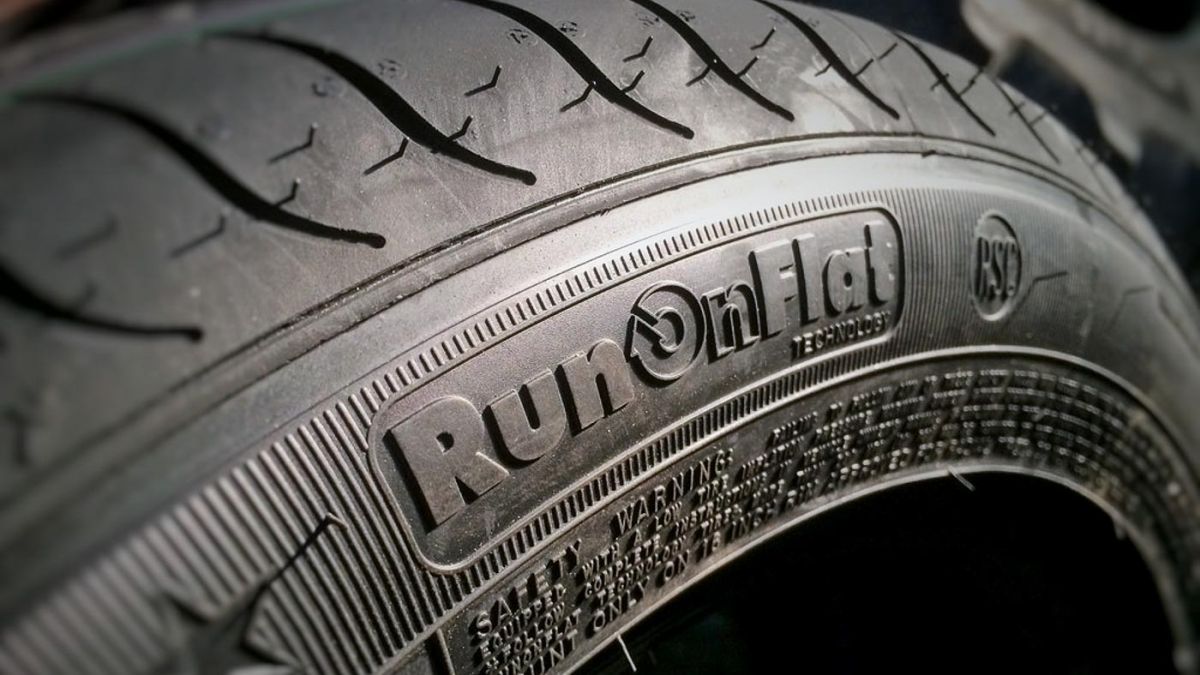
What Is an RFT Tire?
A flat tire can turn a normal journey into a major inconvenience. A puncture can leave the driver searching for a safe place to stop, finding a spare tire, or waiting for roadside assistance. Run-flat tires, commonly abbreviated as RFT tires, were developed to reduce these problems.
Unlike conventional tires, run-flat tires are designed to continue supporting the vehicle for a limited distance even after losing most or all of their air pressure.
This does not mean that an RFT tire can be driven indefinitely after a puncture. It is a temporary mobility solution that allows the driver to reach a safe location or a tire service without immediately stopping at the roadside.
What Does RFT Mean?
RFT stands for Run-Flat Tire.
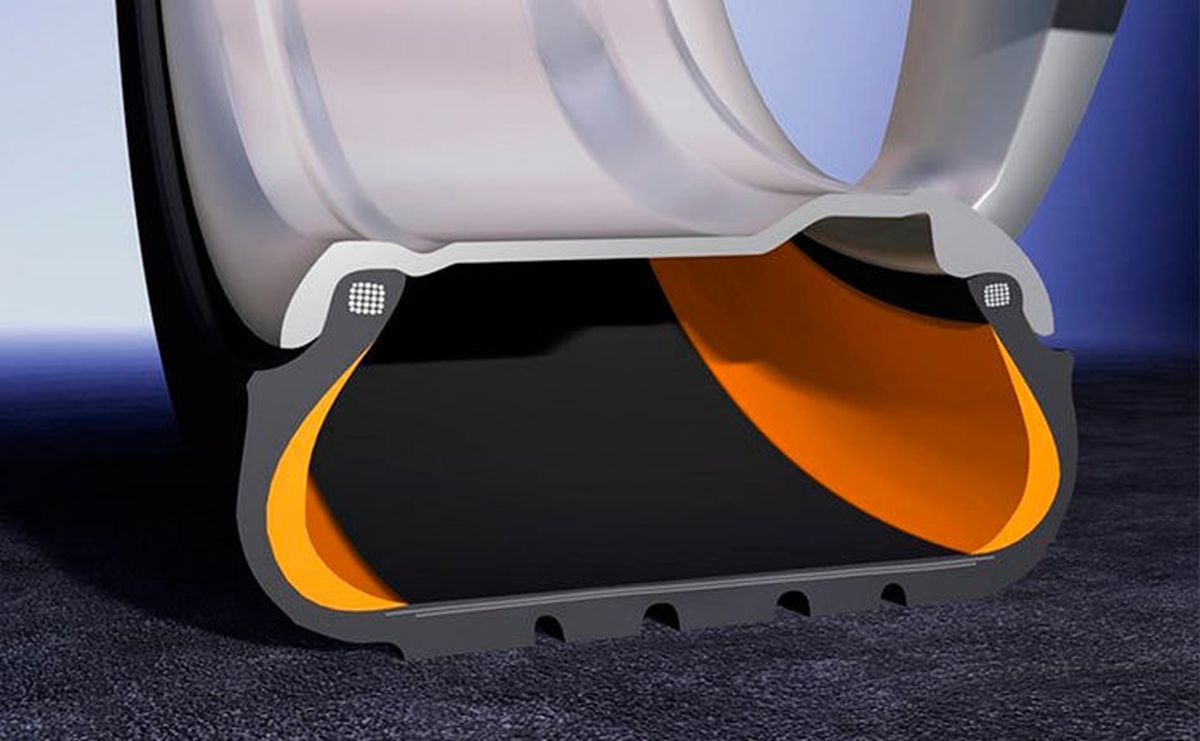
The main difference between an RFT tire and a conventional tire is the construction of the sidewall and internal structure.
A normal tire relies heavily on its air pressure to support the weight of the vehicle. When the tire loses its air, the sidewall can collapse under the vehicle's weight.
An RFT tire has reinforced sidewalls and other structural features that allow it to carry the vehicle's weight for a limited period even when the internal air pressure has dropped significantly.
This is the basic principle behind run-flat technology.
How Does an RFT Tire Work?
When a conventional tire is punctured, the loss of air pressure causes the tire to deform significantly.
The sidewall bends under the weight of the vehicle. Continued driving can quickly generate excessive heat and eventually destroy the tire.
An RFT tire is designed differently.
Its reinforced sidewalls are strong enough to maintain the shape of the tire and support the vehicle even after a major loss of air pressure.
Depending on the specific tire and manufacturer, the internal structure may also include additional reinforcement designed to control deformation and heat buildup.
As a result, the driver can generally continue driving for a limited distance at a reduced speed after a puncture.
How Far Can You Drive With an RFT Tire?
The exact distance depends on the tire manufacturer, tire model, vehicle, road conditions, load, and the amount of pressure lost.
Many run-flat tires are designed to provide approximately 80 km of mobility at speeds up to around 80 km/h after a complete loss of pressure.
However, this should not be treated as a universal rule for every RFT tire.
The specifications printed on the tire, provided by the manufacturer, and listed in the vehicle owner's manual should always take priority.
The purpose of the run-flat capability is to get the vehicle to a safe location or tire repair facility, not to allow normal driving for an extended period.
RFT Tires Require a Tire Pressure Monitoring System
A major problem with driving on a flat conventional tire is that the driver may immediately notice something is wrong because the tire becomes visibly deformed or the vehicle's handling changes.
With an RFT tire, the reinforced sidewall can keep the tire looking relatively normal even after pressure has been lost.
This is why vehicles equipped with run-flat tires generally require a functioning Tire Pressure Monitoring System (TPMS).
The TPMS warns the driver when tire pressure falls below the appropriate level.
Without a reliable pressure monitoring system, the driver may continue driving on a damaged RFT tire without realizing that it has lost pressure.
What Happens When an RFT Tire Gets a Puncture?
When an RFT tire loses pressure, the reinforced construction allows the vehicle to remain mobile.
The driver should nevertheless reduce speed, avoid sudden steering movements and braking, and head toward a safe location or appropriate tire service.
Driving on the tire after a pressure loss causes additional stress and heat buildup.
The longer and faster the vehicle is driven in this condition, the greater the possibility of internal damage.
For this reason, the maximum distance and speed specified by the tire manufacturer should be treated as limits rather than targets.
Advantages of RFT Tires
One of the biggest advantages of run-flat tires is increased mobility after a puncture.
A conventional flat tire can force the driver to stop immediately. With an RFT tire, the vehicle can often continue moving long enough to reach a safer location.
Other potential advantages include:
No immediate need to change the tire
The driver may not need to stop beside a busy road or in an unsafe location to install a spare tire.
No spare tire in some vehicles
Vehicles designed around run-flat tires may not need to carry a traditional spare tire. This can free up luggage-space and reduce vehicle weight.
Better control after sudden pressure loss
The reinforced sidewall helps maintain the tire's structure after a puncture, reducing the dramatic deformation that occurs with a conventional tire.
Additional safety during a puncture
The driver has a better chance of reaching a safe location rather than being stranded immediately after a tire failure.
Disadvantages of RFT Tires
Run-flat tires also have disadvantages, and they are not automatically better than conventional tires for every vehicle.
One of the most commonly mentioned drawbacks is ride comfort.
Because the sidewalls are reinforced, RFT tires can have a firmer sidewall than conventional tires. On rough roads, this can make bumps, potholes, and sharp road imperfections more noticeable.
The exact difference depends heavily on the tire design, vehicle suspension, and tire size.
RFT Tires Can Be More Expensive
Run-flat tires generally cost more than comparable conventional tires.
Their reinforced construction requires additional engineering and materials, which can increase manufacturing and replacement costs.
The price difference varies significantly between brands, sizes, and models.
For drivers who rarely experience tire punctures, the additional purchase cost may be an important consideration.
RFT Tires Can Be More Difficult to Repair
Whether an RFT tire can be repaired after a puncture depends on the type and location of the damage, the manufacturer's specifications, and whether the tire has been driven while underinflated.
This last point is particularly important.
If an RFT tire has been driven for a significant distance after losing pressure, the internal structure may have suffered damage that cannot be seen from the outside.
In such cases, repairing the puncture may not be considered safe.
A professional tire inspection should therefore be performed before deciding whether an RFT tire can be repaired or must be replaced.
Can You Repair an RFT Tire?
Sometimes, yes.
A small puncture in the central tread area may be repairable if the tire manufacturer permits it and the tire has not been damaged by driving while severely underinflated.
However, damage to the sidewall is generally much more serious.
The fact that an RFT tire can continue moving after losing pressure does not mean that every punctured RFT tire is repairable.
The tire should be inspected internally by a qualified tire professional before it is returned to service.
Can You Put Normal Tires on a Car That Uses RFT Tires?
In some cases, a vehicle can technically be fitted with conventional tires, but this should not be treated as a simple tire swap.
The vehicle's suspension, steering calibration, TPMS system, spare-tire equipment, and manufacturer's specifications should all be considered.
Some vehicles were specifically engineered around the characteristics of run-flat tires.
Replacing them with conventional tires may change ride comfort and handling characteristics. More importantly, the vehicle may have been designed without a spare tire because the original tires provided run-flat capability.
Therefore, the vehicle manufacturer's recommendations should be checked before making the change.
Can RFT Tires Be Used on Any Car?
Not every vehicle is suitable for run-flat tires.
The tire must have the correct dimensions, load rating, speed rating, and other specifications for the vehicle.
The wheels also need to be compatible with the tire design.
Some run-flat applications use wheels specifically designed to help retain the tire bead when pressure is lost.
For this reason, simply choosing an RFT tire in the same size as a conventional tire does not guarantee that it is an appropriate replacement.
RFT vs. Conventional Tires
The biggest difference is what happens after a major loss of air pressure.
A conventional tire generally needs to be repaired or replaced before the vehicle can safely continue driving.
An RFT tire is designed to provide limited mobility after pressure loss.
However, conventional tires generally offer advantages in terms of purchase cost, ride comfort, and sometimes tire availability.
RFT tires, on the other hand, provide the convenience of being able to continue driving for a limited distance after a puncture.
Neither type is universally superior. The right choice depends on the vehicle, driving conditions, road quality, budget, and the driver's priorities.
What Should You Do If the RFT Warning Appears?
If the TPMS warning indicates that an RFT tire has lost pressure, the driver should not simply ignore the warning because the vehicle still feels normal.
Reduce speed and avoid aggressive steering, acceleration, and braking.
Check the tire pressure as soon as possible and follow the vehicle manufacturer's instructions for driving after a pressure loss.
If the tire has been completely deflated, the maximum permitted speed and distance specified for that particular tire should be observed.
The safest approach is to have the tire inspected as soon as possible.
Is an RFT Tire Worth It?
RFT tires can be particularly useful for drivers who prioritize mobility and convenience after a puncture.
They can eliminate the need to immediately change a flat tire at the side of the road and may allow the driver to reach a tire shop without requiring roadside assistance.
However, they come with compromises. They can be more expensive, may provide a firmer ride, and a tire that has been driven while flat may require replacement even when the original puncture appears minor.
For this reason, choosing between RFT and conventional tires should not be based solely on the ability to drive after a puncture.
The tire's compatibility with the vehicle, its load and speed ratings, TPMS requirements, road conditions, comfort expectations, and manufacturer's recommendations should all be considered before making the decision.