TR
TR EN
EN

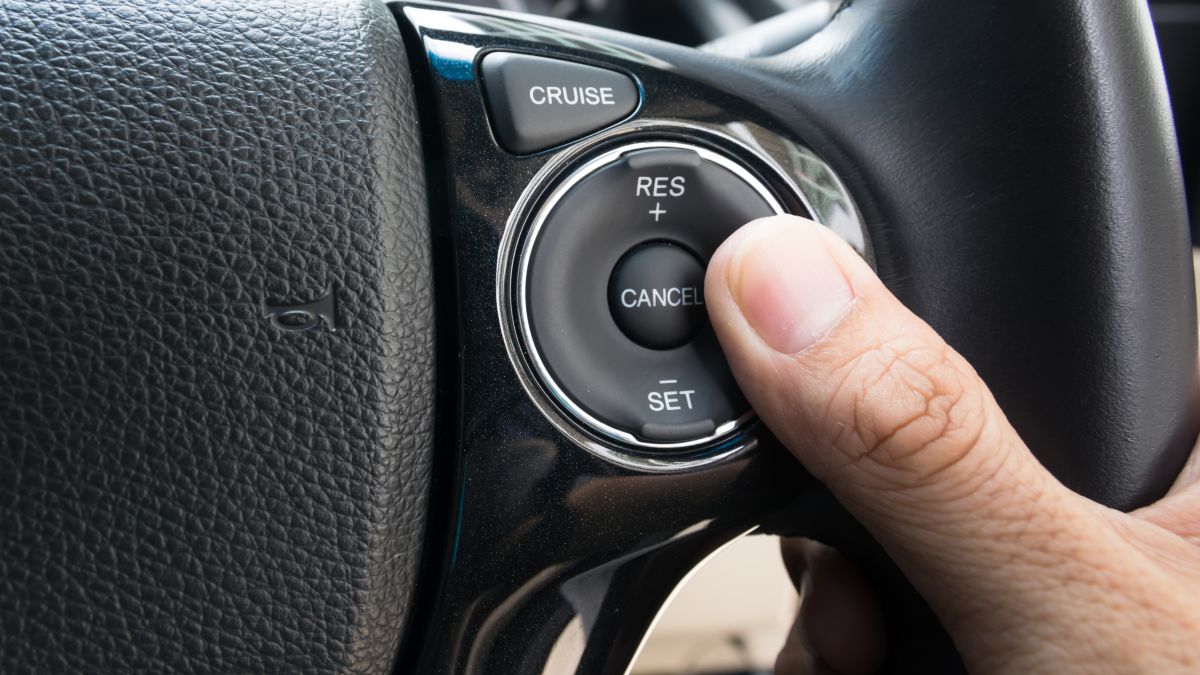
Does Cruise Control Save Fuel?
Cruise control is one of the most useful features for long-distance driving. Instead of keeping your foot constantly on the accelerator pedal, the system electronically controls the engine to maintain the speed selected by the driver.
But does cruise control actually save fuel?
Yes, it can reduce fuel consumption under certain conditions, but it is not automatically more economical on every road or in every driving situation. It tends to work best on flat, steady roads, while manual driving can sometimes be more efficient on hilly, winding roads or in heavy traffic.
Why Can Cruise Control Reduce Fuel Consumption?
One of the factors that can increase fuel consumption is unnecessary speed variation.
During a long journey, a driver may unintentionally press the accelerator slightly harder or release it repeatedly. The vehicle accelerates, slows down, and accelerates again. When these small changes happen continuously, the engine's operating conditions also keep changing.
Cruise control attempts to maintain a constant speed.
For example, if you set the system to 110 km/h on a highway, the vehicle will continuously adjust engine output to stay around that speed.
Depending on the vehicle, the system may:
-
Adjust the throttle opening
-
Modify fuel injection
-
Control engine torque
-
Work together with the automatic transmission
-
Maintain a more consistent cruising speed
This can reduce unnecessary acceleration caused by inconsistent accelerator-pedal input.
Its Main Advantage Is Maintaining a Constant Speed
The main reason cruise control can improve fuel economy is actually very simple: it helps maintain a steady speed.
Aerodynamic resistance increases significantly as vehicle speed rises. Therefore, maintaining a moderate and consistent speed is generally more economical than repeatedly accelerating and slowing down.
For example, if a driver constantly varies between 95 and 110 km/h, fuel consumption may be higher than when traveling smoothly at a steady 100 km/h.
However, cruise control itself does not automatically make the vehicle economical.
Driving at 100 km/h with cruise control will generally use more fuel than driving at 80 km/h with cruise control.
The selected speed is therefore just as important as the use of cruise control.
Cruise Control Is More Efficient on Flat Roads
One of the situations where cruise control can provide the greatest benefit is a flat, relatively empty road.
On a long, straight highway with little traffic, the system can maintain a consistent speed with relatively small adjustments.
This can reduce the small but repeated accelerator inputs that a driver might otherwise make.
The longer the vehicle travels under these stable conditions, the more useful cruise control can become from a fuel-economy perspective.
Can Cruise Control Increase Fuel Consumption Uphill?
Yes.
One of the disadvantages of cruise control is that its priority is generally to maintain the selected speed.
Imagine that you are traveling at 100 km/h on a flat road and then approach an uphill section. The vehicle naturally tends to lose speed as the road rises.
If cruise control is active, the system will try to keep the vehicle at 100 km/h.
To do this, the engine may need to produce more power. Depending on the vehicle, this can result in:
-
Greater throttle opening
-
Increased turbocharger boost
-
Higher fuel injection
-
Automatic transmission downshifts
-
Higher engine RPM
An experienced driver may instead allow the vehicle to lose a small amount of speed while maintaining a lighter engine load.
For this reason, manual control can sometimes be more economical on hilly roads.
What Happens When Cruise Control Goes Downhill?
The way cruise control behaves downhill depends on the vehicle.
Modern vehicles can use several strategies to prevent the speed from increasing too much.
The system may reduce throttle input, use engine braking, downshift the transmission, or, in some vehicles with more advanced systems, use the brakes.
Adaptive cruise control systems may also apply the brakes when necessary to maintain the selected speed or following distance.
The exact behavior depends on the engine, transmission, braking system, and cruise-control technology used by the vehicle.
Is Cruise Control Always More Economical Than Manual Driving?
No.
This is one of the most common misconceptions about cruise control.
The purpose of cruise control is primarily to maintain a selected speed, not to achieve the absolute lowest possible fuel consumption in every situation.
For example, while climbing a mild hill, allowing the vehicle to slow from 100 km/h to 95 km/h may require less engine power than forcing it to remain at exactly 100 km/h.
A cruise-control system may continue increasing engine output to maintain the programmed speed.
An experienced driver can sometimes anticipate these conditions and adjust the accelerator accordingly.
Does Adaptive Cruise Control Save Fuel?
Adaptive cruise control (ACC) works differently from conventional cruise control.
Instead of simply maintaining a selected speed, ACC also monitors traffic ahead and adjusts the vehicle's speed to maintain a specified following distance.
On highways and relatively smooth traffic, this can provide both convenience and potentially more consistent driving.
When the vehicle ahead slows down, ACC reduces your speed. When traffic clears, it accelerates toward the selected cruising speed.
This can reduce unnecessary driver inputs and may help maintain smoother traffic flow.
However, if traffic is constantly stopping and accelerating, ACC may have to repeatedly speed up and slow down. In these conditions, the fuel-saving benefit may be limited.
Can Adaptive Cruise Control Increase Fuel Consumption During Acceleration?
It can.
Suppose the vehicle ahead suddenly changes lanes and the road becomes clear. The adaptive cruise control system may accelerate relatively strongly to return to the programmed speed.
A driver might choose to accelerate more gradually.
Repeated strong acceleration can increase fuel consumption, particularly if traffic conditions require frequent speed changes.
The effect can be different in hybrid and electric vehicles because regenerative braking and electric motor assistance can change how acceleration and deceleration affect energy consumption.
Cruise Control in Gasoline Cars
Cruise control can be useful in gasoline-powered vehicles, particularly during steady highway driving.
Maintaining a consistent cruising speed can reduce unnecessary throttle changes and help the engine operate under relatively stable conditions.
However, speed remains one of the most important factors affecting fuel consumption.
At higher speeds, aerodynamic drag becomes increasingly significant. Therefore, using cruise control at a high speed does not make the vehicle economical simply because the speed is constant.
Cruise Control in Diesel Cars
Diesel engines often operate efficiently during steady long-distance driving, particularly because of their strong low- and mid-range torque characteristics.
As a result, cruise control can work very well with diesel vehicles on highways.
However, hills remain an important consideration.
When climbing, cruise control may demand additional engine power to maintain the programmed speed. This can increase fuel consumption, particularly in heavily loaded vehicles.
Cruise Control with a Manual Transmission
Many modern vehicles with manual transmissions can use cruise control.
The cruise-control system manages engine output, while the driver remains responsible for selecting the appropriate gear.
For example, if the vehicle approaches a steep hill while cruising in a high gear, the engine may begin to struggle.
The driver may need to shift to a lower gear.
Cruise control cannot replace the driver's responsibility to select the appropriate gear in a manual-transmission vehicle.
Cruise Control with an Automatic Transmission
Cruise control and automatic transmissions can work together very effectively.
When the vehicle climbs a hill, the transmission may automatically downshift to provide more torque. When the road becomes flat again, it may return to a higher gear.
Depending on the transmission design, the system may behave differently with:
-
Conventional automatic transmissions
-
Dual-clutch transmissions
-
CVT transmissions
-
Automated manual transmissions
This is one reason why the same cruise-control setting can produce different fuel-consumption results in different vehicles.
Cruise Control with a CVT
CVT transmissions do not use fixed conventional gear ratios in the same way as traditional automatic transmissions.
Instead, the transmission can continuously adjust its ratio to keep the engine operating at an appropriate RPM.
When cruise control encounters an uphill section, the CVT may increase engine RPM to provide the necessary power.
The driver may therefore notice the engine becoming louder even though the vehicle remains at the same speed.
This does not necessarily indicate a problem. It can simply be a normal characteristic of CVT operation.
How Much Fuel Can Cruise Control Save?
There is no universal percentage that applies to every vehicle and every road.
The difference in fuel consumption depends on factors such as:
-
Road gradient
-
Cruising speed
-
Traffic density
-
Wind
-
Vehicle weight
-
Engine type
-
Transmission type
-
Tire pressure
-
Air-conditioning use
-
Driving style
A driver who frequently varies accelerator input may see a noticeable improvement when using cruise control on a flat highway.
On the other hand, an experienced driver who already maintains a very steady and economical speed may see little difference.
At What Speed Is Cruise Control Most Economical?
One of the most important factors is the speed you choose.
As speed increases, aerodynamic drag becomes significantly greater.
Therefore:
Higher cruising speed generally means higher fuel consumption.
Setting cruise control to 130 km/h does not make the vehicle more economical than driving at 90 or 100 km/h simply because the speed is constant.
Cruise control stabilizes the selected speed. It does not automatically select an economical speed for you.
Can You Use Cruise Control in the City?
Traditional cruise control is generally less useful in urban traffic.
Traffic lights, intersections, pedestrians, speed changes, and frequent stops mean that the system may constantly need to be disengaged or adjusted.
Under these conditions, cruise control usually provides little fuel-economy benefit.
Adaptive cruise control can be more useful in certain modern vehicles because it can automatically adjust speed according to traffic.
However, frequent acceleration and braking can still limit its fuel-saving potential.
How to Drive Economically with Cruise Control
Simply activating cruise control is not enough to maximize fuel economy.
For more efficient driving:
-
Select a reasonable cruising speed.
-
Use cruise control on flat, flowing roads.
-
Avoid unnecessary acceleration.
-
Consider disabling cruise control on very steep or constantly changing roads.
-
Maintain the correct tire pressure.
-
Avoid carrying unnecessary weight.
-
Anticipate traffic conditions.
-
Avoid aggressive acceleration.
-
Use the transmission appropriately for the road conditions.
-
Maintain the vehicle properly.
On long highway journeys, combining a moderate cruising speed with smooth and consistent driving can provide much better fuel economy than simply setting cruise control to a high speed.
Can Cruise Control Damage the Engine?
Under normal conditions, using cruise control does not damage the engine.
The system is designed to work with the vehicle's engine-management and transmission systems.
However, on steep hills, cruise control may demand significant engine output to maintain the selected speed. This increases engine load, but it does not normally cause damage by itself.
In challenging road conditions, the driver may still choose to take manual control.
Does Cruise Control Save Fuel When Towing?
Towing changes the situation considerably.
A trailer increases vehicle weight and aerodynamic drag, meaning the engine has to work harder.
Cruise control can maintain a consistent speed, but it may respond to hills by demanding significant engine power.
When towing, maintaining a moderate speed and anticipating hills manually can sometimes be more economical and provide better control than relying entirely on cruise control.
The vehicle manufacturer's recommendations regarding cruise-control use while towing should also be followed.
Cruise Control and Fuel Economy on Long Trips
The longer the journey, the more useful consistent driving can become.
If a driver spends several hours continuously adjusting the accelerator, small variations in speed and engine load can accumulate.
Cruise control can reduce this workload and make the driving pattern more consistent.
This is one reason why cruise control is particularly popular for highway travel.
The greatest benefit, however, usually comes from the combination of moderate speed, smooth driving, proper tire pressure, and good vehicle maintenance.
Final Takeaway
Cruise control can save fuel, but only under the right conditions.
Its main advantage is maintaining a steady speed and reducing unnecessary acceleration. This makes it particularly useful on flat, open highways where traffic is flowing smoothly.
On steep or constantly changing roads, however, cruise control may use additional engine power to maintain the programmed speed. In these situations, an experienced driver may sometimes achieve better fuel economy by allowing small speed variations.
The most important point is that cruise control does not make a high cruising speed economical. It simply helps maintain the speed you choose.
For the best fuel economy, use cruise control when the road conditions are suitable, select a moderate speed, avoid aggressive acceleration, and allow the vehicle's engine and transmission to operate smoothly rather than constantly forcing them to maintain an unnecessary speed.