TR
TR EN
EN

Where Does Rust Form on a Vehicle? Which Rust and Corrosion Problems Are Dangerous?
One of the most important issues to consider when buying a vehicle or maintaining a car you have been using for many years is the formation of rust and corrosion. Although a small rust spot visible on the surface may often seem like only an aesthetic problem, rust that develops on the chassis or structural components can seriously affect the vehicle’s durability and safety.
So, where does rust usually form on vehicles? How dangerous is a rusty chassis? How can corrosion be detected, and when should repairs definitely be carried out? Here are all the details…
Why Does Rust Form on Vehicles?
Rust is a type of corrosion that occurs when iron reacts with oxygen and moisture. When the vehicle’s paint or protective coating is damaged, the exposed metal comes into contact with the external environment and begins to rust over time.
The main factors that accelerate rust formation are:
-
Rain and high humidity
-
Salty air near coastal areas
-
Road salt used during winter
-
Paint damage caused by stone impacts
-
Poor repairs after accidents
-
Failure to wash the vehicle regularly
-
Damage to underbody protection
-
Parking outdoors for long periods
Vehicles used in coastal regions and areas with heavy snowfall have a higher risk of rust formation.
Why Is Rust Inspection Important on Vehicles?
Rust does not only damage the appearance of a vehicle. Advanced corrosion can:
-
Weaken the chassis
-
Affect suspension mounting points
-
Damage brake lines
-
Corrode fuel lines
-
Cause major defects during vehicle inspections
-
Significantly reduce the vehicle’s resale value
For this reason, detecting rust at an early stage is extremely important.
Where Should Rust and Corrosion Be Checked on Vehicles?
When purchasing a vehicle or during periodic maintenance, the following areas should be carefully inspected.
Chassis Rails
The chassis is the structural framework that carries the vehicle.
The following should be checked:
-
Swelling
-
Rust spots
-
Holes
-
Welding marks
-
Bending
-
Thick filler applications
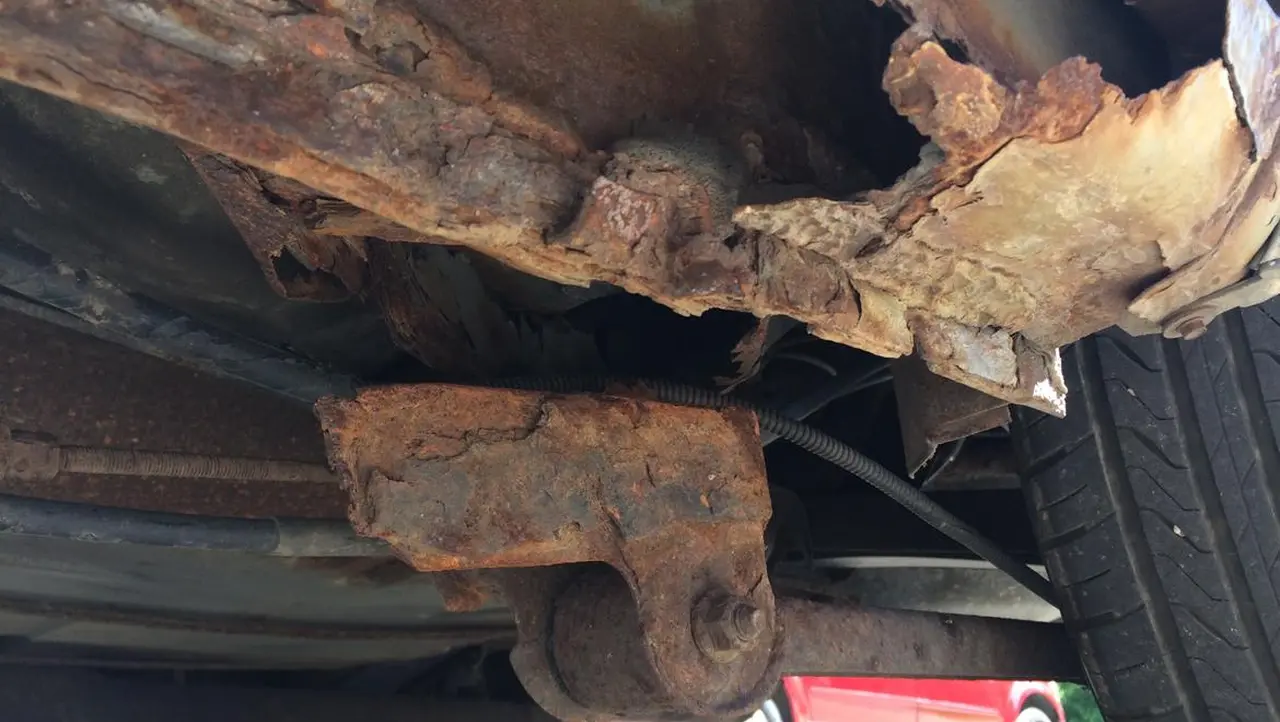
Advanced rust on the chassis is one of the most important safety risks.
Side Sills
The side sills located under the doors are constantly exposed to:
-
Water
-
Mud
-
Stones
During inspection, check for:
-
Bubbles
-
Paint swelling
-
Corrosion
-
Softened areas
Inside Wheel Arches
The inner parts of the front and rear wheel arches can rust over time due to accumulated mud.
Removing the wheel arch liner can reveal the actual condition more clearly.
Shock Absorber Towers
Shock absorber towers are important points that carry the vehicle’s load.
These areas should be carefully inspected if there are:
-
Cracks
-
Rust
-
Welding marks
-
Corrosion
Floor Pan
The vehicle should be lifted and the floor pan should be inspected.
Special attention should be given to:
-
Jacking points
-
Seat mounting areas
-
Areas around the exhaust system
Trunk Floor
If water accumulates in the trunk floor and remains unnoticed for a long time, rust can develop.
The spare wheel should be removed and the lower section should always be checked.
Door Bottoms
If the water drainage holes in doors become blocked, water can accumulate inside.
As a result:
-
Internal rust
-
Paint bubbling
-
Corrosion
may begin.
Edges of the Hood and Trunk Lid
Rust can also appear in these areas due to stone impacts and paint damage.
The rubber seals should especially be lifted and checked.
Brake Lines
Metal brake lines can become thinner and crack when they rust.
This can cause brake fluid leaks and loss of braking performance.
Fuel Lines
In older vehicles, rust on metal fuel lines can increase the risk of fuel leaks.
Exhaust System
Since the exhaust system is constantly exposed to high temperatures and water vapor, it can rust over time.
However, surface rust on the exhaust system is generally considered normal.
Suspension Mounting Points
The components that should be checked include:
-
Control arm connections
-
Subframe
-
Rear axle
-
Tie rod connections
-
Stabilizer bar links
Advanced corrosion in these areas is important for safety.
What Happens If the Chassis Rusts?
The chassis is the main structure that carries the entire load of the vehicle.
If it becomes severely corroded:
-
The metal becomes thinner.
-
Structural strength decreases.
-
Impact absorption capacity is reduced.
-
Suspension mounting points may weaken.
-
Deformation may increase during an accident.
For this reason, chassis rust should never be ignored.
Is It Safe to Drive a Vehicle with a Rusty or Corroded Chassis?
The answer depends on the severity of the rust.
Surface Rust
Light rust that exists only on the paint surface or the upper layer of the metal usually does not create a serious safety risk.
However, it should be cleaned and protected.
Advanced Corrosion
If the chassis has:
-
Holes
-
Metal thinning
-
Large corrosion areas
-
Broken welds
the vehicle may not be safe.
In such a vehicle:
-
The chassis may deform more than expected during an accident.
-
Suspension geometry may deteriorate.
-
Steering control may be negatively affected.
-
The strength of structural components may decrease.
Therefore, vehicles with serious chassis corrosion should not be used without professional repair.
Can a Rusty Vehicle Pass Inspection?
Surface rust alone does not always create a problem during vehicle inspections.
However, the following conditions may be considered major defects:
-
Serious chassis corrosion
-
Holes in structural components
-
Excessive corrosion on brake lines
-
Weakness in suspension mounting points
-
Structural damage affecting safety
Therefore, having the underbody checked before inspection is highly recommended.
How to Check Rust When Buying a Used Vehicle?
The following checks should be performed when purchasing a second-hand vehicle:
-
The vehicle should be lifted.
-
The underbody should be inspected in detail.
-
Chassis rails should be checked.
-
The trunk floor should be opened.
-
The spare wheel should be removed.
-
Side sills should be inspected.
-
Shock absorber towers should be checked.
-
Brake lines should be examined.
-
Door bottoms and seals should be lifted and inspected.
-
Thick filler areas or signs of fresh paint should be investigated.
If possible, paint thickness measurement and underbody inspection should be performed together during an expert vehicle inspection.
How Can Rust Formation Be Prevented?
To use your vehicle for many years without rust problems, consider the following recommendations:
-
Wash the vehicle regularly.
-
Clean the underbody during winter months.
-
Remove salt residues after driving near coastal areas.
-
Repair paint scratches without delay.
-
Regularly check underbody protection coatings.
-
Make sure water drainage holes remain open.
-
Avoid parking in damp environments for long periods.
-
Keep the garage dry and well ventilated.
Rust formation on vehicles is not only an aesthetic problem. Especially corrosion occurring on critical areas such as the chassis, side sills, suspension mounting points, and brake lines can seriously affect vehicle durability and road safety.
Surface rust can be prevented from becoming a major problem if it is cleaned and protected at an early stage. However, corrosion on the chassis or structural components should never be ignored. It should be carefully inspected by a professional service and repaired when necessary. Having a comprehensive underbody inspection before purchasing a vehicle is one of the most effective ways to prevent high repair costs and safety risks in the future.