TR
TR EN
EN

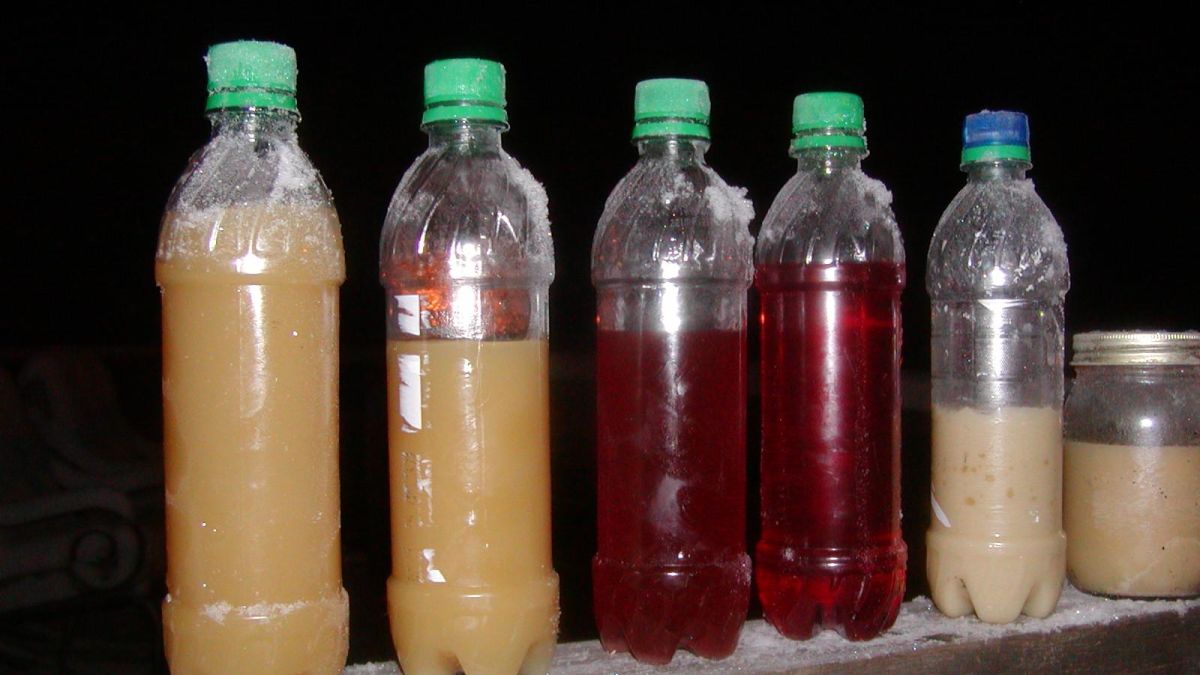
Do Gasoline and Diesel Freeze? At What Temperature Do the Fluids in Your Car Freeze?
Your vehicle is exposed to weather conditions involving various temperature fluctuations throughout its service life. One of the biggest concerns for drivers living in cold climate regions is whether various automotive fluids can freeze. Many people wonder at what temperature different fluids, from gasoline to transmission fluid, will freeze.
Does Gasoline Freeze?
Simply put, gasoline can freeze, but very few people live in a climate cold enough to witness such an event. The exact freezing point of gasoline varies depending on its various components, including its octane rating. However, consider a range of approximately -40 to -130°C (-40 to -200°F), with gasoline generally beginning to freeze at around -73°C (-100°F).
Therefore, unless you live in Antarctica, you generally do not need to worry about the gasoline in your vehicle freezing.
The most important thing to keep in mind is to always keep the fuel tank above one-quarter full. This helps prevent fuel-related problems and can also help extend the life of the fuel pump.
Does Diesel Fuel Freeze?
Compared with gasoline and other alternative fuel types, diesel fuel is much more likely to cause problems in cold weather. The main reason for these problems is not actually freezing, but rather “gelling.”
The paraffin wax naturally present in diesel fuel begins to thicken at approximately 0°C (32 to 34°F). This thickening of paraffin wax is known as “gelling.”
Thickened or gelled fuel can quickly clog fuel filters and fuel lines, causing significant restriction and preventing proper fuel flow. This problem becomes even more severe in temperatures below -10°C (14°F).
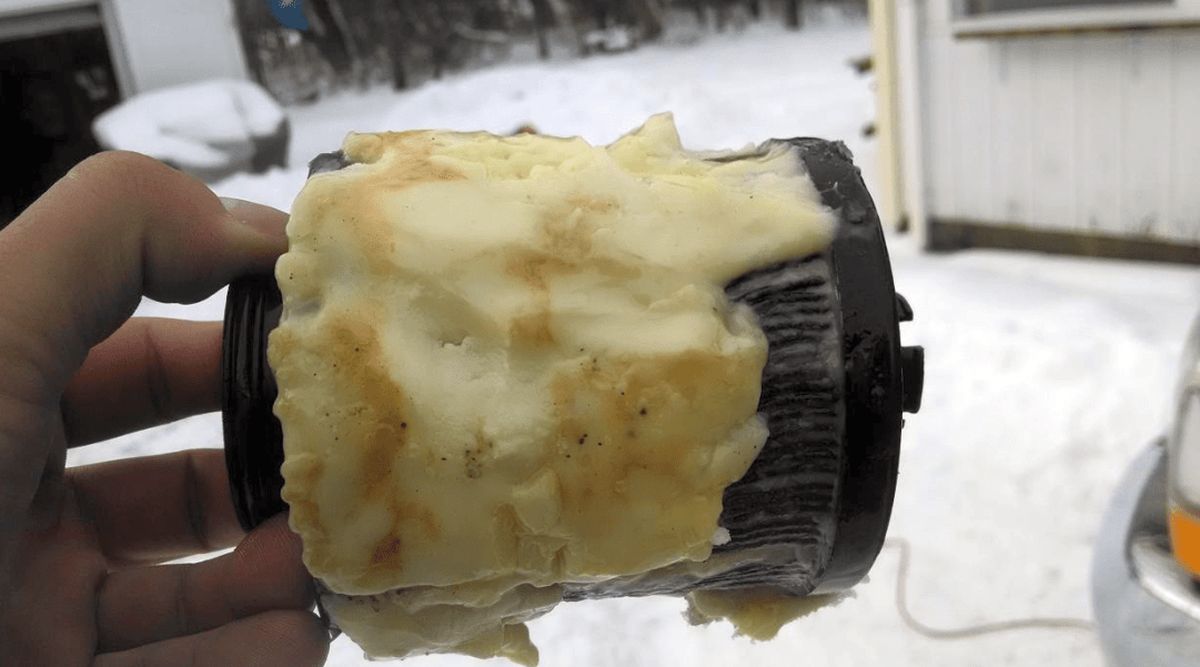
Diesel fuel requires proper maintenance and attention throughout the year, especially during winter. Once diesel fuel begins to gel, there are very few options for reversing the process. There is no product that can simply be poured into the tank and quickly and effectively dissolve fuel that has already gelled.
The best approach is to prevent gelling before extremely cold weather arrives. Anti-gel additives help prevent diesel fuel molecules from sticking together, reducing wax formation and helping prevent the fuel from turning into a gel-like consistency.
Continuously heating the fuel can effectively reverse gelling and restore fuel flow. However, heating a large quantity of fuel can take time and is often difficult to accomplish in cold weather. Most diesel vehicles have a heating element located inside or near the fuel filter to assist with this process.
Does Engine Oil Freeze?
Engine oil does not technically freeze, even in the coldest climates. This is because engine oil is a petroleum-based product. Instead of freezing, engine oil becomes thicker and more viscous as its temperature decreases.
However, this can become a concern for drivers living in areas where temperatures fall below approximately -18°C (0°F).
Most engines require engine oil with the appropriate viscosity to operate properly. Viscosity describes how easily an oil flows at a given temperature.
Thinner oils have a more fluid consistency and flow more easily in cold weather. This makes the engine easier to start in low temperatures and helps reduce friction between internal components.
At higher temperatures, thicker oils are preferred because they help maintain oil pressure and prevent the oil from becoming excessively thin.
Using the wrong engine oil can cause the oil to become excessively thick in cold weather. This restricts oil flow and can cause critical engine components to experience increased wear.
For this reason, if you live in a cold climate, you should always use the engine oil recommended for your vehicle and the expected temperature range.
Does Brake Fluid Freeze?
Like engine oil, brake fluid is technically classified as a fluid rather than water, and it does not freeze like water. Instead, brake fluid can become thicker or develop a gel-like consistency in extremely cold temperatures.
However, this rarely causes noticeable problems. The brake pedal may feel firmer during the first few applications, but the brake fluid quickly warms up and reaches its normal operating condition.
In many cases, brake fluid can begin to thicken and develop a gel-like consistency at approximately -34°C (-30°F) or lower. However, modern brake fluids contain a variety of additives, and many can resist this type of thickening down to approximately -43°C (-45°F).
Does Antifreeze Freeze?
Contrary to popular belief, antifreeze (coolant) can freeze, but the temperature must reach an extremely low level for this to happen.
Most coolant mixtures used in vehicle cooling systems consist of approximately 50% water and 50% antifreeze. This mixture generally provides freeze protection down to approximately -37 to -45°C (-35 to -50°F).
The exact protection level of the coolant can be checked using an antifreeze or coolant tester.
If the coolant in a vehicle freezes, there is a risk of serious engine damage. Although many engines have freeze plugs designed to help minimize damage caused by freezing coolant, cracking of the engine block or cylinder head can still occur.
Does Transmission Fluid (ATF) Freeze?
Transmission fluid is classified as an oil-based fluid and therefore does not freeze into ice like water. Instead, it becomes thicker in cold weather, which can cause problems related to fluid flow and pressure.
Temperatures generally need to fall below approximately -18°C (0°F) before transmission fluid becomes significantly thicker or develops a gel-like consistency.
If transmission fluid becomes excessively thick, gear changes may become delayed or harsher than normal. However, these symptoms generally begin to disappear after the vehicle has been driven for the first few kilometers, as the transmission fluid warms up and the vehicle returns to normal operating conditions.
Does Power Steering Fluid Freeze?
Power steering fluid is generally classified as an oil- or petroleum-based fluid. Therefore, it does not typically freeze in the same way that water does.
However, its viscosity increases as temperatures fall. The colder the ambient temperature becomes, the thicker the power steering fluid will become.
If water enters the power steering system, however, it can freeze inside the system and potentially cause the lines to become blocked.
When power steering fluid becomes too thick, its efficiency decreases and friction between metal components can increase. The power steering pump may also become noticeably noisier in cold weather.
Does Windshield Washer Fluid Freeze?
If the ambient temperature falls below a certain level, windshield washer fluid can certainly freeze. However, the freezing point of windshield washer fluid depends on the additives used in the product.
Windshield washer fluid is formulated with antifreeze agents so that it can withstand low temperatures. Depending on the concentration and type of antifreeze additives used, its freezing point can range from approximately -15 to -63°C (5 to -81°F).
When purchasing windshield washer fluid for your vehicle, pay attention to its rated freezing temperature and choose a product suitable for the climate in your area.
If windshield washer fluid freezes, pressing the windshield washer lever will not spray fluid onto the windshield. The frozen fluid can also expand and potentially cause the washer reservoir or other components of the system to crack.