TR
TR EN
EN

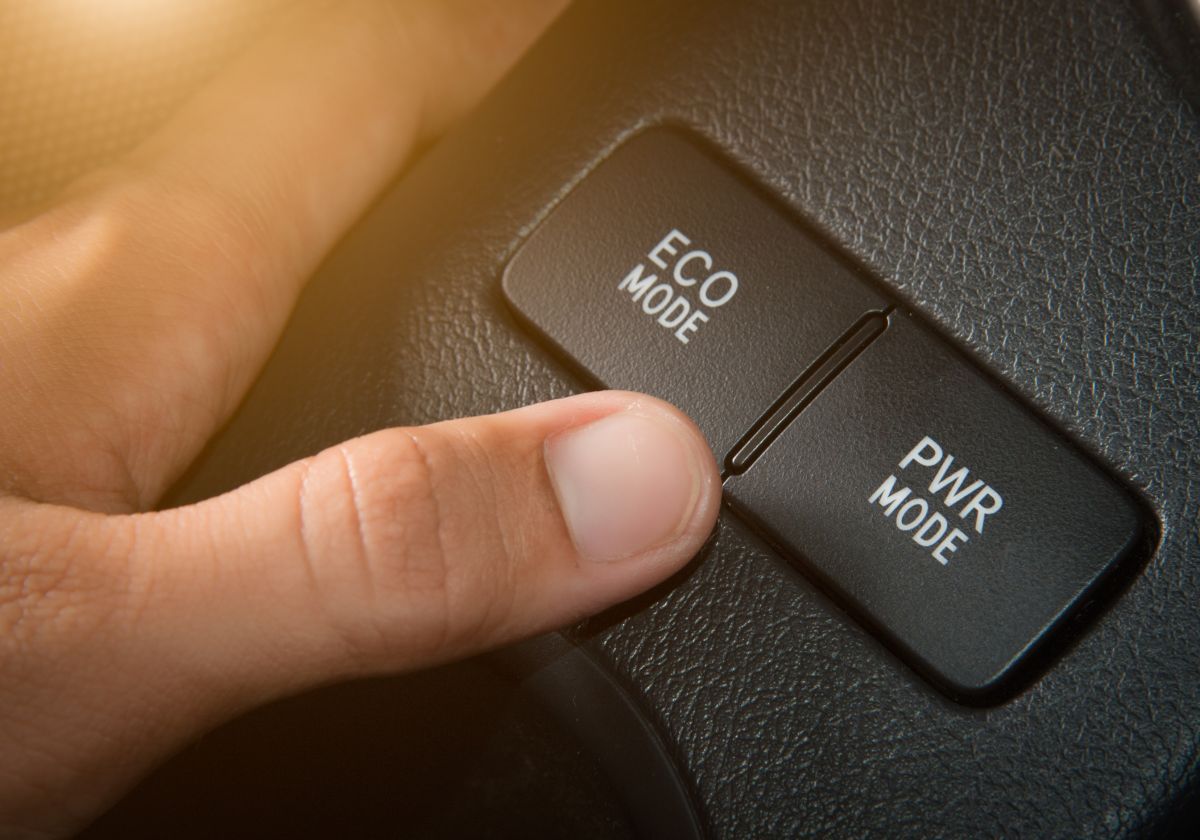
What Is ECO Mode? Does ECO Mode Save Fuel?
Modern cars often come with several driving modes, such as Normal, Sport, Comfort, Snow, Individual, and ECO mode.
ECO mode is designed to make the vehicle operate with fuel or energy efficiency as a priority. Depending on the vehicle, it can change throttle response, automatic transmission shift points, air-conditioning operation, engine behavior, and other systems.
But does ECO mode really save fuel?
Yes, it can reduce fuel consumption, but the amount of savings depends heavily on the vehicle and the driver's habits. ECO mode is not a magic fuel-saving button. Instead, it encourages smoother and more efficient driving by changing how the vehicle responds to the driver's inputs.
What Does ECO Mode Do?
The main purpose of ECO mode is to reduce unnecessary energy consumption.
Depending on the manufacturer and vehicle, ECO mode may:
-
Soften throttle response
-
Encourage earlier upshifts
-
Keep the engine at lower RPM
-
Change automatic transmission behavior
-
Adjust air-conditioning operation
-
Make the start-stop system more active
-
Modify cruise-control acceleration
-
Optimize electric motor operation in hybrid and electric vehicles
The exact strategy varies from one vehicle to another.
Does ECO Mode Reduce Engine Power?
Usually, the engine's maximum physical power does not actually change.
For example, if a car's engine produces 150 horsepower, selecting ECO mode does not necessarily turn it into a 120-horsepower engine.
Instead, the system generally changes how quickly the engine responds to accelerator input.
When you press the accelerator, the ECU can interpret that input differently in ECO mode. You may need to press the pedal farther to request the same level of acceleration.
This is why some drivers feel that their car is "slower" in ECO mode.
The engine has not necessarily lost its maximum power. The vehicle is simply using that power more gradually.
Does ECO Mode Really Save Fuel?
Yes, but the amount of fuel saved varies considerably.
ECO mode can be particularly useful during:
-
City driving
-
Stop-and-go traffic
-
Gentle acceleration
-
Automatic transmission operation
-
Frequent low-speed driving
-
Steady-speed driving
For example, if a driver normally accelerates aggressively from traffic lights, ECO mode can make the accelerator response less sensitive and encourage smoother acceleration.
However, if the driver activates ECO mode but continues to accelerate aggressively, drive at high speeds, and brake hard, the fuel-saving benefit can become very small.
How Does ECO Mode Reduce Fuel Consumption?
There are several ways in which ECO mode can improve efficiency.
Smoother throttle response
ECO mode often makes the accelerator less sensitive. This can help prevent unnecessary bursts of acceleration.
Earlier upshifts
An automatic transmission may shift into a higher gear earlier, allowing the engine to operate at lower RPM when conditions permit.
Reduced acceleration demand
The vehicle prioritizes smooth and efficient power delivery instead of maximum responsiveness.
Air-conditioning management
Some vehicles modify the way the air-conditioning compressor and climate-control system operate in ECO mode, reducing the energy required for cabin temperature control.
Start-stop operation
The start-stop system may be used more actively to prevent unnecessary fuel consumption while the vehicle is stationary.
Is ECO Mode More Useful in City Driving?
In many cases, yes.
City driving involves constant:
-
Acceleration
-
Deceleration
-
Stopping
-
Starting
-
Gear changes
This makes accelerator control particularly important.
ECO mode can help reduce fuel consumption by encouraging smoother acceleration and preventing unnecessary throttle inputs.
For example, gently accelerating away from a traffic light generally consumes less fuel than using full throttle simply to reach the next traffic light faster.
The fuel saving therefore comes partly from the vehicle's ECO strategy and partly from the smoother driving behavior that the mode encourages.
Does ECO Mode Save Fuel on the Highway?
It can, but its effect may be less noticeable than in city traffic.
At steady highway speeds, fuel consumption is strongly influenced by:
-
Vehicle speed
-
Aerodynamic drag
-
Tire pressure
-
Road gradient
-
Vehicle weight
-
Engine efficiency
-
Wind
-
Air-conditioning use
For example, the difference between driving at 90 km/h and 130 km/h can have a much larger effect on fuel consumption than simply switching ECO mode on or off.
Once aerodynamic resistance becomes significant, reducing speed can provide a much greater efficiency benefit.
What Does ECO Mode Change in an Automatic Transmission?
ECO mode can have a noticeable effect on automatic transmissions.
The transmission may shift into higher gears earlier to keep engine RPM lower.
For example, under normal settings, the transmission might hold 3rd gear longer during moderate acceleration. In ECO mode, it may shift into 4th gear sooner.
This can result in:
-
Lower engine RPM
-
Less engine noise
-
Smoother acceleration
-
Lower fuel consumption
The transmission can still downshift when necessary.
If you press the accelerator hard or encounter a steep hill, the transmission can select a lower gear to provide the required torque.
What Does ECO Mode Do in a Manual Transmission?
The effect can be less obvious in a manual car because the driver controls the gear changes.
However, the vehicle can still modify throttle response, climate-control operation, engine management, or other systems.
Some vehicles also provide gear-shift recommendations that tell the driver when to shift up or down for better efficiency.
In a manual car, the driver's behavior therefore has an even greater influence on the effectiveness of ECO mode.
Does ECO Mode Limit the Air Conditioning?
It can.
The air-conditioning system requires energy to operate. In an internal-combustion vehicle, the compressor can also place an additional load on the engine.
Depending on the vehicle, ECO mode may change the climate-control strategy.
It may:
-
Reduce compressor operation
-
Limit fan speed
-
Adjust the target cabin temperature
-
Reduce the intensity of heating or cooling
-
Prioritize energy efficiency over rapid temperature changes
As a result, the air-conditioning system may feel slightly less aggressive in ECO mode.
However, this varies significantly between vehicles.
Does ECO Mode Affect the Start-Stop System?
It can.
The start-stop system shuts the engine off when the vehicle is stationary under suitable conditions, reducing fuel consumption while idling.
ECO mode may encourage more frequent use of this system or change the strategy used to restart the engine.
However, the engine will not necessarily shut off every time the vehicle stops.
Factors such as:
-
Engine temperature
-
Battery condition
-
Outside temperature
-
Climate-control demand
-
Traffic conditions
-
Safety requirements
can prevent the start-stop system from operating.
This is normal.
Why Does the Car Feel Slower in ECO Mode?
This is one of the most noticeable characteristics of ECO mode.
The vehicle may feel less responsive when you press the accelerator.
The main reason is usually electronic throttle mapping, rather than an actual loss of engine capability.
For example, pressing the accelerator 30% may produce a stronger response in Normal or Sport mode than it does in ECO mode.
The result is smoother and less aggressive acceleration.
This can help reduce fuel consumption because the driver is less likely to request unnecessary amounts of torque.
Can ECO Mode Damage the Engine or Transmission?
Under normal conditions, no.
ECO mode is designed by the manufacturer to work within the normal operating parameters of the engine and drivetrain.
Using ECO mode continuously does not normally cause damage to the engine or transmission.
In some situations, lower engine speeds and smoother acceleration may even reduce unnecessary mechanical stress.
However, ECO mode does not eliminate the need for maintenance.
Engine oil, filters, spark plugs, transmission fluid, cooling systems, and other maintenance items still need to be serviced according to the manufacturer's recommendations.
Does ECO Mode Reduce Performance?
It can reduce responsiveness, but that does not necessarily mean the vehicle's maximum performance has been permanently reduced.
In ECO mode, you may notice:
-
Softer throttle response
-
Earlier upshifts
-
Lower engine RPM
-
More conservative transmission behavior
-
Reduced climate-control power
This can make the car feel slower when you suddenly demand acceleration.
For example, when overtaking another vehicle, you may need to press the accelerator farther than you would in Sport mode.
Should You Leave ECO Mode On All the Time?
For normal daily driving, there is generally no problem with doing so.
If you drive calmly and mainly use the vehicle for commuting, ECO mode can be a sensible default setting.
However, ECO mode is not necessarily the best choice for every situation.
Normal or Sport mode may be more appropriate when:
-
Overtaking quickly
-
Climbing a steep hill
-
Carrying a heavy load
-
Towing a trailer
-
Driving on a winding road
-
You need a faster throttle response
-
Driving in a performance-oriented manner
The best mode depends on what you need from the vehicle at that moment.
Does ECO Mode Work Differently in Hybrid Cars?
Yes.
Hybrid vehicles can use ECO mode to change the way the combustion engine and electric motor work together.
The system may prioritize electric propulsion when conditions allow, reduce aggressive engine intervention, or optimize energy recovery.
Some hybrid vehicles also adjust:
-
Accelerator response
-
Regenerative braking
-
Engine start/stop behavior
-
Battery usage
-
Climate-control energy consumption
The objective is to use the available energy as efficiently as possible.
What About Electric Vehicles?
ECO mode is also common in electric vehicles.
Because an EV does not consume gasoline, the purpose is to reduce electrical energy consumption and potentially increase driving range.
ECO mode may:
-
Soften accelerator response
-
Limit maximum motor output
-
Reduce climate-control consumption
-
Modify regenerative braking
-
Optimize energy use
-
Reduce unnecessary power demand
For an electric vehicle, ECO mode can therefore help extend range rather than simply reduce fuel consumption.
How Much Fuel Can ECO Mode Save?
There is no universal percentage.
Claims such as "ECO mode always saves 10% fuel" should be treated with caution.
The actual difference depends on:
-
Vehicle model
-
Engine type
-
Transmission
-
Driving style
-
Traffic
-
Vehicle speed
-
Road conditions
-
Climate-control usage
-
Tire pressure
-
Outside temperature
-
Vehicle load
If you already drive very smoothly and efficiently, switching ECO mode on may make only a small difference.
On the other hand, if you normally accelerate aggressively, ECO mode can help reduce consumption by making the vehicle's responses more conservative.
How Can You Get the Most From ECO Mode?
ECO mode works best when combined with efficient driving habits.
Accelerate smoothly
Avoid using full throttle unless you actually need it.
Look ahead in traffic
If you can anticipate traffic lights and slowing vehicles, you can reduce unnecessary acceleration and braking.
Avoid excessive speed
High speeds significantly increase aerodynamic drag, especially on highways.
Maintain correct tire pressure
Underinflated tires increase rolling resistance and can raise fuel consumption.
Remove unnecessary weight
Carrying heavy items in the trunk all the time can increase energy consumption.
Use climate control sensibly
Heating and cooling can have a noticeable effect on energy consumption, especially in hybrid and electric vehicles.
Is ECO Mode Worth Using?
For most drivers, yes.
There is little downside to using ECO mode during normal driving if you prefer its smoother response.
However, the biggest fuel-saving benefit does not come from the ECO button itself.
The largest gains usually come from combining the mode with efficient driving habits.
A driver who uses ECO mode but repeatedly accelerates hard and drives at high speeds may consume more fuel than a driver who keeps ECO mode off but drives smoothly and anticipates traffic.
Final Takeaway
ECO mode is a vehicle operating mode designed to prioritize fuel or energy efficiency.
It can change throttle response, automatic transmission shift points, climate-control operation, start-stop behavior, and other systems depending on the vehicle.
Yes, ECO mode can save fuel, but it does not produce the same result in every vehicle or driving situation.
Its greatest benefit comes from encouraging smoother acceleration, lower engine speeds, and more efficient use of the vehicle's systems.
In simple terms:
ECO mode → More conservative vehicle response
Smoother driving → Lower unnecessary energy consumption
Lower consumption → Potential fuel savings
So, ECO mode should not be viewed as a magic solution for fuel economy. It is better understood as a tool that helps the vehicle and driver work toward more efficient driving.