TR
TR EN
EN

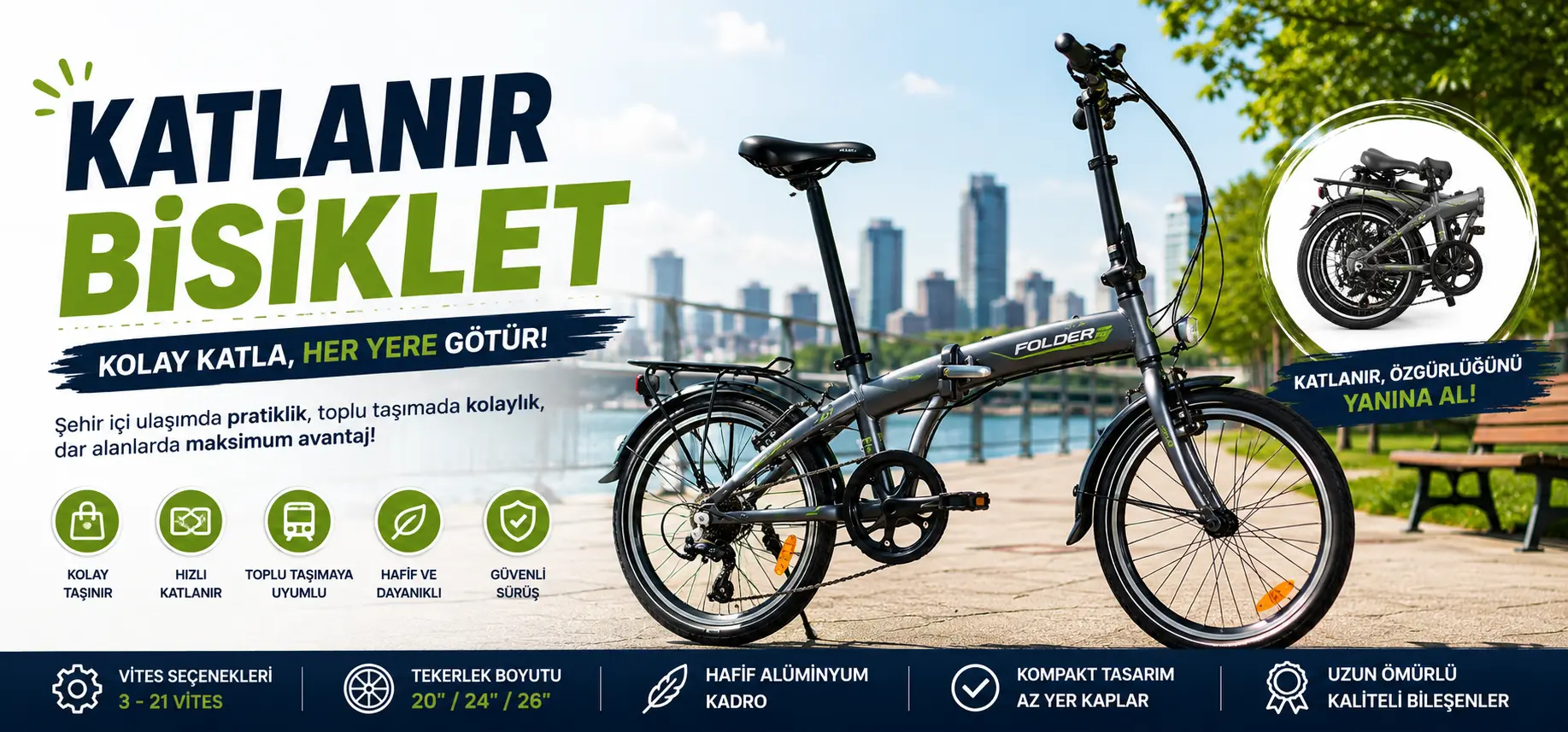
Folding Bike Buying Guide: What to Know Before You Buy
Folding bikes have become one of the most practical means of transportation for modern city life. Thanks to their compact design, portability, and compatibility with public transportation, they are widely preferred by commuters, students, and weekend cycling enthusiasts. However, with so many models available featuring different wheel sizes, frame materials, gear systems, and folding mechanisms, choosing the right folding bike for your needs is essential.
What Is a Folding Bike?
A folding bike is a bicycle designed with a special hinge mechanism that allows it to be folded quickly for easy transportation and storage. Compared to traditional bicycles, it occupies much less space and is specifically designed for urban commuting.
Once folded, it can:
-
Easily fit into a car trunk.
-
Be stored under an office desk.
-
Be kept on a balcony or in an apartment hallway.
-
Be carried more conveniently on public transportation.
-
Be stored easily in caravans, RVs, or boats.
Who Should Buy a Folding Bike?
Folding bicycles are suitable for a wide range of users, especially:
-
Daily commuters
-
University students
-
People who frequently use buses, metro systems, or trains
-
Caravan and RV owners
-
Boat owners
-
Camping enthusiasts
-
People living in small apartments
-
Anyone who wants to keep a bicycle in their car trunk at all times
Advantages of Folding Bikes
When you choose the right model, a folding bike offers many benefits.
Space Saving
One of its biggest advantages is its compact folded size, making storage extremely easy.
Easy to Carry
Many models can be folded within just 10 to 15 seconds.
Reduced Risk of Theft
Instead of locking your bicycle outside, you can simply bring it into your office or home.
Public Transportation Friendly
Folded bicycles can often be transported on subways, trains, ferries, and certain buses.
Car Trunk Friendly
Many models fit comfortably into the trunk of even compact sedan vehicles.
Disadvantages of Folding Bikes
Like any product, folding bikes also have certain limitations.
-
They may provide less riding comfort than full-size bicycles.
-
Performance differences become more noticeable on longer rides.
-
Lightweight premium models tend to be more expensive.
-
They are not ideal for rough off-road terrain.
-
The folding mechanism may require periodic maintenance.
What Should You Consider When Choosing a Folding Bike?
1. Wheel Size
Wheel size has a significant impact on ride quality and handling.
16-Inch Wheels
Advantages
-
Extremely compact
-
Easy to carry
-
Fits into very small storage spaces
Disadvantages
-
Less comfortable on rough roads.
20-Inch Wheels
This is the most popular wheel size.
Advantages
-
Balanced riding experience
-
Higher cruising speed
-
Better riding comfort
-
Ideal for everyday city commuting
24- and 26-Inch Wheels
Advantages
-
More comfortable
-
Faster on longer rides
Disadvantages
-
Require more storage space after folding.
2. Frame Material
The frame material significantly affects the bike's overall weight.
Steel Frame
Pros
-
Strong and durable
-
More affordable
Cons
-
Heavier than other materials
Aluminum Frame
Advantages
-
Lightweight
-
More resistant to corrosion
-
The most commonly preferred option today
Carbon Fiber Frame
Advantages
-
Extremely lightweight
-
Excellent performance
Disadvantages
-
Considerably more expensive
3. Bicycle Weight
Weight is especially important for folding bicycles.
Approximate weight categories:
-
Under 10 kg → Premium class
-
10–12 kg → Excellent
-
12–14 kg → Ideal for most users
-
Over 14 kg → Can become tiring to carry
4. Folding Mechanism
A high-quality folding mechanism should:
-
Have no unwanted movement or play.
-
Open and close smoothly.
-
Include a secure locking system.
-
Remain durable without loosening over years of use.
5. Gear System
Choose the gear system according to your intended use.
Single-Speed
-
Easy to maintain
-
Lightweight
-
Ideal for flat roads
6–8 Speed
-
Perfect for city riding
-
Makes gentle hills easier to climb
9–10 Speed
-
Better suited for sporty riding
-
More comfortable for longer distances
6. Brake System
Brake performance should never be overlooked.
V-Brakes
-
Affordable
-
Easy to maintain
Mechanical Disc Brakes
-
Better performance in wet conditions
-
Stronger braking power
Hydraulic Disc Brakes
-
Maximum braking performance
-
More precise braking control
-
Commonly found on premium models
Folding Bike Recommendations Based on Your Needs
Daily Urban Commuting
Recommended specifications:
-
20-inch wheels
-
Aluminum frame
-
7 or 8-speed drivetrain
-
Weight between 11 and 13 kg
-
Foldable pedals
These features provide an excellent balance of comfort and practicality for everyday commuting.
Combined with Public Transportation
Recommended features:
-
16- or 20-inch wheels
-
Lightweight aluminum frame
-
Quick folding mechanism
-
Magnetic folding lock
-
Compact design for easy carrying
Weekend Leisure Rides
Recommended specifications:
-
20-inch wheels
-
8 or 9-speed drivetrain
-
Comfortable wide saddle
-
Suspension seat post (optional)
-
Rear rack compatibility
Camping and Caravan Travel
Ideal features include:
-
Compact folded dimensions
-
Lightweight construction
-
Corrosion-resistant components
-
Easy portability
-
Compatibility with mudguards and luggage racks
Should You Buy an Electric Folding Bike?
Electric folding bikes offer significant advantages, particularly for long-distance commuting and hilly routes.
Advantages
-
Requires less physical effort.
-
Provides motor assistance on hills.
-
Reduces sweating during daily commuting.
-
Makes longer rides much easier.
Disadvantages
-
Heavier than conventional folding bikes.
-
Battery maintenance is required.
-
Higher purchase price.
How to Maintain a Folding Bike
Regular maintenance helps ensure long-lasting performance.
Maintenance tips:
-
Clean and lubricate the chain regularly.
-
Check tire pressure frequently.
-
Inspect brake pads periodically.
-
Keep the folding hinges clean and secure.
-
Check bolts and fasteners for looseness.
-
Avoid leaving the bicycle exposed to rain for extended periods.
Common Mistakes When Buying a Folding Bike
Some of the most common mistakes include:
-
Choosing the cheapest model solely based on price.
-
Ignoring the bicycle's weight.
-
Not evaluating the quality of the folding mechanism.
-
Selecting an unsuitable wheel size for your intended use.
-
Failing to research service availability and spare parts.
-
Purchasing without reviewing the warranty terms.
Conclusion
When choosing a folding bike, you should consider much more than just the price. Factors such as weight, wheel size, frame material, gear system, braking technology, and the quality of the folding mechanism all play a crucial role in overall performance and long-term satisfaction.
Whether you need a bike for daily commuting, combining with public transportation, camping trips, or caravan travel, selecting a model with the right features will improve both riding comfort and durability. Before making your purchase, it is also wise to evaluate after-sales services such as the warranty period, service network, and spare parts availability to ensure a reliable and long-lasting investment.