TR
TR EN
EN

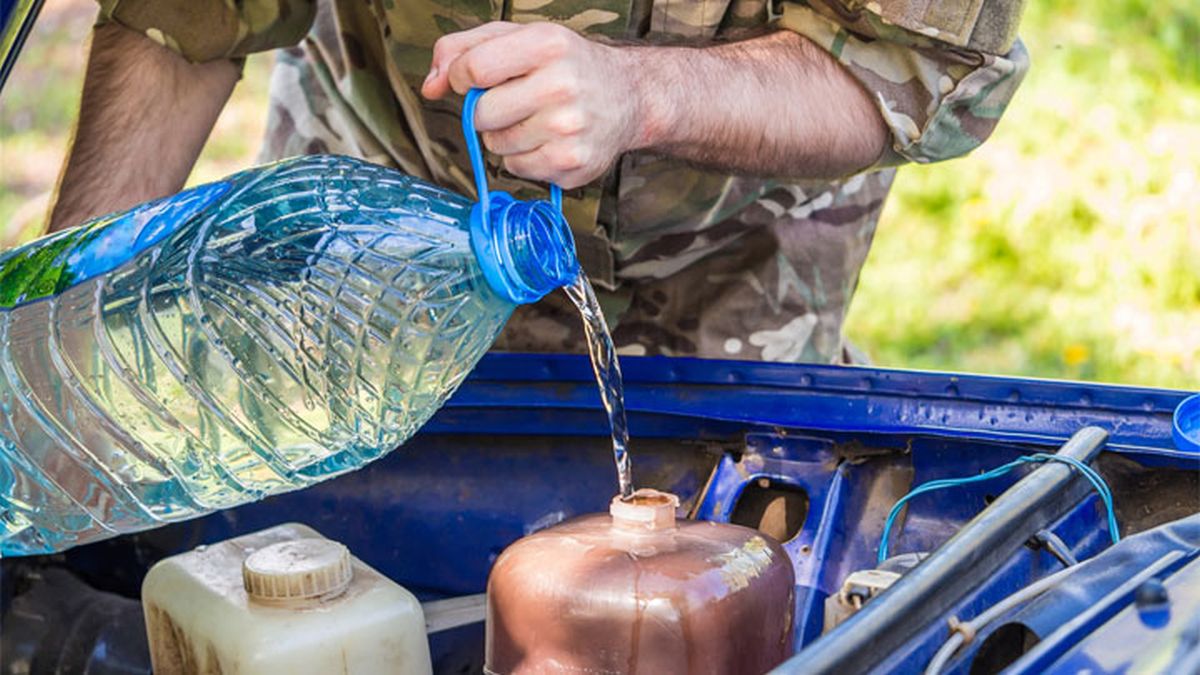
Can Water Be Used Instead of Radiator Coolant?
A vehicle's cooling system is designed to keep the engine within its correct operating temperature. The liquid circulating through the radiator, engine block, cylinder head, heater core, and other components plays a critical role in this process.
This raises a common question, especially when the coolant level is low or the vehicle has an unexpected leak:
Can ordinary water be used instead of radiator coolant?
The short answer is yes, water can be used temporarily in an emergency, but it should not normally replace the correct coolant mixture.
Water can remove heat very effectively, but it does not provide the corrosion protection, freezing protection, boiling-point protection, and additive package that a proper engine coolant provides.
What Does Radiator Coolant Do?
Engine coolant has several jobs beyond simply carrying heat away from the engine.
A proper coolant mixture helps:
-
Transfer heat away from the engine
-
Prevent freezing in cold temperatures
-
Increase resistance to boiling
-
Protect metal components against corrosion
-
Reduce deposits inside the cooling system
-
Protect water pumps and seals
-
Maintain the cooling system's chemical balance
-
Protect aluminum engine and radiator components
This is why coolant should not be considered simply colored water.
Modern engines contain aluminum, steel, cast iron, copper, plastic, rubber and other materials. The coolant needs to be chemically compatible with all of these components.
Why Does Water Cool an Engine So Well?
Pure water actually has excellent heat-transfer properties.
This is one reason why water is used in some specialized racing cooling systems under controlled conditions.
However, the problem is not water's ability to absorb heat.
The problem is everything that happens outside the ideal temperature range.
Pure water freezes at approximately 0°C and boils at approximately 100°C under normal atmospheric pressure.
An engine cooling system can experience temperatures outside those conditions.
Coolant is therefore added to water to provide protection that pure water cannot provide.
Can You Drive a Car With Only Water in the Cooling System?
Temporarily, yes.
If you have a coolant leak and the engine is losing coolant, adding clean water may be better than continuing to drive with an insufficient amount of liquid in the cooling system.
An engine with an empty or severely low cooling system can overheat very quickly.
However, using water should be considered an emergency measure, not a permanent solution.
Once the vehicle reaches a safe location, the cooling system should be repaired if necessary and refilled with the correct coolant mixture.
What Happens if You Use Water Permanently?
Long-term use of ordinary water can create several problems.
The most important are:
Corrosion
Water does not contain the corrosion inhibitors found in engine coolant. Over time, cooling-system components can corrode internally.
Mineral deposits
Tap water can contain minerals that may accumulate inside the radiator, water passages and other components.
Freezing
In cold weather, water can freeze and expand. This can potentially damage radiators, hoses, coolant passages and other components.
Boiling
Water has a lower boiling point than a properly formulated coolant mixture under comparable conditions.
Water pump and component protection
Coolant additives also help protect components such as the water pump and seals.
For these reasons, continuously operating an engine with plain water is not a good long-term strategy.
Can Tap Water Be Used?
It depends on the situation.
If you are dealing with an emergency and the coolant level is dangerously low, adding tap water to prevent overheating can be preferable to driving with insufficient coolant.
But tap water is not the ideal long-term choice.
Tap water can contain minerals and salts that may contribute to deposits and corrosion inside the cooling system.
For normal coolant preparation, the manufacturer's recommendation should be followed. In many applications, coolant concentrate is mixed with distilled or deionized water at the specified ratio.
Is Distilled Water Better?
Yes.
Distilled or deionized water contains far fewer dissolved minerals than ordinary tap water.
This makes it more suitable for use with coolant concentrate.
However, the exact requirements depend on the coolant product and vehicle manufacturer.
Some coolants are supplied as premixed coolant, meaning they are already diluted and should be used directly.
Others are sold as concentrate and require dilution before being added to the cooling system.
The product instructions should always be followed.
What Is the Correct Coolant-to-Water Ratio?
A common coolant mixture is approximately:
50% coolant + 50% water
This is widely used because it provides a good balance between heat transfer, freezing protection and boiling protection.
However, this is not a universal rule for every vehicle.
Some manufacturers specify different concentrations depending on the engine, coolant technology and climate.
Using too much concentrate is not necessarily better.
Coolant concentrate itself generally transfers heat less effectively than water, so an excessively concentrated mixture can actually reduce cooling efficiency.
The correct mixture is therefore more important than simply adding as much coolant as possible.
What Happens if You Add Water to Coolant?
If you have lost some coolant and add water as an emergency top-up, the coolant concentration will decrease.
A small amount of water may not cause a serious problem.
However, repeatedly adding water without restoring the correct coolant concentration can gradually dilute the cooling system.
For example, if a vehicle repeatedly loses coolant and the owner keeps replacing the loss with water, the system may eventually contain a mixture with insufficient antifreeze and corrosion protection.
The cooling system should therefore be checked and the correct coolant concentration restored.
Can Water Cause an Engine to Overheat?
Water itself is an effective heat-transfer fluid, so simply having water in the cooling system does not automatically cause overheating.
However, an engine can still overheat for many other reasons.
For example:
-
Low coolant level
-
Radiator blockage
-
Faulty thermostat
-
Failed water pump
-
Cooling fan failure
-
Damaged radiator
-
Air trapped in the cooling system
-
Head gasket problems
-
Collapsed or damaged hose
-
Faulty coolant temperature sensor
Therefore, if an engine overheats while using water, the problem should not automatically be blamed on the water itself.
The cooling system needs to be diagnosed.
Can Water Freeze Inside the Engine?
Yes.
This is one of the biggest problems with using plain water in cold climates.
When water freezes, it expands.
If enough water freezes inside a cooling system, the expansion can place significant stress on components.
The radiator, hoses, engine passages and other parts can potentially be damaged.
Coolant is designed to lower the freezing point and provide protection against cold temperatures.
This is particularly important for vehicles that remain outside during winter.
Can Water Boil Inside the Cooling System?
It can.
Under normal atmospheric pressure, water boils at approximately 100°C.
However, a vehicle's cooling system is pressurized, which raises the boiling point.
A properly formulated coolant mixture also provides additional boiling protection.
This is important because certain areas of an engine can become extremely hot.
If coolant begins to boil locally, vapor pockets can form. Vapor does not transfer heat in the same way as liquid coolant, which can contribute to further temperature increases.
Why Is the Cooling System Pressurized?
The cooling system is normally sealed and pressurized.
When coolant temperature rises, pressure inside the system increases.
The higher pressure raises the boiling point of the coolant, allowing the engine to operate at temperatures above the normal boiling point of water without the coolant simply boiling away.
The radiator cap or expansion tank cap is therefore an important part of the system.
It controls pressure within a specified range.
This is another reason why opening a hot cooling system is dangerous.
Is It Safe to Open the Radiator When the Engine Is Hot?
No.
This is one of the most important safety rules when dealing with engine coolant.
A hot cooling system can be under significant pressure.
Opening the radiator cap or expansion tank cap while the engine is hot can release pressurized hot coolant or steam.
This can cause severe burns.
If you suspect that the engine is overheating, allow it to cool completely before opening the cooling system.
Do not rely solely on the temperature gauge dropping slightly. The cooling system should be sufficiently cool and depressurized before the cap is opened.
What Should You Do if the Coolant Level Is Low?
First, determine why the level is low.
Coolant does not normally disappear quickly from a healthy sealed cooling system.
A low coolant level may indicate:
-
A leaking hose
-
Radiator leakage
-
Water pump leakage
-
Expansion tank leakage
-
Heater-core leakage
-
Head gasket problems
-
A leaking thermostat housing
-
A damaged coolant connection
If the coolant level has dropped significantly, simply adding water and continuing to drive may only hide the underlying problem temporarily.
What If There Is a Coolant Leak on the Road?
If the engine is losing coolant and the temperature is rising, continuing to drive can cause serious engine damage.
If you have no coolant available and the engine has cooled sufficiently, clean water can be used as an emergency top-up to reach a safe location or repair facility.
However, you should monitor the temperature closely.
If the temperature rises again, the engine should be stopped.
Driving an overheating engine can result in expensive damage to:
-
Cylinder head
-
Head gasket
-
Pistons
-
Valves
-
Engine block
-
Turbocharger
In an emergency, preventing severe overheating is more important than maintaining the perfect coolant mixture for a few additional miles.
Is Water Better Than Driving With No Coolant?
In an emergency, yes.
If the choice is between:
Driving with an extremely low or empty cooling system
and
Adding clean water to restore the liquid level
adding water is generally the safer option.
An engine needs sufficient coolant or water circulating through its cooling passages to remove heat.
However, this should only be viewed as a temporary emergency solution.
Once the vehicle is repaired, the cooling system should be returned to the correct coolant concentration.
Can You Mix Different Coolants With Water?
Water and coolant can normally be mixed when the coolant is designed to be diluted.
The more important issue is mixing different coolant formulations.
Coolants can use different additive technologies, and their colors should not be relied upon to determine compatibility.
Two coolants may have similar colors but completely different chemical formulations.
Therefore, when topping up a cooling system, use the coolant specification recommended by the vehicle manufacturer.
Does Coolant Color Matter?
Not reliably.
Coolant color is not a universal standard.
Blue, green, red, pink, orange, yellow and other colors can be used by different manufacturers for different coolant formulations.
The correct way to select coolant is by checking the required specification and technology, not simply matching the color.
This is especially important when topping up an existing system.
Does Using More Coolant Improve Cooling?
Not necessarily.
It is a common misconception that increasing the amount of antifreeze or coolant concentrate will always make the engine run cooler.
The opposite can happen if the mixture becomes excessively concentrated.
Water generally has better heat-transfer characteristics than concentrated antifreeze.
The purpose of coolant is to provide a balance between:
-
Heat transfer
-
Freezing protection
-
Boiling protection
-
Corrosion protection
-
Material compatibility
The correct mixture therefore matters more than using the highest possible coolant concentration.
What Is the Best Liquid for a Car Cooling System?
For most modern vehicles, the best option is the coolant specified by the vehicle manufacturer, mixed or supplied at the correct concentration.
Depending on the product, this may be:
-
Premixed coolant
-
Coolant concentrate mixed with distilled/deionized water
-
A manufacturer-specific coolant formulation
The vehicle owner's manual or manufacturer's service documentation should be used to determine the correct product and mixture.
What About Racing Cars?
Some racing applications may use water-based cooling systems under specific rules and operating conditions.
Water can provide excellent heat transfer, and some specialized systems may use water with appropriate additives.
However, this does not mean that plain water is automatically better for a normal road car.
Race vehicles operate under controlled conditions, and their cooling systems, maintenance schedules and operating environments can be very different from those of everyday vehicles.
A road car needs protection against freezing, corrosion and long-term cooling-system degradation.
Can You Use Water in Summer?
The absence of freezing temperatures does remove one major problem with plain water, but it does not eliminate all the others.
Even in hot weather, the cooling system still needs:
-
Corrosion protection
-
Boiling protection
-
Deposit control
-
Water pump and seal protection
-
Correct chemical balance
Therefore, warm weather is not a reason to permanently replace coolant with water.
How Often Should Coolant Be Changed?
There is no universal replacement interval.
Different coolant technologies have different service lives, and some modern vehicles are designed for very long coolant service intervals.
The correct interval depends on:
-
Vehicle manufacturer
-
Coolant specification
-
Coolant technology
-
Engine design
-
Operating conditions
The manufacturer's recommended maintenance schedule should be followed.
If the coolant has become contaminated, its concentration is incorrect, or the cooling system has been repaired, additional service may be required.
The Bottom Line
Can water be used instead of radiator coolant?
Yes, as a temporary emergency solution.
If your vehicle has lost coolant and you are in a situation where continuing to drive with a low cooling-system level could cause overheating, adding clean water can help you reach a safe location or repair facility.
But water should not normally be used as a permanent replacement for coolant.
A proper coolant mixture provides benefits that water alone cannot provide, including:
-
Freeze protection
-
Boiling protection
-
Corrosion protection
-
Deposit control
-
Component protection
-
Long-term cooling-system stability
For everyday use, the best approach is simple: use the coolant specified by the vehicle manufacturer and maintain the correct concentration.
Water can get you out of an emergency, but it should not become a substitute for the cooling system's properly formulated coolant.