TR
TR EN
EN

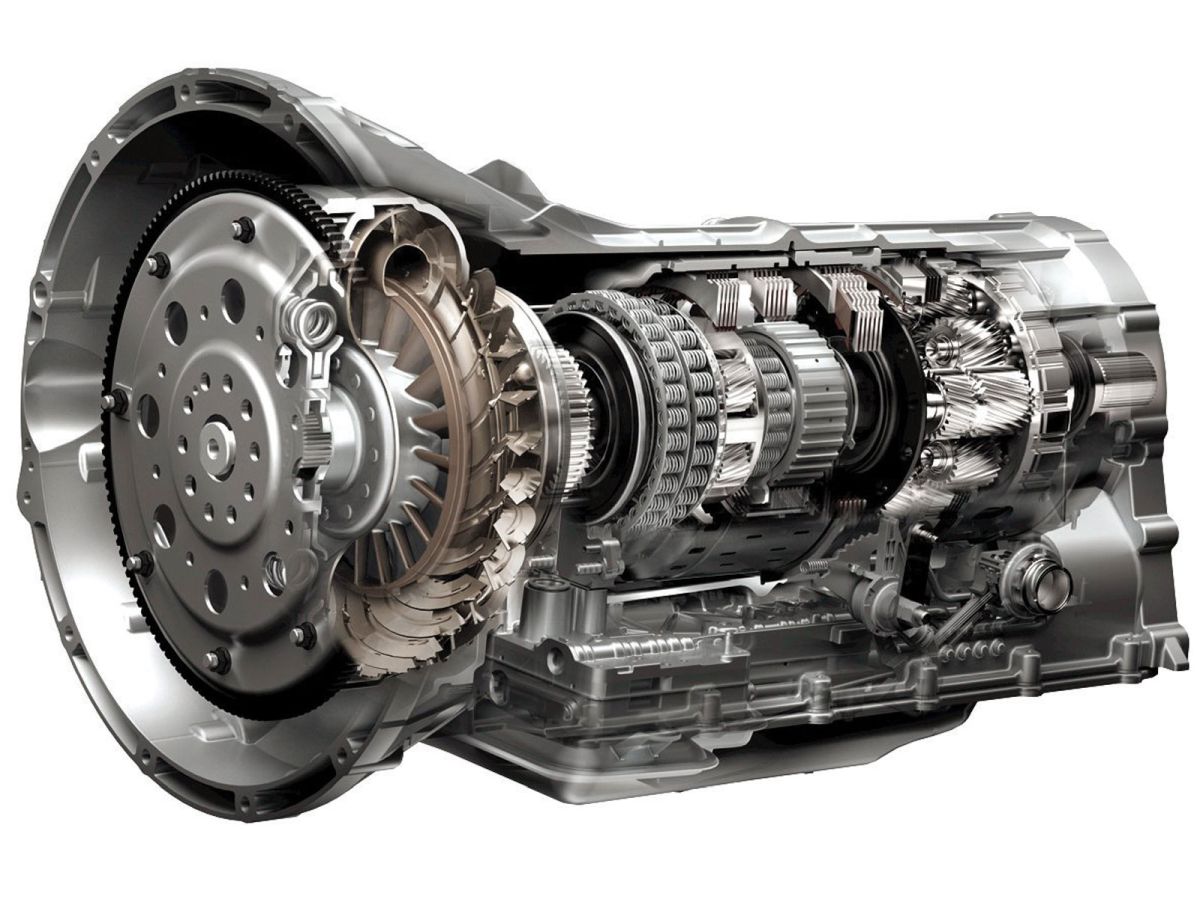
What Is a Transmission? 4 Types of Transmissions and How They Work
One of the most important things you need to know about cars is what type of transmission the vehicle you are planning to buy is equipped with. Before explaining the different types of transmissions, let's first look at what a transmission is and what it does.
Regardless of the type, the job of a transmission is to manipulate the power produced by the engine and transfer that power to the wheels through various gear ratios. It adjusts the gear ratio between the engine and the drive wheels according to the vehicle's speed and driving conditions.
There are four common types of transmissions: manual, automatic, continuously variable transmission (CVT), and dual-clutch transmission (DCT).
Manual Transmission
The manual transmission is the simplest and one of the oldest types of automotive transmissions. It is also known as a stick shift or standard transmission. These transmissions use a clutch pedal that allows the driver to disconnect the engine from the transmission when changing gears.
In a manual transmission, torque flows through the transmission when the clutch is engaged, meaning the clutch pedal is not being pressed. When the clutch pedal is pressed to change gears, the flow of torque from the engine to the transmission is temporarily interrupted.
Although manual transmissions are becoming something of an endangered species in modern vehicles, they still offer several advantages over more advanced transmission types. Thanks to their relatively simple construction, they are generally easier and less expensive to repair.
Automatic Transmission
Automatic transmissions use two or more planetary gear sets and allow gear changes through clutches and bands. They are the most popular type of transmission used in modern vehicles.
A typical automatic transmission has several gear-selection positions, including Park, Reverse, Neutral, Drive, and various lower gear ranges.
Automatic transmissions provide a simplified driving experience by eliminating the need for the driver to manually operate the clutch and select gears. This makes driving considerably easier, particularly for inexperienced drivers.
However, an automatic transmission is much more complex than a manual transmission. As a result, it can have more components that may require repair, and repair costs can be considerably higher.
Continuously Variable Transmission (CVT)
CVT transmissions are commonly found in front-wheel-drive (FWD) vehicles and some transaxle-based all-wheel-drive vehicles.
Instead of using a fixed set of conventional gears, a CVT uses two variable-width pulleys connected by a belt or chain. The pulley diameters can continuously change, allowing the transmission to maintain the engine within an efficient operating range.
Vehicles equipped with CVTs operate similarly to automatic transmission vehicles from the driver's perspective, but the transmission does not shift through conventional fixed gears.
Because the transmission can continuously adjust the gear ratio, the engine can remain at a relatively efficient RPM under many driving conditions. This can improve fuel economy and help reduce exhaust emissions.
However, CVTs can produce unusual engine sounds during sudden acceleration. Some drivers also notice increased engine noise or vibration because the engine may remain at a relatively constant RPM while the vehicle continues to accelerate.
These characteristics are generally less noticeable in conventional automatic transmissions.
You can find more information about CVT transmissions in our related article ►
Dual-Clutch Transmission
Unlike conventional automatic transmissions, semi-automatic and dual-clutch transmissions do not use a traditional torque converter and planetary gear sets in the same way. Instead, they are based on a manual-type transmission design combined with two coaxially mounted clutches.
One clutch controls the odd-numbered gears, such as 1st, 3rd, and 5th, while the other controls the even-numbered gears, such as 2nd, 4th, and 6th.
During a gear change, engine torque does not have to be completely interrupted in the same way as with a conventional manual transmission.
The transmission control module, such as the PCM or TCM, uses information from various sensors to predict the next required gear and prepare it in advance.
Because the next gear can already be selected and prepared, the transmission can change gears extremely quickly while minimizing the interruption of engine torque.
Semi-automatic and dual-clutch transmissions offer several advantages over conventional automatic transmissions. They can provide faster throttle response, improved fuel economy, and a more direct driving experience.
Because they are based on many components similar to those used in manual transmissions, some repairs can also be less expensive than repairs on a conventional automatic transmission. However, modern dual-clutch systems contain sophisticated mechatronic and electronic components, and failures in these components can still be expensive to repair.
Common Causes of Transmission Failure
A transmission is generally designed to last for a large portion of a vehicle's service life, but it can fail prematurely for various reasons.
Some of the most common causes of premature transmission failure include the following.
Low Transmission Fluid Level
Driving a vehicle with a low transmission fluid level can result in inadequate lubrication and hydraulic pressure.
Insufficient lubrication increases friction between internal components, while low hydraulic pressure can prevent an automatic transmission from operating correctly.
Over time, this can cause significant damage to internal transmission components.
Using the Wrong Transmission Fluid
Your vehicle requires transmission fluid with the correct specifications to operate properly.
Using the wrong fluid can result in inadequate lubrication, incorrect hydraulic pressure, clutch problems, overheating, and premature transmission wear.
Different transmissions require different types of fluids, and even fluids that appear similar may have significantly different friction and viscosity characteristics.
Always check the owner's manual or consult a qualified service professional to determine which transmission fluid is appropriate for your vehicle.
Exceeding the Vehicle's Load Capacity
Exceeding the vehicle's recommended load or towing capacity can place excessive stress on the transmission.
The additional load forces the transmission to work harder and can increase operating temperatures.
Excessive heat is one of the major enemies of transmission fluid and internal transmission components. Prolonged operation under excessive load can therefore accelerate transmission wear and potentially lead to premature failure.
Shifting Gears Incorrectly While the Vehicle Is Moving
Incorrect gear selection while the vehicle is moving can cause serious damage, particularly if the transmission is forced into an inappropriate gear.
In vehicles with automatic transmissions, selecting Reverse or Park while the vehicle is still moving can cause severe mechanical stress and damage to transmission components.
It can also place excessive loads on related components such as the drivetrain and drive shafts.
Drivers should always allow the vehicle to come to a complete stop before selecting Park or changing between certain directional gears.
Poor Maintenance
Even a well-designed transmission requires proper maintenance.
Transmission fluid deteriorates over time because of heat, contamination, mechanical wear, and repeated operating cycles. Depending on the vehicle and transmission type, the fluid may need to be inspected or replaced at specific intervals.
Regular maintenance can also help identify leaks, abnormal noises, delayed gear engagement, slipping, overheating, and other warning signs before they develop into major failures.
Following the vehicle manufacturer's recommended maintenance schedule is one of the best ways to extend transmission life.
A transmission problem that is identified early is generally much easier and less expensive to address than a transmission that has already suffered extensive internal damage.