TR
TR EN
EN

How Can Traffic Congestion Be Prevented?
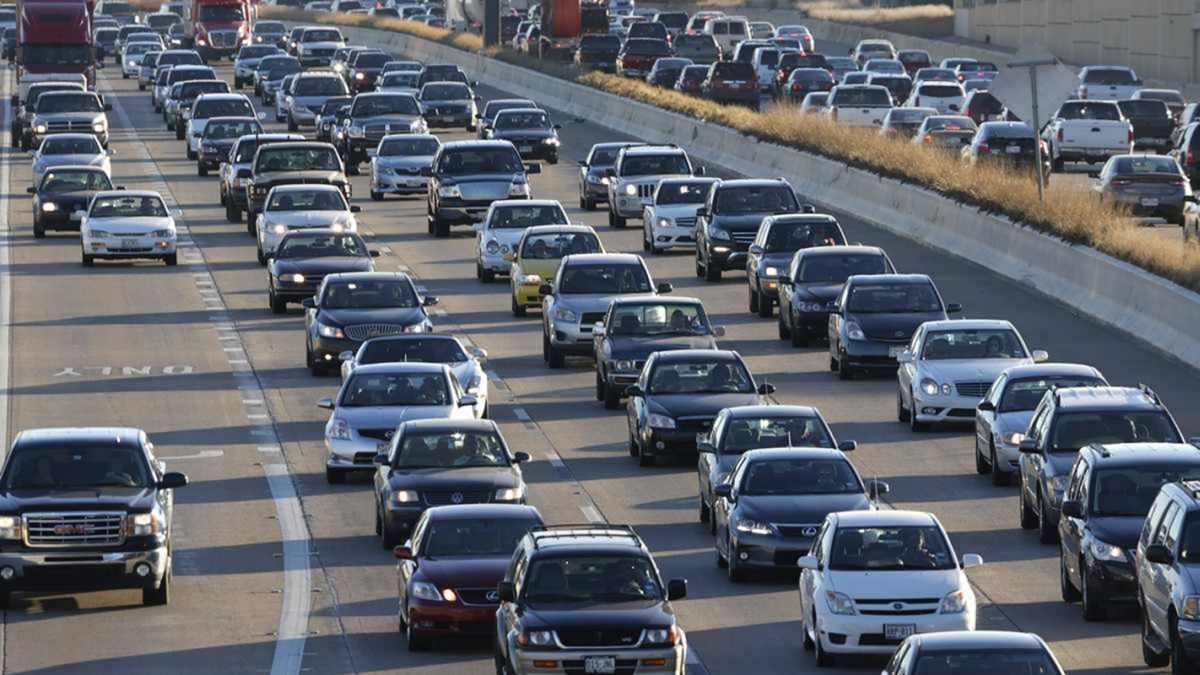
Traffic congestion is one of the most common transportation problems in growing cities. As the number of vehicles on the roads increases, roads that were once sufficient can become overcrowded, especially during morning and evening rush hours.
Traffic congestion does more than make journeys longer. It increases fuel consumption, air pollution, noise, stress, and the time people spend traveling between home, work, and other destinations.
Solving traffic congestion is not simply a matter of building more roads. In many cities, expanding road capacity can provide temporary relief, but the additional capacity eventually attracts more traffic. A lasting solution requires better public transportation, smarter traffic management, improved urban planning, and changes in how people travel.
Why Does Traffic Congestion Occur?
Traffic congestion occurs when the number of vehicles trying to use a road exceeds the road's practical capacity.
However, congestion is not always caused simply by having too many cars. Several factors can contribute to the problem.
Rapid population growth, insufficient public transportation, poor road design, accidents, road construction, illegally parked vehicles, traffic lights, narrow intersections, and poorly planned urban development can all increase congestion.
Traffic demand is also concentrated at certain times of the day. Large numbers of people may leave home at approximately the same time in the morning and return during the same evening period. This creates peak-hour congestion even when roads are relatively quiet at other times.
Can Building More Roads Solve Traffic Problems?
Building new roads or widening existing ones can help in some situations, but it is not a permanent solution by itself.
When road capacity increases, more people may choose to drive because the journey initially becomes faster and more convenient. Over time, this additional demand can fill the newly created capacity.
This phenomenon is often referred to as induced demand.
For this reason, simply adding more lanes may postpone congestion rather than eliminate it.
Road improvements are still important when existing infrastructure is poorly designed or insufficient. However, they work best when combined with other transportation strategies.
Improving Public Transportation
One of the most effective ways to reduce traffic congestion is to make public transportation a practical alternative to driving.
Buses, metro systems, trams, commuter trains, and other forms of public transportation can carry many more people using significantly less road space than individual cars.
A single bus can replace dozens of cars during peak hours. A train or metro system can transport hundreds or even thousands of passengers without requiring a corresponding increase in road traffic.
However, people are more likely to leave their cars at home when public transportation is reliable, comfortable, safe, affordable, and frequent.
Simply having a bus system is not enough. The service must also meet the needs of the people who use it.
Expanding Metro and Rail Systems
In large cities, rail transportation can play an especially important role in reducing road congestion.
Metro and commuter rail systems are not affected by traffic jams in the same way as buses and private cars. They can therefore provide predictable travel times even during rush hour.
Expanding rail networks and connecting residential areas with business districts, universities, airports, and major transportation hubs can reduce the number of private vehicles on the roads.
Park-and-ride facilities can make these systems even more effective by allowing drivers to leave their cars outside congested areas and continue their journey by public transportation.
Making Buses More Efficient
Cities do not always need to build expensive rail infrastructure to improve public transportation.
Bus rapid transit (BRT) systems and dedicated bus lanes can allow buses to move more efficiently through congested areas.
When buses are stuck in the same traffic as private vehicles, they become less attractive to passengers. Dedicated lanes allow buses to maintain more reliable travel times and make public transportation a more competitive alternative to driving.
Priority systems at traffic lights can also allow buses to pass through intersections more efficiently.
Encouraging Carpooling
Carpooling can reduce the number of vehicles traveling on the road without requiring people to completely abandon cars.
For example, if four employees who normally drive separate cars to the same workplace share one vehicle, three vehicles are removed from the road.
Carpooling can be particularly effective in areas where public transportation is limited.
Companies can encourage this practice by providing preferential parking spaces, ride-sharing programs, or incentives for employees who share journeys.
Promoting Cycling and Walking
Not every journey requires a car.
For short trips, walking and cycling can be practical alternatives to driving. Developing safe sidewalks, protected bicycle lanes, bicycle parking, and pedestrian-friendly streets can reduce the number of short car journeys.
This can also improve air quality and public health.
The goal is not necessarily to eliminate cars from a city. Instead, cities should provide residents with several practical transportation options so that using a car is not the only realistic choice.
Using Smart Traffic Lights
Traffic lights have a major influence on the movement of vehicles through urban areas.
Traditional traffic lights often operate according to fixed schedules. However, traffic conditions can change significantly throughout the day.
Smart traffic management systems can use cameras, sensors, and real-time traffic information to adjust signal timing according to current traffic conditions.
For example, if one direction has significantly more traffic than another, the system can adjust the signal cycle to improve vehicle flow.
When coordinated across multiple intersections, smart traffic signals can reduce unnecessary stops and improve traffic flow along major roads.
Improving Intersection Design
Intersections are often major bottlenecks.
A road may have sufficient capacity, but if vehicles cannot pass efficiently through an intersection, traffic can quickly build up behind it.
Improving lane arrangements, turning lanes, signal timing, pedestrian crossings, and intersection geometry can increase the number of vehicles that pass through an intersection during each signal cycle.
In some locations, roundabouts can also improve traffic flow by reducing the need for traditional signal-controlled intersections.
However, the appropriate solution depends on traffic volume, pedestrian activity, road geometry, and local conditions.
Preventing Illegal Parking
Illegal or poorly planned parking can reduce road capacity considerably.
A vehicle parked on the side of a busy road may block an entire lane and force other drivers to merge into neighboring lanes. This can create a bottleneck that extends far beyond the location of the illegally parked vehicle.
Better parking management, loading zones, enforcement, and sufficient off-street parking can help keep important traffic lanes clear.
Managing Traffic Accidents Quickly
Traffic accidents can cause severe congestion even when they occur on roads that normally handle large amounts of traffic without problems.
A collision can block one or more lanes, while drivers approaching the scene may slow down to observe what happened.
Fast accident detection and response can therefore play an important role in preventing long-lasting traffic jams.
Traffic monitoring systems, rapid-response teams, towing services, and clear emergency procedures can help reopen blocked lanes more quickly.
Using Real-Time Traffic Information
Modern navigation systems can help drivers avoid congested routes by providing real-time traffic information.
When drivers know that a particular road is heavily congested, they may choose an alternative route or postpone their journey.
However, if too many vehicles are redirected to the same alternative road, congestion can simply move from one location to another.
For this reason, traffic information systems work best when they are integrated with broader traffic-management systems rather than relying solely on individual navigation decisions.
Encouraging Flexible Working Hours
Peak-hour congestion is partly caused by large numbers of people traveling at the same time.
Flexible working hours can spread transportation demand across a longer period.
For example, if some employees begin work at 7:00 a.m., others at 8:00 a.m., and others at 9:00 a.m., fewer people may need to travel at exactly the same time.
Remote and hybrid work can also reduce the number of daily commuting trips where the nature of the job allows it.
Even a modest reduction in peak-hour travel can have a noticeable effect on heavily congested roads.
Better Urban Planning
Long-term traffic problems often begin with urban planning decisions.
If residential areas are built far away from workplaces, schools, shopping centers, and public transportation, residents may become heavily dependent on private vehicles.
Mixed-use development can reduce this dependence by placing homes, workplaces, shops, schools, and services closer together.
Transit-oriented development can also encourage higher-density development around major public transportation stations.
When people can reach everyday destinations without driving, the number of unnecessary vehicle trips can decrease.
Reducing the Need for Private Cars
The most effective traffic strategies do not necessarily try to make driving faster. Instead, they reduce the number of journeys that require private vehicles.
People are more likely to choose alternatives when public transportation is convenient, walking routes are safe, cycling infrastructure is available, and essential services are located close to residential areas.
A city with several transportation options is less vulnerable to congestion than a city where almost everyone depends on a private car.
Should Cities Charge for Driving?
Congestion pricing is another strategy used to manage traffic.
Under a congestion-pricing system, drivers may have to pay a fee to enter or travel through particularly congested areas during specific periods.
The purpose is not simply to generate revenue. It is to discourage unnecessary trips during the busiest periods and encourage people to use public transportation, carpool, or travel at different times.
However, such systems need to be carefully designed. If affordable transportation alternatives are not available, congestion charges can disproportionately affect people who have no practical alternative to driving.
Electric Cars Do Not Solve Traffic Congestion
Electric vehicles can reduce exhaust emissions and dependence on fossil fuels, but they do not eliminate congestion.
An electric car occupies approximately the same amount of road space as a gasoline or diesel car.
If thousands of electric vehicles are traveling on a road that is already operating above capacity, the road will still become congested.
Therefore, electrification is an important part of reducing transportation emissions, but it should not be confused with a complete solution to traffic congestion.
What Can Drivers Do?
Traffic congestion is primarily an infrastructure and urban-planning problem, but individual drivers can also help.
Avoiding unnecessary trips, sharing rides, using public transportation when practical, maintaining a safe following distance, and avoiding sudden lane changes can all contribute to smoother traffic flow.
Keeping a vehicle properly maintained is also important. A broken-down vehicle on a busy road can quickly become the cause of a traffic jam.
Planning journeys outside peak hours can also make a difference, particularly for trips that do not need to take place at a specific time.
What Is the Best Solution to Traffic Congestion?
There is no single solution that can eliminate traffic congestion in every city.
The most effective approach is usually a combination of several strategies:
-
Reliable and frequent public transportation
-
Metro, rail, and bus rapid transit systems
-
Dedicated bus and bicycle lanes
-
Intelligent traffic-light systems
-
Better intersection design
-
Effective parking management
-
Rapid response to accidents and road incidents
-
Carpooling and ride-sharing
-
Flexible working hours and remote work
-
Walkable and bicycle-friendly neighborhoods
-
Better urban planning
-
Appropriate congestion-management policies
Traffic congestion is ultimately a result of transportation demand exceeding available capacity. The long-term solution is therefore not simply to build more roads, but to create a transportation system in which people have multiple practical ways to reach their destinations.
When public transportation, walking, cycling, road infrastructure, and traffic management work together, cities can reduce congestion while also improving travel times, air quality, safety, and overall quality of life.