TR
TR EN
EN

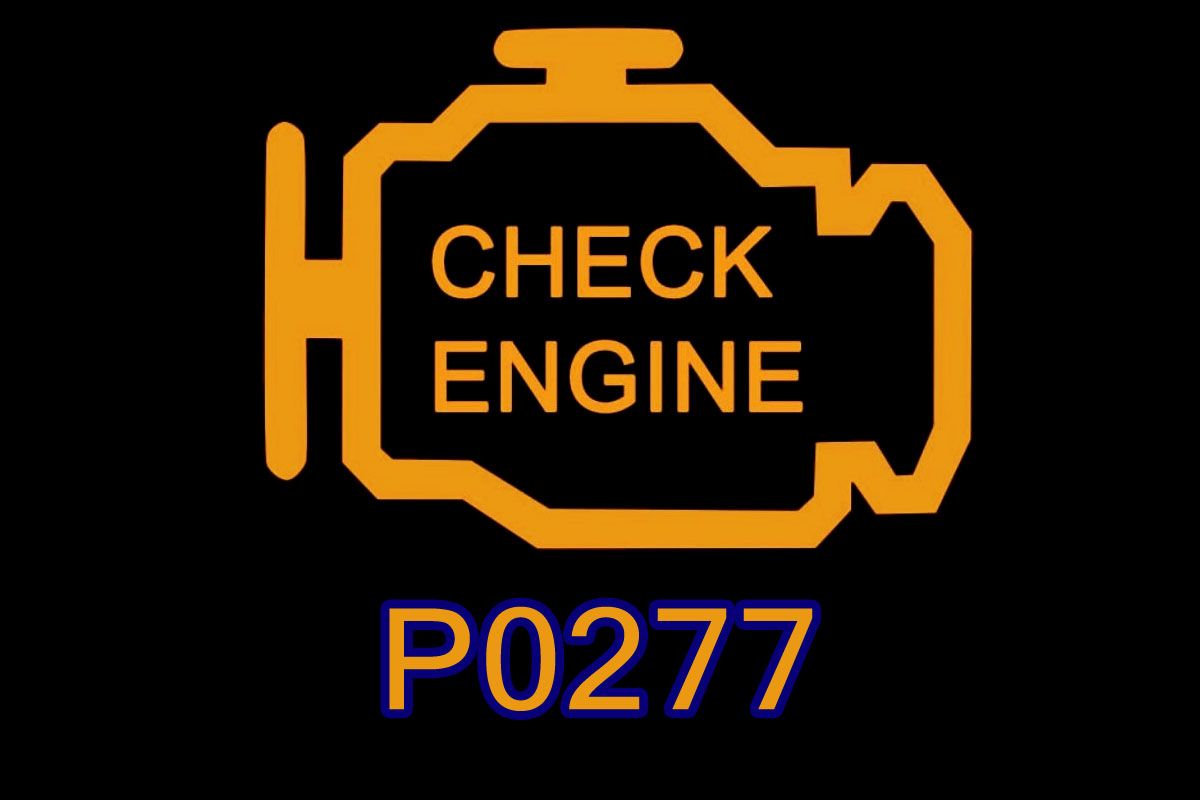
P0277 Cylinder 6 Injector Circuit High
P0277 is a generic OBD-II diagnostic trouble code meaning the engine control module (ECM/PCM) has detected an abnormally high electrical condition in the fuel injector circuit for cylinder 6.
The important point is that the word “High” refers to the electrical behavior of the injector circuit. It does not mean that cylinder 6 has excessive fuel pressure, that the injector is delivering too much fuel, or that the engine is running at high RPM.
P0277 is therefore primarily an electrical circuit diagnosis, even though the resulting problem can eventually appear as a fueling or misfire problem.
What Does the Cylinder 6 Injector Do?
The injector assigned to cylinder 6 delivers a precisely controlled amount of fuel into the engine.
The ECM controls the injector by switching its electrical circuit according to engine speed, load, temperature, throttle position, oxygen-sensor feedback, and many other parameters.
Depending on the engine design, the injector may have a constant power supply with the ECM controlling the other side of the circuit, or the system may use a different high-side/low-side control strategy.
Because of this, the exact voltage behavior of an injector circuit cannot be diagnosed correctly without knowing the vehicle's wiring architecture.
What Does “Injector Circuit High” Actually Mean?
P0277 indicates that the ECM has detected a voltage or electrical condition that is higher than the expected value for the cylinder 6 injector circuit.
This can happen for several different reasons.
For example, the ECM may detect a control circuit that is being pulled toward battery voltage when it should be switching differently. An open circuit, a short to voltage, a disconnected injector, or an internal injector fault can produce this type of condition.
Therefore, replacing the injector simply because P0277 is stored is not always the correct repair.
Common Causes of P0277
Several problems can produce this code:
-
Faulty cylinder 6 fuel injector
-
Open circuit in the injector wiring
-
Short to battery voltage
-
Damaged injector control wire
-
Broken wire inside the harness
-
Corroded injector connector
-
Loose or poorly tensioned connector terminal
-
Water or oil contamination around the connector
-
Damaged injector power supply
-
Poor electrical connection in a shared injector power circuit
-
Internal electrical failure of the injector
-
ECM injector driver problem
-
Harness damage caused by heat, vibration, or previous engine work
A wiring fault is particularly important because injector harnesses often pass through areas exposed to considerable heat and vibration.
The Injector May Not Actually Be the Problem
This is one of the most important points when diagnosing P0277.
An injector circuit code does not automatically mean that the injector itself has failed.
Imagine that the injector is perfectly functional but its control wire has broken inside the insulation. The ECM may still detect an abnormal electrical condition and store P0277.
The same thing can happen if a connector terminal has lost its tension and is no longer making reliable contact.
A shorted wire can also create a high electrical condition without any mechanical problem inside the injector.
For that reason, the circuit should be tested before an injector is condemned.
How to Diagnose P0277 Correctly
Start by scanning the vehicle for all stored and pending trouble codes.
If several injector circuit codes are present at the same time, do not immediately assume that multiple injectors have failed. Look for a common power supply, fuse, relay, ground, or harness problem.
If P0277 is the only injector-related code, concentrate initially on cylinder 6 and its associated wiring.
Inspect the injector connector
Disconnect the cylinder 6 injector connector and inspect it carefully.
Look for:
-
Bent terminals
-
Loose terminals
-
Corrosion
-
Broken locking mechanisms
-
Water or oil contamination
-
Terminals pushed backward inside the connector
-
Damaged insulation near the connector
A connector can look perfectly normal from the outside while having poor terminal contact internally.
Inspect the wiring
Follow the harness from the injector toward the main engine harness.
Look for areas where the wiring may have:
-
Rubbed against the engine
-
Melted against an exhaust component
-
Been pinched
-
Been stretched
-
Been repaired incorrectly
-
Been contaminated with oil or coolant
Pay particular attention to sections that were recently disturbed during engine, intake, fuel-system, or maintenance work.
Check the Injector Power and Control Circuits
The next step is to identify the injector's power and control wires using the manufacturer's wiring diagram.
Do not assume which terminal is power and which is the ECM control circuit.
With the correct wiring information, the technician can determine whether the circuit has:
-
Correct supply voltage
-
Proper control switching
-
Continuity
-
An unwanted short to battery voltage
-
An unwanted short to ground
-
Excessive voltage drop
A continuity test alone is not always enough.
A wire can show continuity with a multimeter and still fail when current flows through it because of corrosion, partial internal damage, or a poor terminal connection.
Test the Injector Itself
The injector's electrical condition should also be checked.
Depending on the injector type, measuring resistance across the injector terminals can reveal an open or shorted coil.
However, injector resistance by itself does not prove that the injector is mechanically healthy.
An injector can have electrically acceptable resistance and still suffer from:
-
Restricted flow
-
Poor spray pattern
-
Mechanical sticking
-
Contamination
-
Incorrect fuel delivery
For that reason, resistance testing is only one part of the diagnosis.
An Oscilloscope Can Reveal More
When a basic multimeter does not clearly identify the problem, an oscilloscope can be extremely useful.
The technician can compare the cylinder 6 injector waveform with a known-good injector.
Differences in the waveform can help identify problems with:
-
ECM control
-
Injector coil behavior
-
Switching voltage
-
Current rise
-
Inductive kick
-
Circuit interruption
-
Driver operation
This is especially valuable when P0277 appears intermittently and disappears before the vehicle reaches the workshop.
Why P0277 Can Cause a Misfire
If the cylinder 6 injector is not being controlled correctly, the cylinder may receive insufficient or no fuel.
The result can be:
-
Rough idle
-
Engine hesitation
-
Loss of power
-
Poor acceleration
-
Increased fuel consumption
-
Engine vibration
-
Difficult starting
-
Cylinder 6 misfire
-
Check engine light
A separate misfire code such as P0306 – Cylinder 6 Misfire Detected may therefore appear alongside P0277.
If both codes are present, the injector circuit should receive particular attention because an electrical problem can directly prevent proper fuel delivery.
What If P0277 Appears Only During Acceleration?
An intermittent P0277 that appears under acceleration can be especially interesting.
Engine movement increases under load, and the wiring harness can move with the engine. A damaged wire or weak terminal connection may therefore make contact at idle but lose contact when the engine moves.
Heat can produce a similar effect.
A harness that works normally when cold may develop an electrical fault after the engine compartment reaches operating temperature.
In such cases, monitoring the circuit while manipulating the harness or reproducing the operating conditions can be more useful than simply measuring resistance with the engine switched off.
Diesel and Gasoline Engines Can Differ
The exact injector circuit design varies considerably between gasoline and diesel engines.
A conventional gasoline port injector is electrically very different from a modern common-rail diesel injector.
Some diesel injection systems operate with very high voltages or specialized driver strategies. Their wiring and testing procedures therefore require the manufacturer's specifications and appropriate diagnostic equipment.
A resistance measurement that might be meaningful on one injector system may be inappropriate or insufficient on another.
This is why P0277 should always be diagnosed according to the specific engine's wiring diagram and injector control strategy.
Could a Low Battery Cause P0277?
Battery voltage should be considered when the vehicle has several unrelated electrical faults, particularly after a weak-battery or charging-system event.
However, a normal battery problem should not automatically be blamed for an isolated P0277.
If only cylinder 6 has an injector circuit high code, the cylinder-specific injector circuit deserves much more attention.
If multiple injectors and other actuators are simultaneously reporting electrical faults, then shared power supply, grounds, charging voltage, and module power distribution become much more important.
P0277 vs P0276 and P0278
These codes belong to the same cylinder 6 injector family but describe different electrical conditions.
P0276 – Cylinder 6 Injector Circuit Low
The ECM has detected a lower-than-expected electrical condition in the cylinder 6 injector circuit.
P0277 – Cylinder 6 Injector Circuit High
The ECM has detected a higher-than-expected electrical condition in the cylinder 6 injector circuit.
P0278 – Cylinder 6 Contribution / Balance Fault
This is different. It indicates that cylinder 6 is not contributing the expected amount of power compared with the other cylinders. It does not specifically identify an electrical injector-circuit problem.
This distinction is important because P0278 could be caused by fuel delivery, compression, valve-train problems, timing, or other engine issues, whereas P0277 specifically points toward the injector's electrical circuit.
Should You Replace the Cylinder 6 Injector?
Not based on P0277 alone.
A good diagnostic procedure should establish whether the problem is:
-
The injector itself
-
The injector connector
-
The injector power supply
-
The injector control wire
-
A short or open circuit
-
A shared electrical supply problem
-
The ECM driver
If the injector fails an electrical test or comparison with a known-good unit, replacement may be justified.
If the injector tests correctly but the control circuit is faulty, replacing the injector will not solve the problem.
What About the ECM?
The ECM is capable of producing an injector circuit fault, but it should normally be considered after the injector and external wiring have been properly tested.
Modern ECM injector drivers are sophisticated electronic circuits. A damaged driver can cause abnormal injector control, but this is much less common than a connector, harness, injector, or power-supply problem.
Before condemning the ECM, verify the circuit according to the manufacturer's diagnostic procedure.
A Practical Diagnostic Order for P0277
A technician dealing with P0277 can approach the fault logically:
-
Scan all stored and pending DTCs.
-
Check freeze-frame data and operating conditions.
-
Confirm the physical location of cylinder 6 using manufacturer information.
-
Inspect the cylinder 6 injector connector.
-
Inspect the entire injector harness.
-
Check the injector power supply.
-
Test the control circuit for opens and shorts.
-
Check voltage drop where appropriate.
-
Test injector electrical characteristics.
-
Compare injector control signals with a known-good cylinder.
-
Perform injector flow/balance testing if an electrical fault is not found but fuel delivery remains suspect.
-
Check ECM driver operation.
-
Consider ECM replacement only after the external circuit has been proven good.
Final Diagnosis
P0277 – Cylinder 6 Injector Circuit High is fundamentally an electrical fault code for the cylinder 6 fuel injector circuit.
The word “High” describes the electrical signal or voltage behavior detected by the ECM, not excessive fuel pressure or excessive fuel delivery.
The injector itself can certainly be responsible, but so can a shorted control wire, open circuit, damaged connector, poor terminal contact, shared power-supply problem, or—in less common cases—the ECM injector driver.
The most reliable repair is therefore not simply to replace the injector. Find out why the ECM is seeing an abnormally high electrical condition in the cylinder 6 injector circuit, repair the actual fault, and then verify injector operation under the conditions in which the code originally occurred.