TR
TR EN
EN

What Is an Engine Misfire and What Causes It?
Engine hesitation, rough running, and misfiring are common problems that can occur in both gasoline and diesel engines. The driver may feel the engine stumble, jerk, hesitate during acceleration, or temporarily lose power.
In some cases, the problem is minor and related to a spark plug or dirty sensor. In other cases, engine hesitation can be caused by fuel delivery problems, ignition faults, air leaks, injector problems, low compression, or an electronic control issue.
Because many different faults can produce similar symptoms, identifying when the hesitation occurs and under what conditions is extremely important for an accurate diagnosis.
What Is Engine Hesitation?
Engine hesitation occurs when the engine does not respond normally to the accelerator pedal or temporarily loses its ability to produce smooth power.
For example, when you press the accelerator, the engine should increase its power progressively. If the engine briefly stops responding, jerks, stumbles, or feels as though it is about to stall, this can be described as engine hesitation.
The problem may occur:
-
When accelerating from a stop
-
During sudden acceleration
-
At low engine speed
-
At high engine speed
-
Under heavy engine load
-
When climbing a hill
-
When the engine is cold
-
When the engine reaches operating temperature
-
When the air conditioning is switched on
-
At idle
The operating conditions can provide important clues about the source of the problem.
What Is Engine Misfiring?
An engine misfire occurs when one or more cylinders fail to complete combustion correctly.
A gasoline engine requires the correct combination of air, fuel, compression, and ignition to produce combustion.
If any of these elements is missing or insufficient, combustion can become incomplete or fail altogether.
A misfire can cause:
-
Engine shaking
-
Rough idle
-
Jerking
-
Loss of power
-
Poor acceleration
-
Increased fuel consumption
-
Engine hesitation
-
Check Engine Light activation
In severe cases, an active misfire can damage the catalytic converter because unburned fuel may enter the exhaust system.
What Causes Engine Hesitation?
There are many possible causes of engine hesitation. The most common ones involve the ignition system, fuel system, air intake system, sensors, and engine management system.
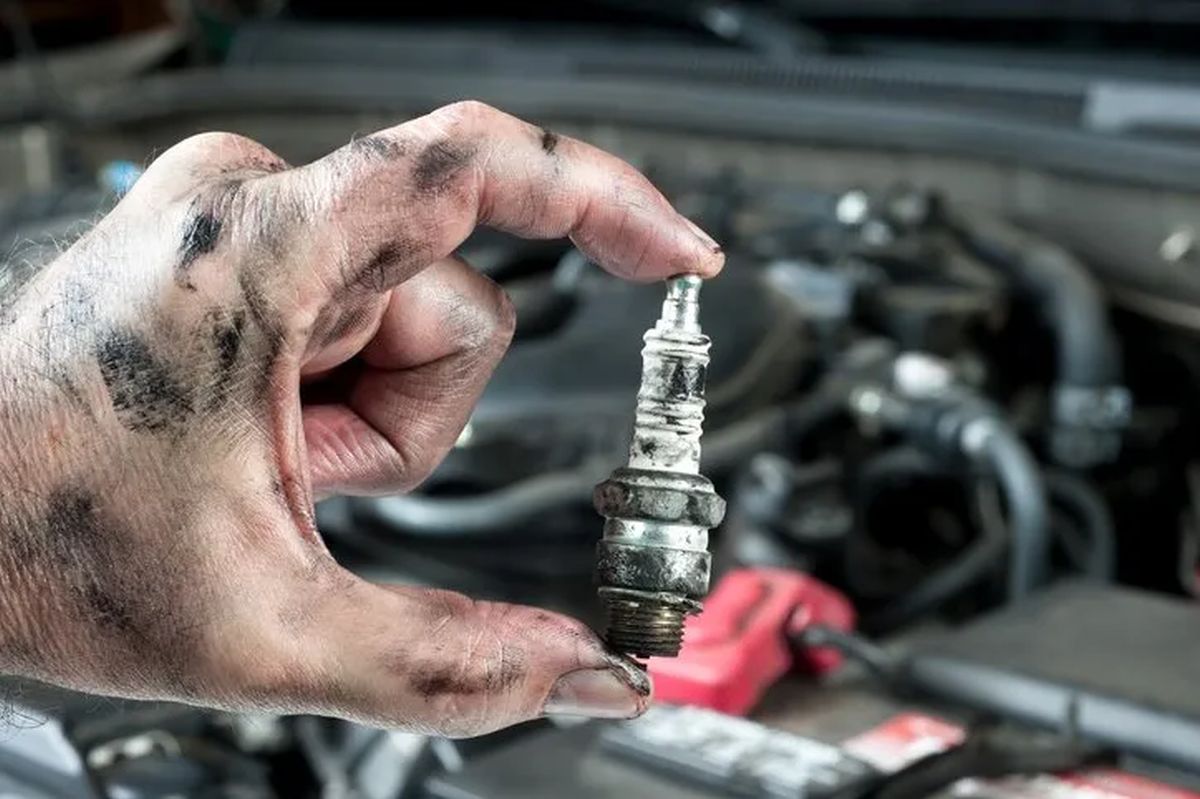
Worn or Faulty Spark Plugs
Spark plugs are one of the first components to inspect on a gasoline engine experiencing hesitation or misfire.
A worn, damaged, incorrectly gapped, or contaminated spark plug may not produce a strong and consistent spark.
This can become particularly noticeable when the engine is under load.
Possible symptoms include:
-
Hesitation during acceleration
-
Rough idle
-
Misfires
-
Poor fuel economy
-
Difficult starting
-
Reduced engine power
Spark plugs should be inspected and replaced according to the manufacturer's specifications.
Faulty Ignition Coils
Ignition coils generate the high voltage required to create the spark at the spark plug.
A weak or failing ignition coil can cause an intermittent or permanent misfire.
The problem may be more noticeable during acceleration because cylinder pressure increases under load, making it harder for the ignition system to produce a reliable spark.
A faulty ignition coil can cause:
-
Engine hesitation
-
Misfire
-
Rough running
-
Loss of power
-
Check Engine Light
-
Increased fuel consumption
On engines with individual ignition coils, diagnostic equipment can sometimes identify which cylinder is misfiring.
Dirty or Faulty Fuel Injectors
Fuel injectors must deliver the correct amount of fuel at the correct time.
If an injector becomes clogged or develops an electrical or mechanical fault, the affected cylinder may receive too much or too little fuel.
This can result in:
-
Hesitation
-
Rough idle
-
Misfire
-
Poor acceleration
-
Increased fuel consumption
-
Difficult starting
A partially restricted injector may cause a problem that is difficult to reproduce at idle but becomes obvious under acceleration.
Low Fuel Pressure
The engine needs adequate fuel pressure to maintain the correct air-fuel mixture.
Low fuel pressure can be caused by:
-
A weak fuel pump
-
A restricted fuel filter
-
A faulty fuel pressure regulator
-
Electrical problems
-
Fuel supply restrictions
When the engine demands more fuel during acceleration, insufficient fuel pressure can cause hesitation and power loss.
Clogged Fuel Filter
A severely restricted fuel filter can limit fuel flow to the engine.
The vehicle may appear to run normally at light throttle but hesitate when the driver demands more power.
This is because fuel demand increases significantly under acceleration and heavy load.
If the filter is severely restricted, the engine may also struggle to maintain high engine speed.
Vacuum or Intake Air Leaks
Unmetered air entering the intake system can disturb the air-fuel mixture.
A vacuum leak may occur through:
-
Cracked vacuum hoses
-
Damaged intake hoses
-
Faulty PCV components
-
Intake manifold gaskets
-
Throttle body seals
-
Vacuum connections
Vacuum leaks often cause rough idle and hesitation, particularly at low engine speeds.
Dirty Throttle Body
The throttle body controls the amount of air entering the engine.
Over time, oil vapor, carbon, and dirt can accumulate around the throttle plate.
Heavy deposits can interfere with smooth airflow and throttle operation.
A dirty throttle body may cause:
-
Hesitation
-
Rough idle
-
Poor throttle response
-
Stalling
-
Unstable engine speed
Electronic throttle bodies may also require an adaptation or relearn procedure after cleaning, depending on the vehicle.
Faulty Throttle Position Sensor
The throttle position sensor or electronic throttle system tells the engine control system how much the driver is requesting.
If the throttle position signal is incorrect or intermittent, the engine control module may not respond correctly to accelerator input.
This can cause:
-
Delayed throttle response
-
Hesitation
-
Sudden acceleration changes
-
Reduced engine power
-
Check Engine Light
-
Limp mode
Modern vehicles may use an electronic accelerator pedal and electronic throttle rather than a traditional mechanical throttle cable.
Faulty Mass Airflow Sensor
The Mass Airflow Sensor (MAF) measures the amount of air entering the engine.
The engine control module uses this information to calculate the appropriate amount of fuel.
If the MAF sensor becomes contaminated or develops an electrical fault, the calculated air-fuel mixture may become incorrect.
Possible symptoms include:
-
Hesitation
-
Poor acceleration
-
Rough idle
-
Increased fuel consumption
-
Engine misfire
-
Reduced power
A MAF-related problem may sometimes be accompanied by diagnostic trouble codes, but a faulty sensor does not always produce an obvious code.
Faulty MAP Sensor
The Manifold Absolute Pressure (MAP) sensor measures intake manifold pressure.
The engine control module can use this information to determine engine load and calculate fuel delivery and ignition timing.
A faulty or contaminated MAP sensor can cause incorrect load calculations and lead to:
-
Hesitation
-
Rough running
-
Poor acceleration
-
Stalling
-
Increased fuel consumption
-
Check Engine Light
Oxygen Sensor Problems
The oxygen sensor, also known as a lambda sensor, monitors oxygen levels in the exhaust.
The engine control system uses this information to adjust the air-fuel mixture.
A slow, inaccurate, or contaminated oxygen sensor can contribute to incorrect fuel control.
Possible symptoms include:
-
Hesitation
-
Poor fuel economy
-
Rough running
-
Increased emissions
-
Check Engine Light
However, oxygen sensor problems should not automatically be assumed whenever an engine hesitates. The sensor itself may be functioning correctly while reporting a mixture problem caused by another component.
Exhaust Restriction
A restricted catalytic converter or exhaust system can prevent exhaust gases from leaving the engine efficiently.
As engine speed and load increase, the restriction can become more noticeable.
Possible symptoms include:
-
Poor acceleration
-
Engine hesitation
-
Loss of high-speed power
-
Difficulty reaching high RPM
-
Increased exhaust backpressure
-
Excessive heat
A severely restricted catalytic converter can make the engine feel as though it is unable to breathe properly.
EGR Valve Problems
The Exhaust Gas Recirculation (EGR) system reduces certain emissions by routing a controlled amount of exhaust gas back into the intake.
If an EGR valve becomes stuck open or does not operate correctly, it can introduce an inappropriate amount of exhaust gas into the intake.
This may cause:
-
Rough idle
-
Hesitation
-
Stalling
-
Poor acceleration
-
Reduced engine performance
EGR-related hesitation is particularly relevant on diesel engines.
Turbocharger or Boost Problems
On turbocharged engines, insufficient or unstable boost pressure can cause hesitation and loss of power.
Possible causes include:
-
Boost leaks
-
Damaged intercooler hoses
-
Faulty boost control valve
-
Wastegate problems
-
Variable geometry turbocharger problems
-
Turbocharger damage
-
Faulty boost pressure sensor
A boost leak may become particularly obvious when accelerating because the engine requires significantly more airflow under load.
Faulty Crankshaft or Camshaft Position Sensor
The crankshaft and camshaft position sensors provide the engine control module with information about engine position and speed.
If one of these sensors produces an intermittent or incorrect signal, ignition and fuel injection timing can be affected.
Symptoms may include:
-
Engine hesitation
-
Misfires
-
Difficult starting
-
Stalling
-
Sudden loss of power
-
Intermittent Check Engine Light
A failing position sensor can sometimes cause the engine to shut off unexpectedly.
Low Engine Compression
Combustion depends on adequate cylinder compression.
Low compression can result from:
-
Worn piston rings
-
Burned valves
-
Damaged valves
-
Head gasket problems
-
Cylinder wear
-
Valve timing problems
If one cylinder has significantly lower compression than the others, the engine may run unevenly and hesitate during acceleration.
A compression test or leak-down test can help identify internal engine problems.
Incorrect Ignition Timing or Valve Timing
Modern engines rely on precise ignition and valve timing.
Problems with the timing system can affect engine performance significantly.
Possible causes include:
-
Timing chain problems
-
Timing belt problems
-
Variable valve timing faults
-
Camshaft position problems
-
Incorrect mechanical timing
A timing problem may cause hesitation, rough running, poor fuel economy, and loss of power.
What Are the Symptoms of Engine Hesitation?
Engine hesitation can appear differently depending on the underlying problem.
Common symptoms include:
-
Delayed response to the accelerator
-
Jerking during acceleration
-
Temporary loss of power
-
Engine stumbling
-
Rough idle
-
Misfires
-
Engine shaking
-
Stalling
-
Poor fuel economy
-
Difficulty reaching high RPM
-
Check Engine Light
-
Reduced engine performance
Some vehicles may also enter limp mode when the engine control system detects a serious fault.
Why Does the Engine Hesitate During Acceleration?
Acceleration places a greater demand on the engine.
The engine needs more air, more fuel, and stronger ignition performance.
If the fuel system cannot supply enough fuel, the ignition system cannot produce a reliable spark, or the intake system cannot supply the required airflow, hesitation may occur.
This is why a vehicle can sometimes idle normally but hesitate severely when the accelerator is pressed.
Why Does the Engine Hesitate at Low RPM?
Low-RPM hesitation can be caused by several different problems.
Common possibilities include:
-
Vacuum leaks
-
Dirty throttle body
-
Faulty MAF sensor
-
Faulty MAP sensor
-
EGR problems
-
Ignition problems
-
Fuel injector problems
-
Incorrect fuel mixture
The exact cause depends on the engine and the conditions under which the hesitation occurs.
Why Does the Engine Hesitate at High RPM?
High-RPM hesitation often becomes more noticeable when fuel or airflow demand increases.
Possible causes include:
-
Weak fuel pump
-
Restricted fuel filter
-
Fuel pressure problems
-
Ignition coil weakness
-
Spark plug problems
-
Turbocharger problems
-
Boost leaks
-
Exhaust restriction
-
Valve timing problems
High-RPM hesitation should be diagnosed with live data and, when necessary, fuel-pressure and ignition-system testing.
Why Does the Engine Hesitate When Cold?
A cold engine requires different fuel and ignition strategies than a fully warmed engine.
If the engine hesitates primarily during cold starts, possible causes include:
-
Coolant temperature sensor problems
-
Fuel mixture problems
-
Vacuum leaks
-
Faulty spark plugs
-
Weak ignition coils
-
Dirty injectors
-
MAF or MAP sensor problems
If the problem disappears completely after the engine warms up, this information can be very useful during diagnosis.
Why Does the Engine Hesitate When Warm?
If hesitation appears only after the engine reaches operating temperature, different possibilities should be considered.
Heat can affect:
-
Ignition coils
-
Crankshaft position sensors
-
Camshaft position sensors
-
Fuel pumps
-
Wiring
-
Electrical connections
Some components may work correctly when cold but become unreliable as their internal temperature increases.
Can Bad Fuel Cause Engine Hesitation?
Yes.
Contaminated, stale, or incorrect fuel can affect combustion.
Water or other contamination in the fuel can cause:
-
Rough running
-
Misfires
-
Hesitation
-
Poor acceleration
-
Difficult starting
If the symptoms began immediately after refueling, fuel quality should be considered as part of the diagnosis.
How Is Engine Hesitation Diagnosed?
The correct diagnostic approach depends on the symptoms.
A technician may begin by scanning the vehicle for diagnostic trouble codes and examining live data.
The following may then be checked:
-
Spark plugs
-
Ignition coils
-
Fuel pressure
-
Fuel injectors
-
MAF sensor
-
MAP sensor
-
Throttle position
-
Intake air leaks
-
Oxygen sensor readings
-
Engine coolant temperature
-
Crankshaft and camshaft signals
-
Turbocharger boost pressure
-
Compression
-
Exhaust backpressure
A road test under the conditions that reproduce the hesitation can also be extremely useful.
Can an Engine Hesitation Be Ignored?
It is not recommended.
A small hesitation may initially seem harmless, but the underlying problem can become worse.
Continued misfires can be particularly dangerous for the catalytic converter because unburned fuel can enter the exhaust system.
If the engine is severely misfiring, the Check Engine Light is flashing, or there is a significant loss of power, continued driving should be avoided until the vehicle is inspected.
Final Thoughts
Engine hesitation is a symptom, not a specific fault.
The problem can originate from the ignition system, fuel system, intake system, sensors, exhaust system, turbocharger, engine timing, or internal engine components.
Spark plugs, ignition coils, fuel injectors, fuel pressure, vacuum leaks, throttle bodies, MAF and MAP sensors are among the components commonly associated with hesitation and misfires.
The most important part of diagnosis is determining exactly when the hesitation occurs. A problem that happens only during cold starts is different from one that appears only under heavy acceleration or at high engine speed.
Instead of replacing parts based solely on symptoms, the vehicle should be diagnosed using fault codes, live data, physical inspection, and appropriate mechanical and electrical tests. This makes it much easier to identify the actual cause of the hesitation and avoid unnecessary repairs.