TR
TR EN
EN

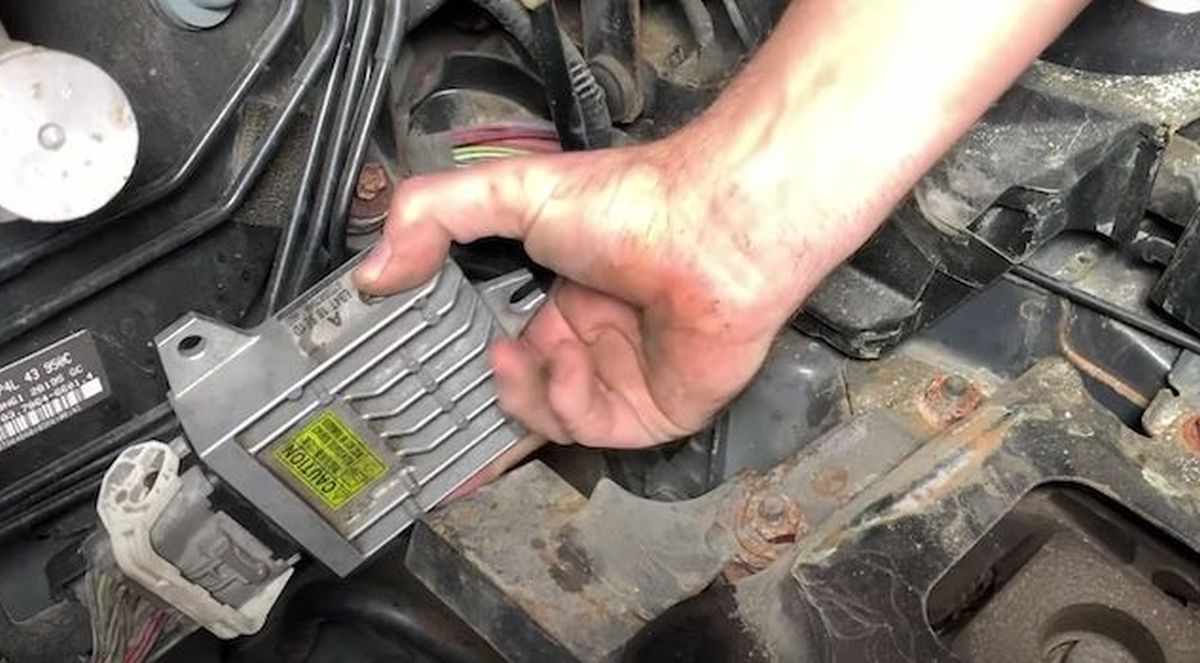
Symptoms of a Transmission Control Module (TCM) Failure
The Transmission Control Module (TCM) is one of the most important electronic control units in a modern automatic transmission. It monitors transmission speed, temperature, pressure, gear position, engine torque, and other operating parameters to determine when and how the transmission should shift.
When the TCM works correctly, gear changes are coordinated with engine output and vehicle speed. When the TCM develops an electrical, electronic, software, communication, or internal fault, the transmission may begin shifting incorrectly or may enter a protective operating mode.
A TCM failure does not always mean that the transmission itself is mechanically damaged. In many cases, the actual problem may be related to wiring, power supply, ground connections, sensors, communication networks, software, or the TCM itself.
What Is a Transmission Control Module (TCM)?
The Transmission Control Module, commonly abbreviated as TCM, is the electronic control unit responsible for managing many functions of an automatic transmission.
Depending on the transmission design, the TCM can control or coordinate:
-
Gear selection
-
Shift timing
-
Shift pressure
-
Shift solenoids
-
Torque converter lock-up
-
Line pressure
-
Clutch engagement
-
Transmission temperature management
-
Manual shift requests
-
Protective operating strategies
The TCM receives information from multiple sensors and other control modules.
For example, it may use information about:
-
Vehicle speed
-
Engine speed
-
Throttle position
-
Accelerator pedal position
-
Transmission input speed
-
Transmission output speed
-
Transmission fluid temperature
-
Gear position
-
Brake pedal status
-
Engine torque
-
Hydraulic pressure
The TCM then uses this information to determine the appropriate transmission behavior.
What Are the Most Common Symptoms of TCM Failure?
A faulty TCM can produce a wide range of symptoms because the transmission depends heavily on electronic control.
The most common symptoms include:
-
Harsh gear shifts
-
Delayed gear changes
-
Incorrect gear selection
-
Transmission slipping
-
Transmission stuck in one gear
-
Failure to shift into certain gears
-
Failure to engage Drive or Reverse
-
Random gear changes
-
Transmission warning light
-
Check engine light
-
Reduced transmission performance
-
Limp mode
-
Manual mode not working
-
Paddle shifters not responding
-
Poor acceleration
-
Increased fuel consumption
-
Communication-related diagnostic trouble codes
-
Intermittent transmission operation
Not every symptom means the TCM itself has failed.
A proper diagnosis is necessary before replacing the module.
Harsh Gear Shifting
One of the most noticeable symptoms of a TCM-related problem is unusually harsh shifting.
The transmission may shift from one gear to another with a strong bump or jolt.
For example, the driver may feel:
-
A strong engagement when selecting Drive
-
A hard 1–2 shift
-
A hard 2–3 shift
-
A harsh downshift
-
A noticeable impact during stopping
-
Sudden engagement when accelerating
The TCM controls shift timing and, depending on the transmission, can influence hydraulic pressure through electronically controlled solenoids.
If the TCM receives incorrect information or fails to control the transmission correctly, shift quality can deteriorate.
However, harsh shifting can also be caused by low transmission fluid, degraded fluid, solenoid problems, valve body issues, clutch wear, or mechanical transmission damage.
Delayed Gear Shifting
Another possible symptom is delayed shifting.
The engine may reach a higher RPM than expected before the transmission changes gear.
The driver may notice that:
-
The transmission holds a gear too long
-
Upshifts occur late
-
Downshifts happen unexpectedly
-
The transmission hesitates before changing gear
-
Acceleration feels inconsistent
If the TCM is receiving incorrect speed, load, or temperature information, it may calculate inappropriate shift points.
Transmission Stuck in One Gear
A particularly obvious symptom of a control problem is a transmission that remains in one gear.
The vehicle may start and drive, but the transmission may refuse to shift normally.
For example, it may remain in:
-
Second gear
-
Third gear
-
A fixed forward gear
-
A limited emergency gear
This can happen when the TCM detects a serious fault and activates a protective strategy.
It is often referred to as limp mode or fail-safe mode.
Limp Mode
Limp mode is designed to protect the transmission from further damage when the control system detects a serious problem.
When limp mode is activated, the transmission may deliberately restrict its operation.
Possible symptoms include:
-
Limited gear selection
-
Fixed gear operation
-
Reduced acceleration
-
Delayed shifting
-
Harsh engagement
-
Transmission warning message
-
Check engine light
-
Limited vehicle speed
A TCM problem can cause limp mode, but limp mode does not prove that the TCM itself is defective.
A faulty sensor, solenoid, wiring circuit, low fluid pressure, internal transmission problem, or communication failure can also trigger protective operation.
Failure to Engage Drive or Reverse
A serious transmission control problem may prevent the transmission from engaging Drive or Reverse correctly.
The driver may move the selector into D or R, but the vehicle may:
-
Remain stationary
-
Engage after a delay
-
Engage suddenly
-
Engage intermittently
-
Select an unexpected gear
This can result from electronic control problems, hydraulic pressure problems, solenoid faults, mechanical transmission failures, or communication problems between the TCM and other modules.
Because failure to engage Drive or Reverse can also indicate a serious mechanical or hydraulic problem, the transmission should be inspected promptly.
Transmission Warning Light
Modern vehicles may have a dedicated transmission warning light or message.
Depending on the manufacturer, the dashboard may display:
-
Transmission fault
-
Check transmission
-
Gearbox fault
-
Service transmission
-
Transmission overheat
-
Gear unavailable
-
Transmission warning symbol
The exact warning varies by vehicle.
A warning message should be accompanied by diagnostic scanning rather than simply clearing the fault code.
Check Engine Light
A TCM-related problem can also illuminate the check engine light.
This is because the engine and transmission control systems often communicate continuously.
The vehicle may store diagnostic trouble codes related to:
-
TCM communication
-
Shift solenoids
-
Transmission pressure
-
Transmission speed sensors
-
Gear ratio errors
-
Internal transmission faults
-
CAN communication
-
TCM power supply
-
TCM processor operation
A diagnostic scanner capable of communicating with the transmission module is often required.
A basic engine-only scanner may not provide the complete picture.
Transmission Slipping
Transmission slipping occurs when the transmission does not maintain the expected mechanical relationship between engine speed and transmission output.
The engine RPM may increase without a corresponding increase in vehicle speed.
A control problem can contribute to slipping if the TCM commands incorrect clutch pressure or shift operation.
However, slipping is also commonly associated with mechanical problems such as:
-
Worn clutch packs
-
Low transmission fluid
-
Incorrect fluid level
-
Hydraulic pressure loss
-
Worn valve body components
-
Internal transmission wear
Therefore, slipping should never automatically be diagnosed as a TCM failure.
Incorrect Gear Selection
A malfunctioning TCM may command or report an incorrect gear.
The driver may experience:
-
Unexpected upshifts
-
Unexpected downshifts
-
Incorrect gear selection
-
Gear changes at inappropriate engine speeds
-
Transmission remaining in the wrong gear
Incorrect gear information can also originate from transmission speed sensors, gear-position sensors, wiring, or communication problems.
Manual Mode Stops Working
Many automatic transmissions offer a manual shift mode.
Depending on the vehicle, this may be controlled through:
-
Gear selector movement
-
Paddle shifters
-
Steering-wheel controls
-
Electronic switches
A TCM-related fault can cause manual mode to become unavailable.
The transmission may continue operating automatically but refuse manual shift commands.
This can be a useful diagnostic clue, especially if the problem appears at the same time as a transmission warning.
Paddle Shifters Do Not Respond
If a vehicle has paddle shifters, the TCM must receive and process the driver's shift request.
A fault in the TCM, CAN communication system, steering-wheel controls, wiring, or related modules can prevent the transmission from responding.
If only the paddle shifters stop working while automatic shifting remains normal, the problem may not be the TCM itself.
The input switches and communication circuits should also be checked.
Transmission Shifts Randomly
A transmission that changes gears unpredictably can be experiencing a control problem.
Possible symptoms include:
-
Sudden downshifts
-
Unexpected upshifts
-
Gear hunting
-
Repeated shifting between two gears
-
Shifting at unusually high RPM
-
Shifting at unusually low RPM
The TCM calculates shift decisions using multiple inputs.
An incorrect signal from one of the sensors can therefore produce symptoms that appear to be caused by the TCM.
Gear Hunting
Gear hunting occurs when the transmission repeatedly moves between two gears instead of maintaining a stable gear.
For example, the transmission may repeatedly shift between a higher and lower gear during mild acceleration.
Possible causes include:
-
Incorrect vehicle speed information
-
Throttle position information problems
-
Transmission speed sensor faults
-
Incorrect engine load information
-
TCM calibration problems
-
Low transmission fluid
-
Mechanical transmission problems
A road test with live data can help identify the cause.
Communication Errors With the TCM
Modern vehicles contain multiple electronic control modules that communicate through networks such as CAN.
The engine control module, TCM, ABS module, body control module, and other systems may exchange information continuously.
If communication with the TCM is interrupted, the vehicle may store communication-related diagnostic trouble codes.
Possible symptoms include:
-
Transmission warning
-
No communication with TCM
-
Limp mode
-
Incorrect gear display
-
Loss of automatic shifting
-
Multiple unrelated warning lights
-
Intermittent transmission operation
Communication problems are especially important because the TCM may be perfectly healthy while the actual problem is the network, wiring, power supply, or another module.
U0101 and Lost Communication With the TCM
One well-known communication-related diagnostic trouble code is U0101 – Lost Communication With Transmission Control Module.
When this code is stored, it means that another control module has detected a loss of communication with the TCM.
This does not automatically mean that the TCM must be replaced.
Possible causes include:
-
TCM power loss
-
Poor ground connection
-
Damaged CAN wiring
-
Loose connector
-
Corroded connector pins
-
Low battery voltage
-
Charging-system problems
-
Network communication faults
-
TCM internal failure
A complete electrical and communication diagnosis is necessary.
TCM Power Supply Problems
A TCM cannot operate correctly without stable electrical power.
A weak battery, poor connection, blown fuse, damaged power wire, or charging-system problem can create symptoms that look like a TCM failure.
Possible causes include:
-
Weak battery
-
Low system voltage
-
Blown TCM fuse
-
Corroded fuse connection
-
Damaged wiring
-
Loose electrical connection
-
Poor ground
-
Charging-system malfunction
This is why checking power and ground should be part of the diagnosis before replacing the module.
Poor Ground Connection
A poor ground connection can cause extremely confusing electronic problems.
The TCM may:
-
Reset intermittently
-
Stop communicating
-
Store multiple fault codes
-
Control solenoids incorrectly
-
Become completely inactive
Ground connections should be checked for resistance, voltage drop, corrosion, looseness, and physical damage.
Simply looking at a ground cable is not always sufficient.
Low Battery Voltage Can Cause TCM Problems
Modern electronic control modules can behave abnormally when system voltage becomes too low.
A weak battery or charging problem may cause:
-
Transmission warning lights
-
Communication codes
-
Gear selection problems
-
Intermittent TCM communication
-
Multiple control-module faults
-
Temporary limp mode
If several electronic systems suddenly report faults at the same time, battery voltage and charging-system operation should be checked.
TCM Software Problems
Not every TCM problem is caused by a damaged electronic component.
Software or calibration issues can also affect transmission operation.
Depending on the vehicle, the manufacturer may release software updates to correct:
-
Shift quality
-
Shift timing
-
False diagnostic trouble codes
-
Communication problems
-
Adaptation problems
-
Specific operating conditions
If a known software update exists for the vehicle, programming or updating the TCM may resolve the issue without replacing the hardware.
TCM Adaptation Problems
Many modern automatic transmissions use adaptive strategies.
The TCM can learn how the transmission responds to different operating conditions and adjust control parameters accordingly.
If adaptations become incorrect or are lost after certain repairs, the transmission may exhibit:
-
Harsh shifts
-
Delayed engagement
-
Poor shift quality
-
Gear hunting
-
Unusual shift timing
Depending on the vehicle, a relearn or adaptation procedure may be required.
This procedure should be performed according to the manufacturer's specifications.
Can a TCM Failure Cause Poor Fuel Economy?
Yes.
The transmission has a significant effect on engine operating conditions.
If the transmission does not shift correctly, the engine may operate at an inefficient RPM.
For example, a transmission that refuses to reach a higher gear may keep the engine running at elevated RPM during cruising.
This can increase fuel consumption.
However, poor fuel economy alone is not sufficient evidence of a TCM problem.
Can a TCM Failure Cause the Car Not to Start?
It can, depending on the vehicle.
Some vehicles use communication between the TCM, engine control module, immobilizer system, and other modules as part of the starting strategy.
A serious communication or power problem may therefore contribute to a no-start condition.
However, many other systems can also cause a vehicle not to start, so a no-start problem should not automatically be attributed to the TCM.
Can a TCM Failure Damage the Transmission?
A control problem can potentially contribute to transmission damage if the transmission is operated incorrectly for an extended period.
Incorrect shift timing, pressure control, or clutch engagement can increase stress and heat.
However, the opposite situation is also common: a mechanically damaged transmission can cause the TCM to report faults.
This distinction is extremely important.
A diagnostic trouble code does not necessarily identify the failed physical component.
How Is a TCM Failure Diagnosed?
Proper diagnosis should begin with a complete scan of the vehicle.
The technician should check:
-
TCM diagnostic trouble codes
-
Engine control module codes
-
ABS module codes
-
CAN communication codes
-
Transmission live data
-
Battery voltage
-
Charging voltage
-
TCM power supply
-
TCM grounds
-
Wiring
-
Connectors
-
Transmission sensors
-
Solenoids
-
Transmission fluid condition
-
Hydraulic pressure
-
Gear ratios
The transmission should also be road-tested when appropriate.
Why Should You Not Replace the TCM Immediately?
TCMs can be expensive, and replacing one without proving that it is defective can waste significant money.
A TCM fault code can be caused by:
-
Wiring
-
Connector problems
-
Low voltage
-
Poor grounds
-
Sensor failures
-
Solenoid faults
-
Communication problems
-
Mechanical transmission problems
-
Software issues
For example, a lost-communication code may be caused by a damaged CAN wire rather than a failed TCM.
The electrical circuit should therefore be tested before replacing the control module.
Can a TCM Be Repaired?
In some cases, a TCM can be repaired, depending on its design and the nature of the failure.
Possible electronic failures include:
-
Damaged circuit-board components
-
Power supply circuit failures
-
Communication circuit failures
-
Corrosion
-
Solder-joint problems
-
Internal electronic component failure
However, not every TCM is economically or technically repairable.
Some vehicles require a replacement module to be programmed or configured to the vehicle.
Does a Replacement TCM Need Programming?
Often, yes.
Modern TCMs may contain vehicle-specific software, calibration, coding, adaptation values, or security-related information.
After replacement, the module may need:
-
Software programming
-
Vehicle configuration
-
Coding
-
Calibration
-
Adaptation reset
-
Transmission relearn
-
Security or immobilizer synchronization
The exact procedure depends on the manufacturer and transmission.
Installing a replacement TCM without the required programming can result in continued transmission problems.
What Should Be Checked Before Replacing a TCM?
Before condemning the TCM, a technician should generally verify:
Power supply
The module must receive the correct voltage under the relevant operating conditions.
Ground connections
Ground integrity should be tested rather than assumed.
Fuses and relays
The appropriate power circuits should be checked.
Wiring
Damaged, shorted, open, or corroded wiring can interrupt communication or control.
Connectors
Loose, contaminated, or corroded connector pins can create intermittent faults.
CAN communication
Communication lines should be tested when communication codes are present.
Sensors and solenoids
The TCM may be functioning correctly but receiving incorrect information from another component.
Transmission condition
Fluid level, pressure, clutch operation, valve body condition, and mechanical components should be considered.
Can a Bad Sensor Make It Look Like the TCM Is Faulty?
Yes.
The TCM depends on sensor information to make decisions.
A faulty transmission input speed sensor, output speed sensor, temperature sensor, pressure sensor, or gear-position sensor can cause incorrect transmission behavior.
The TCM may then store a fault code because the data it receives is outside the expected range.
Replacing the TCM without checking the sensor signal can therefore fail to solve the problem.
Can a Bad Solenoid Be Mistaken for a TCM Failure?
Yes.
Shift and pressure-control solenoids are electrically controlled by the transmission system.
A failed solenoid, damaged wiring, poor connector connection, or internal hydraulic problem can cause symptoms that appear to be electronic control failure.
The solenoid circuit should be tested for:
-
Resistance
-
Power supply
-
Ground or control signal
-
Wiring continuity
-
Short circuits
-
Mechanical operation
The exact testing method depends on the transmission design.
TCM Failure vs. Mechanical Transmission Failure
This is one of the most important distinctions in transmission diagnosis.
A TCM problem generally involves electronic control, communication, sensor information, software, or actuator commands.
A mechanical transmission problem can involve:
-
Worn clutch packs
-
Damaged gears
-
Valve body wear
-
Hydraulic pressure loss
-
Bearing damage
-
Internal mechanical damage
-
Torque converter problems
The symptoms can overlap.
For example, harsh shifting can be caused by a TCM control issue or by a mechanical/hydraulic problem.
Therefore, diagnosis should determine whether the problem is electronic, hydraulic, mechanical, or a combination of these.
How Long Can You Drive With a TCM Problem?
There is no universal answer.
If the vehicle has entered limp mode, is shifting violently, cannot select the correct gear, or has lost normal transmission control, continued driving may increase the risk of damage.
Driving should be minimized if there is:
-
Severe slipping
-
Strong impact during gear changes
-
No Drive or Reverse
-
Transmission overheating
-
Major fluid leakage
-
Sudden loss of transmission control
-
Severe abnormal noise
The safest approach is to diagnose the problem as soon as possible.
How Can TCM Problems Be Prevented?
Not every TCM failure can be prevented, but several practices can reduce the risk of transmission-related electronic problems.
It is useful to:
-
Maintain the battery and charging system
-
Keep electrical connections clean and secure
-
Repair fluid leaks promptly
-
Use the correct transmission fluid
-
Follow the manufacturer's transmission service intervals
-
Avoid overheating the transmission
-
Address warning lights quickly
-
Protect wiring from damage
-
Keep connectors properly sealed
-
Install software updates when applicable
-
Avoid ignoring intermittent transmission problems
Good transmission maintenance also reduces the possibility of mechanical problems being misinterpreted as electronic faults.
Final Thoughts
A Transmission Control Module failure can produce many different symptoms, including harsh shifting, delayed gear changes, incorrect gear selection, transmission slipping, limp mode, failure to engage Drive or Reverse, warning lights, communication errors, and loss of manual shifting functions.
However, these symptoms do not automatically prove that the TCM itself is defective.
The TCM is part of a much larger control system that includes sensors, solenoids, wiring, power supplies, grounds, CAN communication networks, hydraulic components, and mechanical transmission parts. A failure in any of these areas can create symptoms that resemble a TCM problem.
For this reason, the correct approach is to scan all relevant control modules, examine live data, check power and ground circuits, inspect wiring and connectors, test sensors and solenoids, and evaluate the mechanical and hydraulic condition of the transmission before replacing the TCM.
If the TCM itself is confirmed to be defective, replacement may require programming, coding, calibration, or transmission adaptation procedures. Correct diagnosis is therefore much more important than simply replacing the module based on a diagnostic trouble code.