TR
TR EN
EN

What Is an X-Tronic Transmission? Advantages and Disadvantages
X-Tronic is a name commonly associated with continuously variable transmissions (CVTs), particularly in vehicles from manufacturers such as Nissan and other brands within the Renault-Nissan-Mitsubishi Alliance.
Unlike a conventional automatic transmission that uses a fixed number of gears, an X-Tronic CVT can continuously vary its transmission ratio within its designed range.
This allows the engine to operate at a speed that is appropriate for the driving conditions without requiring the transmission to shift through a series of fixed gears.
The result is a very different driving experience from a traditional automatic transmission.
Instead of clearly feeling first gear, second gear, third gear, and so on, the engine speed can rise and remain relatively steady while the vehicle continues accelerating.
This behavior is one of the defining characteristics of X-Tronic.
However, X-Tronic transmissions also have limitations. Their durability depends heavily on the transmission design, fluid condition, driving conditions, maintenance, and how the vehicle is used.
Understanding how the system works is therefore important before evaluating whether an X-Tronic transmission is good or bad.
What Does X-Tronic Mean?
X-Tronic is primarily a commercial name used for certain CVT transmissions.
The exact transmission design can vary according to the vehicle, engine, model year, market, and generation.
Therefore, "X-Tronic" should not be treated as the name of one single transmission mechanically identical across every vehicle.
The fundamental concept, however, is generally a continuously variable transmission.
A CVT does not depend on a conventional set of fixed forward gears in the same way as a traditional automatic transmission.
Instead, it uses a variable transmission ratio to continuously adapt the relationship between engine speed and wheel speed.
How Does an X-Tronic CVT Work?
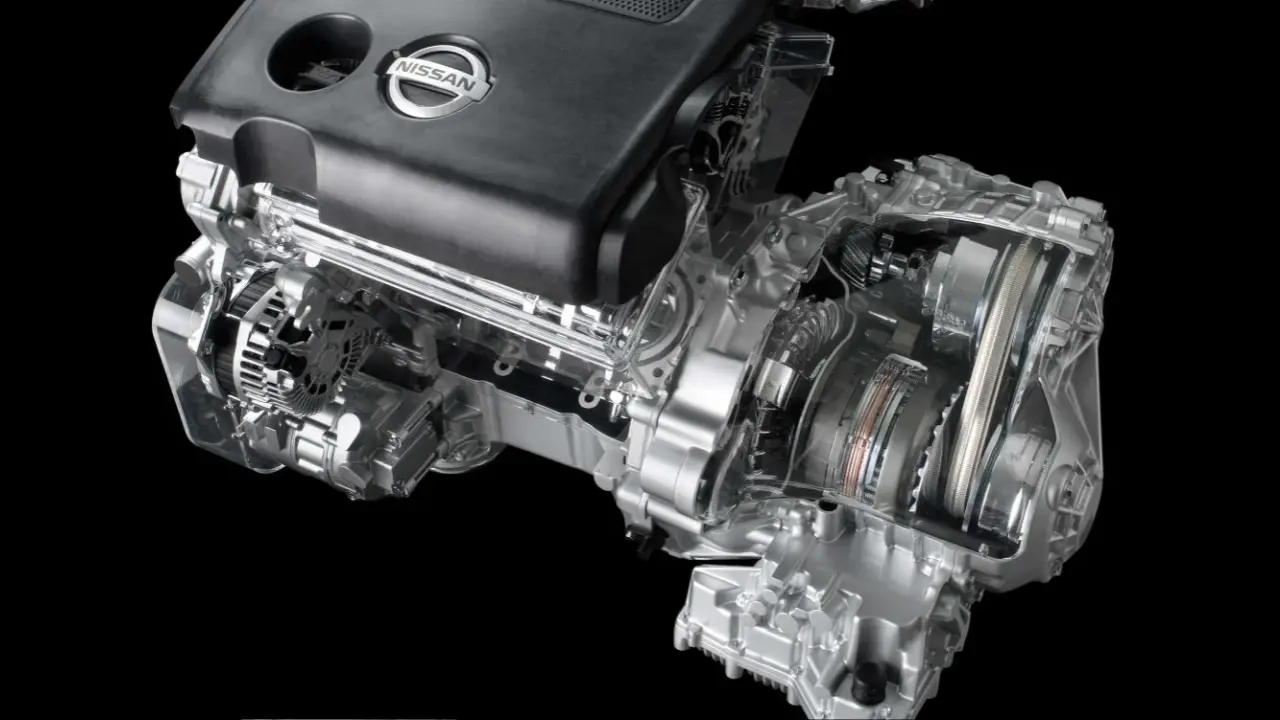
A conventional CVT typically uses two variable-diameter pulleys connected by a high-strength steel belt or chain.
One pulley is connected to the engine through the transmission input, while the other transfers torque toward the final drive and wheels.
The effective diameter of each pulley can change.
When the pulley diameters change in relation to each other, the transmission ratio changes.
At low vehicle speeds, the transmission can provide a low ratio that allows the engine to generate the torque needed to get the vehicle moving.
As vehicle speed increases, the ratio can progressively change toward a higher ratio.
There are therefore no traditional fixed gear steps in the same sense as a six-speed or eight-speed automatic transmission.
The transmission control system continuously determines the appropriate ratio based on parameters such as:
-
Vehicle speed
-
Engine speed
-
Accelerator pedal position
-
Engine load
-
Transmission fluid temperature
-
Throttle position
-
Driving conditions
-
Selected driving mode
-
Climbing or descending conditions
The result is continuous ratio adjustment rather than conventional gear-by-gear shifting.
Why Does an X-Tronic Feel Different From a Conventional Automatic?
The difference is most noticeable during acceleration.
With a conventional automatic transmission, engine speed generally rises, the transmission changes gear, engine speed drops or changes, and acceleration continues in the next gear.
An X-Tronic CVT can behave differently.
When the driver presses the accelerator strongly, the transmission may quickly select a ratio that places the engine near an efficient or powerful operating range.
The engine may then remain at relatively high RPM while the vehicle continues gaining speed.
This can produce what drivers sometimes describe as a "rubber-band" sensation.
It is not necessarily a malfunction.
It is largely a consequence of how a continuously variable transmission operates.
Some modern X-Tronic systems use programmed ratio changes that imitate conventional gear shifts under certain conditions.
These simulated shifts can make the transmission feel more familiar to drivers accustomed to traditional automatic transmissions.
X-Tronic vs. Traditional Automatic Transmission
The most important difference is the method used to change the transmission ratio.
A conventional automatic transmission normally uses planetary gearsets, clutches, brakes, and hydraulic or electronically controlled components to provide a defined number of forward ratios.
An X-Tronic CVT uses continuously variable ratio control.
This gives the CVT a much wider range of possible operating ratios within its design limits.
The engine can therefore spend more time near an operating point that is appropriate for fuel economy or performance.
Neither system is universally better.
They simply use different engineering approaches.
Advantages of X-Tronic Transmission
X-Tronic CVTs have several characteristics that can make them particularly suitable for passenger cars and urban driving.
Smooth Acceleration
One of the biggest advantages is the absence of conventional gear changes.
Because the transmission can continuously change ratio, acceleration can be very smooth.
There are no normal shift shocks between first, second, third, and fourth gears because those fixed steps do not exist in the same way.
For drivers who prioritize comfort, this can be a significant advantage.
Improved Engine Efficiency
A CVT can keep the engine operating closer to an efficient RPM range.
Instead of forcing the engine to follow the fixed ratio steps of a conventional automatic transmission, the CVT can continuously adjust the ratio.
Under suitable conditions, this can contribute to lower fuel consumption.
Actual fuel economy still depends on the engine, vehicle weight, aerodynamics, driving style, traffic, temperature, and transmission calibration.
Therefore, an X-Tronic does not automatically guarantee better fuel economy in every situation.
Comfortable City Driving
CVTs can work particularly well in stop-and-go traffic.
Frequent acceleration and deceleration do not require repeated conventional gear changes.
The transmission can continuously adapt its ratio as the vehicle moves through traffic.
This can make urban driving feel smooth and relaxed.
Keeping the Engine in an Appropriate RPM Range
A CVT provides the transmission control system with a high degree of flexibility.
During moderate acceleration, the engine can remain within an RPM range that balances power and efficiency.
During stronger acceleration, the transmission can select a ratio that allows the engine to produce the required power without waiting for multiple gear changes.
This is one of the fundamental engineering benefits of the CVT concept.
Reduced Shift Shock
Traditional automatic transmissions can sometimes produce noticeable shifts, especially when there are calibration problems, worn components, incorrect fluid levels, or other faults.
A CVT does not normally produce the same series of fixed gear changes.
As a result, the driving experience can feel more seamless.
However, a CVT can still develop judder, shudder, hesitation, or harsh engagement when there is a mechanical, hydraulic, electronic, or fluid-related problem.
Potentially Good Fuel Economy in Urban Use
When properly calibrated, a CVT can provide good efficiency in city driving because it does not need to repeatedly select fixed gears.
The transmission can select a ratio appropriate for relatively low-speed operation and continuously adjust it as traffic conditions change.
This is one reason CVTs are widely used in compact and midsize passenger vehicles.
Disadvantages of X-Tronic Transmission
The same characteristics that make CVTs attractive can also create disadvantages.
Different Driving Feel
Some drivers simply do not like the way a CVT behaves.
During hard acceleration, engine RPM may rise rapidly and remain elevated while the vehicle continues accelerating.
This can feel unusual compared with a conventional automatic transmission.
Manufacturers have attempted to reduce this effect through transmission programming and simulated shift behavior, but the underlying CVT principle remains different.
Sensitivity to Fluid Condition
CVT fluid is not simply a generic lubricant.
The fluid has to perform several functions, including lubrication, cooling, and providing the friction characteristics required by the transmission's internal components.
Using the wrong fluid can cause problems.
Fluid degradation can also affect transmission operation.
For this reason, the correct fluid specification and service procedure are extremely important.
The exact maintenance requirement should always be based on the vehicle manufacturer's specifications.
Belt or Chain Wear
The steel belt or chain inside a CVT is a critical component.
It transfers engine torque while operating under substantial load between the variable pulleys.
If the transmission is subjected to excessive heat, insufficient lubrication, incorrect fluid, severe wear, or operating conditions beyond its intended limits, internal components can deteriorate.
Once internal mechanical damage occurs, repairs can become expensive.
Heat Management Is Important
CVTs can generate significant heat, particularly under heavy loads.
Long periods of high-speed driving, steep climbs, towing, aggressive acceleration, or operation in very hot conditions can place additional thermal stress on the transmission.
The transmission cooling system therefore plays an important role.
An overheated CVT may develop abnormal behavior and accelerated fluid degradation.
Repairs Can Be Expensive
CVT repair can be expensive because the transmission contains specialized components and requires appropriate diagnostic equipment and procedures.
Depending on the fault, repairs may involve:
-
Valve body components
-
Solenoids
-
Sensors
-
Transmission control modules
-
Bearings
-
Pulleys
-
Steel belt or chain
-
Hydraulic components
-
Internal seals
-
Torque converter components, depending on the design
-
Complete transmission replacement
The most economical repair depends on the actual failure and the condition of the transmission.
Not Every CVT Is Designed for the Same Load
CVTs are available in many different designs.
A CVT designed for a small naturally aspirated engine is not necessarily comparable with a CVT designed for a larger turbocharged engine or a hybrid powertrain.
The maximum torque capacity, cooling system, pulley design, belt or chain construction, software calibration, and internal components can differ considerably.
Therefore, statements such as "all CVTs are weak" or "all CVTs are reliable" are too broad.
Common X-Tronic Transmission Problems
A properly functioning X-Tronic should provide smooth and predictable operation.
When problems develop, the symptoms can vary significantly.
Common warning signs include:
-
Shuddering during acceleration
-
Judder at low speed
-
Delayed engagement
-
Poor acceleration
-
Engine RPM fluctuating unexpectedly
-
Transmission slipping
-
Abnormal whining or humming
-
Overheating warnings
-
Transmission warning lights
-
Limp-home mode
-
Difficulty selecting Drive or Reverse
-
Unusual vibration
-
Sudden changes in transmission behavior
These symptoms do not automatically mean the CVT itself is mechanically destroyed.
A sensor, wiring problem, fluid issue, control valve, solenoid, cooling problem, or software-related issue can produce similar symptoms.
What Causes CVT Judder?
CVT judder is one of the symptoms that often causes concern.
The vehicle may feel as though it is vibrating or repeatedly grabbing and releasing during acceleration, particularly at low speeds.
Possible causes include:
-
Degraded transmission fluid
-
Incorrect CVT fluid
-
Internal clutch-related issues, depending on design
-
Belt or pulley wear
-
Hydraulic pressure problems
-
Valve body problems
-
Solenoid faults
-
Transmission control problems
-
Excessive internal wear
A proper diagnosis is required because similar vibrations can also come from the engine, driveshafts, CV joints, engine mounts, or other drivetrain components.
Is X-Tronic Reliable?
There is no universal answer.
The reliability of an X-Tronic transmission depends on the specific transmission model, vehicle application, maintenance history, operating conditions, software calibration, cooling system, and driving habits.
A well-maintained CVT operating within its intended conditions can provide many years of service.
On the other hand, neglected fluid, repeated overheating, severe use, incorrect repairs, or continued operation after symptoms appear can significantly shorten transmission life.
The reputation of a transmission family should therefore not be confused with the condition of an individual transmission.
How Long Does an X-Tronic Transmission Last?
There is no single mileage figure that applies to every X-Tronic transmission.
Service life can vary greatly.
Factors that influence longevity include:
-
Transmission design
-
Engine torque
-
Vehicle weight
-
Driving style
-
Traffic conditions
-
Climate
-
Transmission temperature
-
Fluid condition
-
Maintenance history
-
Towing or heavy-load use
-
Previous repairs
A CVT that is correctly maintained and operated within its design limits can last a long time.
Conversely, severe overheating or internal wear can cause problems much earlier.
Does X-Tronic Need a Fluid Change?
The answer depends on the exact vehicle and manufacturer's maintenance strategy.
Some manufacturers specify CVT fluid inspection or replacement at particular intervals, while others have different maintenance recommendations depending on operating conditions.
The important point is that CVT fluid should not be treated like ordinary automatic transmission fluid.
The exact fluid specification must be followed.
Using an incorrect fluid can alter the friction and hydraulic characteristics required by the transmission.
When servicing an X-Tronic transmission, the correct fluid, fluid level procedure, temperature range, and service method are all important.
Can You Tow With an X-Tronic?
Some X-Tronic-equipped vehicles are approved for towing, while others have limited or no towing capability.
The answer depends on the specific vehicle and transmission.
If towing is permitted, staying within the manufacturer's specified towing capacity is essential.
Heavy towing can increase transmission temperature and load.
In some applications, additional cooling capacity may be required or recommended.
Always follow the vehicle manufacturer's towing specifications rather than assuming that all X-Tronic transmissions have the same capability.
Is X-Tronic Good for Long-Distance Driving?
Yes, an X-Tronic transmission can be well suited to long-distance driving.
Once the vehicle reaches cruising speed, the CVT can select a relatively high transmission ratio and keep engine RPM at an appropriate level.
This can contribute to a quiet and relaxed driving experience.
However, long-distance driving involving high speeds, heavy loads, steep gradients, or very high ambient temperatures can place additional thermal demands on the transmission.
A properly functioning cooling system becomes particularly important in these conditions.
How Should You Drive an X-Tronic?
Good driving habits can help reduce unnecessary stress on a CVT.
Avoid repeatedly performing aggressive launches or hard acceleration when it is not necessary.
Allow the drivetrain to operate normally rather than continuously switching between Drive and Reverse while the vehicle is still moving.
When climbing long, steep hills or driving under heavy load, pay attention to transmission temperature warnings and unusual behavior.
If the vehicle develops shuddering, slipping, delayed engagement, abnormal noises, or warning messages, it is better to investigate the problem early rather than continuing to drive until the transmission stops working.
Does an X-Tronic Have Gears?
Technically, a conventional CVT does not use fixed forward gears in the same way as a traditional automatic transmission.
It uses continuously variable ratios.
However, modern CVTs can be programmed to simulate gear changes.
During acceleration, the transmission control software may deliberately change engine speed in steps to create a more familiar driving sensation.
These simulated ratios are software-controlled behavior and should not be confused with traditional physical gears.
X-Tronic Transmission: Advantages and Disadvantages in Real-World Use
For everyday passenger-car use, the strengths of X-Tronic are primarily associated with smoothness, efficiency, and the ability to keep the engine within an appropriate operating range.
Its weaknesses are more closely related to driving feel, sensitivity to maintenance, heat management, and the potentially high cost of major repairs.
A driver who prefers smooth urban driving may find an X-Tronic very comfortable.
Someone who prefers the distinct mechanical sensation of gear changes or frequently uses a vehicle for heavy-duty applications may prefer a conventional automatic or another transmission type.
The best choice depends on the vehicle and its intended use.
How to Protect an X-Tronic Transmission
Several simple practices can help maintain a CVT in good condition.
Use the correct CVT fluid
Never assume that any automatic transmission fluid is suitable.
Use the specification required for the exact transmission.
Follow the manufacturer's maintenance requirements
If the manufacturer specifies a fluid inspection or replacement procedure, follow it.
Keep the transmission cooling system healthy
A cooling problem can create excessive transmission temperatures and accelerate fluid degradation.
Do not ignore warning signs
Shuddering, abnormal noises, delayed engagement, overheating warnings, and transmission fault codes should be investigated.
Avoid unnecessary severe use
Repeated aggressive acceleration, excessive loads, and towing beyond the approved capacity can increase transmission stress.
Use proper diagnostic procedures
CVT problems should be diagnosed using scan data, fluid condition, hydraulic measurements where applicable, and mechanical inspection rather than replacing the transmission based only on symptoms.
Final Thoughts
X-Tronic is generally associated with continuously variable transmission technology, offering a different approach from conventional automatic transmissions with fixed gear ratios.
Its biggest advantages are smooth acceleration, efficient engine-speed management, comfortable operation, and the ability to continuously adapt the transmission ratio.
Its disadvantages include a driving feel that some people dislike, sensitivity to fluid and temperature, potential internal belt or pulley wear, and potentially expensive repairs when major failures occur.
Most importantly, an X-Tronic transmission should not be judged simply by the word "CVT."
Different generations and applications can have very different designs, calibrations, torque capacities, cooling systems, and reliability characteristics.
With the correct fluid, appropriate maintenance, proper cooling, and sensible driving habits, an X-Tronic transmission can provide smooth and efficient service for many years.
If symptoms such as juddering, slipping, delayed engagement, abnormal RPM behavior, overheating, or unusual noises appear, early diagnosis is one of the best ways to prevent a relatively manageable problem from developing into major transmission damage.