TR
TR EN
EN

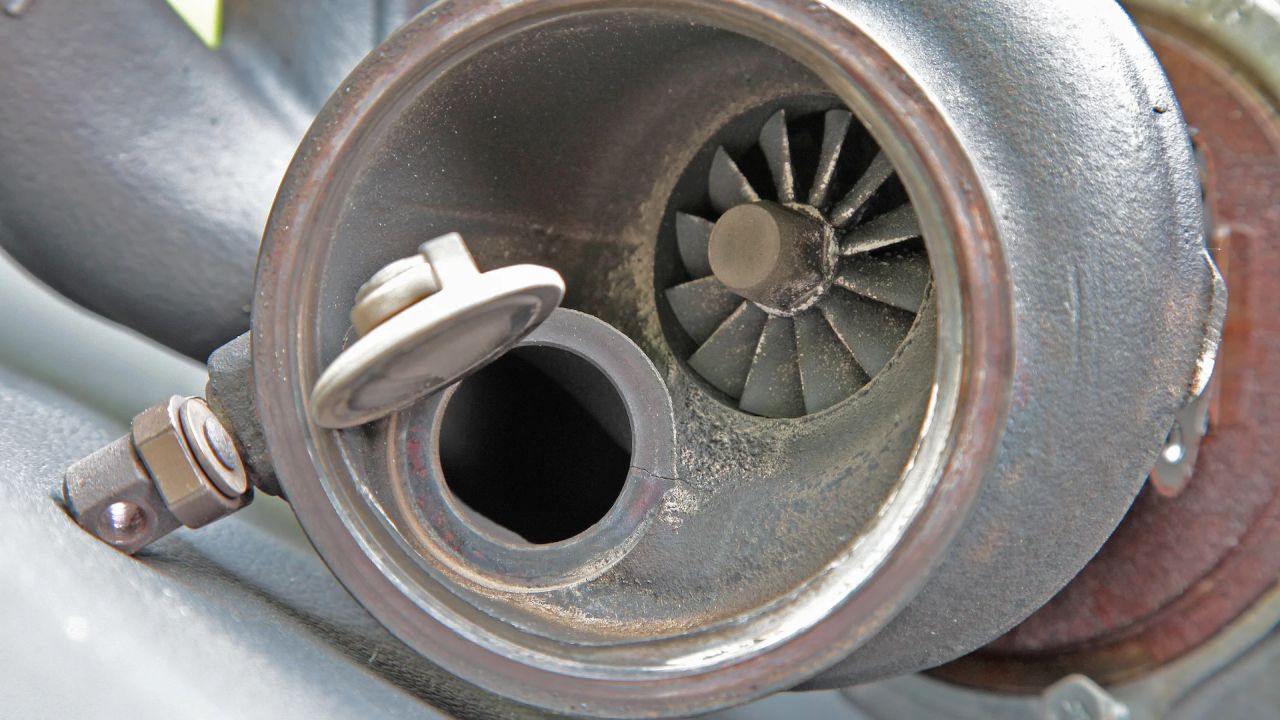
What Is a Wastegate? What Are the Symptoms of Wastegate Failure?
A wastegate is one of the most important control components in a turbocharged engine. Its main purpose is to control the amount of exhaust gas reaching the turbocharger turbine and, as a result, regulate turbocharger boost pressure.
The turbocharger uses exhaust gas energy to spin its turbine. The turbine is connected to a compressor wheel, which compresses intake air and sends more air into the engine.
The more exhaust energy reaches the turbine, the faster the turbocharger can spin and the more boost it can potentially produce.
However, allowing all exhaust gas to continuously drive the turbine can cause excessive boost pressure and turbocharger speed.
This is where the wastegate becomes important.
The wastegate provides a controlled way to bypass some of the exhaust gas around the turbine when the desired boost level has been reached.
How Does a Wastegate Work?
The basic operating principle is straightforward.
During acceleration, exhaust gases spin the turbocharger turbine. The turbine drives the compressor, which increases the pressure of the intake air.
As boost pressure approaches the target specified by the engine management system, the wastegate begins to open.
When the wastegate opens, part of the exhaust gas is diverted away from the turbine.
As less exhaust energy reaches the turbine, turbocharger speed is controlled and boost pressure is prevented from rising beyond the intended level.
When boost pressure needs to increase again, the wastegate can close, allowing more exhaust gas to drive the turbine.
This process happens continuously according to engine operating conditions.
What Does the Wastegate Control?
The wastegate primarily controls turbocharger boost pressure.
The ECU determines the desired boost level based on factors such as:
-
Engine speed
-
Engine load
-
Accelerator position
-
Intake air pressure
-
Intake air temperature
-
Engine temperature
-
Requested torque
-
Throttle position
-
Vehicle operating conditions
The ECU then controls the wastegate through an actuator or boost-control system.
The exact control strategy varies considerably between engines.
Internal Wastegate and External Wastegate
There are two major types of wastegate systems used in turbocharged engines: internal wastegates and external wastegates.
Internal Wastegate
An internal wastegate is integrated into the turbocharger housing.
It normally uses a small bypass passage inside the turbine housing and a flap that opens to divert exhaust gas around the turbine.
This design is common on factory turbocharged passenger cars because it is compact and relatively simple.
External Wastegate
An external wastegate is a separate component installed outside the turbocharger housing.
It has its own valve, actuator, and exhaust path.
External wastegates are commonly found in high-performance, racing, heavily modified, and high-boost applications where more precise exhaust-flow control may be required.
The choice between the two depends on the engine and turbocharger configuration.
What Is a Wastegate Actuator?
The wastegate actuator is the mechanism that physically moves the wastegate.
Depending on the system, the actuator can be:
-
Pneumatic
-
Vacuum-operated
-
Electronic
-
Electronically controlled through a pneumatic actuator
Traditional turbo systems often use a pressure-operated actuator connected to the wastegate with a rod.
When the control pressure reaches the required level, the actuator moves the wastegate.
Modern turbocharged engines can use electronically controlled wastegate actuators that allow the ECU much more precise control.
What Is the Difference Between a Wastegate and a Blow-Off Valve?
These two components are often confused because both are associated with turbocharged engines.
However, they operate on completely different sides of the turbocharger.
Wastegate:
Controls exhaust gas flow to the turbine and regulates turbocharger boost production.
Blow-Off Valve:
Manages pressurized intake air when the throttle closes, particularly during rapid throttle lift-off.
In simple terms:
Wastegate = exhaust side
Blow-Off Valve = intake/compressor side
A wastegate controls how much energy is supplied to the turbocharger.
A Blow-Off Valve manages pressure already produced by the compressor when the throttle position changes.
What Happens When the Wastegate Opens?
When the wastegate opens, some exhaust gas bypasses the turbine.
This reduces the amount of energy available to accelerate the turbocharger.
As a result, turbocharger speed and boost pressure can be controlled.
The wastegate does not necessarily dump all exhaust gas away from the turbocharger. It generally diverts only the amount required to achieve the desired boost level.
What Happens If the Wastegate Stays Closed?
A wastegate that remains closed when it should open can cause excessive boost pressure.
This condition is commonly described as overboost.
Possible consequences include:
-
Excessive boost pressure
-
Turbocharger overspeed
-
Engine protection mode
-
Reduced engine power
-
Check Engine Light
-
Detonation or abnormal combustion under certain conditions
-
Increased mechanical and thermal stress
Modern ECUs can detect excessive boost and may reduce engine power to protect the engine and turbocharger.
What Happens If the Wastegate Stays Open?
The opposite problem can occur if the wastegate remains open or cannot close properly.
Too much exhaust gas bypasses the turbine, preventing the turbocharger from building the expected boost pressure.
This can cause:
-
Low boost
-
Poor acceleration
-
Sluggish engine response
-
Reduced engine power
-
Increased exhaust smoke in some diesel applications
-
Poor turbocharger performance
A wastegate that opens too early can create similar symptoms.
What Are the Symptoms of Wastegate Failure?
Wastegate problems can produce several different symptoms depending on whether the valve is stuck open, stuck closed, leaking, incorrectly adjusted, or suffering from an actuator or control problem.
Low Boost Pressure
One of the most common symptoms is insufficient boost.
The turbocharger may fail to reach the boost pressure requested by the ECU.
The driver may notice:
-
Weak acceleration
-
Reduced engine power
-
Slower response
-
Poor performance at higher loads
-
Difficulty maintaining expected acceleration
Low boost is not necessarily proof of a wastegate failure. A leaking intercooler hose, damaged turbocharger, restricted exhaust, faulty boost-control solenoid, or intake problem can produce similar symptoms.
Excessive Boost Pressure
A wastegate that fails to open can cause boost pressure to rise above the desired level.
This condition can trigger an overboost fault.
The ECU may respond by reducing engine power or entering a protection strategy.
The driver may experience strong acceleration followed by a sudden loss of power.
Boost Fluctuation
An unstable wastegate can cause boost pressure to repeatedly rise and fall.
The vehicle may accelerate normally one moment and feel weak the next.
Boost fluctuations can be caused by:
-
Wastegate sticking
-
Faulty actuator
-
Boost-control solenoid problems
-
Vacuum leaks
-
Electronic actuator faults
-
Incorrect wastegate adjustment
-
Turbocharger problems
Sudden Loss of Power
Some wastegate problems only become apparent under heavy load.
The vehicle may initially accelerate normally but suddenly lose power once the ECU detects that boost pressure is outside the expected range.
This can happen when the ECU activates a protection strategy.
The driver may describe this as the turbocharger “cutting out.”
Check Engine Light
Wastegate problems can trigger diagnostic trouble codes related to turbocharger boost pressure or boost-control performance.
Depending on the vehicle, the ECU may detect:
-
Boost pressure too high
-
Boost pressure too low
-
Boost control malfunction
-
Turbocharger performance problems
-
Actuator position errors
The exact diagnostic codes vary by manufacturer and engine.
Turbocharger Whistling or Unusual Noise
A wastegate problem can sometimes change the sound of the turbocharging system.
Possible noises include:
-
Excessive whistling
-
Rattling
-
Chattering
-
Metallic sounds
-
Unusual exhaust noise
However, turbocharger noise should not automatically be blamed on the wastegate.
A damaged compressor wheel, turbine, bearing, exhaust leak, intake leak, or loose heat shield can produce similar noises.
Wastegate Rattle
Wastegate rattle is a relatively common complaint on some turbocharged engines.
It can occur when the wastegate flap, linkage, actuator rod, or related components develop excessive movement or wear.
The result may be a metallic rattling noise, especially:
-
At idle
-
During deceleration
-
During light acceleration
-
When the engine transitions between boost and vacuum
Not every rattle means the wastegate itself has failed.
Some turbocharger designs are naturally more prone to mechanical noise, and the exact cause must be determined through inspection.
Poor Throttle Response
A wastegate that does not respond correctly can affect turbocharger boost development.
If the wastegate remains open too much, the turbocharger may take longer to generate the required boost.
The driver may experience a noticeable delay in acceleration.
Increased Fuel Consumption
Wastegate problems can sometimes increase fuel consumption.
If the turbocharger cannot generate the expected boost, the engine may not operate within its intended air-fuel conditions.
The ECU may also change fueling and engine-control strategies to compensate for abnormal boost conditions.
However, increased fuel consumption has many possible causes and should not be used alone to diagnose a wastegate problem.
Smoke From the Exhaust
In diesel engines, turbocharger and boost-control problems can sometimes contribute to excessive exhaust smoke.
If the engine receives less air than expected while fuel delivery remains high, the air-fuel mixture can become unfavorable and black smoke may increase.
However, smoke can also be caused by injector problems, EGR faults, air filter restriction, turbocharger damage, and other engine issues.
What Causes Wastegate Failure?
Wastegate failures can have mechanical, pneumatic, electrical, or electronic causes.
Wastegate Valve Sticking
The wastegate flap can become difficult to move because of:
-
Carbon deposits
-
Corrosion
-
Heat-related damage
-
Mechanical wear
-
Contamination
-
Deformed components
A sticking valve may remain open or closed when it should move.
Wastegate Actuator Failure
The actuator is responsible for moving the wastegate.
If the actuator diaphragm, spring, linkage, or electronic motor fails, the wastegate may not respond correctly.
A pneumatic actuator can also develop leaks that prevent it from producing the required movement.
Vacuum or Pressure Hose Problems
On systems that use pneumatic control, damaged hoses can cause serious boost-control problems.
A hose may be:
-
Cracked
-
Disconnected
-
Blocked
-
Leaking
-
Incorrectly connected
Even if the wastegate itself is mechanically healthy, a damaged control hose can prevent it from operating correctly.
Boost-Control Solenoid Failure
Many turbocharged engines use a boost-control solenoid to regulate the pressure or vacuum sent to the wastegate actuator.
If this solenoid malfunctions, the ECU may be unable to control the wastegate accurately.
The result can be either overboost or underboost.
Electronic Wastegate Actuator Failure
Modern turbochargers may use electronic wastegate actuators.
These systems can monitor and control wastegate position with greater precision.
However, the additional electronics also introduce potential failure points.
Possible problems include:
-
Actuator motor failure
-
Position sensor failure
-
Wiring problems
-
Connector corrosion
-
Calibration problems
-
Communication faults
Carbon and Soot Deposits
Turbocharged diesel engines can be particularly exposed to soot and carbon deposits.
Deposits around the wastegate mechanism can interfere with free movement.
This may cause the valve to stick or respond more slowly than intended.
Incorrect Wastegate Adjustment
On modified turbocharger systems, incorrect actuator preload or wastegate adjustment can cause boost-control problems.
An actuator that is adjusted incorrectly can cause the wastegate to open too early or too late.
This is particularly important on modified vehicles.
Changing the wastegate rod length without understanding the turbocharger's control strategy can create serious boost-control problems.
Turbocharger Damage
A damaged turbocharger can also affect wastegate operation.
Excessive shaft movement, housing damage, actuator problems, or mechanical interference can prevent the wastegate from functioning correctly.
For this reason, the turbocharger should be inspected as a complete assembly.
How Is Wastegate Failure Diagnosed?
Wastegate diagnosis should begin with a scan of the vehicle's ECU.
The technician should check for stored and pending diagnostic trouble codes.
The next step is to compare the turbocharger's requested boost pressure with its actual boost pressure.
This can provide valuable information.
For example, if the ECU requests increased boost but actual boost remains consistently low, the technician can investigate the wastegate, actuator, boost-control system, intake system, and turbocharger.
If actual boost rises significantly above the requested value, a wastegate that is not opening correctly becomes one of the possibilities.
Inspect the Wastegate Mechanically
The wastegate mechanism should be inspected for free movement where the design allows this.
The technician can check:
-
Wastegate flap movement
-
Actuator rod movement
-
Linkage condition
-
Excessive play
-
Corrosion
-
Carbon deposits
-
Mechanical interference
Care must be taken because turbocharger components operate at extremely high temperatures.
Test the Wastegate Actuator
The actuator should be tested according to the manufacturer's specified procedure.
For pneumatic systems, this may involve applying controlled pressure or vacuum and observing actuator movement.
For electronic actuators, diagnostic equipment may be required to command the actuator and monitor its position.
The actuator should move smoothly and reach the expected position.
Check the Boost-Control System
The entire control system should be inspected.
This includes:
-
Boost-control solenoid
-
Vacuum hoses
-
Pressure hoses
-
Electrical wiring
-
Connectors
-
ECU commands
-
Sensors
-
Actuator position
Replacing the turbocharger without testing these components can result in unnecessary expense.
Can You Drive With a Wastegate Problem?
It depends on the severity and type of failure.
A minor wastegate rattle without abnormal boost pressure may not immediately cause engine damage.
However, a wastegate that is stuck closed can be considerably more serious because it can cause excessive boost and turbocharger overspeed.
Continuing to drive under heavy load with an overboost condition is not recommended.
Likewise, severe power loss, abnormal turbocharger noise, smoke, or a Check Engine Light associated with boost-control faults should be investigated promptly.
Can a Bad Wastegate Damage the Turbocharger?
Yes, a serious wastegate problem can contribute to turbocharger damage.
If the wastegate cannot open when required, the turbocharger may operate at excessive speed.
This can increase mechanical and thermal stress on:
-
Turbocharger shaft
-
Bearings
-
Compressor wheel
-
Turbine wheel
-
Turbocharger housing
The actual consequences depend on the turbocharger design and the severity of the overboost condition.
Can a Wastegate Cause Turbo Lag?
Yes, a wastegate problem can contribute to poor boost response.
If the wastegate is opening too early, exhaust energy that should be driving the turbine is bypassed.
The turbocharger may therefore take longer to generate the desired boost.
However, normal turbo lag and wastegate malfunction are not the same thing.
Turbo lag is a characteristic of turbocharger response, while a faulty wastegate can make the response significantly worse than intended.
Is the Wastegate the Same as the Turbocharger?
No.
The wastegate is a control component associated with the turbocharging system.
The turbocharger itself contains the turbine and compressor assemblies.
The wastegate regulates exhaust flow around the turbine to control turbocharger operation.
On an internally wastegated turbocharger, the wastegate mechanism is integrated into the turbocharger housing. On an externally wastegated system, it is a separate component.
Can a Wastegate Be Repaired?
Sometimes.
The repair depends on what has failed.
A repair may involve:
-
Replacing the actuator
-
Repairing a control hose
-
Replacing a boost-control solenoid
-
Repairing wiring
-
Replacing damaged linkage
-
Cleaning a sticking mechanism
-
Replacing the wastegate assembly
-
Replacing or rebuilding the turbocharger
However, some turbocharger manufacturers specify replacement of the complete turbocharger rather than repair of individual wastegate components.
The correct procedure should follow the manufacturer's service information.
Final Thoughts
The wastegate is a critical component of a turbocharged engine because it controls the amount of exhaust energy used to drive the turbocharger turbine.
When boost pressure approaches the desired level, the wastegate can open and divert part of the exhaust gas around the turbine. When additional boost is required, it can close to allow more exhaust energy to reach the turbine.
A faulty wastegate can cause low boost, excessive boost, boost fluctuations, poor acceleration, sudden power loss, turbocharger noise, wastegate rattle, increased fuel consumption, and Check Engine Light warnings.
The direction of the problem is particularly important. A wastegate that remains open can cause underboost and poor performance, while one that remains closed can cause overboost and potentially place excessive stress on the turbocharger.
However, similar symptoms can be caused by boost leaks, intercooler problems, faulty boost-control solenoids, damaged vacuum lines, turbocharger faults, sensor problems, or ECU control issues.
For this reason, proper wastegate diagnosis should involve checking diagnostic trouble codes, comparing requested and actual boost pressure, testing the actuator, inspecting the wastegate mechanism, and checking the complete boost-control system.
A correctly functioning wastegate allows the turbocharger to produce the required boost without exceeding the safe operating range, making it essential for both engine performance and turbocharger protection.