TR
TR EN
EN

Why Does the Engine Shake at Idle? Causes of Rough Idle Vibration
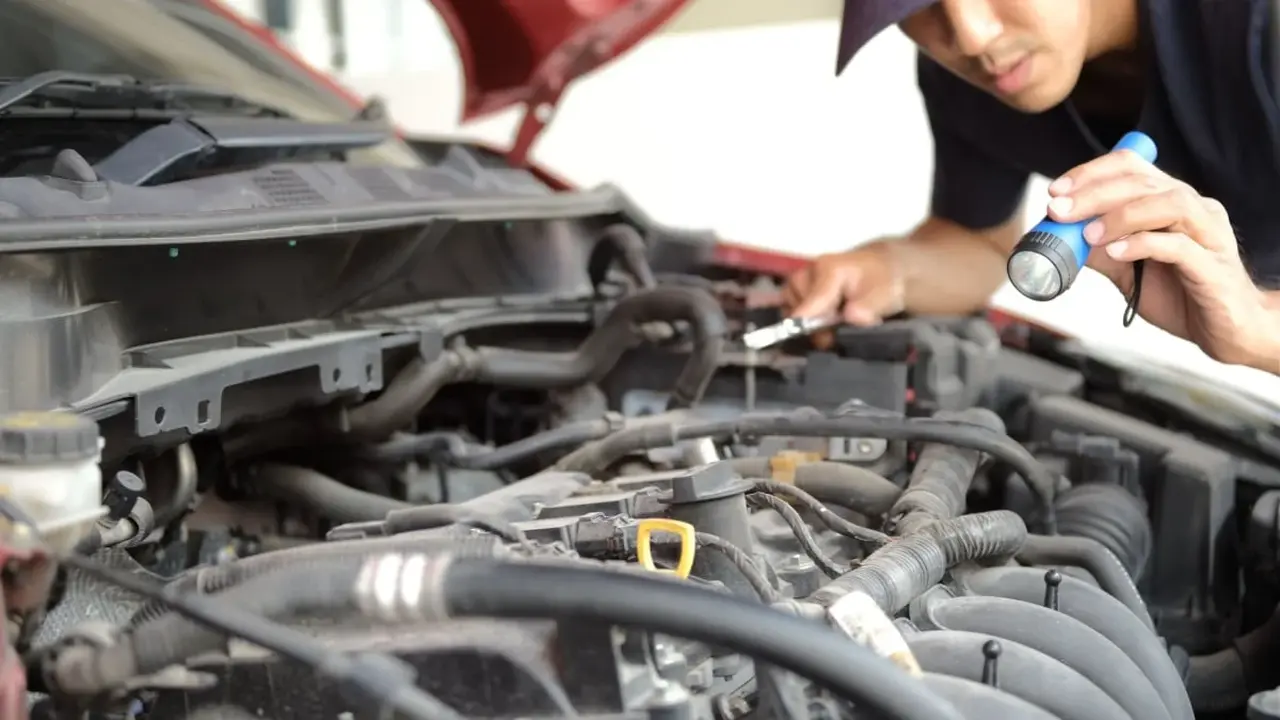
An engine that runs smoothly at idle should produce only minor, normal vibrations. When the vehicle is stopped and the engine begins to shake noticeably, the steering wheel, dashboard, seat, or even the entire body of the vehicle may vibrate.
Sometimes the problem is relatively simple, such as worn engine mounts or dirty spark plugs. In other cases, idle vibration can be an early warning of a misfire, vacuum leak, fuel-delivery problem, compression issue, or another engine-management fault.
The important point is that engine vibration at idle is a symptom, not a diagnosis.
Several completely different problems can produce almost identical symptoms. The most effective way to find the cause is to determine whether the engine itself is running unevenly or whether the engine is running normally but its vibration is no longer being isolated from the vehicle.
What Should a Normal Engine Feel Like at Idle?
A healthy engine should generally maintain a relatively stable idle speed and operate smoothly when the vehicle is stationary.
A small amount of vibration is normal because an internal combustion engine produces mechanical forces as the cylinders fire. The engine mounts are designed to isolate these normal vibrations from the vehicle body.
The amount of vibration considered normal depends on the engine design.
A three-cylinder engine, for example, may naturally feel different from a four-cylinder or six-cylinder engine. Diesel engines can also produce more noticeable low-speed vibration than some gasoline engines.
The important factor is a change from the vehicle's normal behavior.
If the engine used to idle smoothly but has recently started shaking, there is likely a problem that should be investigated.
The First Question: Is the Engine Actually Running Roughly?
This distinction is extremely important.
There are two broad categories of idle vibration.
In the first case, the engine itself is running unevenly. One or more cylinders may not be producing the expected amount of power.
In the second case, the engine is actually running normally, but excessive vibration is being transferred into the vehicle.
For example, a damaged engine mount can cause significant vibration even when the engine is operating perfectly.
On the other hand, an ignition misfire can cause the engine RPM to fluctuate and produce an uneven combustion rhythm.
These two problems require completely different repairs.
Worn or Damaged Engine Mounts
Engine mounts are one of the most common causes of noticeable vibration at idle.
Their job is to support the engine and transmission while preventing normal engine vibrations from being transferred directly to the vehicle body.
Engine mounts can deteriorate because of:
-
Age
-
Rubber deterioration
-
Excessive heat
-
Oil contamination
-
Cracks
-
Separation of the rubber from the mount
-
Internal hydraulic failure in hydraulic mounts
When a mount becomes weak or damaged, the engine may still run normally, but the driver can feel considerably more vibration.
The vibration may be particularly noticeable when the vehicle is stopped in gear.
For example, an automatic-transmission vehicle may vibrate more strongly while stopped in Drive than in Park or Neutral because the engine is under additional load.
How Can You Tell if an Engine Mount Is the Problem?
A useful clue is that the engine may sound and operate normally while the vehicle body vibrates.
The idle RPM may remain stable.
There may be no misfire code.
Acceleration may also be normal.
If the vibration changes significantly when shifting between Park, Neutral, Drive, or Reverse, the engine mounts and transmission mounts deserve particular attention.
A visual inspection can sometimes reveal a damaged or collapsed mount, but not all mount failures are obvious from the outside.
Misfire at Idle
A misfire is another major cause of engine vibration.
A four-cylinder engine normally relies on all four cylinders contributing power consistently.
If one cylinder is not burning the air-fuel mixture correctly, the engine can become noticeably uneven.
Common causes of an idle misfire include:
-
Worn spark plugs
-
Faulty ignition coils
-
Damaged ignition wiring where applicable
-
Fuel injector problems
-
Vacuum leaks
-
Incorrect air-fuel mixture
-
Low compression
-
Valve problems
-
Incorrect engine timing
A misfire may become more noticeable at idle because the engine has less rotational momentum and less combustion energy available to mask the imbalance.
Faulty Spark Plugs
Spark plugs are a common cause of rough idle on gasoline engines.
A worn, fouled, damaged, or incorrectly gapped spark plug may not ignite the mixture reliably.
Possible symptoms include:
-
Engine shaking
-
Rough idle
-
Hesitation
-
Reduced acceleration
-
Increased fuel consumption
-
Difficult starting
-
Check Engine Light
If one spark plug is significantly worse than the others, the engine may run unevenly even though it continues to operate.
However, replacing spark plugs without confirming the cause is not always the correct solution. A spark plug may become fouled because of another underlying problem, such as an oil leak into the combustion chamber or an excessively rich mixture.
Ignition Coil Problems
Modern gasoline engines commonly use individual ignition coils for each cylinder.
If one coil becomes weak or fails intermittently, the corresponding cylinder may produce an incomplete or absent combustion event.
This can cause strong vibration at idle.
An ignition coil problem can sometimes be identified by observing misfire data with a diagnostic scanner.
On some engines, swapping the suspected coil with another cylinder can help determine whether the misfire follows the coil. This should only be done when appropriate for the particular ignition system and according to proper diagnostic procedures.
Vacuum Leaks
A vacuum leak can create a rough idle by allowing unmetered air to enter the engine.
The ECU calculates fuel delivery based on the amount of air it expects to enter the engine. If additional air enters through a leak, the actual air-fuel mixture can become different from what the ECU expects.
Common sources include:
-
Cracked vacuum hoses
-
Intake manifold gasket leaks
-
PCV system leaks
-
Brake booster hoses
-
Throttle-body gasket problems
-
Intake duct damage
-
EVAP system leaks
Vacuum leaks often affect idle more strongly than higher engine speeds.
This is because the pressure difference between the intake manifold and the surrounding atmosphere is generally greater at idle.
Dirty or Faulty Throttle Body
The throttle body controls the amount of air entering the engine.
Over time, carbon and oil deposits can accumulate around the throttle plate and throttle bore.
A dirty throttle body can contribute to:
-
Unstable idle
-
Low idle speed
-
Stalling
-
Poor throttle response
-
Hesitation
-
Difficult idle control
Electronic throttle systems may be particularly sensitive to airflow changes around the throttle plate.
However, cleaning the throttle body does not automatically solve every rough-idle problem.
Some vehicles also require an idle or throttle adaptation procedure after cleaning or replacement.
Idle Air Control Valve Problems
Older or certain specific engine designs use a separate Idle Air Control (IAC) valve to regulate airflow around the closed throttle plate.
If the valve becomes dirty, sticks, or fails electrically, the engine may have difficulty maintaining a stable idle.
Possible symptoms include:
-
Idle speed fluctuations
-
Stalling
-
High idle
-
Low idle
-
Rough operation
-
Engine vibration
Many newer vehicles no longer use a separate IAC valve because idle airflow is controlled electronically through the throttle body.
Fuel Injector Problems
A fuel injector that is dirty, restricted, leaking, or electrically faulty can cause one cylinder to receive the wrong amount of fuel.
If the injector delivers too little fuel, that cylinder may produce weak combustion.
If it leaks or delivers too much fuel, the mixture may become excessively rich.
Either situation can contribute to rough idle and vibration.
A fuel injector problem may also produce:
-
Increased fuel consumption
-
Misfire
-
Poor acceleration
-
Difficult starting
-
Fuel odor
-
Check Engine Light
Injector diagnosis may require electrical testing, fuel-pressure testing, balance testing, or specialized injector testing depending on the system.
Fuel Pressure Problems
The injectors cannot deliver the correct amount of fuel if the fuel system cannot maintain the required pressure.
Possible causes include:
-
Weak fuel pump
-
Restricted fuel filter
-
Faulty fuel pressure regulator
-
Fuel-pressure control problems
-
Electrical problems affecting the pump
-
Restricted fuel lines
Low fuel pressure can cause lean operation and misfires.
In some vehicles, the problem may be more noticeable under acceleration, while in others it may appear during idle.
The correct fuel-pressure specification is vehicle-specific and should be checked against the manufacturer's service information.
Air Filter and Air Intake Problems
A severely restricted air filter can affect engine airflow, although it is not one of the most common causes of severe idle vibration.
More important can be damage or leaks in the intake system.
A cracked intake hose between the airflow sensor and throttle body, for example, can allow air to enter without being properly accounted for by the engine-management system.
This can cause poor idle quality and drivability problems.
MAF Sensor Problems
The Mass Air Flow (MAF) sensor measures the amount of air entering the engine in vehicles equipped with this type of sensor.
If the MAF sensor becomes contaminated or produces an inaccurate signal, the ECU may calculate the air-fuel mixture incorrectly.
Possible symptoms include:
-
Rough idle
-
Hesitation
-
Poor acceleration
-
Increased fuel consumption
-
Stalling
-
Check Engine Light
However, MAF-related symptoms can overlap with vacuum leaks and other intake problems.
A sensor should not be replaced simply because the engine has a rough idle.
MAP Sensor Problems
The Manifold Absolute Pressure (MAP) sensor measures intake manifold pressure.
The ECU can use this information to estimate engine load and control fuel injection and ignition.
An inaccurate MAP signal can contribute to unstable idle, hesitation, poor acceleration, or incorrect fuel control.
A MAP sensor problem can sometimes be identified through live-data analysis by comparing the reported pressure with the actual operating conditions.
Engine Coolant Temperature Sensor Problems
The engine coolant temperature sensor tells the ECU how warm or cold the engine is.
If the sensor reports an incorrect temperature, the ECU may use an inappropriate fuel and idle-control strategy.
For example, if the ECU incorrectly believes the engine is cold when it is actually warm, the engine may receive control parameters intended for cold operation.
This can contribute to rough idle, increased fuel consumption, difficult starting, or other drivability problems.
Intake Air Temperature Sensor Problems
The intake air temperature sensor measures the temperature of the incoming air.
Incorrect temperature information can influence the ECU's calculations.
Depending on the engine design, the IAT sensor may be a separate component or integrated into another sensor such as the MAF or MAP sensor.
A faulty IAT reading can contribute to drivability issues, although it is not usually the first component to suspect when an engine suddenly begins shaking at idle.
EGR Valve Problems
An Exhaust Gas Recirculation (EGR) system reduces certain emissions by directing a controlled amount of exhaust gas back into the engine.
If the EGR valve remains open when it should be closed, excessive exhaust gas can enter the intake during idle.
This can cause:
-
Rough idle
-
Engine shaking
-
Stalling
-
Hesitation
-
Poor acceleration
EGR-related problems are particularly important on engines equipped with systems that are prone to carbon buildup.
PCV System Problems
The Positive Crankcase Ventilation (PCV) system controls crankcase vapors and routes them back into the intake system.
A failed PCV valve, damaged hose, or excessive crankcase ventilation leak can introduce unwanted air into the intake system.
Because the problem can act similarly to a vacuum leak, it may cause rough idle or unstable engine operation.
The PCV system should therefore be included when diagnosing unexplained idle problems.
Low Engine Compression
Not every rough idle problem is caused by electronics or sensors.
Mechanical engine problems can also create vibration.
If one cylinder has significantly lower compression than the others, it may not produce the same amount of power.
Possible causes include:
-
Worn piston rings
-
Burned valve
-
Damaged valve seat
-
Head gasket failure
-
Piston damage
-
Valve-train problems
A compression test can provide useful information, while a leak-down test can help identify where compression is being lost.
Timing Problems
Incorrect valve timing or ignition timing can also produce rough engine operation.
On modern engines, timing is electronically controlled and may involve variable valve timing systems.
Problems can occur because of:
-
Incorrect mechanical timing
-
Timing chain wear
-
Timing belt installation errors
-
Variable valve timing actuator problems
-
Oil-pressure problems affecting VVT systems
-
Camshaft or crankshaft position sensor problems
If timing is incorrect, rough idle may be accompanied by poor acceleration, difficult starting, misfires, or diagnostic trouble codes.
Crankshaft and Camshaft Position Sensor Problems
The crankshaft and camshaft position sensors provide the ECU with information about engine position and speed.
If one of these sensors produces an intermittent or inaccurate signal, the ECU may have difficulty determining the correct timing of fuel injection or ignition.
Possible symptoms include:
-
Rough idle
-
Stalling
-
Difficult starting
-
Intermittent misfire
-
Poor acceleration
-
Engine warning light
An intermittent sensor problem can be especially difficult to diagnose because the engine may operate normally most of the time.
Dual-Mass Flywheel Problems
On some manual-transmission diesel and gasoline vehicles, a dual-mass flywheel is used to reduce drivetrain vibration.
When the internal components of a dual-mass flywheel become excessively worn, vibration may be felt at idle.
Other possible symptoms include:
-
Rattling noises
-
Vibration through the clutch pedal
-
Changes in vibration when the clutch pedal is pressed
-
Harsh engagement
-
Drivetrain noise
This is an important distinction because the engine itself may be running correctly.
Automatic Transmission Load
An automatic transmission can influence how an engine feels at idle.
When the vehicle is stopped in Drive, the transmission places a load on the engine.
If the engine already has a weak idle or if the transmission has a related problem, vibration may become more noticeable in Drive than in Park or Neutral.
Transmission-related issues should therefore be considered if the vibration changes dramatically depending on the selected gear.
Air Conditioning Can Make Idle Vibration More Noticeable
Turning on the air conditioning increases the load placed on the engine.
A healthy engine-management system should normally compensate for this additional load.
However, if the engine already has a weak idle, the extra load from the A/C compressor can make the vibration more noticeable.
This can be a useful diagnostic clue.
If the engine is smooth with the A/C off but begins shaking when the compressor engages, the idle-control system, engine condition, mounts, and A/C load should be investigated.
Why Does the Engine Shake More When Cold?
Cold-start behavior can provide valuable diagnostic information.
An engine that shakes only when cold may have a problem related to:
-
Ignition
-
Fuel mixture
-
Vacuum leaks
-
Coolant temperature sensing
-
Fuel injectors
-
Intake deposits
-
Compression
-
Glow plugs on diesel engines
If the engine becomes smooth after warming up, the temperature-dependent nature of the fault can help narrow the diagnosis.
However, it does not identify one specific component by itself.
Why Does the Engine Shake More When Warm?
A vibration that appears after the engine reaches operating temperature can also provide a useful clue.
Possible causes include:
-
Ignition coil breakdown when hot
-
Vacuum or intake changes
-
Fuel-control problems
-
Sensor faults
-
Engine mounts becoming softer when heated
-
EGR operation
-
Variable valve timing problems
Some electrical components fail only after reaching a certain temperature, making a warm-engine fault particularly challenging to reproduce.
Why Does the RPM Fluctuate at Idle?
If the engine speed repeatedly rises and falls, the problem may involve the ECU's attempt to correct an unstable engine condition.
Possible causes include:
-
Vacuum leaks
-
Dirty throttle body
-
IAC problems where applicable
-
MAF or MAP sensor errors
-
Fuel-pressure problems
-
Ignition misfire
-
EGR problems
-
Incorrect air-fuel mixture
-
Engine temperature sensor problems
The RPM fluctuation itself is not the root cause. It is usually a sign that the engine-management system is struggling to maintain stable combustion or airflow.
Can a Faulty Engine Mount Cause a Misfire Code?
Normally, a damaged engine mount does not directly create an actual cylinder misfire.
However, severe vibration can sometimes confuse certain monitoring strategies or make the driver believe the engine is misfiring.
If a genuine cylinder-specific misfire code is stored, the ignition, fuel, air, and mechanical condition of that cylinder should be investigated rather than assuming the engine mount is responsible.
This distinction is important because replacing a mount will not repair a genuine combustion problem.
How Is Engine Vibration at Idle Diagnosed?
A proper diagnosis should begin by identifying exactly what changes when the engine shakes.
The technician should determine:
-
Whether RPM is stable
-
Whether a Check Engine Light is present
-
Whether misfire codes are stored
-
Whether the vibration changes with A/C operation
-
Whether it changes between Park, Neutral, Drive, or Reverse
-
Whether the vibration is worse when cold or hot
-
Whether the engine sounds uneven
-
Whether the vibration changes when engine speed increases slightly
A diagnostic scanner can then be used to inspect live data and misfire counters where supported.
Depending on the findings, further tests may include:
-
Spark plug inspection
-
Ignition coil testing
-
Vacuum leak testing
-
Fuel-pressure testing
-
Injector testing
-
Compression testing
-
Leak-down testing
-
Engine mount inspection
-
Intake system inspection
-
Sensor signal testing
Why Reading Diagnostic Trouble Codes Is Important
A scan tool can provide valuable clues, especially when the Check Engine Light is illuminated.
Codes related to misfires, fuel mixture, airflow, engine timing, or sensor signals can significantly narrow the diagnostic path.
However, an OBD code identifies a condition detected by the ECU. It does not always identify the failed physical component.
For example, an air-fuel mixture code does not automatically mean that an oxygen sensor is defective.
The code must be interpreted together with live data and physical testing.
Can a Car Be Driven With an Engine That Shakes at Idle?
That depends on the cause.
If the vibration is caused by a worn engine mount and the engine is otherwise running normally, the vehicle may remain drivable for some time, although the mount should be repaired.
A severe misfire is more urgent.
Continued driving with a significant misfire can increase exhaust temperatures and potentially damage the catalytic converter.
The vehicle should be inspected promptly if the Check Engine Light is flashing, the engine is shaking severely, there is substantial power loss, or the vehicle repeatedly stalls.
The Most Common Diagnostic Mistake
The biggest mistake is replacing parts based only on symptoms.
For example, a driver may see a rough idle and immediately replace:
-
Spark plugs
-
Ignition coils
-
Injectors
-
MAF sensor
-
MAP sensor
-
Throttle body
without confirming the actual cause.
This can become expensive very quickly.
A better approach is to first determine whether the engine is actually misfiring or whether the vibration is simply being transmitted through a failed mount.
That single distinction can eliminate many unnecessary repairs.
Final Thoughts
An engine that shakes at idle can have a surprisingly large number of possible causes.
The problem may be as simple as a worn engine mount or as serious as low compression or a significant misfire.
The most common possibilities include:
-
Worn engine mounts
-
Spark plug problems
-
Ignition coil failure
-
Vacuum leaks
-
Dirty throttle body
-
Fuel injector problems
-
Fuel-pressure problems
-
MAF or MAP sensor issues
-
EGR or PCV problems
-
Engine temperature sensor faults
-
Low compression
-
Incorrect engine timing
-
Crankshaft or camshaft sensor problems
-
Dual-mass flywheel wear
-
Transmission-related load or vibration
The most important diagnostic question is whether the engine is actually running unevenly or whether it is running correctly but its vibration is no longer being isolated from the vehicle.
Checking RPM behavior, listening to the engine, reading diagnostic trouble codes, examining live data, and carrying out targeted mechanical and electrical tests will usually provide a much more reliable answer than replacing parts at random.
If the engine has suddenly started shaking at idle, especially together with a flashing Check Engine Light, severe power loss, or repeated stalling, the problem should be diagnosed as soon as possible.