TR
TR EN
EN

What Happens If You Put Too Much Oil in an Engine?
Engine oil is essential for lubrication, cooling, cleaning, and protecting internal engine components. However, more engine oil does not mean better protection. Filling the engine above the manufacturer's specified oil level can cause serious problems.
A small amount above the maximum mark may not immediately cause noticeable symptoms, but significant overfilling can lead to oil aeration, increased crankcase pressure, leaks, smoke, and even severe engine damage.
Why Is Too Much Engine Oil a Problem?
The engine is designed to operate with a specific amount of oil.
When the oil level becomes too high, the rotating crankshaft and connecting rods can come into contact with the oil in the sump. Instead of remaining relatively calm in the oil pan, the oil can become heavily agitated.
This can cause the oil to mix with air and form foamy or aerated oil.
Foamy oil does not provide the same reliable lubrication as properly circulated oil because the oil pump may draw oil containing excessive amounts of air.
This can reduce lubrication of components such as:
-
Main bearings
-
Connecting-rod bearings
-
Camshafts
-
Valve train components
-
Turbocharger bearings
-
Timing components
In severe cases, inadequate lubrication can result in major engine damage.
What Happens When the Crankshaft Hits the Oil?
The crankshaft normally rotates above the oil stored in the sump.
If the oil level is too high, the rotating crankshaft and connecting rods can dip into the oil.
This creates significant resistance and churns the oil.
The consequences can include:
-
Foaming
-
Increased oil temperature
-
Increased crankcase pressure
-
Reduced engine efficiency
-
Oil consumption
-
Oil leaks
The engine may also require more power to rotate because the crankshaft is fighting against the excess oil.
Can Excess Engine Oil Cause Oil Leaks?
Yes.
Overfilling the engine can increase crankcase pressure, particularly when combined with excessive blow-by or a restricted crankcase ventilation system.
The increased pressure can force oil past seals and gaskets.
Possible leak points include:
-
Valve cover gasket
-
Crankshaft seals
-
Oil pan gasket
-
Turbocharger oil seals
-
Other engine seals and gaskets
If oil leaks suddenly appear after an oil change, the oil level should be checked before assuming that a gasket has failed.
Can Too Much Oil Damage the Turbocharger?
On turbocharged engines, excessive engine oil can potentially contribute to turbocharger problems.
High crankcase pressure can interfere with the turbocharger's oil drainage system.
If oil cannot drain properly from the turbocharger, oil may enter the intake or exhaust side.
This can lead to:
-
Increased oil consumption
-
Blue exhaust smoke
-
Oil inside the intercooler
-
Reduced turbocharger performance
-
Turbocharger oil leakage
However, excessive oil should not automatically be blamed for every turbocharger oil leak. The turbocharger itself and the crankcase ventilation system should also be inspected.
Can Too Much Oil Cause Blue Smoke?
Yes.
Excess engine oil can sometimes enter areas where it should not be, particularly if crankcase pressure becomes excessive.
The engine may then burn the oil.
One of the most recognizable symptoms is blue or blue-gray exhaust smoke.
Depending on the engine design, oil may enter the combustion chambers through the piston rings, valve guides, or turbocharger system.
Can Excess Oil Cause White Smoke?
Oil burning is generally associated with blue or blue-gray smoke rather than pure white smoke.
White exhaust smoke is more commonly associated with coolant entering the combustion chamber, although the appearance of exhaust smoke can vary depending on temperature and operating conditions.
Therefore, smoke color alone should not be used to diagnose an engine problem.
Can Too Much Oil Cause Rough Running?
It can, particularly when the overfill is significant.
Excessive oil may reach the crankcase ventilation system and be drawn into the intake.
This can contaminate:
-
Throttle body
-
Intake manifold
-
Intercooler
-
Intake valves
-
Sensors
If enough oil enters the combustion chambers, engine operation can become unstable.
Possible symptoms include:
-
Rough idle
-
Engine hesitation
-
Misfires
-
Poor acceleration
-
Increased smoke
-
Reduced engine performance
Can Too Much Oil Damage the Catalytic Converter?
Yes, indirectly.
If excessive engine oil enters the combustion chambers and is burned, oil can enter the exhaust system.
Long-term oil consumption can contaminate the catalytic converter and oxygen sensors.
This may result in:
-
Check Engine Light
-
Reduced catalytic converter efficiency
-
Increased emissions
-
Oxygen sensor contamination
This is another reason why significant oil overfill should be corrected rather than ignored.
Can Too Much Oil Cause Engine Failure?
In severe cases, yes.
Significant overfilling can contribute to:
-
Oil aeration
-
Poor lubrication
-
Excessive crankcase pressure
-
Oil leaks
-
Bearing damage
-
Turbocharger problems
In extreme circumstances, if a large amount of oil enters a cylinder, the engine can experience hydrolock-like mechanical resistance because liquid oil cannot be compressed in the same way as the normal air-fuel mixture.
This can cause serious mechanical damage, particularly during cranking or operation.
What Are the Symptoms of an Overfilled Engine?
The symptoms depend on how much the engine has been overfilled.
Possible symptoms include:
-
Oil level above the maximum mark
-
Blue or blue-gray exhaust smoke
-
Oil leaks
-
Burning oil smell
-
Rough engine operation
-
Misfires
-
Increased oil consumption
-
Reduced engine performance
-
Higher engine temperature
-
Unusual engine noise
-
Increased crankcase pressure
-
Oil inside the intake system
-
Check Engine Light
A mildly overfilled engine may show no obvious symptoms at all.
How Much Oil Overfill Is Dangerous?
There is no universal number that applies to every engine.
The correct oil level is determined by the vehicle manufacturer, and the difference between the minimum and maximum marks on the dipstick can vary considerably between engines.
If the oil level is above the maximum mark, it should not simply be assumed to be safe.
The greater the overfill, the greater the potential risk.
A significant overfill should be corrected as soon as possible.
What Should You Do If You Put Too Much Oil in the Engine?
First, do not panic.
Park the vehicle on a level surface and allow the engine to sit for the period specified by the manufacturer before checking the oil level.
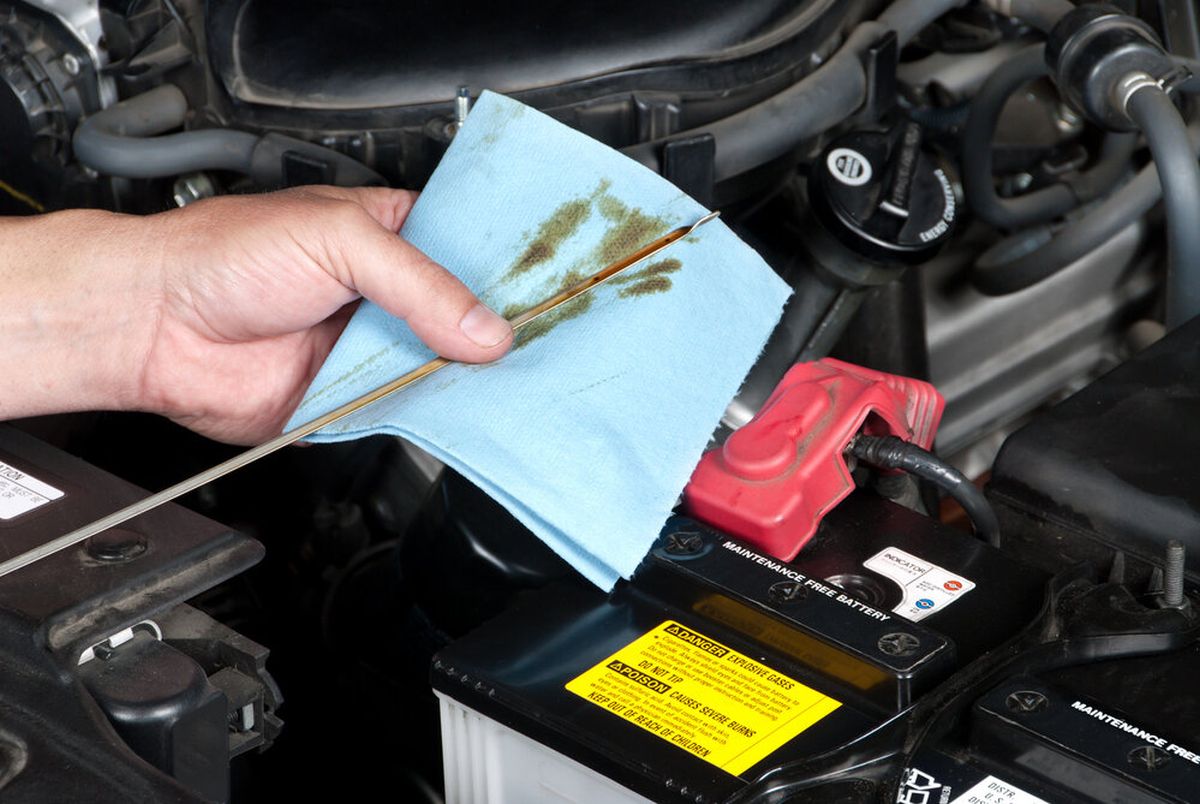
Then check the dipstick correctly.
If the level is clearly above the maximum mark, remove the excess oil using an appropriate method.
Depending on the vehicle, this may be done by:
-
Draining a controlled amount through the oil drain plug
-
Using an oil extraction pump through the dipstick tube
-
Returning to a service center for correction
The important point is to remove enough oil to bring the level back within the manufacturer's specified range.
Should You Drive With Too Much Engine Oil?
If the oil level is significantly above the maximum mark, it is better not to drive the vehicle until the excess oil has been removed.
The risk depends on the amount of overfill and the engine design.
A very small amount above the maximum level may not immediately cause damage, but there is little benefit in taking the risk.
If the engine has already developed smoke, oil leaks, unusual noises, or rough running after being overfilled, it should be inspected before continued driving.
How Should Engine Oil Level Be Checked?
For an accurate reading:
-
Park the vehicle on level ground.
-
Follow the manufacturer's instructions regarding whether the engine should be warm or cold.
-
Switch off the engine.
-
Wait the recommended amount of time for the oil to drain back into the sump.
-
Remove and wipe the dipstick.
-
Insert the dipstick completely.
-
Remove it again and check the oil level.
-
Make sure the level is between the minimum and maximum marks.
Some modern vehicles do not have a traditional dipstick and instead use an electronic oil-level measurement system.
In that case, follow the manufacturer's procedure.
Is It Better to Have the Oil at the Maximum Mark?
The oil level should normally be within the manufacturer's specified range, not necessarily above it.
The maximum mark represents the upper limit of the intended operating range.
Adding more oil after reaching the maximum mark does not provide additional lubrication or protection.
In fact, going beyond that level can create new problems.
What If the Engine Was Started With Too Much Oil?
If you accidentally overfilled the engine and started it briefly, shut it off and check the oil level.
If the overfill is significant, correct the oil level before restarting the engine.
If the engine has been driven for an extended period with a substantial overfill, inspect for:
-
Oil leaks
-
Excessive smoke
-
Unusual engine noise
-
Oil contamination in the intake
-
Turbocharger problems
-
Abnormal engine operation
If any of these symptoms are present, professional inspection is recommended.
Final Thoughts
Too much engine oil can be just as problematic as too little oil.
A small amount above the maximum level may not immediately cause a problem, but significant overfilling can cause the crankshaft to churn the oil, resulting in aeration, increased crankcase pressure, oil leaks, smoke, and lubrication problems.
Turbocharged engines can be particularly sensitive to crankcase pressure and oil drainage issues.
If you accidentally add too much oil, the safest approach is simple: check the level correctly and remove the excess oil until it reaches the manufacturer's specified range.
Never assume that adding extra oil provides extra engine protection. The engine is designed to operate with a specific oil level, and maintaining that level is one of the simplest ways to protect the engine from unnecessary damage.