TR
TR EN
EN

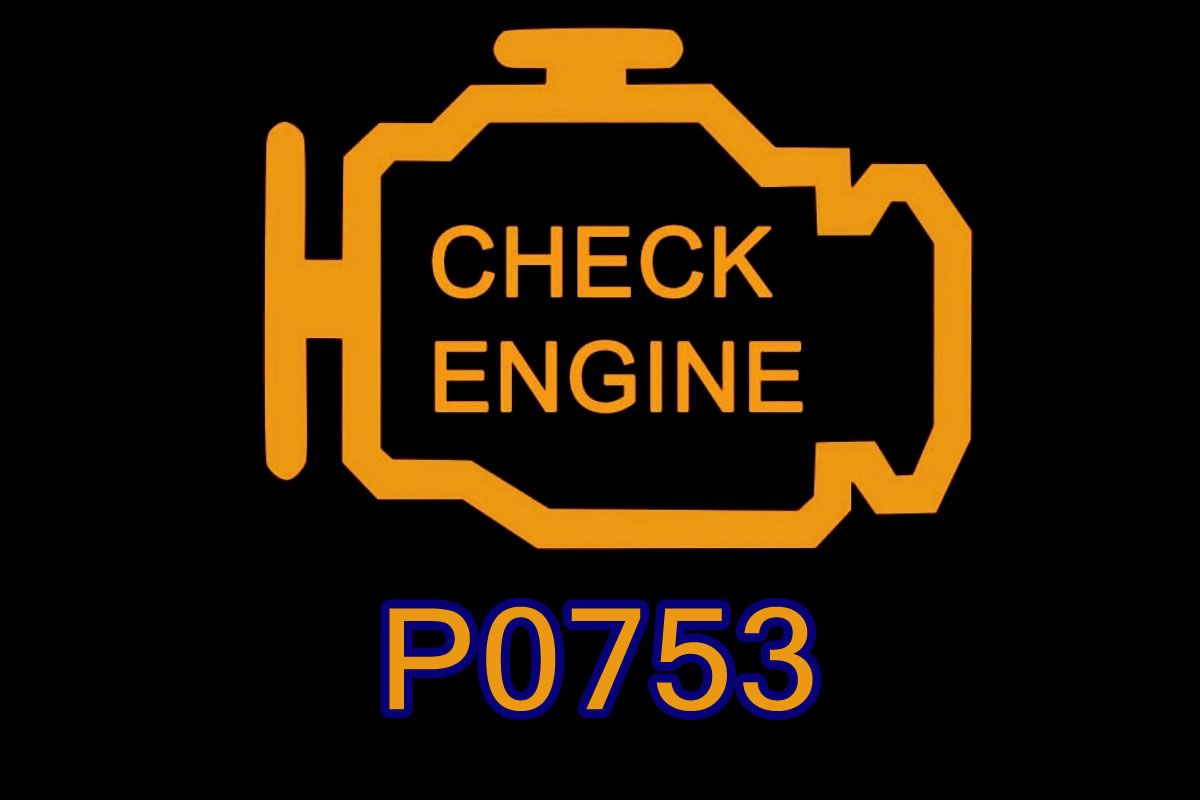
P0753 Shift Solenoid "A" Electrical
The P0753 trouble code is an OBD-II diagnostic trouble code associated with the electrical control of Shift Solenoid "A" in an automatic transmission.
P0753 – Shift Solenoid "A" Electrical
This code means that the Transmission Control Module (TCM) has detected an electrical problem in the circuit responsible for controlling Shift Solenoid "A".
Unlike a general shift-solenoid malfunction code, P0753 specifically points toward an electrical problem. The cause can be a failed solenoid coil, open circuit, short circuit, damaged wiring, poor connector contact, inadequate power supply, an internal transmission harness problem or, less commonly, a TCM fault.
It is important to understand that P0753 does not automatically mean Shift Solenoid "A" itself is defective. The complete electrical circuit needs to be tested before replacing any components.
What Does P0753 Mean?
Automatic transmissions use electronically controlled solenoids to manage hydraulic fluid.
The TCM sends electrical commands to the solenoids according to operating conditions.
The basic process is:
TCM → Electrical Control Circuit → Shift Solenoid "A" → Hydraulic Circuit → Clutch / Brake → Gear Change
When the electrical characteristics of the Solenoid "A" circuit do not match the expected values, the TCM can store:
P0753 – Shift Solenoid "A" Electrical
Depending on the vehicle, the TCM may monitor:
-
Circuit voltage
-
Current flow
-
Solenoid resistance
-
Circuit continuity
-
Control signal
-
Solenoid response
The exact detection strategy differs between manufacturers and transmission designs.
What Is Shift Solenoid "A"?
Shift Solenoid "A" is an electronically controlled valve used to regulate transmission fluid.
Its exact function depends on the transmission.
It may control or influence:
-
Gear changes
-
Clutch engagement
-
Brake application
-
Shift timing
-
Hydraulic pressure
-
Specific gear combinations
There is no universal gear assignment for Solenoid "A".
For example, Solenoid "A" in one transmission may participate in a completely different shift pattern from Solenoid "A" in another.
The vehicle-specific transmission hydraulic and electrical diagrams should therefore be used during diagnosis.
What Does "Electrical" Mean in P0753?
The word "Electrical" is important.
P0753 is different from other Shift Solenoid "A" codes:
P0750 – Shift Solenoid "A" Malfunction
A general malfunction.
P0751 – Shift Solenoid "A" Performance / Stuck Off
The solenoid does not produce the expected result or is detected as stuck OFF.
P0752 – Shift Solenoid "A" Stuck On
The solenoid is detected as remaining active.
P0753 – Shift Solenoid "A" Electrical
The problem is specifically associated with the electrical circuit.
P0754 – Shift Solenoid "A" Intermittent
The electrical or operational problem occurs intermittently.
This distinction helps determine where diagnosis should begin.
Symptoms of P0753
The symptoms depend on the transmission and the function of Solenoid "A".
Possible symptoms include:
-
Check Engine Light
-
Transmission warning light
-
Harsh shifting
-
Delayed gear changes
-
Erratic shifting
-
Failure to shift
-
Missing gears
-
Transmission stuck in one gear
-
Unexpected downshifting
-
Transmission slipping
-
Engine RPM flare
-
Delayed Drive engagement
-
Delayed Reverse engagement
-
Limp mode
-
Reduced acceleration
-
Poor fuel economy
-
Increased transmission temperature
Some vehicles may have very few symptoms apart from the warning light.
Other vehicles may immediately enter a fail-safe transmission mode.
What Does P0753 Feel Like While Driving?
Harsh shifting
Incorrect solenoid control can cause hydraulic pressure to change abruptly.
Delayed shifting
The transmission may hesitate before changing gears.
Missing gears
The TCM may disable certain gears when it cannot reliably control Solenoid "A".
Unexpected downshifting
A transmission-control strategy may be activated to protect the drivetrain.
Engine RPM flare
The engine may rev higher than expected during a gear change.
Transmission slipping
If the affected hydraulic circuit controls clutch pressure, an electrical fault can interfere with proper clutch engagement.
Limp mode
The transmission may operate with a limited number of gears.
Common Causes of P0753
Failed Shift Solenoid "A"
The solenoid coil may be open, shorted or otherwise defective.
Open circuit
A broken wire can prevent the solenoid from receiving or completing its electrical circuit.
Short circuit
A damaged wire can short to power, ground or another circuit.
Damaged wiring
Heat, vibration, friction and transmission movement can damage the harness.
Corroded connector
Corrosion can increase resistance or interrupt electrical contact.
Loose connector terminal
A terminal with poor contact can cause an electrical fault.
Damaged internal transmission harness
The wiring inside the transmission can fail.
Blown fuse
A shared solenoid power supply may be interrupted.
Poor power supply
Insufficient voltage can affect solenoid operation.
Poor ground
A poor electrical ground can disrupt circuit operation.
Low battery or charging voltage
Abnormal vehicle voltage can interfere with TCM and transmission operation.
TCM control-driver failure
The electronic output circuit that controls Solenoid "A" can fail.
Is P0753 Serious?
P0753 should be diagnosed promptly.
A faulty electrical circuit can prevent the transmission from controlling an important hydraulic function.
Depending on the transmission, this can result in:
-
Harsh shifts
-
Slipping
-
Missing gears
-
Limp mode
-
Increased transmission temperature
-
Accelerated clutch wear
However, P0753 does not automatically mean that the transmission has suffered major internal damage.
A damaged connector or broken wire can be enough to trigger the code.
Can You Drive With P0753?
If the transmission is shifting normally, a short drive to a repair facility may be possible.
However, continued driving should be avoided if the transmission is showing serious symptoms.
Do not continue driving if you experience:
-
Severe slipping
-
Violent shifting
-
Loss of Drive
-
Loss of Reverse
-
Transmission overheating
-
Strong burnt-fluid smell
-
Persistent limp mode
If the transmission is slipping, continued driving can cause additional clutch damage.
P0753 vs. P0754
P0753 – Shift Solenoid "A" Electrical
The TCM detects an electrical problem in the Solenoid "A" circuit.
P0754 – Shift Solenoid "A" Intermittent
The fault occurs inconsistently.
A damaged wire or loose connector can sometimes begin as an intermittent P0754 and eventually develop into a persistent electrical P0753.
P0753 vs. P0752
P0752 – Shift Solenoid "A" Stuck On
The system detects that the solenoid remains active.
P0753 – Shift Solenoid "A" Electrical
The circuit itself has an electrical problem.
A shorted control circuit can potentially produce a stuck-on condition, so the two codes can sometimes be related.
P0753 vs. P0751
P0751 – Shift Solenoid "A" Performance / Stuck Off
The solenoid is not producing the expected operating result or is detected as stuck OFF.
P0753 – Shift Solenoid "A" Electrical
The system specifically identifies an electrical fault.
P0753 vs. P0750
P0750 – Shift Solenoid "A" Malfunction
A general malfunction.
P0753 – Shift Solenoid "A" Electrical
A more specific electrical fault.
Where Is Shift Solenoid "A"?
The exact location varies according to the transmission.
It may be:
-
Inside the transmission
-
Mounted in the valve body
-
Located beneath the transmission pan
-
Integrated into a solenoid pack
-
Part of a mechatronic unit
Some transmissions allow individual solenoid replacement.
Others require removal or service of the valve body or solenoid assembly.
How to Diagnose P0753
Because P0753 specifically identifies an electrical problem, diagnosis should begin with the electrical circuit.
1. Scan the transmission control module
Retrieve all stored codes.
Check:
-
Current codes
-
Pending codes
-
History codes
-
Freeze-frame information
-
Transmission temperature
-
Commanded gear
-
Actual gear
-
Solenoid commands
-
Input speed
-
Output speed
Other transmission codes may help identify the source.
2. Check battery and charging voltage
Verify that the vehicle's electrical system is operating correctly.
A low system voltage can create misleading transmission-control faults.
3. Check relevant fuses
Inspect all fuses supplying the TCM and transmission solenoids.
If a fuse is blown, determine the reason before installing another fuse.
4. Inspect the transmission connector
Look for:
-
Corrosion
-
Bent pins
-
Loose terminals
-
Water intrusion
-
Transmission-fluid contamination
-
Damaged locking mechanisms
5. Inspect the wiring harness
Look for:
-
Broken wires
-
Chafing
-
Melted insulation
-
Pinched wires
-
Short circuits
-
Poor previous repairs
Pay particular attention to wiring near hot components and moving parts.
6. Check circuit continuity
Using the manufacturer's wiring diagram, test the circuit between the TCM and Solenoid "A".
An open circuit can directly cause P0753.
7. Check for short circuits
Test for possible:
-
Short to power
-
Short to ground
-
Short between circuits
The exact procedure depends on the transmission's circuit design.
8. Perform voltage-drop testing
Voltage-drop testing can reveal excessive resistance in:
-
Wiring
-
Connector terminals
-
Grounds
-
Power feeds
A circuit may show continuity with a multimeter but still fail when the solenoid is operating under load.
9. Measure Solenoid "A" resistance
Compare the measured resistance with the manufacturer's specification.
An open circuit or abnormal resistance can indicate a defective solenoid.
Do not rely on a generic resistance number because specifications vary between transmissions.
10. Check the solenoid power supply
Determine whether Solenoid "A" receives the required power.
Some systems use a common power feed for several solenoids and switch the ground side through the TCM.
Others use a different circuit configuration.
11. Check the TCM control signal
Verify whether the TCM is generating the correct signal.
An oscilloscope can be useful for PWM-controlled circuits.
12. Inspect the internal transmission harness
If the external wiring is good, the internal harness should be considered.
13. Test the solenoid
If the electrical circuit is correct but the solenoid does not respond properly, the solenoid itself may be defective.
14. Evaluate the TCM
If power, ground, wiring, connectors and the solenoid are all confirmed to be good, the TCM output driver may need to be tested.
A TCM should not be replaced simply because P0753 is stored.
Can a Bad Shift Solenoid Cause P0753?
Yes.
An internally open or shorted solenoid coil can cause an electrical fault.
However, the solenoid is only one possible cause.
Can Wiring Cause P0753?
Yes.
A broken, shorted or high-resistance wire can cause the code.
Can a Bad Connector Cause P0753?
Yes.
Loose or corroded terminals can interrupt the Solenoid "A" circuit.
Can a Blown Fuse Cause P0753?
Yes, depending on the vehicle's electrical design.
A shared solenoid power supply may be interrupted by a blown fuse.
Can Low Battery Voltage Cause P0753?
It can contribute to transmission electrical faults.
The battery and charging system should therefore be verified before replacing transmission components.
Can Dirty Transmission Fluid Cause P0753?
Usually not as the direct cause of an electrical code.
However, severe contamination can affect solenoid operation and may create additional transmission problems.
Can Low Transmission Fluid Cause P0753?
Low fluid is not normally the direct cause of an electrical circuit fault.
Nevertheless, fluid level should be checked because low fluid can create other transmission problems.
Can a Bad Valve Body Cause P0753?
A valve-body problem is not normally the direct cause of an electrical circuit code.
However, if P0753 is accompanied by hydraulic or shifting problems, the valve body may require inspection.
Can a Bad TCM Cause P0753?
Yes.
The TCM controls the electrical circuit, so a failed output driver can cause P0753.
However, the TCM should be considered only after the rest of the circuit has been tested.
Can P0753 Cause Harsh Shifting?
Yes.
Incorrect Solenoid "A" control can alter hydraulic pressure during gear changes.
Can P0753 Cause Transmission Slipping?
Yes, depending on the transmission design.
If Solenoid "A" controls a clutch-related hydraulic circuit, incorrect control can contribute to slipping.
Can P0753 Cause Limp Mode?
Yes.
The TCM may activate fail-safe operation when it detects a significant solenoid-control problem.
Can P0753 Cause Transmission Overheating?
Potentially.
If the electrical fault causes clutch slip or abnormal engagement, transmission temperature can rise.
Can P0753 Damage the Transmission?
It can if the problem is ignored.
The electrical fault itself may not cause mechanical damage immediately, but the resulting incorrect shifting or clutch slip can generate:
-
Excessive heat
-
Clutch wear
-
Fluid deterioration
-
Additional transmission problems
Common Diagnostic Mistakes With P0753
Replacing Solenoid "A" immediately
The actual problem may be wiring, a connector or the power supply.
Ignoring the fuse
A shared power-supply fault can affect the solenoid circuit.
Checking only resistance
Resistance testing alone does not verify the entire circuit under operating conditions.
Ignoring voltage drop
High resistance in a connector or wire may not be obvious from a basic continuity test.
Replacing the TCM too early
The TCM is often blamed before the wiring and solenoid are properly tested.
Assuming the entire transmission is damaged
P0753 is an electrical fault code and does not automatically indicate internal transmission failure.
What Is the Correct Repair for P0753?
The correct repair depends on the confirmed cause.
Possible repairs include:
-
Replacing Shift Solenoid "A"
-
Repairing broken wiring
-
Repairing a short circuit
-
Repairing high-resistance wiring
-
Replacing damaged connector terminals
-
Cleaning electrical corrosion
-
Repairing water intrusion
-
Repairing the internal transmission harness
-
Restoring the correct solenoid power supply
-
Replacing a blown fuse after identifying the underlying cause
-
Correcting battery or charging-system problems
-
Updating TCM software where applicable
-
Reprogramming the TCM
-
Replacing the TCM if its control driver is confirmed defective
How to Test the Vehicle After Repair
After the repair, verify the entire Solenoid "A" electrical circuit.
Check that:
-
Solenoid "A" receives the correct power
-
The TCM control signal is correct
-
Circuit resistance is within specification
-
No open circuit remains
-
No short circuit remains
-
Voltage drop is within specification
-
Connectors are secure
-
Wiring is stable
-
Gear changes are normal
-
No slipping occurs
-
Transmission temperature remains normal
-
Limp mode does not activate
-
No additional codes appear
-
P0753 does not return
The road test should include different gears, speeds, throttle positions and transmission temperatures.
Frequently Asked Questions About P0753
What does P0753 mean?
P0753 means the transmission control system has detected an electrical problem involving Shift Solenoid "A" or its control circuit.
Does P0753 mean Shift Solenoid "A" is bad?
No. Wiring, connectors, fuses, power supply and the TCM can also cause the code.
Can a broken wire cause P0753?
Yes.
Can a corroded connector cause P0753?
Yes.
Can a blown fuse cause P0753?
Yes, depending on the vehicle's circuit design.
Can low battery voltage cause P0753?
It can contribute to electrical problems, so system voltage should be checked.
Can dirty transmission fluid cause P0753?
It is unlikely to be the direct cause of the electrical code, although severe contamination can affect solenoid operation.
Can low transmission fluid cause P0753?
It is not normally the direct cause of the electrical fault.
Can a bad TCM cause P0753?
Yes, but it should be considered after the circuit and solenoid have been tested.
Can P0753 cause harsh shifting?
Yes.
Can P0753 cause transmission slipping?
Yes, depending on what Solenoid "A" controls.
Can P0753 cause limp mode?
Yes.
Can P0753 cause transmission overheating?
It can if the resulting transmission operation causes clutch slip or abnormal engagement.
Can I drive with P0753?
If the transmission is operating normally, a short drive to a repair facility may be possible. If there is severe slipping, violent shifting, overheating or loss of gears, continued driving should be avoided.
Does P0753 mean the transmission needs to be replaced?
No. The fault may be limited to the solenoid, wiring, connector, fuse or TCM control circuit.
Final Thoughts on P0753
P0753 – Shift Solenoid "A" Electrical indicates that the transmission control system has detected an electrical problem in the circuit controlling Shift Solenoid "A".
The most important distinction is that this is an electrical fault code, not simply a statement that the solenoid has failed.
A logical diagnostic sequence is:
Scan Tool → Battery / Charging System → Fuses → Connector → Wiring → Continuity → Short Test → Voltage Drop → Solenoid Resistance → Power Supply → Control Signal → Internal Harness → TCM
The solenoid should not be replaced until the circuit has been properly tested.
Likewise, P0753 does not automatically mean that the transmission needs to be rebuilt or replaced. A damaged wire, corroded connector or failed solenoid can all produce the code.
Finding the exact electrical fault first is the best way to avoid unnecessary parts replacement and prevent the resulting transmission problems from becoming more serious.