TR
TR EN
EN

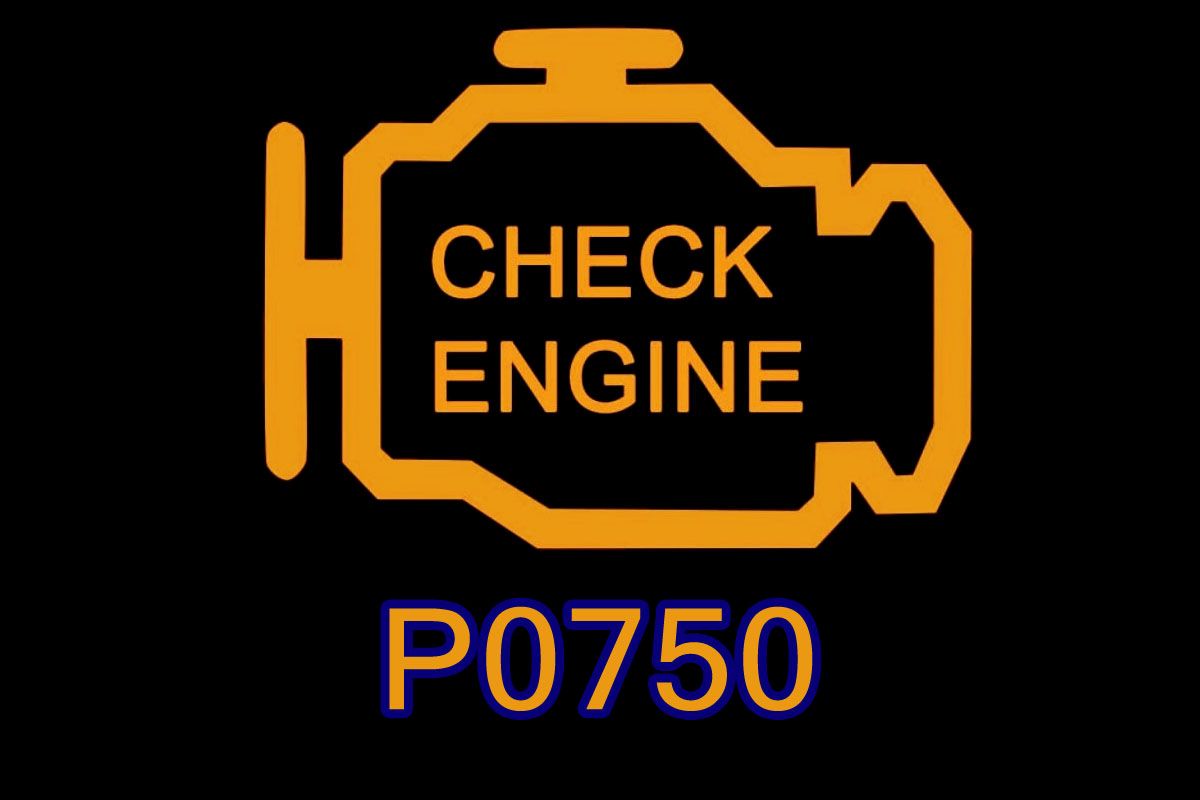
P0750 Shift Solenoid "A" Malfunction
The P0750 – Shift Solenoid "A" Malfunction diagnostic trouble code (DTC) indicates that the transmission control module (TCM) has detected a problem involving Shift Solenoid "A" or its control circuit.
Shift Solenoid "A" is an electronically controlled component used by an automatic transmission to regulate transmission fluid flow. By directing fluid through specific hydraulic passages, the solenoid helps control gear changes and clutch or brake element operation.
P0750 is a relatively broad code. It does not automatically mean that Shift Solenoid "A" itself is defective.
The actual cause can be an electrical circuit problem, damaged wiring, a poor connector connection, a failed solenoid, contaminated transmission fluid, a valve-body problem, or an internal transmission fault.
What Does P0750 Mean?
In simple terms:
The transmission control system has detected a malfunction involving Shift Solenoid "A".
The TCM controls the solenoid according to driving conditions.
When the solenoid is commanded to operate, the transmission is expected to produce a corresponding hydraulic and mechanical response.
If the electrical circuit or transmission operation does not behave as expected, P0750 may be stored.
Unlike performance-specific codes such as P0756, P0750 is a more general malfunction code.
The exact diagnostic criteria vary between manufacturers and transmission designs.
What Is Shift Solenoid "A"?
Shift solenoids are electrically controlled valves located inside the transmission or valve-body assembly.
They regulate the flow of transmission fluid.
The TCM uses information from various sensors to determine when the solenoid should be activated or deactivated.
Depending on the transmission, Solenoid "A" may control a hydraulic circuit involved in:
-
A particular gear
-
A specific shift
-
Clutch engagement
-
Brake application
-
Hydraulic pressure control
There is no universal location or function for Shift Solenoid "A".
The exact role of the solenoid must therefore be confirmed using the service information for the specific transmission.
How Does Shift Solenoid "A" Work?
When the TCM sends an electrical command, the solenoid changes the flow of transmission fluid.
This changes hydraulic pressure within the valve body.
The hydraulic system then operates the appropriate transmission components.
A simplified sequence is:
TCM command → Solenoid operation → Fluid flow changes → Hydraulic pressure changes → Clutch/valve operation → Gear change
If one part of this process fails, transmission operation can become abnormal.
Symptoms of P0750
The symptoms depend on the transmission design and which hydraulic circuit is controlled by Solenoid "A".
Possible symptoms include:
Harsh shifting
The transmission may shift harder than normal.
Delayed shifting
The transmission may hesitate before completing a gear change.
Failure to shift
One or more gears may become unavailable.
Incorrect gear selection
The transmission may remain in an inappropriate gear.
Transmission slipping
Engine RPM may increase without a proportional increase in vehicle speed.
Shift flare
Engine speed may rise temporarily during a gear change.
Reduced acceleration
The vehicle may feel less responsive.
Limp mode
The TCM may restrict transmission operation.
Check Engine Light
The malfunction indicator lamp may illuminate.
Transmission warning message
Some vehicles may display a separate transmission warning.
What Causes P0750?
P0750 can have several possible causes.
Faulty Shift Solenoid "A"
The solenoid may have an electrical or mechanical failure.
Open circuit
A broken wire or disconnected connection can interrupt the solenoid circuit.
Short circuit
A short to power or ground can interfere with normal solenoid control.
Damaged wiring
Heat, vibration, or contact with other components can damage the harness.
Corroded connector
Corrosion can increase electrical resistance.
Loose terminals
Poor terminal contact can prevent reliable solenoid operation.
Contaminated transmission fluid
Debris can interfere with solenoid movement.
Low transmission fluid
Insufficient fluid can affect hydraulic operation.
Valve-body problem
A sticking valve or worn valve bore can prevent the expected transmission response.
Internal transmission damage
Worn clutches, seals, or other components can affect the hydraulic response.
TCM fault
A control-module problem is possible, although it should not normally be the first component blamed.
Can a Bad Shift Solenoid Cause P0750?
Yes.
Shift Solenoid "A" may be defective.
Possible problems include:
-
Open internal coil
-
Internal short
-
Mechanical sticking
-
Contamination
-
Slow response
-
Heat-related failure
A solenoid can sometimes fail intermittently even when it appears normal during a basic inspection.
Can Wiring Cause P0750?
Yes.
The electrical circuit should be one of the first areas checked.
Inspect the wiring for:
-
Broken wires
-
Chafed insulation
-
Short circuits
-
Open circuits
-
Corroded terminals
-
Loose connections
-
Water intrusion
-
High resistance
The wiring between the TCM and transmission is exposed to heat, vibration, and movement, making harness damage possible.
Can a Bad Connector Cause P0750?
Yes.
A connector problem can prevent the solenoid from receiving a reliable control signal.
Possible issues include:
-
Corroded pins
-
Loose terminals
-
Bent terminals
-
Damaged connector housing
-
Fluid contamination
-
Moisture
-
Poor terminal tension
A connector may look normal externally while still having an electrical contact problem.
Can Dirty Transmission Fluid Cause P0750?
Yes, potentially.
Contaminated transmission fluid can interfere with solenoid and valve-body operation.
Debris may cause a solenoid or valve to move incorrectly.
If the fluid contains excessive metal particles, this may also indicate internal transmission wear.
Can Low Transmission Fluid Cause P0750?
Low fluid can interfere with hydraulic operation.
It may cause:
-
Delayed engagement
-
Slipping
-
Harsh shifting
-
Erratic shifting
-
Hydraulic pressure loss
-
Increased transmission temperature
However, low fluid should not automatically be considered the direct cause of P0750.
The fluid level should be checked according to the manufacturer's specified procedure, and any leak should be repaired.
Can the Valve Body Cause P0750?
Yes.
The valve body works directly with the shift solenoids.
A sticking valve, restricted passage, or worn valve bore can prevent the hydraulic system from responding correctly.
This means the solenoid may be electrically functional while the transmission still experiences a shift-control problem.
Can P0750 Be Caused by Internal Transmission Damage?
Yes.
If the electrical circuit and solenoid are functioning correctly, internal transmission problems may need to be considered.
Potential causes include:
-
Worn clutch packs
-
Damaged seals
-
Internal hydraulic leakage
-
Worn pistons
-
Mechanical damage
However, internal transmission failure should not be assumed simply because P0750 is present.
Does P0750 Mean Shift Solenoid "A" Is Bad?
No, not necessarily.
P0750 identifies a malfunction involving the Solenoid "A" system.
The actual cause may be located in:
Wiring → Connector → Solenoid → Fluid → Hydraulic circuit → Valve body → Internal transmission
This is why proper testing is more important than replacing the solenoid immediately.
How Is P0750 Diagnosed?
Because P0750 is a general malfunction code, diagnosis should begin with the simplest possibilities.
1. Scan for additional DTCs
Check for other transmission-related codes.
Look for:
-
Other shift solenoid codes
-
Pressure-control codes
-
Gear-ratio codes
-
Speed sensor codes
-
Transmission temperature codes
-
Communication faults
Additional codes can help identify a common cause.
2. Review freeze-frame data
Check the conditions present when P0750 was stored.
Useful information includes:
-
Vehicle speed
-
Engine RPM
-
Transmission temperature
-
Throttle position
-
Selected gear
-
System voltage
3. Inspect the transmission fluid
Check the level and condition.
Look for severe discoloration, burnt odor, or excessive debris.
4. Inspect the wiring
Check the complete Solenoid "A" circuit.
Look for broken, damaged, or corroded wiring.
5. Inspect the transmission connector
Check the terminals for corrosion, looseness, contamination, and damage.
6. Test the solenoid
Measure electrical resistance according to the manufacturer's specifications.
A resistance value outside the specified range can indicate an internal electrical problem.
7. Check the control signal
Verify that the TCM is commanding the solenoid correctly.
8. Perform an actuator test if supported
Some diagnostic systems can command individual transmission solenoids.
This can help determine whether the solenoid responds correctly.
9. Monitor live transmission data
Observe gear commands, shaft speeds, transmission temperature, and other available parameters.
10. Evaluate hydraulic operation
If the electrical circuit passes inspection, hydraulic pressure or valve-body operation may need to be investigated.
Why Is a Resistance Test Not Always Enough?
A resistance test can identify certain electrical faults, but it cannot prove that the solenoid is mechanically functioning correctly.
For example, a solenoid may have acceptable resistance but still:
-
Stick internally
-
Respond slowly
-
Fail when hot
-
Have restricted movement
-
Fail to control hydraulic pressure correctly
Therefore, resistance testing should be considered one part of the diagnosis rather than the entire diagnosis.
What If P0750 Appears Intermittently?
An intermittent P0750 may be caused by:
-
Loose connector terminals
-
Corroded contacts
-
Partially broken wiring
-
Heat-sensitive solenoid failure
-
Harness movement
-
Internal transmission connector problems
If the code disappears after restarting the vehicle, that does not necessarily mean the problem has been fixed.
The freeze-frame data and stored fault history can help reproduce the condition.
What If P0750 Appears When the Transmission Is Hot?
A hot-only fault can provide a valuable diagnostic clue.
Possible causes include:
-
Heat-sensitive solenoid
-
Internal solenoid expansion
-
Wiring resistance changes
-
Connector problems
-
Hydraulic leakage
-
Valve-body wear
The system should be tested under the same temperature conditions in which the fault occurs.
Can P0750 Cause Limp Mode?
Yes.
If the TCM cannot reliably control the transmission, it may activate a protective operating strategy.
Depending on the vehicle, this may result in:
-
Limited gear selection
-
Fixed-gear operation
-
Increased line pressure
-
Disabled manual shifting
-
Reduced transmission performance
The exact behavior varies by vehicle and transmission.
Can P0750 Cause Transmission Slipping?
Yes, potentially.
If Solenoid "A" controls a hydraulic circuit involved in clutch engagement, incorrect operation can result in insufficient or poorly controlled pressure.
This can cause:
-
Engine RPM flare
-
Poor acceleration
-
Delayed engagement
-
Slipping
-
Increased transmission temperature
Continued slipping can accelerate internal clutch wear.
Is P0750 a Serious Problem?
It can be.
The severity depends on the cause and the symptoms.
A wiring or connector problem may be relatively straightforward to repair.
A failed solenoid may require transmission access but may still be a localized repair.
However, if P0750 is accompanied by persistent slipping, overheating, or loss of gears, the possibility of additional transmission damage becomes more concerning.
Can You Drive With P0750?
If the vehicle is shifting normally and there are no severe symptoms, driving directly to a repair facility may be possible.
However, continued driving should be avoided if the transmission:
-
Slips
-
Loses gears
-
Shifts violently
-
Overheats
-
Enters limp mode
-
Produces a burning smell
Driving for an extended period with abnormal transmission operation can increase the risk of internal damage.
How Is P0750 Repaired?
The correct repair depends on the confirmed cause.
Possible repairs include:
-
Repairing damaged wiring
-
Replacing damaged connector terminals
-
Repairing electrical connections
-
Replacing Shift Solenoid "A"
-
Correcting the transmission-fluid level
-
Repairing fluid leaks
-
Servicing contaminated transmission fluid when appropriate
-
Repairing or servicing the valve body
-
Correcting hydraulic pressure problems
-
Repairing internal transmission components
-
Performing transmission adaptation or relearn procedures
-
Repairing or replacing the TCM when properly diagnosed
Should Shift Solenoid "A" Be Replaced?
Not automatically.
Before replacing it, the technician should determine whether:
-
The solenoid receives the correct electrical command
-
The circuit has correct power and ground
-
The wiring has acceptable resistance
-
The connector has reliable contact
-
The solenoid has the correct electrical characteristics
-
The solenoid operates mechanically
-
The hydraulic circuit responds correctly
If the solenoid itself fails testing, replacement may be appropriate.
Does P0750 Require a Transmission Rebuild?
No, not by itself.
P0750 is not proof of internal transmission failure.
The diagnostic process should first investigate:
Electrical circuit → Connector → Solenoid → Fluid → Hydraulic circuit → Valve body
Only when there is evidence of internal mechanical damage should a transmission rebuild be considered.
Common Diagnostic Mistakes
Replacing the solenoid immediately
The actual problem may be wiring or a connector.
Replacing the entire transmission
P0750 does not automatically mean that the transmission has suffered major internal damage.
Checking only the solenoid resistance
Electrical resistance does not prove correct hydraulic operation.
Ignoring transmission fluid
Contaminated or low fluid can contribute to transmission-control problems.
Ignoring additional DTCs
Other codes can provide important diagnostic information.
Replacing the TCM without testing the circuit
A control-module failure should be confirmed rather than assumed.
How Do You Clear P0750?
The fault should be repaired before clearing the code.
After the repair, a suitable diagnostic scanner can clear P0750.
Some vehicles may require a transmission adaptation or relearn procedure.
A proper sequence is:
Diagnose → Repair → Clear DTC → Perform required adaptation/relearn → Road test → Rescan
The vehicle should be tested under the conditions in which the fault originally occurred.
Final Thoughts on P0750
P0750 – Shift Solenoid "A" Malfunction indicates that the transmission control module has detected a malfunction involving Shift Solenoid "A" or its control system.
Unlike a code that specifically identifies a performance condition or an intermittent fault, P0750 is a general malfunction code. The actual cause therefore needs to be established through testing.
Possible causes include a defective solenoid, damaged wiring, poor connector contact, contaminated transmission fluid, low fluid level, hydraulic restrictions, valve-body problems, or internal transmission wear.
The most important mistake to avoid is assuming that P0750 automatically means "replace Shift Solenoid A."
A proper diagnostic path is:
Scan all DTCs → Check transmission fluid → Inspect wiring and connectors → Test the solenoid → Verify the TCM control signal → Monitor transmission operation → Evaluate hydraulic pressure → Inspect the valve body or internal components when necessary.
If P0750 is accompanied by slipping, severe shifting, loss of gears, overheating, or limp mode, the vehicle should be inspected promptly. A relatively simple electrical or solenoid problem can become much more expensive if abnormal transmission operation is allowed to continue.