TR
TR EN
EN

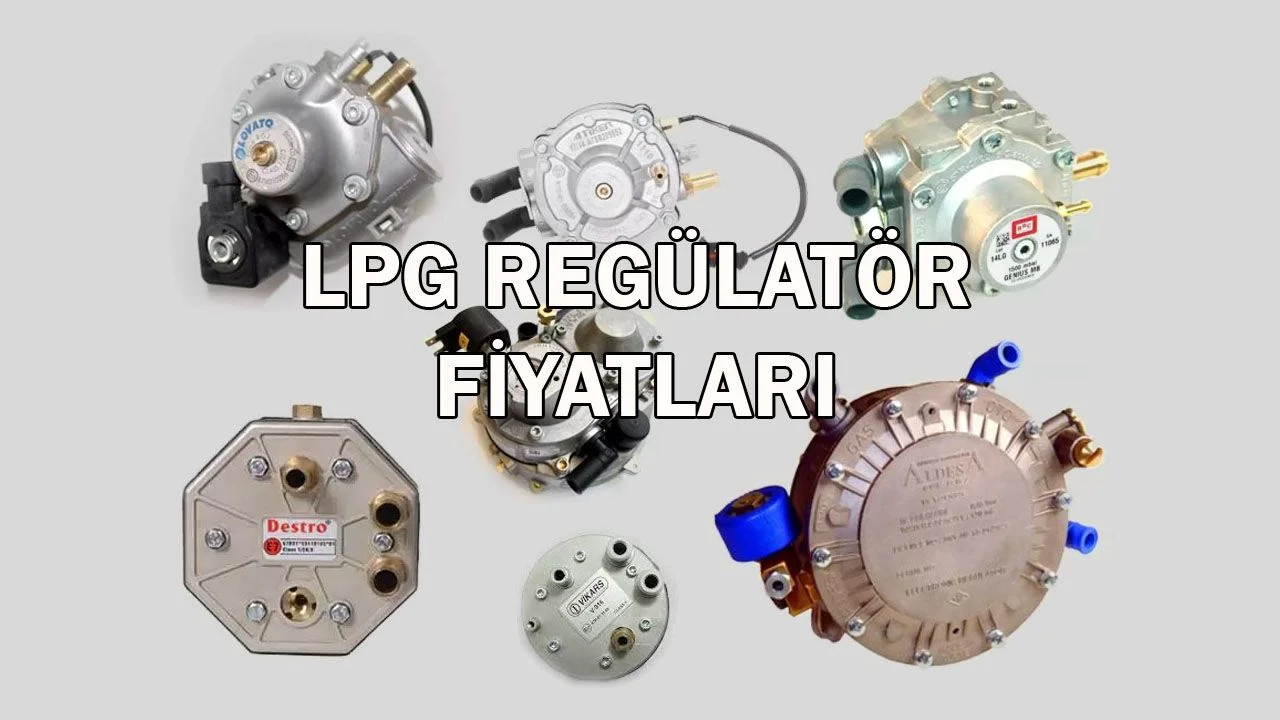
LPG Regulator Prices in Turkey 2026: Price List
We have compiled 2026 LPG regulator prices based on commonly used LPG system brands and regulator models. The LPG regulator, also known as an LPG reducer, vaporizer, or LPG converter, is one of the most important components in an LPG fuel system. It reduces the pressure of liquid LPG coming from the tank and converts it into gas at a pressure suitable for the engine and LPG injectors.
Regulator condition can directly affect LPG system performance. A worn diaphragm, internal leakage, unstable gas pressure, or insufficient heat transfer can lead to hesitation, loss of power, unstable idle, increased fuel consumption, and difficulty switching to LPG.
There is no universal replacement mileage for every LPG regulator. Service life depends on the regulator design, vehicle, LPG system, maintenance, fuel quality, and operating conditions. Some regulators may require overhaul or replacement after extended use, while others can operate reliably for considerably longer.
The prices below are product-only prices. Installation and labor costs are not included. Prices may also vary according to the seller, country, exchange rate, availability, taxes, and market conditions.
Note: The prices are provided for informational purposes only. The products are not being sold through this article. Euro-denominated prices are subject to exchange-rate fluctuations.
Last Updated: January 1, 2026
LPG Regulator Prices 2026
Below is the 2026 price list for LPG regulators from various manufacturers.
AKL
-
SR06 130 kW Sequential LPG Regulator: 2,000 TL
-
SR07 Sequential LPG Regulator: 1,300 TL
-
SR09 Sequential LPG Regulator: 1,800 TL
-
SR11 Sequential LPG Regulator: 2,200 TL
-
Carbureted-System LPG Regulator: 1,500 TL
Aldesa
-
Galaxy Sequential LPG Regulator: 1,800 TL
-
Carbureted-System LPG Regulator: 1,500 TL
-
140 kW Carbureted-System LPG Regulator: 1,800 TL
Atiker
-
SR06 130 kW LPG Regulator: 2,000 TL
-
SR06 220 kW Super LPG Regulator: 2,700 TL
-
SR06 300 kW Super LPG Regulator: 3,000 TL
-
SR07 110 kW LPG Regulator: 1,300 TL
-
SR07 140 kW Super LPG Regulator: 1,500 TL
-
SR09 110 kW LPG Regulator: 1,600 TL
-
SR09 140 kW Super LPG Regulator: 1,800 TL
-
SR10 110 kW LPG Regulator: 1,500 TL
-
SR10 140 kW Super LPG Regulator: 1,600 TL
-
SR11 130 kW LPG Regulator: 2,000 TL
-
SR11 220 kW Super Max LPG Regulator: 2,300 TL
-
SR11 300 kW Super Max LPG Regulator: 2,700 TL
-
Elit SR12 130 kW LPG Regulator: 3,000 TL
-
Elit SR12 220 kW LPG Regulator: 3,200 TL
-
Elit SR12 300 kW LPG Regulator: 3,800 TL
-
VR01 90 kW Carbureted-System LPG Regulator: 1,300 TL
-
VR01 140 kW Super Carbureted-System LPG Regulator: 1,800 TL
-
VR03 90 kW Super Carbureted-System LPG Regulator: 1,900 TL
-
Gold Sequential LPG Regulator: 3,700 TL
-
Grand Sequential LPG Regulator: 3,700 TL
BRC
-
Genius 1200MB MY11 Sequential Regulator: €100
-
Genius 1500MB MY11 Sequential Regulator: €115
-
AT90E 100 kW Carbureted-System Regulator: €85
Cangas
-
Sequential LPG Regulator: 2,000 TL
-
90 kW Carbureted-System LPG Regulator: 1,800 TL
Fema
-
Master Sequential LPG Regulator: 2,000 TL
-
ECO24 Sequential LPG Regulator: 1,600 TL
-
Carbureted-System LPG Regulator: 1,800 TL
Landirenzo
-
LI02 110 kW Sequential Regulator: €120
-
LI10 160 kW Sequential Regulator: €275
-
LI10 200 kW Turbo Sequential Regulator: €300
Lovato
-
Smart RGJ-3.2L Sequential Regulator: €80
-
HP LPG Regulator: €145
-
92 kW Carbureted-System Regulator: €50
-
140 kW Super Carbureted-System LPG Regulator: €55
-
170 kW Major Carbureted-System Regulator: €100
Mimgas
-
SU2000 Sequential LPG Regulator: 1,300 TL
-
Toros 110 kW Sequential LPG Regulator: 1,600 TL
-
Toros 240 kW Sequential LPG Regulator: 1,800 TL
-
90 kW Carbureted-System LPG Regulator: 1,600 TL
-
110 kW Carbureted-System LPG Regulator: 2,200 TL
Nazorati
-
Atom Sequential LPG Regulator: 2,200 TL
-
Carbureted-System LPG Regulator: 1,800 TL
OMVL
-
Sequential LPG Regulator: €110
-
200 kW Carbureted-System LPG Regulator: €100
Prins
-
Technomax Sequential LPG Regulator: €180
-
Ecomax Sequential LPG Regulator: €130
-
Silverline Turbo Sequential LPG Regulator: €275
-
VSI-2 Sequential LPG Regulator: €500
Tomasetto
-
AT09 Sequential LPG Regulator, 170 HP: €120
-
AT13 Sequential LPG Regulator: €150
Vikars
-
Gold Turbo Sequential Regulator: 1,700 TL
-
Carbureted-System LPG Regulator: 1,500 TL
-
Older-Type Carbureted-System Regulator: 1,500 TL
Wentgas
-
Sequential LPG Regulator: 1,800 TL
-
Carbureted-System LPG Regulator: 1,600 TL
Zavoli
-
135 kW Sequential LPG Regulator: €100
-
100 kW Carbureted-System LPG Regulator: €65
What Determines LPG Regulator Prices?
The price difference between LPG regulators can be substantial. The cheapest regulator is not necessarily the best choice, and the most expensive model is not automatically the most suitable one.
Several factors affect the price.
Engine power
Regulators are designed for different power levels. A regulator intended for a relatively low-power engine may not provide sufficient vaporization capacity for a high-output engine, especially under heavy load.
Sequential or carbureted LPG system
Older carbureted LPG systems generally use different regulator designs from modern sequential injection systems. They should not be treated as interchangeable components.
Turbocharged engines
Turbocharged engines can require regulators with higher flow and vaporization capacity. The regulator must be capable of maintaining stable pressure when engine load and LPG demand increase.
Brand and system compatibility
LPG systems from different manufacturers may use different pressure specifications, connections, sensors, and calibration requirements. Compatibility should therefore be checked before purchasing a replacement.
Regulator capacity
The kW or HP rating is an important specification, but it should not be considered in isolation. The actual engine, fuel system, operating pressure, and calibration also matter.
Does a More Expensive LPG Regulator Mean Better Quality?
Not necessarily.
A higher price may reflect the brand, design, capacity, materials, availability, or the specific LPG system for which the regulator was developed.
The correct regulator is the one that is properly matched to the engine and LPG system.
For example, installing a very high-capacity regulator on a small naturally aspirated engine does not automatically improve fuel economy or performance.
Conversely, using an undersized regulator on a powerful turbocharged engine can create fuel-pressure problems under high load.
What Happens When an LPG Regulator Starts to Fail?
A regulator can gradually deteriorate rather than failing completely at once.
Possible symptoms include:
-
LPG pressure fluctuations
-
Loss of power during acceleration
-
Hesitation at high RPM
-
Unstable idle
-
Engine stalling on LPG
-
Difficulty switching from gasoline to LPG
-
Lean or rich mixture problems
-
Increased LPG consumption
-
Misfire under load
-
LPG pressure dropping during heavy acceleration
However, these symptoms are not exclusive to the regulator.
A blocked LPG filter, defective injector, faulty pressure sensor, ignition problem, vacuum leak, wiring fault, or incorrect LPG calibration can produce similar symptoms.
Should the LPG Regulator Be Replaced or Repaired?
Some LPG regulators can be overhauled using a suitable repair kit, while others may be more practical to replace as a complete unit.
An overhaul may involve replacing internal components such as diaphragms, seals, and other wear parts.
Whether rebuilding is worthwhile depends on:
-
Regulator design
-
Availability of genuine repair parts
-
Internal condition
-
Labor cost
-
Age of the regulator
-
Availability and price of a replacement regulator
A regulator that is heavily worn or physically damaged may be better replaced rather than rebuilt.
How Can You Tell if the Regulator Is Actually Faulty?
Replacing the regulator based only on symptoms is not the best diagnostic method.
The LPG system should first be checked for actual pressure and pressure stability.
A technician may monitor the regulator under:
-
Idle conditions
-
Normal cruising
-
Acceleration
-
High RPM
-
Heavy engine load
-
Gasoline-to-LPG transition
-
Different coolant temperatures
The regulator's coolant circulation should also be checked because insufficient heating can create symptoms that resemble a regulator fault.
The LPG filter, injectors, pressure sensor, wiring, and calibration should also be evaluated.
Does an LPG Regulator Affect Fuel Consumption?
It can.
If the regulator does not maintain the correct pressure, the LPG ECU may have difficulty maintaining the intended air-fuel mixture.
Depending on the failure, the engine may run too lean or too rich.
However, increased LPG consumption should not automatically be blamed on the regulator.
Other possible causes include:
-
Incorrect LPG calibration
-
Dirty or faulty LPG injectors
-
Worn spark plugs
-
Weak ignition coils
-
Faulty oxygen sensor
-
MAF/MAP sensor problems
-
Vacuum leaks
-
Incorrect fuel pressure
-
Low engine compression
-
Thermostat or coolant-temperature problems
-
Tire pressure and vehicle resistance
-
Driving conditions and driving style
LPG Regulator Installation Cost
The prices in this article refer to the regulator itself and do not include installation.
The total replacement cost can therefore be higher than the product price.
Installation may involve:
-
Removing the old regulator
-
Disconnecting LPG and coolant lines
-
Installing the replacement
-
Checking for leaks
-
Checking coolant circulation
-
Bleeding air from the cooling system when necessary
-
Setting LPG pressure
-
Performing LPG ECU calibration
-
Checking fuel trims and engine operation
Labor costs vary significantly according to the vehicle, LPG system, workshop, and region.
Choosing the Right LPG Regulator
When replacing an LPG regulator, price should not be the only consideration.
Before purchasing, check:
-
LPG system brand and model
-
Engine power
-
Naturally aspirated or turbocharged engine
-
Required regulator pressure
-
Regulator capacity
-
Injector compatibility
-
Coolant connection configuration
-
Pressure sensor compatibility
-
Availability of calibration settings
-
Manufacturer recommendations
A regulator should be selected according to the complete LPG system rather than simply choosing the cheapest model with a similar power rating.
2026 LPG Regulator Prices: What Should You Expect?
The prices listed above show a wide range between different brands and models. In the supplied 2026 price list, some basic regulators are available around 1,300–1,800 TL, while higher-capacity or premium models can reach 3,000–3,800 TL or more.
Imported regulators are also listed in euros, with prices ranging from approximately €50 to €500, depending on the brand, model, capacity, and LPG system.
Because exchange rates, taxes, distribution costs, stock availability, and regional pricing can change, Euro-denominated products can have significantly different prices in local currency at different times.
Is It Worth Buying a Cheap LPG Regulator?
A low purchase price can be attractive, but the total cost of ownership is more important.
A poor-quality or incompatible regulator can result in:
-
Unstable LPG pressure
-
Poor engine performance
-
Increased fuel consumption
-
Repeated calibration problems
-
Premature diaphragm failure
-
Additional labor costs
-
Repeated workshop visits
For this reason, compatibility and proven quality should generally be considered before price alone.
Important Point Before Replacing the Regulator
An LPG regulator is a relatively important component, but it should not be replaced simply because a vehicle has an LPG-related problem.
For example, if the vehicle loses power at high RPM, the correct diagnostic approach is to determine whether LPG pressure actually falls under load. If pressure remains stable, the problem may be related to the injectors, ignition system, sensors, calibration, air intake, exhaust restriction, or the engine itself.
The same principle applies to LPG fault codes. A diagnostic code identifies a detected condition or circuit; it does not automatically prove that the regulator is defective.
For this reason, pressure testing and system diagnosis should come before replacing an expensive LPG component.
The 2026 prices in this list provide a useful reference point for comparing LPG regulator costs, but the correct product should always be selected according to the vehicle, engine power, LPG system, required pressure, and regulator capacity. A regulator that is correctly matched to the system is far more important than simply choosing the cheapest or most expensive model.