TR
TR EN
EN

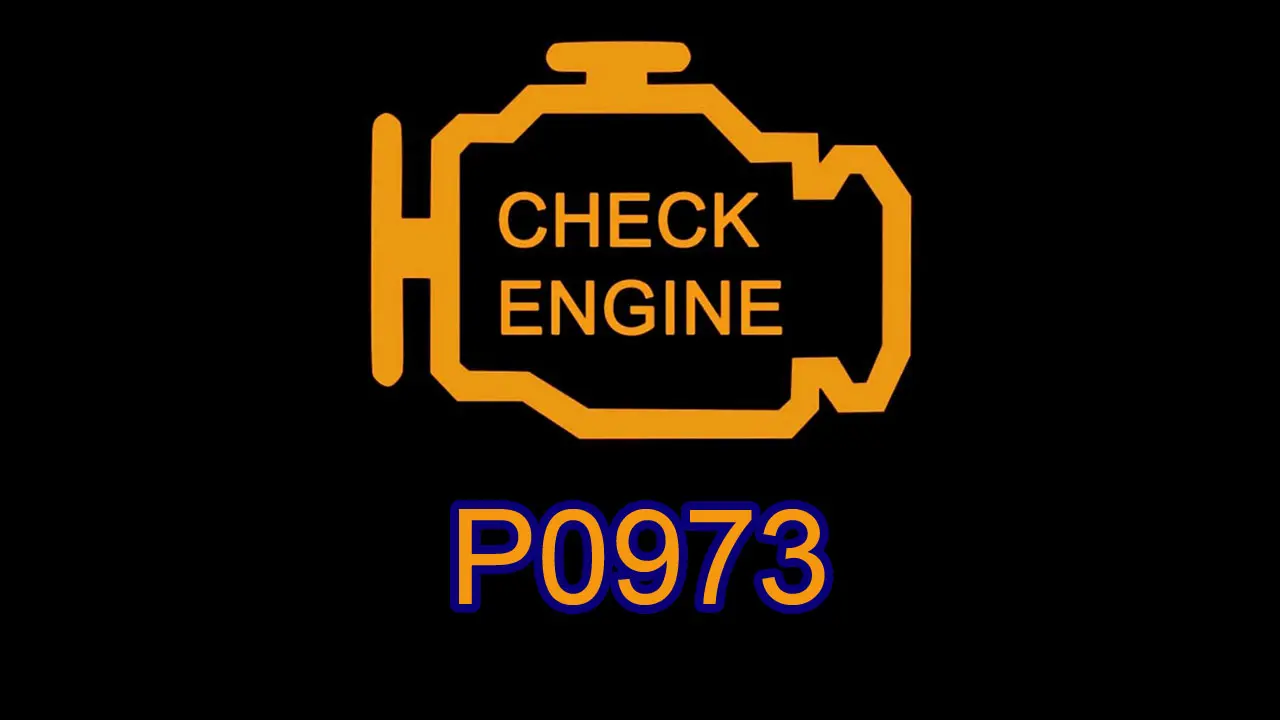
P0973 Shift Solenoid "A" Control Circuit Low
The P0973 trouble code is an OBD-II diagnostic trouble code associated with the electronic control system of an automatic transmission.
P0973 – Shift Solenoid “A” Control Circuit Low
This code means that the transmission control module (TCM) or powertrain control module (PCM) has detected an abnormally low electrical condition in the control circuit of Shift Solenoid “A.”
The word “Low” refers to the electrical condition of the solenoid control circuit, not necessarily to low hydraulic pressure inside the transmission.
A faulty shift solenoid can cause P0973, but it is not automatically the cause. A short to ground, damaged wiring, poor connector contact, power-supply problem, incorrect solenoid resistance or a TCM fault can also trigger this code.
What Does P0973 Mean?
P0973 – Shift Solenoid “A” Control Circuit Low
Modern automatic transmissions use electronically controlled solenoids to regulate transmission fluid and manage gear changes.
The TCM determines when and how the solenoids should operate based on information such as:
-
Vehicle speed
-
Engine RPM
-
Throttle position
-
Engine load
-
Transmission temperature
-
Selected gear
-
Driving conditions
Shift Solenoid “A” controls one of the transmission's hydraulic circuits.
When the TCM detects that the electrical condition of the Shift Solenoid “A” control circuit is lower than the expected value, it may store P0973.
The basic operating sequence is:
TCM command → Electrical solenoid control → Hydraulic fluid control → Clutch/valve operation → Gear change
If the electrical circuit does not behave as expected, the transmission may not be able to perform the commanded gear change correctly.
What Is a Shift Solenoid?
A shift solenoid is an electrically operated valve that controls transmission fluid.
When the TCM sends an electrical command, the solenoid opens, closes or modulates fluid flow through a specific hydraulic circuit.
This allows the transmission to control:
-
Clutch packs
-
Brake elements
-
Shift valves
-
Hydraulic pressure circuits
-
Other transmission components
The shift solenoid effectively connects the electronic control system with the transmission's hydraulic system.
What Does the “A” Mean?
The “A” identifies a specific shift-solenoid circuit according to the manufacturer's transmission design.
It does not universally mean that this is physically the first solenoid in the transmission.
Different manufacturers use different solenoid layouts and naming conventions.
Shift Solenoid “A” may be located:
-
Inside the transmission
-
Inside the valve body
-
In a mechatronic assembly
-
On a transmission control assembly
Its exact location and function should be confirmed using vehicle-specific service information.
What Does “Circuit Low” Mean?
The “Low” designation means that the TCM has detected an electrical condition below the expected level in the Shift Solenoid “A” control circuit.
Possible causes include:
-
Short to ground
-
Faulty solenoid
-
Damaged wiring
-
Poor connector contact
-
Incorrect solenoid resistance
-
Power-supply problem
-
Open circuit
-
TCM fault
The exact electrical behavior depends on the manufacturer's circuit design.
Does P0973 Mean Shift Solenoid “A” Is Bad?
No.
A defective solenoid is only one possible cause of P0973.
For example, a damaged control wire touching a grounded component can pull the circuit voltage down and trigger the code.
Likewise, corrosion or poor terminal contact can alter the electrical characteristics of the circuit.
The entire circuit should therefore be tested before replacing the solenoid.
Symptoms of P0973
The symptoms depend on what Shift Solenoid “A” controls in the particular transmission.
Possible symptoms include:
-
Check Engine Light
-
Transmission warning light
-
Harsh shifting
-
Delayed gear changes
-
Erratic shifting
-
Transmission slipping
-
Transmission stuck in one gear
-
Missing a particular gear
-
Unexpected upshifts
-
Unexpected downshifts
-
Delayed Drive engagement
-
Delayed Reverse engagement
-
Poor acceleration
-
Increased engine RPM
-
Reduced fuel economy
-
Limp mode
Some vehicles may continue operating almost normally.
In these cases, the Check Engine Light may be the only noticeable symptom.
Common Causes of P0973
Several electrical and transmission-related problems can trigger this code.
Faulty Shift Solenoid “A”
The solenoid may have an internal electrical or mechanical failure.
Possible problems include:
-
Internal short
-
Open coil winding
-
Incorrect resistance
-
Coil failure
-
Mechanical sticking
-
Contamination
A solenoid with abnormal electrical characteristics can cause the TCM to detect a low circuit condition.
Short to ground
A damaged control wire can contact a grounded component.
This can pull the circuit voltage lower than expected.
Possible grounding points include:
-
Transmission housing
-
Engine ground
-
Chassis ground
-
Another grounded circuit
This is one of the most important possibilities when diagnosing a circuit-low code.
Damaged wiring
Transmission wiring is exposed to:
-
Heat
-
Vibration
-
Moisture
-
Transmission fluid
-
Oil
-
Road contamination
Possible wiring problems include:
-
Chafed insulation
-
Broken conductors
-
Pinched wires
-
Melted insulation
-
Corrosion
-
High resistance
-
Poor previous repairs
Connector problems
A poor connection at the transmission connector can interfere with solenoid control.
Possible issues include:
-
Bent pins
-
Loose terminals
-
Corrosion
-
Water intrusion
-
Transmission fluid contamination
-
Damaged connector locks
Incorrect solenoid resistance
The solenoid coil should have a resistance within the manufacturer's specified range.
A resistance value outside specification may indicate an internal solenoid problem.
The correct resistance varies between transmissions.
Power-supply problem
Some transmission designs use a shared power supply for multiple solenoids.
If the common supply circuit is damaged, several solenoid-related codes may appear simultaneously.
This is particularly important if P0973 appears together with other solenoid codes.
Open or damaged circuit
Depending on the manufacturer's circuit design, a broken circuit or disconnected solenoid can produce an abnormal electrical condition.
The transmission wiring diagram should be used to determine how the circuit is monitored.
Valve body problems
The solenoid may be electrically functional but unable to produce the expected hydraulic response because of a mechanical valve-body problem.
Possible causes include:
-
Sticking valves
-
Worn valve bores
-
Contamination
-
Restricted passages
Transmission control module fault
A TCM fault is possible, but it should generally be considered only after the solenoid, wiring and connectors have been properly tested.
Can Low Transmission Fluid Cause P0973?
Low transmission fluid can cause:
-
Delayed gear engagement
-
Slipping
-
Poor shifting
-
Hydraulic pressure problems
However, low transmission fluid does not normally cause an electrical circuit-low condition by itself.
The fluid level should still be checked because fluid level and condition are important parts of transmission diagnosis.
Can Dirty Transmission Fluid Cause P0973?
Contaminated transmission fluid can contribute to:
-
Solenoid sticking
-
Valve-body problems
-
Restricted hydraulic passages
-
Erratic shifting
However, dirty fluid alone does not necessarily explain an electrical circuit-low code.
The electrical circuit should still be tested when P0973 is present.
P0973 vs. P0974 vs. P0975
These codes concern different conditions and should not be confused.
P0973 – Shift Solenoid “A” Control Circuit Low
The TCM detects an electrical condition lower than expected.
P0974 – Shift Solenoid “A” Control Circuit High
The TCM detects an electrical condition higher than expected.
P0975 – Shift Solenoid “B” Control Circuit Range/Performance
This concerns a different solenoid and indicates a range/performance problem.
Understanding both the solenoid letter and the type of electrical fault is important when diagnosing these codes.
How Serious Is P0973?
P0973 can range from a relatively simple electrical problem to a significant transmission-control fault.
A damaged wire or loose connector may be relatively straightforward to repair.
However, if Shift Solenoid “A” controls an important hydraulic circuit, incorrect operation can result in:
-
Harsh shifting
-
Clutch slipping
-
Excessive heat
-
Accelerated internal wear
-
Limp mode
For this reason, P0973 should not be ignored.
Can You Drive With P0973?
If the vehicle continues to shift normally, a short drive to a repair facility may be possible.
However, prolonged driving with an unresolved transmission-control problem is not recommended.
Driving should be minimized if you experience:
-
Severe slipping
-
Violent gear changes
-
Loss of Drive
-
Loss of Reverse
-
Transmission overheating
-
Limp mode
-
Burning transmission fluid smell
These symptoms may indicate a more serious transmission problem.
How to Diagnose P0973
Because P0973 indicates a circuit-low condition, the electrical system should be carefully tested.
1. Scan the TCM
Use a professional diagnostic scanner to retrieve all stored and pending codes.
Look for additional faults involving:
-
Other shift solenoids
-
Pressure-control solenoids
-
Transmission pressure sensors
-
Transmission temperature
-
Gear ratios
-
Communication
-
Power supply
If several solenoid codes are present, inspect shared circuits first.
2. Check freeze-frame data
Review the operating conditions when P0973 was stored.
Important information may include:
-
Engine RPM
-
Vehicle speed
-
Transmission temperature
-
Selected gear
-
Throttle position
-
Solenoid command
-
Transmission operating mode
This can help determine when the fault occurs.
3. Identify Shift Solenoid “A”
Use the vehicle-specific transmission wiring diagram to identify:
-
Solenoid location
-
Connector pinout
-
Power supply
-
Control wire
-
TCM connection
-
Circuit strategy
Do not assume that Shift Solenoid “A” is located in the same position on different transmissions.
4. Check the transmission fluid
Inspect:
-
Fluid level
-
Fluid condition
-
Fluid type
-
Signs of contamination
-
Signs of leakage
Follow the manufacturer's specified procedure.
Some transmissions require the fluid to be at a specific temperature for an accurate level measurement.
5. Inspect the wiring
Look for:
-
Chafed insulation
-
Broken conductors
-
Pinched wires
-
Melted insulation
-
Corrosion
-
Previous repairs
-
Harness contact with hot components
Pay particular attention to wiring near the transmission and exhaust.
6. Inspect the connectors
Check for:
-
Bent pins
-
Loose terminals
-
Corrosion
-
Water intrusion
-
Transmission fluid contamination
-
Damaged connector locks
A poor electrical connection can cause a circuit-low condition even when the wiring appears intact.
7. Measure solenoid resistance
Disconnect the appropriate connector and measure the resistance of Shift Solenoid “A.”
Compare the measurement with the manufacturer's specification.
If the resistance is outside specification, the solenoid may be defective.
Do not use a universal resistance value because solenoid specifications vary between transmissions.
8. Check for a short to ground
Because P0973 indicates a circuit-low condition, check the control wire for an unintended connection to ground.
Inspect for contact with:
-
Transmission housing
-
Engine ground
-
Chassis
-
Other grounded wiring
This is particularly important when the solenoid itself passes its resistance test.
9. Check the power and control circuits
Verify:
-
Solenoid power supply
-
Control voltage
-
Continuity
-
Resistance
-
Voltage drop
-
TCM command
The exact procedure depends on the transmission's electrical design.
Always follow the manufacturer's wiring diagram.
10. Use a bidirectional scan tool
If supported, command Shift Solenoid “A” on and off using a professional diagnostic scanner.
Observe the electrical response and transmission behavior.
This can help determine whether the problem is:
-
Electrical
-
Solenoid-related
-
Hydraulic
-
Mechanical
11. Check hydraulic operation
If the electrical circuit and solenoid pass testing but the transmission still operates incorrectly, investigate the hydraulic system.
Possible causes include:
-
Sticking valves
-
Valve-body wear
-
Restricted passages
-
Internal leakage
-
Incorrect hydraulic pressure
Why P0973 Does Not Mean Low Transmission Pressure
This distinction is very important.
P0973 is an electrical circuit code.
It does not directly state that hydraulic pressure inside the transmission is low.
For example, a control wire shorted to ground can cause P0973 while actual transmission fluid pressure remains normal.
Therefore:
Electrical circuit low ≠ hydraulic pressure low
The electrical circuit should be tested before assuming that the transmission has a hydraulic pressure problem.
P0973 After Transmission Repair
If P0973 appears immediately after transmission repair or replacement, inspect the components that were disturbed during the work.
Possible causes include:
-
Connector not fully seated
-
Bent connector terminal
-
Pinched wiring
-
Damaged harness
-
Incorrect harness routing
-
Contaminated connector
-
Damaged solenoid connector
-
Poor electrical connection
If the code appeared immediately after repair, the repair area should be inspected carefully before assuming that the transmission has developed a major internal failure.
P0973 After a Transmission Fluid Change
A transmission fluid change does not normally cause an electrical circuit-low code by itself.
However, if the code appeared after service, verify:
-
Correct fluid specification
-
Correct fluid level
-
Correct filling procedure
-
Correct fluid temperature during level checking
-
Electrical connector condition
-
Wiring condition
If transmission fluid entered an electrical connector, it can interfere with electrical contact.
An incorrect fluid level may cause shifting problems, although it would not normally explain the electrical low condition itself.
Can P0973 Cause Limp Mode?
Yes.
Depending on the transmission design, the TCM may activate a protective operating strategy if it detects that Shift Solenoid “A” cannot be controlled correctly.
The vehicle may then:
-
Remain in a single gear
-
Use a limited number of gears
-
Shift harshly
-
Delay engagement
-
Increase line pressure
-
Limit transmission functionality
Not every vehicle with P0973 will enter limp mode.
The exact response depends on the transmission and control software.
Can P0973 Damage the Transmission?
P0973 does not automatically mean that internal transmission damage has already occurred.
However, if Shift Solenoid “A” controls an important hydraulic circuit and the transmission continues operating incorrectly, abnormal shifting can increase:
-
Clutch wear
-
Heat
-
Hydraulic stress
-
Internal component wear
If the transmission is slipping or shifting violently, continued driving can make the underlying problem worse.
Common Diagnostic Mistakes With P0973
One of the most common mistakes is immediately replacing Shift Solenoid “A.”
The solenoid may be functioning correctly while the actual problem is:
-
Short to ground
-
Damaged wiring
-
Corroded connector
-
Poor terminal contact
-
Power-supply problem
-
TCM control problem
Another mistake is interpreting “Circuit Low” as “transmission pressure is low.”
P0973 primarily describes an electrical condition.
Another common mistake is replacing the entire transmission without first testing the solenoid circuit.
P0973 alone does not prove that the transmission needs to be rebuilt or replaced.
What Is the Correct Repair for P0973?
The correct repair depends on the confirmed cause.
Possible repairs include:
-
Replacing Shift Solenoid “A”
-
Repairing damaged wiring
-
Removing a short to ground
-
Repairing an open circuit
-
Replacing damaged connector terminals
-
Cleaning or replacing a contaminated connector
-
Restoring the correct solenoid power supply
-
Repairing the solenoid control circuit
-
Correcting poor electrical connections
-
Repairing valve-body problems when confirmed
-
Repairing hydraulic pressure problems when confirmed
-
Repairing internal transmission components when confirmed
-
Repairing or replacing the TCM when it is conclusively diagnosed as faulty
Final Thoughts on P0973
P0973 – Shift Solenoid “A” Control Circuit Low indicates that the transmission control module has detected an electrically low condition in the Shift Solenoid “A” control circuit.
The most important areas to investigate are the solenoid, wiring, connectors, power supply and control circuit.
A short to ground, damaged wiring or poor connector can produce P0973 even when the solenoid itself is functioning correctly.
It is also important to remember that P0973 does not automatically mean that transmission fluid pressure is low or that the transmission has suffered internal mechanical damage.
A systematic diagnosis should begin with the electrical circuit. If the electrical system passes inspection, the technician can then investigate the solenoid's mechanical operation, valve body and hydraulic system.
Testing the circuit before replacing parts is the best way to diagnose P0973 correctly and avoid unnecessary solenoid or transmission replacement.