TR
TR EN
EN

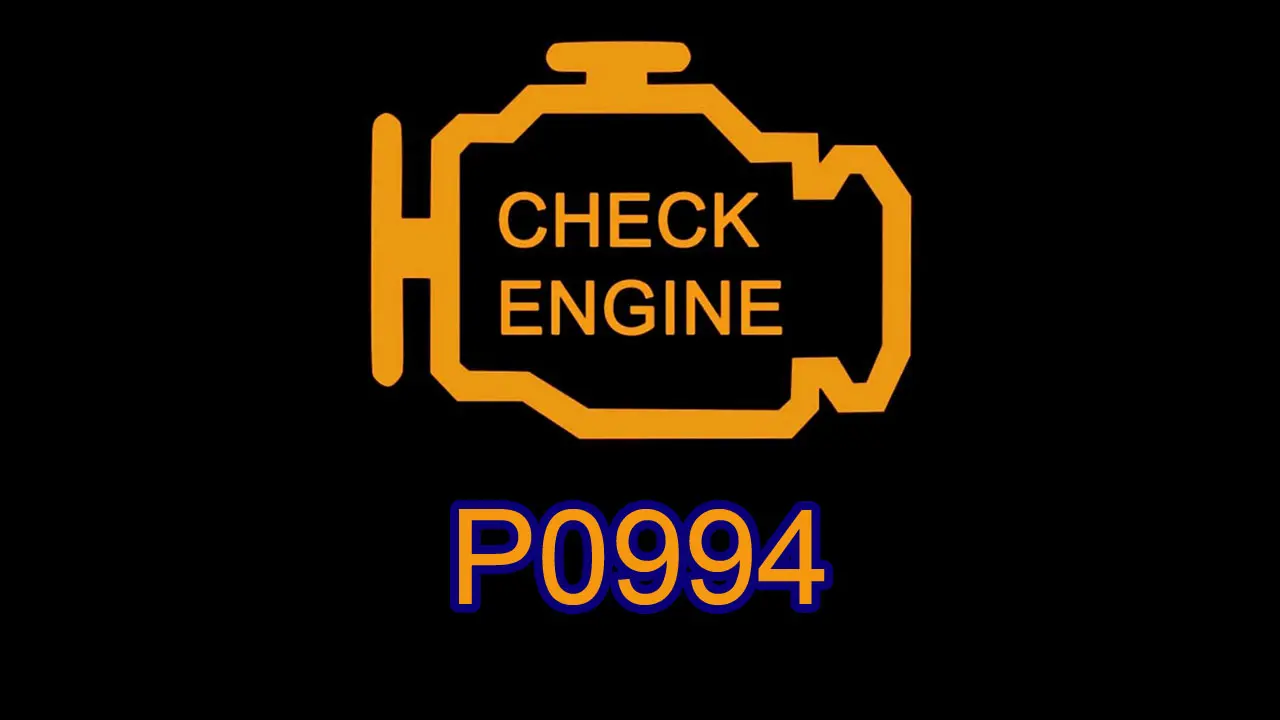
P0994 Transmission Fluid Pressure Sensor / Switch "F" Circuit Low
The P0994 diagnostic trouble code (DTC) indicates a low signal condition in the Transmission Fluid Pressure Sensor/Switch "F" circuit.
The Transmission Fluid Pressure Sensor/Switch "F" is part of the automatic transmission's electronic and hydraulic control system. It monitors transmission fluid pressure and provides information to the Transmission Control Module (TCM) or Powertrain Control Module (PCM).
When the control module detects that the electrical signal from the "F" pressure sensor or switch is lower than the expected range, it may store P0994.
Depending on the vehicle and transmission design, this fault can cause hard shifting, delayed gear changes, transmission slipping, incorrect gear operation, warning lights and limp mode.
However, P0994 does not automatically mean that the transmission fluid pressure is actually low. The term "Circuit Low" refers primarily to the electrical signal detected in the sensor circuit.
A faulty sensor, short to ground, damaged wiring, poor connector contact, incorrect reference voltage or an actual hydraulic pressure problem can all contribute to this code.
What Does P0994 Mean?
P0994 – Transmission Fluid Pressure Sensor/Switch "F" Circuit Low
This code means that the transmission control module has detected an electrical signal from the Transmission Fluid Pressure Sensor/Switch "F" circuit that is below the expected value.
The word "Low" describes the electrical signal.
It does not automatically mean that the transmission has insufficient hydraulic pressure.
For example, the transmission may have normal hydraulic pressure while the sensor signal is low because the signal wire is shorted to ground.
Conversely, the sensor may be correctly reporting a genuine low-pressure condition.
Therefore, both the electrical circuit and the hydraulic system may need to be checked.
What Is a Transmission Fluid Pressure Sensor/Switch?
The Transmission Fluid Pressure Sensor/Switch is a component that monitors hydraulic pressure inside an automatic transmission.
Depending on the transmission design, it may be:
-
A variable pressure sensor
-
A pressure switch
-
A combined sensor/switch
-
Integrated into the valve body
-
Integrated into an internal transmission wiring harness
-
Part of a mechatronic assembly
A pressure sensor generally converts hydraulic pressure into an electrical signal.
A pressure switch may change its electrical state when a specified pressure threshold is reached.
The exact operating principle depends on the transmission.
What Does Transmission Fluid Pressure Sensor "F" Do?
Pressure Sensor/Switch "F" monitors a specific hydraulic circuit within the transmission.
The TCM can use the pressure information to determine whether the transmission is operating within the expected hydraulic range.
The information may be used for:
-
Gear-shift control
-
Clutch engagement
-
Hydraulic pressure management
-
Shift quality
-
Transmission protection
-
Diagnostic monitoring
If the electrical signal is too low, the TCM may no longer be able to accurately determine the pressure condition.
What Does the "F" Mean?
The letter "F" identifies a particular pressure sensor or switch circuit.
It does not represent a universal physical location or a specific transmission gear.
A transmission may have multiple pressure sensors or switches, identified with letters such as A, B, C, D, E and F.
The exact location and function of "F" depend on the specific transmission.
For accurate diagnosis, the manufacturer's wiring diagram and service information should be used.
How Does a Transmission Fluid Pressure Sensor Work?
Many transmission pressure sensors use a pressure-sensitive electronic element.
As hydraulic pressure changes, the electrical output of the sensor changes.
The TCM monitors this signal and compares it with expected values.
If the signal becomes lower than the permitted range, the control module can store P0994.
A pressure switch works differently and may provide an ON/OFF signal depending on hydraulic pressure.
Where Is Transmission Fluid Pressure Sensor "F" Located?
The location varies according to transmission design.
The sensor or switch may be located:
-
Inside the transmission
-
On the valve body
-
Near the transmission hydraulic circuits
-
Inside the transmission pan area
-
Integrated into an internal transmission harness
-
Inside a mechatronic unit
Some modern automatic transmissions integrate several sensors into a single internal assembly.
As a result, replacing the component may require removal of the transmission pan or valve body.
Symptoms of P0994
The symptoms of P0994 depend on the vehicle and the severity of the electrical or hydraulic problem.
Common symptoms can include:
-
Check Engine Light
-
Transmission warning light
-
Hard shifting
-
Harsh gear changes
-
Delayed shifting
-
Jerking during gear changes
-
Transmission slipping
-
Incorrect gear selection
-
Delayed Drive or Reverse engagement
-
Transmission stuck in one gear
-
Reduced transmission performance
-
Limp mode
-
Increased transmission temperature
Some vehicles may store P0994 without producing obvious symptoms.
Check Engine Light
The Check Engine Light may illuminate when the TCM detects a low pressure-sensor signal.
Depending on the vehicle, a separate transmission warning message may also appear.
The code may remain stored even if the signal later returns to normal.
Hard or Harsh Shifting
A pressure-sensor signal that is too low can cause the TCM to misunderstand the transmission's hydraulic condition.
The control module may respond by changing its shift strategy.
The driver may notice:
-
Hard upshifts
-
Hard downshifts
-
Jerking
-
Thumping
-
Sudden gear engagement
However, these symptoms can also be caused by mechanical or hydraulic transmission problems.
Delayed Gear Changes
Incorrect pressure information may affect shift timing.
The transmission may hesitate before changing gears.
Possible signs include:
-
Delayed upshifts
-
Delayed downshifts
-
High engine RPM
-
Hesitation
-
Slow gear engagement
Transmission Slipping
P0994 can be associated with transmission slipping if the underlying problem involves insufficient hydraulic pressure.
If a clutch does not receive enough pressure, it may fail to engage completely.
This can cause:
-
RPM increases without proportional acceleration
-
Fluctuating RPM
-
Weak acceleration
-
Temporary loss of drive
However, a low sensor signal does not automatically mean that hydraulic pressure is low.
Worn clutch packs, low fluid, valve-body problems and transmission pump issues can also cause slipping.
Delayed Drive or Reverse Engagement
A hydraulic or pressure-control problem may cause a delay when selecting Drive or Reverse.
The vehicle may take several seconds to engage after the gear selector is moved.
Possible causes include:
-
Low transmission fluid
-
Low hydraulic pressure
-
Valve-body problems
-
Transmission pump wear
-
Internal leakage
-
Pressure-control problems
Transmission Stuck in One Gear
A serious pressure-sensor fault may cause the TCM to restrict transmission operation.
The transmission may remain in one gear or provide only limited gear selection.
This can occur as part of a protective strategy.
Limp Mode
Some vehicles may enter transmission limp mode when P0994 is detected.
The TCM may limit transmission operation because it cannot reliably monitor the pressure circuit.
Possible symptoms include:
-
Fixed gear operation
-
Limited gear selection
-
Harsh shifts
-
Reduced acceleration
-
Restricted transmission functionality
The exact strategy varies between manufacturers.
Common Causes of P0994
Several problems can cause a low signal in the Transmission Fluid Pressure Sensor/Switch "F" circuit.
Faulty pressure sensor
The sensor may internally fail and produce a signal below the expected range.
Short circuit to ground
A signal wire contacting ground can pull the sensor signal down.
Damaged wiring
Broken, damaged or corroded wiring can interfere with the sensor signal.
Connector problems
Loose or corroded terminals can create abnormal voltage readings.
Reference voltage problem
If the sensor does not receive the correct reference voltage, its output may be incorrect.
Poor sensor ground
A ground-circuit problem can affect sensor operation.
Internal transmission harness fault
Heat, vibration and transmission-fluid exposure can damage internal wiring.
Low transmission fluid
Low fluid can cause actual hydraulic pressure problems.
Valve-body problems
Sticking valves, blocked passages or worn valve bores can affect pressure.
Transmission pump problems
A worn pump can produce insufficient hydraulic pressure.
Transmission control module problem
A TCM fault is possible but generally less common than sensor or wiring problems.
Electrical Causes of P0994
Because P0994 specifically identifies a circuit low condition, the electrical circuit should be inspected carefully.
Possible electrical causes include:
-
Signal wire shorted to ground
-
Open or damaged wiring
-
Low reference voltage
-
Poor sensor ground
-
Corroded connector
-
Loose terminal
-
Internal sensor failure
-
Damaged internal transmission harness
A circuit-low code should not immediately be interpreted as a mechanical transmission failure.
Does "Circuit Low" Mean Transmission Fluid Pressure Is Low?
No, not necessarily.
This is the most important point when diagnosing P0994.
The phrase "Circuit Low" primarily describes the electrical signal received by the control module.
For example, if the pressure sensor's signal wire is shorted to ground, the TCM may see a very low voltage even if the actual transmission hydraulic pressure is completely normal.
On the other hand, if the sensor is functioning correctly and accurately reports low hydraulic pressure, the vehicle may have a genuine transmission pressure problem.
These two situations require completely different repairs.
Can Low Transmission Fluid Cause P0994?
Yes, it can contribute to P0994 in some situations.
Low transmission fluid can result in:
-
Low hydraulic pressure
-
Pressure fluctuations
-
Delayed engagement
-
Slipping
-
Abnormal shifting
If the pressure sensor accurately detects the low pressure, the TCM may identify a pressure-related problem.
However, low fluid does not explain every P0994 code.
The electrical circuit should also be tested.
Can Dirty Transmission Fluid Cause P0994?
Contaminated fluid can contribute to hydraulic transmission problems.
Debris may affect:
-
Valve-body operation
-
Hydraulic passages
-
Pressure regulation
-
Pressure-control components
If the fluid contains excessive metal particles or clutch material, internal transmission wear should be considered.
However, dirty fluid alone does not automatically prove an electrical circuit-low problem.
Can a Short to Ground Cause P0994?
Yes.
A signal wire that is shorted to ground can pull the sensor signal below the expected range.
This is one of the most important electrical causes to investigate.
The wiring should be checked for contact with:
-
Transmission housing
-
Ground wires
-
Chassis ground
-
Other grounded circuits
Can a Bad Pressure Sensor Cause P0994?
Yes.
An internally failed pressure sensor may produce a signal that is consistently too low.
The sensor may also develop a fault that appears only under certain temperature or pressure conditions.
For this reason, live-data monitoring and electrical testing can be more useful than simply reading the stored code.
How Is P0994 Diagnosed?
A proper diagnosis should evaluate both the electrical signal and the actual transmission hydraulic pressure.
A diagnostic procedure may include:
-
Scanning all diagnostic trouble codes
-
Checking freeze-frame data
-
Monitoring live pressure-sensor data
-
Checking reference voltage
-
Checking sensor ground
-
Testing signal voltage
-
Inspecting wiring
-
Inspecting connectors
-
Testing the pressure sensor
-
Checking transmission fluid
-
Measuring actual hydraulic pressure when necessary
Step 1: Scan for All Diagnostic Trouble Codes
The first step is to perform a complete diagnostic scan.
The technician should check:
-
Stored codes
-
Pending codes
-
History codes
-
Transmission codes
-
Freeze-frame data
Other codes can provide important clues.
For example, additional sensor-voltage or transmission-pressure codes may indicate a shared electrical or hydraulic problem.
Step 2: Check the Freeze-Frame Data
Freeze-frame information shows the operating conditions when P0994 was detected.
Useful information can include:
-
Transmission temperature
-
Engine RPM
-
Vehicle speed
-
Gear position
-
Throttle position
-
Battery voltage
This can help determine whether the problem occurs when the transmission is cold, hot, under load or during a specific gear change.
Step 3: Monitor the Pressure Sensor Signal
The pressure sensor signal should be monitored using a professional diagnostic scan tool when live data is available.
The technician should look for:
-
Extremely low readings
-
Fixed readings
-
Implausible pressure values
-
Sudden voltage drops
-
Pressure values that do not correspond to transmission operation
The expected values vary by transmission.
Step 4: Check Reference Voltage
If the pressure sensor uses a reference-voltage circuit, the technician should verify that the correct voltage is present.
An incorrect reference voltage can cause an incorrect sensor output.
The exact specification must be obtained from the vehicle manufacturer's service information.
Step 5: Check Sensor Ground
A poor ground can affect the pressure sensor signal.
The technician should check:
-
Ground continuity
-
Voltage drop
-
Connector condition
-
Ground integrity under operating conditions
A poor ground can produce misleading sensor readings.
Step 6: Check the Signal Wire
The signal circuit should be tested for:
-
Short to ground
-
Open circuit
-
High resistance
-
Damaged insulation
-
Corrosion
A signal wire shorted to ground is particularly relevant to a circuit-low code.
Step 7: Inspect the Connector
The sensor connector should be carefully inspected for:
-
Corrosion
-
Bent terminals
-
Loose terminals
-
Poor terminal tension
-
Fluid contamination
-
Damaged locking mechanism
A connector that looks normal from the outside can still have an internal contact problem.
Step 8: Test the Pressure Sensor
If the wiring and power supply are correct, the pressure sensor itself should be tested.
Depending on the design, the technician may measure:
-
Reference voltage
-
Signal voltage
-
Ground
-
Resistance
-
Pressure-to-voltage relationship
The manufacturer's specifications should always be followed.
Step 9: Check Actual Hydraulic Pressure
If the electrical circuit tests correctly, actual hydraulic pressure should be considered.
A pressure gauge or appropriate diagnostic procedure can be used to compare actual pressure with manufacturer specifications.
If the actual pressure is too low, possible causes include:
-
Low transmission fluid
-
Transmission pump wear
-
Valve-body problems
-
Internal leakage
-
Pressure-regulation problems
-
Worn internal transmission components
Common Repair Solutions for P0994
The correct repair depends on the root cause.
Possible repairs include:
-
Repairing damaged wiring
-
Repairing a signal wire short to ground
-
Replacing damaged connectors
-
Repairing sensor ground
-
Correcting reference-voltage problems
-
Replacing Transmission Fluid Pressure Sensor/Switch "F"
-
Repairing the internal transmission harness
-
Correcting transmission fluid level
-
Servicing contaminated transmission fluid
-
Repairing the valve body
-
Repairing the transmission pump
-
Repairing internal transmission components
-
Repairing or updating the TCM when appropriate
The component should be replaced only after the cause has been confirmed.
Does P0994 Always Mean the Pressure Sensor Is Bad?
No.
P0994 identifies a low electrical signal condition in the Transmission Fluid Pressure Sensor/Switch "F" circuit.
Possible causes include:
-
Defective pressure sensor
-
Short to ground
-
Damaged wiring
-
Corroded connector
-
Poor sensor ground
-
Reference-voltage problem
-
Internal transmission harness failure
-
Actual low hydraulic pressure
-
Valve-body problems
-
Transmission pump problems
A complete diagnosis is necessary before replacing the sensor.
Can P0994 Be Caused by a Wiring Problem?
Yes.
Wiring problems are among the first things that should be investigated when a circuit-low code is present.
A damaged signal wire that contacts ground can immediately pull the signal below the expected range.
Heat, vibration and transmission movement can also cause wiring problems to appear intermittently.
Can P0994 Cause Transmission Damage?
The diagnostic code itself does not directly damage the transmission.
However, the underlying problem may lead to damage if it causes incorrect hydraulic operation.
For example, insufficient hydraulic pressure can cause clutch slipping.
Continued slipping can produce excessive heat and accelerate clutch wear.
Can You Drive With P0994?
It depends on the vehicle's symptoms.
If the vehicle operates normally and only the warning light is illuminated, limited driving may be possible while arranging a diagnosis.
However, driving should be minimized if there is:
-
Severe transmission slipping
-
Hard or abnormal shifting
-
Transmission overheating
-
Loss of drive
-
Delayed engagement
-
Limp mode
These symptoms may indicate a serious hydraulic or mechanical transmission problem.
Is P0994 a Serious Code?
P0994 should not be ignored.
The severity depends on the underlying cause.
A damaged connector or signal wire may be relatively simple to repair.
However, if the code is caused by low hydraulic pressure, a failing transmission pump, valve-body problems or internal transmission wear, the problem can be considerably more serious.
Early diagnosis can prevent unnecessary parts replacement and reduce the risk of secondary transmission damage.
P0994 vs P0995
P0994 and P0995 concern the same general pressure sensor/switch circuit but indicate opposite electrical conditions.
P0994 means the Transmission Fluid Pressure Sensor/Switch "F" circuit signal is low.
P0995 means the same circuit signal is high.
A low signal may be caused by a short to ground, sensor failure or low reference voltage.
A high signal may be caused by a short to voltage, sensor failure or another electrical problem.
Neither code automatically proves that the actual transmission hydraulic pressure is low or high.
P0994 vs P0996
P0994 and P0996 also describe different electrical conditions.
P0994 indicates a circuit low condition.
P0996 indicates an intermittent circuit condition.
An intermittent fault can cause the signal to disappear or become unstable, while a circuit-low fault indicates that the signal is below the expected range.
A vehicle can potentially store both codes if the sensor circuit has multiple electrical problems.
P0994 vs P0997
P0994 involves the Transmission Fluid Pressure Sensor/Switch "F" circuit.
P0997 involves the Shift Solenoid "F" control circuit range/performance.
Although both codes relate to transmission control and use the letter "F", they do not necessarily refer to the same component.
The pressure sensor/switch monitors hydraulic pressure, while a shift solenoid controls transmission fluid flow through a hydraulic circuit.
How to Prevent Transmission Pressure Sensor Problems
Proper transmission maintenance can reduce the risk of pressure-related faults.
-
Maintain the correct transmission fluid level.
-
Use the correct transmission fluid specification.
-
Follow the manufacturer's service schedule.
-
Replace the transmission filter where applicable.
-
Repair fluid leaks promptly.
-
Avoid prolonged transmission overheating.
-
Inspect transmission wiring and connectors during service.
-
Do not ignore transmission warning lights.
-
Diagnose abnormal shifting as soon as possible.
Frequently Asked Questions
What does P0994 mean?
P0994 means that the transmission control module has detected a low electrical signal in the Transmission Fluid Pressure Sensor/Switch "F" circuit.
Does P0994 mean transmission fluid pressure is low?
Not necessarily. "Circuit Low" primarily describes the electrical signal. Actual hydraulic pressure must be tested separately.
Does P0994 mean the pressure sensor is bad?
No. A short to ground, damaged wiring, poor connector, reference-voltage problem or actual hydraulic pressure issue can also cause P0994.
Can low transmission fluid cause P0994?
Yes, low fluid can contribute to actual low hydraulic pressure and abnormal transmission operation. However, the electrical circuit should also be checked.
Can a short to ground cause P0994?
Yes. A signal wire shorted to ground can pull the pressure-sensor signal below the expected range.
Can P0994 cause hard shifting?
Yes. Incorrect pressure information can cause the TCM to use an inappropriate transmission control strategy.
Can P0994 cause transmission slipping?
It can be associated with slipping, particularly if the underlying problem involves insufficient hydraulic pressure. However, worn clutches and other transmission faults can also cause slipping.
Can P0994 cause limp mode?
Yes. Some vehicles may enter limp mode when the TCM detects a significant pressure-sensor circuit problem.
How is P0994 fixed?
The repair depends on the root cause. Possible repairs include wiring repair, connector repair, sensor replacement, fluid correction, valve-body repair or transmission repair.
Can I drive with P0994?
Limited driving may be possible if the transmission operates normally, but severe slipping, overheating, loss of drive, harsh shifting or limp mode should be diagnosed promptly.
Final Thoughts
The P0994 – Transmission Fluid Pressure Sensor/Switch "F" Circuit Low diagnostic trouble code indicates that the transmission control module has detected a lower-than-expected electrical signal from the "F" pressure sensor or switch circuit.
The most important point is that "Circuit Low" does not automatically mean that the actual transmission fluid pressure is low.
The problem may be caused by a defective pressure sensor, a signal wire shorted to ground, damaged wiring, poor grounding, connector corrosion, an incorrect reference voltage or an internal transmission harness problem.
In other cases, the sensor may be accurately reporting a genuine low-pressure condition caused by low transmission fluid, transmission pump wear, valve-body problems or internal hydraulic leakage.
For this reason, P0994 should be diagnosed by checking the complete electrical circuit and the actual hydraulic system.
A reliable diagnostic process includes scanning all transmission codes, checking freeze-frame data, monitoring live sensor data, testing reference voltage and ground, inspecting the signal circuit, checking the sensor and measuring actual hydraulic pressure when necessary.
Replacing the pressure sensor without testing the circuit can result in unnecessary repairs.
If P0994 is accompanied by hard shifting, transmission slipping, overheating, delayed engagement, loss of drive or limp mode, the vehicle should be diagnosed promptly to prevent the underlying problem from causing additional transmission damage.