TR
TR EN
EN

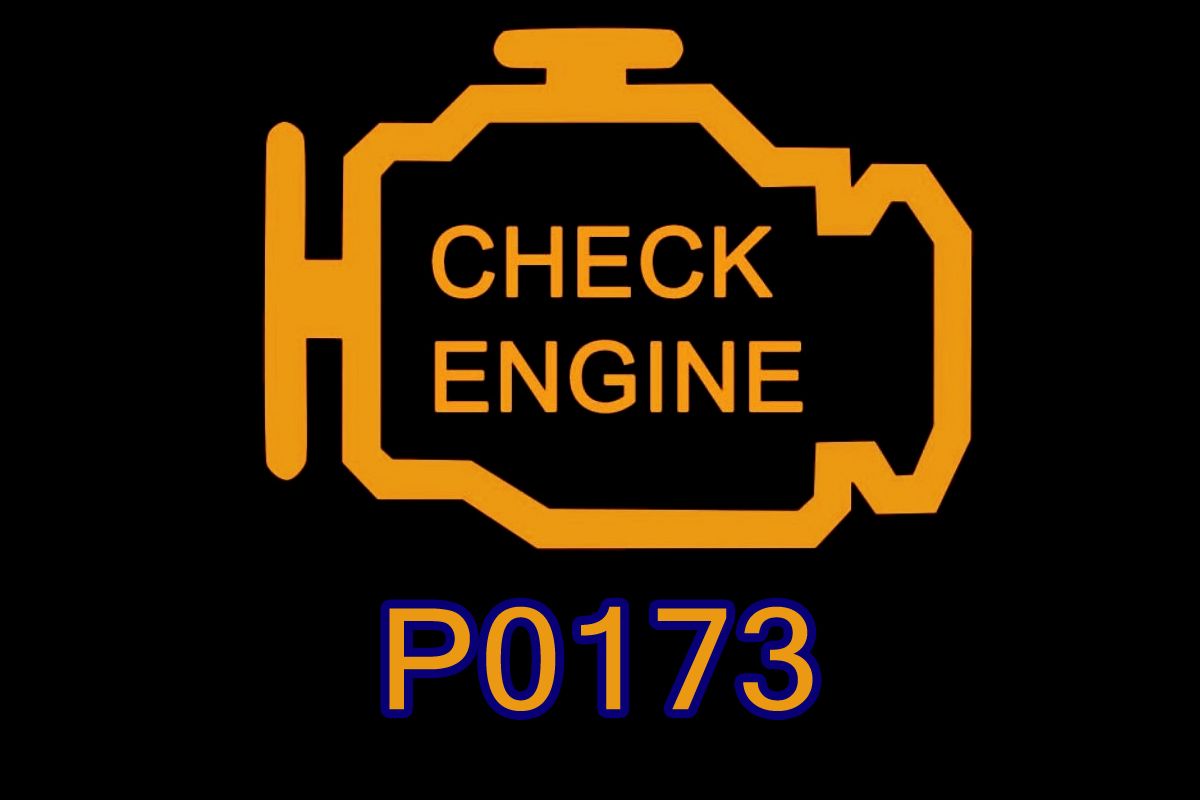
P0173 Fuel Trim Malfunction (Bank 2)
P0173 is a fuel-trim-related OBD-II trouble code that indicates the engine control module (ECM) has detected a problem with fuel correction on Bank 2.
Unlike P0174, which specifically indicates that Bank 2 is running too lean, P0173 is more general. It does not necessarily mean the mixture is lean or rich. Instead, the ECM has determined that the fuel-trim correction for Bank 2 is outside the expected range, behaving incorrectly, or not responding as expected.
This distinction is important because P0173 should not automatically lead to replacing an oxygen sensor, fuel injector, MAF sensor, or fuel pump.
The fuel-trim data needs to be examined first.
What Does P0173 Mean?
P0173 – Fuel Trim Malfunction (Bank 2)
The ECM continuously monitors the air-fuel mixture and adjusts fuel delivery to keep combustion within the desired range.
It makes these corrections using information from components such as:
-
MAF or MAP sensor
-
Oxygen sensor
-
Air-fuel ratio sensor
-
Engine coolant temperature sensor
-
Throttle position
-
Engine load
-
Fuel pressure and other calculated parameters
When the ECM determines that the required fuel correction on Bank 2 is outside its expected operating range, it can store P0173.
The important word here is malfunction.
P0173 does not tell you exactly which component has failed.
What Is Bank 2?
Bank 2 refers to the cylinder bank that does not contain cylinder number 1.
This terminology is mainly relevant to engines with multiple cylinder banks, such as V6 and V8 engines.
For example, if a V6 engine has three cylinders on each bank, one bank will contain cylinder #1 and the other will be Bank 2.
The exact physical location of Bank 2 varies by engine design, so it should be confirmed using the manufacturer's service information rather than assuming it is always the left or right side of the engine.
P0173 Is Not the Same as P0174
These two codes are closely related but should not be treated as identical.
P0173 – Fuel Trim Malfunction (Bank 2)
The ECM detects an abnormal fuel-trim condition on Bank 2.
P0174 – System Too Lean (Bank 2)
The ECM specifically determines that Bank 2 is running too lean and is generally adding excessive fuel to compensate.
With P0173, the fuel-trim problem could involve an abnormal correction in either direction or an inability of the fuel control system to behave as expected.
This is why live fuel-trim data is particularly important.
Understanding Fuel Trims
Fuel trim describes how much the ECM is changing its calculated fuel delivery to achieve the desired mixture.
There are two primary values:
Short-Term Fuel Trim (STFT)
This represents relatively immediate fuel corrections.
Long-Term Fuel Trim (LTFT)
This represents longer-term adaptation based on the corrections the ECM has learned over time.
Positive fuel trim generally means the ECM is adding fuel.
Negative fuel trim generally means the ECM is removing fuel.
A technician should not diagnose P0173 simply by seeing a positive or negative number.
The important questions are:
-
How large is the correction?
-
Is it positive or negative?
-
Does it occur at idle?
-
Does it occur under load?
-
Does Bank 1 behave differently?
-
Does the correction change with engine speed?
-
Is the correction stable or constantly changing?
Why Bank 2 Matters
Because P0173 specifically identifies Bank 2, comparison with Bank 1 can be extremely useful.
If Bank 2 has abnormal fuel trims while Bank 1 remains relatively normal, a Bank 2-specific problem becomes more likely.
Possible causes include:
-
Bank 2 oxygen/A/F sensor
-
Bank 2 injector problem
-
Intake leak affecting that bank
-
Exhaust leak near the Bank 2 sensor
-
Bank-specific wiring problem
-
Fuel distribution problem
-
Sensor contamination
-
Mechanical issue affecting cylinders on that bank
If both banks show similar fuel-trim problems, a common engine-wide cause becomes more likely.
A Bank 2 Intake Leak Can Trigger P0173
An intake leak does not always affect both banks equally.
Depending on the engine's intake manifold design, an air leak may be closer to one group of cylinders.
For example, an intake manifold gasket leak or damaged vacuum passage could introduce additional air into Bank 2.
The ECM then sees oxygen levels indicating that the mixture is not what it expects and begins correcting fuel delivery.
A smoke test can be very useful when an intake leak is suspected.
MAF Sensor Problems
The MAF sensor measures the amount of air entering the engine.
An inaccurate MAF signal can cause incorrect fuel calculations.
Although a MAF problem often affects the entire engine rather than only one bank, P0173 can still appear if the fuel-trim correction becomes abnormal on Bank 2 or if the two banks respond differently.
Possible MAF-related problems include:
-
Contamination
-
Incorrect airflow measurement
-
Damaged sensing element
-
Air entering after the MAF
-
Wiring problems
-
Poor electrical connection
Do not replace the MAF sensor based on P0173 alone.
Compare its readings with engine RPM, throttle position, calculated load, MAP data, and fuel trims.
Oxygen Sensor or Air-Fuel Ratio Sensor
The ECM relies heavily on oxygen or air-fuel ratio sensors to determine whether combustion is producing the expected mixture.
A sensor that becomes slow, biased, contaminated, or electrically unstable can cause incorrect fuel corrections.
Possible problems include:
-
Sensor aging
-
Contamination
-
Wiring damage
-
Connector corrosion
-
Heater circuit problems
-
Exhaust leaks
-
Incorrect sensor signal
A sensor reporting a false lean condition, for example, can cause the ECM to add fuel unnecessarily.
Likewise, an incorrect rich indication can cause the ECM to remove fuel.
The diagnostic procedure depends heavily on whether the vehicle uses a conventional narrowband oxygen sensor or a wideband air-fuel ratio sensor.
Exhaust Leaks Can Mislead the ECM
An exhaust leak near an upstream oxygen or air-fuel ratio sensor can allow outside air to enter the exhaust stream.
The sensor may then detect excess oxygen and report a condition that appears lean.
The ECM responds by modifying fuel delivery.
This can eventually contribute to fuel-trim problems.
Inspect:
-
Exhaust manifold
-
Manifold gasket
-
Sensor mounting area
-
Exhaust flanges
-
Cracks near the cylinder head
-
Exhaust joints
This is particularly important when the sensor data appears inconsistent with the engine's actual behavior.
Fuel Injectors on Bank 2
Fuel injectors are another possible cause.
If one or more injectors on Bank 2 are restricted, the cylinders may receive less fuel than expected.
The ECM can compensate by increasing fuel delivery, depending on the system and operating conditions.
On the other hand, an injector that leaks or delivers too much fuel can create the opposite problem.
Possible injector faults include:
-
Restricted flow
-
Internal leakage
-
Poor spray pattern
-
Electrical malfunction
-
Sticking injector
-
Contamination
Injector resistance by itself is not enough to determine injector health.
A proper diagnosis may involve injector balance testing, flow testing, leakage testing, electrical waveform analysis, or cylinder contribution testing.
Fuel Pressure Problems
Fuel pressure should not be ignored when diagnosing P0173.
If overall fuel pressure is incorrect, the engine may have difficulty maintaining the commanded air-fuel ratio.
Potential causes include:
-
Weak fuel pump
-
Restricted fuel filter
-
Faulty fuel-pressure regulator
-
Fuel-pressure control problem
-
Restricted fuel line
-
Electrical supply problem to the pump
However, a global fuel-pressure problem would usually be expected to influence both banks.
That is why comparing Bank 1 and Bank 2 fuel trims is so valuable.
If Bank 2 is substantially different from Bank 1, a bank-specific problem may be more likely.
PCV and EVAP Systems
The PCV system can introduce additional air into the intake.
A damaged hose, faulty valve, or failed diaphragm can alter fuel trims.
The EVAP purge system can also influence fuel control.
A purge valve that remains open when it should be closed may introduce fuel vapors and additional airflow into the intake.
These problems can sometimes produce fuel-trim abnormalities without immediately generating an EVAP-specific trouble code.
Engine Coolant Temperature Sensor
The ECM uses coolant temperature as part of its fuel-control strategy.
If the temperature sensor reports an incorrect value, the ECM can calculate fuel delivery incorrectly.
A useful diagnostic check is to compare the coolant temperature reading after a cold soak with the actual ambient temperature.
During warm-up, the temperature should also increase in a logical manner.
Sudden unrealistic changes can point toward a sensor or wiring problem.
Wiring and Electrical Problems
P0173 can sometimes be caused by an electrical problem rather than a mechanical fuel-system fault.
Pay attention to:
-
Oxygen/A/F sensor wiring
-
MAF wiring
-
Sensor grounds
-
Reference voltage
-
Connector terminals
-
Corrosion
-
Harness damage
-
Shared grounds
-
Engine harness movement
A damaged wire can work normally under one condition and fail when the engine moves, the harness vibrates, or temperatures change.
This is especially important when P0173 appears intermittently.
How to Diagnose P0173 Properly
A good diagnosis starts with the data rather than the parts catalog.
Start with a complete scan.
Check stored, pending, and history codes.
Look for related codes involving:
-
Oxygen sensors
-
MAF/MAP
-
Fuel pressure
-
Misfires
-
EVAP
-
ECT
-
Throttle
-
Engine timing
Then check the freeze-frame data.
Determine when the ECM detected the problem.
Look at:
-
Engine RPM
-
Coolant temperature
-
Engine load
-
Vehicle speed
-
STFT
-
LTFT
-
MAF/MAP readings
This can reveal whether the problem occurs primarily at idle, cruise, or under load.
Compare Bank 1 and Bank 2.
This is one of the most valuable tests.
If Bank 2 is significantly different from Bank 1, concentrate on components and conditions affecting Bank 2.
Observe fuel trims at different RPMs.
If the correction is abnormal at idle but improves significantly with RPM, an intake or vacuum leak deserves attention.
If the problem becomes much worse under load, fuel delivery should be investigated.
Inspect the intake system.
Check for vacuum leaks, manifold leaks, PCV problems, and damaged hoses.
Use a smoke test when necessary.
Check MAF/MAP plausibility.
The airflow and pressure data should correspond logically with engine speed and load.
Verify fuel pressure.
Measure actual pressure and compare it with manufacturer specifications.
If pressure changes significantly during acceleration, investigate the fuel supply system.
Evaluate the Bank 2 sensor.
Check sensor operation, wiring, connector condition, heater operation where applicable, and signal behavior.
Do not assume the sensor is bad merely because the code mentions fuel trim.
Check for exhaust leaks.
A leak before the upstream sensor can distort the feedback used for fuel correction.
Test the injectors if the evidence points in that direction.
Use appropriate flow, balance, leakage, and electrical tests.
What If P0173 Appears With P0174?
This combination is particularly useful.
P0173 indicates a fuel-trim malfunction on Bank 2.
P0174 specifically indicates that Bank 2 is too lean.
If both are stored, the ECM has detected an abnormal fuel-trim condition and has also identified a lean condition on that bank.
The diagnostic focus should include:
-
Intake leaks
-
MAF measurement
-
Fuel delivery
-
Bank 2 injectors
-
Bank 2 oxygen/A/F sensor
-
Exhaust leaks
-
PCV/EVAP problems
-
Wiring
The freeze-frame data and fuel-trim values can help determine whether the condition is genuinely lean or whether sensor feedback is misleading the ECM.
What If P0173 Appears With P0171?
P0171 means Bank 1 is too lean, while P0173 indicates a fuel-trim malfunction on Bank 2.
This combination can suggest that both banks are experiencing fuel-control problems, although the exact conditions may differ.
If both banks show significant positive fuel trims, investigate common causes such as:
-
MAF under-reporting
-
Low fuel pressure
-
Large intake leak
-
Common fuel-supply problem
If Bank 1 and Bank 2 behave very differently, investigate bank-specific problems.
What If P0173 Appears With Misfire Codes?
If P0173 appears with P0300 or individual cylinder misfire codes, the relationship needs to be established.
A genuine mixture problem can cause misfires.
But a mechanical or ignition problem can also affect oxygen-sensor readings and make fuel-trim data misleading.
For example, an ignition failure can allow unburned oxygen to reach the exhaust sensor.
The ECM may interpret this as a lean condition and increase fuel delivery.
Therefore, the presence of a misfire code should not automatically be interpreted as proof that the fuel system caused the problem.
Is P0173 a Serious Code?
The seriousness depends on the actual cause.
The code itself does not necessarily mean the engine is about to fail.
However, prolonged abnormal fuel correction can lead to:
-
Poor fuel economy
-
Rough idle
-
Hesitation
-
Reduced performance
-
Increased emissions
-
Misfires
-
Spark plug fouling
-
Catalytic converter damage
If the engine is running very poorly or the check engine light is flashing, the vehicle should not continue to be driven unnecessarily.
Common Mistakes When Diagnosing P0173
One of the biggest mistakes is assuming:
“P0173 means the oxygen sensor is bad.”
It doesn't.
Another common mistake is assuming:
“Fuel trim problem means the fuel pump is failing.”
It doesn't.
The code is reporting an abnormal fuel-control condition. The cause may be on the air side, fuel side, sensor side, mechanical side, or electrical side.
Replacing parts without first examining the fuel-trim pattern can become expensive very quickly.
Final Diagnosis
P0173 – Fuel Trim Malfunction (Bank 2) means the ECM has detected an abnormal fuel-trim condition affecting Bank 2.
Unlike P0174, P0173 does not specifically identify the mixture as lean. It indicates that the fuel correction is outside the expected operating behavior.
Possible causes include:
-
Intake or vacuum leaks
-
MAF/MAP measurement problems
-
Oxygen or air-fuel ratio sensor problems
-
Exhaust leaks
-
Fuel-pressure problems
-
Restricted or leaking injectors
-
PCV problems
-
EVAP purge problems
-
Coolant temperature sensor errors
-
Wiring or connector faults
-
Electrical reference or ground problems
-
Engine mechanical problems
The most effective approach is to compare Bank 1 and Bank 2 fuel trims and observe how they change with engine speed and load.
P0173 is therefore best treated as a diagnostic direction, not a command to replace a particular component. Once the fuel-trim behavior is understood, the technician can narrow the problem down much more accurately.