TR
TR EN
EN

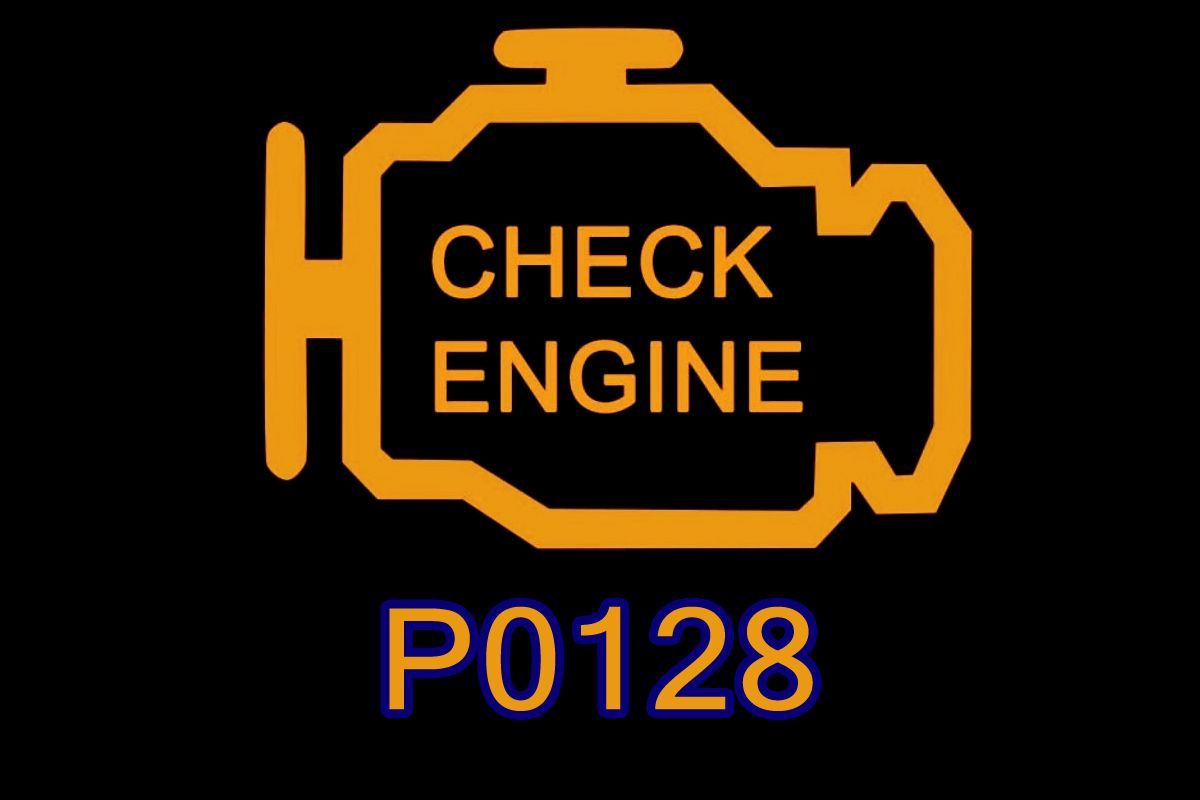
P0128 Coolant Thermostat (Coolant Temperature Below Regulating Temperature)
P0128 is an OBD-II diagnostic trouble code indicating that the engine control module (ECM/PCM) has determined that the engine coolant temperature is not reaching the expected regulating temperature within the expected time or operating conditions.
Despite the name of the code, P0128 does not automatically mean that the thermostat itself is defective.
The thermostat is one of the most common causes, but the ECM reaches this conclusion by monitoring coolant temperature and engine operating behavior. Problems with the coolant temperature sensor, coolant level, cooling-system circulation, wiring, or other components can produce a similar result.
How the Cooling System Is Supposed to Work
When an engine is started cold, the cooling system is designed to warm the engine relatively quickly.
The thermostat initially restricts coolant flow through the radiator. This allows the engine and coolant to reach their intended operating temperature.
As temperature rises, the thermostat opens progressively and allows more coolant to flow through the radiator.
The basic sequence is:
Cold engine → thermostat mostly closed → engine warms up → thermostat opens → radiator removes excess heat
The ECM does not necessarily measure the thermostat position directly. Instead, it can evaluate coolant temperature, engine load, ambient conditions, vehicle speed, and the rate at which the engine warms up.
If the engine remains cooler than expected for too long, P0128 may be stored.
What Does “Coolant Temperature Below Regulating Temperature” Mean?
The phrase is important.
P0128 does not simply mean:
“The coolant temperature sensor says the engine is cold.”
Instead, it generally means the ECM has determined that the engine coolant temperature is below the expected regulating temperature under conditions where the engine should have warmed up.
The exact criteria vary between manufacturers.
For example, the ECM may expect the engine to reach a certain temperature after:
-
A specific amount of running time
-
A specific engine load
-
A particular vehicle speed
-
A defined ambient temperature
-
A certain number of operating conditions
If the temperature remains too low, the ECM can determine that the engine is not reaching its normal operating temperature.
The Most Common Cause: Thermostat Stuck Open
A thermostat that remains partially or completely open is one of the classic causes of P0128.
Instead of restricting radiator flow while the engine is cold, coolant continuously circulates through the radiator.
The radiator then removes heat before the engine has reached its intended operating temperature.
This can produce symptoms such as:
-
Engine takes a long time to warm up
-
Coolant temperature remains lower than normal
-
Heater performance is weak, especially at higher vehicle speeds
-
Fuel consumption increases
-
Check Engine Light illuminates
-
Temperature drops during highway driving
-
Engine temperature fluctuates abnormally
The thermostat does not necessarily have to be completely stuck open. A thermostat that opens too early or does not close properly can also cause the engine to run below its intended temperature.
A Faulty Coolant Temperature Sensor Can Also Trigger P0128
The ECM relies on coolant temperature information to determine engine temperature.
If the Engine Coolant Temperature (ECT) sensor reports a temperature that is lower than the actual coolant temperature, the ECM may believe that the engine is taking too long to warm up.
In that situation, the thermostat may be perfectly healthy.
Possible sensor-related problems include:
-
Incorrect temperature signal
-
Internal sensor failure
-
Connector corrosion
-
Loose terminal
-
Damaged wiring
-
Poor sensor ground or reference circuit
-
Intermittent electrical connection
This is why replacing the thermostat without checking the temperature data can result in an unnecessary repair.
What Does a Normal Warm-Up Look Like?
A healthy cooling system does not necessarily reach operating temperature at exactly the same speed every time.
Warm-up depends on:
-
Outside temperature
-
Engine size
-
Engine load
-
Vehicle speed
-
Heating system usage
-
Thermostat design
-
Coolant temperature at startup
-
Engine management strategy
A vehicle driven gently in very cold weather may warm up more slowly than the same vehicle driven under moderate load.
However, a persistent pattern where the engine remains unusually cool after normal driving is a strong reason to investigate P0128.
Symptoms of P0128
Some vehicles store P0128 before the driver notices a significant problem.
Common symptoms include:
-
Check Engine Light
-
Slow engine warm-up
-
Low coolant temperature on the gauge
-
Weak cabin heater
-
Temperature dropping during highway driving
-
Increased fuel consumption
-
Poor fuel economy
-
Slightly rough operation during warm-up
-
Increased emissions
-
Longer warm-up enrichment
-
Reduced heating performance
The temperature gauge can be misleading because many modern vehicles are deliberately damped. The gauge may appear to sit at its normal position over a relatively broad temperature range.
For diagnosis, scan-tool coolant-temperature data is generally more useful than relying only on the dashboard gauge.
Why Running Too Cool Is a Problem
The engine is designed to operate within a specific temperature range.
When an engine remains colder than intended, several systems can be affected.
The ECM may maintain warm-up strategies for longer than necessary. This can increase fuel consumption and emissions.
Engine oil may also take longer to reach its intended operating condition. Moisture and fuel contamination in the oil may not evaporate as effectively when the engine repeatedly operates at low temperature.
The catalytic converter can also take longer to reach its optimal operating conditions.
P0128 is therefore not merely a comfort-related problem caused by weak cabin heat.
Diagnosing P0128 Step by Step
A useful diagnosis begins by determining whether the engine is actually running too cold or whether the ECM is simply receiving incorrect temperature information.
1. Read the freeze-frame data
Record the conditions under which P0128 was stored.
Useful information includes:
-
Coolant temperature
-
Intake air temperature
-
Engine RPM
-
Vehicle speed
-
Engine load
-
Ambient temperature, if available
-
Fuel trims
-
Vehicle operating time
-
Other stored DTCs
This can help determine whether the engine genuinely failed to reach the expected temperature.
2. Check coolant level
A low coolant level can interfere with proper temperature measurement and cooling-system operation.
Check the coolant level only according to the manufacturer's procedure and when the engine is safely cool.
If the coolant level is low, do not simply refill it and assume the problem is solved.
Determine why the coolant was lost.
Possible causes include:
-
External leaks
-
Hose leaks
-
Radiator leaks
-
Water-pump leaks
-
Thermostat housing leaks
-
Heater-core leaks
-
Expansion-tank problems
-
Internal coolant loss
3. Check the ECT reading when the engine is cold
After the vehicle has been sitting long enough to reach ambient temperature, compare the coolant-temperature reading with other available temperature readings.
The ECT value should generally be physically plausible compared with ambient or intake-air temperature.
A large unexplained discrepancy can point toward a sensor or circuit problem.
For example, if a cold engine has been sitting overnight but the scan tool reports an implausibly low or high coolant temperature, investigate the sensor circuit before blaming the thermostat.
4. Monitor coolant temperature while driving
This is one of the most useful tests for P0128.
Watch the ECT value as the engine warms up.
Look for:
-
Extremely slow temperature increase
-
Temperature that never reaches the expected range
-
Temperature that falls significantly during highway driving
-
Sudden temperature changes
-
Implausible temperature jumps
-
Temperature readings that do not correspond to engine operation
A thermostat stuck open often produces a recognizable pattern: the engine warms slowly and may become noticeably cooler when vehicle speed increases.
5. Inspect the thermostat
If the temperature data supports a thermostat problem, inspect the thermostat and its housing.
Depending on the vehicle, the thermostat may be:
-
Conventional mechanical type
-
Electrically controlled
-
Integrated into a thermostat housing
-
Electronically mapped as part of a larger thermal-management system
Do not assume every thermostat operates in exactly the same way.
A Thermostat Does Not Have to Be Completely Stuck Open
A common misconception is that P0128 requires a thermostat that is visibly stuck open.
That is not necessarily true.
A thermostat can have a reduced sealing ability or open earlier than specified.
For example, if the thermostat begins allowing substantial radiator flow before the engine reaches its intended temperature, the engine may still warm up, but it may warm too slowly.
The ECM can detect this behavior and eventually set P0128.
P0128 in Cold Weather
Ambient temperature matters.
During very cold weather, an engine naturally takes longer to reach operating temperature.
This is why P0128 should not be diagnosed simply because the engine temperature is lower shortly after starting.
The ECM's diagnostic strategy is designed to account for operating conditions, but extreme weather can still affect warm-up behavior.
If P0128 appears repeatedly during cold weather, the thermostat and temperature sensor should still be evaluated rather than dismissing the code entirely.
Could the Cooling Fan Cause P0128?
An abnormal cooling-fan condition can contribute to excessive cooling in some circumstances.
For example, if an electric radiator fan is running continuously when it should not, the radiator can remove more heat than necessary during warm-up.
Possible causes include:
-
Fan relay stuck on
-
Fan control module problem
-
Wiring fault
-
Incorrect fan command
-
Temperature sensor problem
-
HVAC-related fan operation
-
ECM control issue
However, fan operation must be evaluated according to the specific vehicle because some vehicles intentionally operate the cooling fan under conditions unrelated to engine temperature.
Could Low Coolant Cause P0128?
Yes, low coolant can contribute to abnormal temperature behavior and can interfere with coolant-temperature measurement depending on sensor location.
But low coolant should be treated as a condition requiring investigation, not simply as a reason to clear the code.
If coolant is repeatedly disappearing, there is likely an underlying leak or internal coolant-loss problem.
Continuing to drive with insufficient coolant can eventually result in overheating and serious engine damage.
Could the Water Pump Cause P0128?
A water pump problem can affect coolant circulation, but the diagnosis is not as straightforward as “P0128 = bad water pump.”
A severely damaged or inefficient pump can produce abnormal coolant circulation and temperature behavior.
Possible signs of a circulation problem can include:
-
Overheating under certain conditions
-
Poor heater performance
-
Temperature fluctuations
-
Unusual coolant movement
-
Coolant leaks
-
Abnormal pump noise
-
Temperature differences across the cooling system
However, a conventional water-pump failure is often associated with overheating rather than simply a consistently low operating temperature.
The actual temperature pattern should therefore guide the diagnosis.
Could the ECT Sensor Wiring Cause P0128?
Yes.
The ECM does not physically know coolant temperature. It receives an electrical signal from the temperature-sensing circuit and interprets that signal as a temperature.
A wiring problem can therefore create a false temperature reading.
Inspect:
-
Sensor connector
-
Terminals
-
Signal wires
-
Ground/return circuit
-
Reference circuit where applicable
-
Harness routing
-
Areas exposed to coolant or engine heat
An intermittent connection may be particularly difficult to find because the vehicle can operate normally most of the time.
Checking the ECT Sensor
Many ECT sensors use a thermistor whose electrical resistance changes with temperature.
In a common NTC design:
Coolant temperature increases → sensor resistance decreases
Coolant temperature decreases → sensor resistance increases
The ECM uses the electrical characteristics of the sensor to calculate coolant temperature.
However, exact resistance and voltage values are vehicle-specific. A universal resistance table should not be used to diagnose every ECT sensor.
If resistance testing is performed, compare the results with the manufacturer's specifications and the actual coolant temperature.
P0128 and Engine Performance
An engine that runs below its intended operating temperature may continue to run apparently normally.
Nevertheless, the ECM may modify fuel control, ignition strategy, emissions management, and other functions based on coolant temperature.
Possible consequences include:
-
Increased fuel consumption
-
Higher emissions
-
Reduced fuel economy
-
Poor heater operation
-
Extended warm-up operation
-
Potential drivability issues
The severity depends on the vehicle and the actual temperature deviation.
Is It Safe to Drive With P0128?
P0128 is generally less immediately dangerous than a code indicating severe overheating.
If the engine is simply running cooler than intended and there are no other symptoms, the vehicle may remain driveable for a period of time.
However, the problem should not be ignored indefinitely.
More importantly, if the temperature behavior changes from too cold to too hot, stop treating it as a simple P0128 thermostat problem.
An overheating engine can suffer severe damage.
Stop driving and investigate the cooling system if you observe:
-
Temperature gauge entering the overheating zone
-
Coolant warning
-
Steam
-
Coolant loss
-
Strong coolant smell
-
Severe temperature fluctuations
-
Repeated overheating
Common Diagnostic Mistakes
One of the biggest mistakes is replacing the thermostat immediately after seeing P0128.
Another is replacing the ECT sensor without checking whether its signal is actually incorrect.
Other common mistakes include:
-
Ignoring low coolant
-
Failing to check for leaks
-
Trusting the dashboard gauge instead of live data
-
Ignoring the freeze-frame information
-
Assuming all thermostats operate identically
-
Replacing several cooling-system components without testing
-
Clearing the code without verifying the warm-up problem
-
Using generic sensor resistance values
The objective is to determine why the ECM believes the engine is staying below its regulating temperature.
Repair Options for P0128
The correct repair depends on the confirmed cause.
Possible repairs include:
-
Replacing a faulty thermostat
-
Replacing a defective ECT sensor
-
Repairing ECT sensor wiring
-
Repairing connector terminals
-
Correcting low coolant level
-
Repairing a coolant leak
-
Correcting an abnormal cooling-fan operation
-
Repairing a coolant circulation problem
-
Correcting an electronically controlled thermostat problem
-
Performing the manufacturer's cooling-system bleeding procedure
After the repair, clear the code and allow the vehicle to complete the conditions necessary for the ECM to rerun its coolant-temperature monitoring strategy.
Final Diagnostic Perspective
P0128 is best understood as a temperature-regulation performance code.
The ECM has determined that the engine is not reaching or maintaining the expected coolant-temperature range quickly enough under the conditions it is monitoring.
A thermostat stuck open is a very common cause, but it is only one possibility.
The most effective diagnosis is to start with the actual coolant-temperature data, then evaluate coolant level, warm-up behavior, thermostat operation, ECT sensor accuracy, wiring, fan operation, and coolant circulation as appropriate.
In other words, P0128 does not mean “replace the thermostat.” It means the engine is not reaching its expected operating temperature, and the reason for that condition must be identified.