TR
TR EN
EN

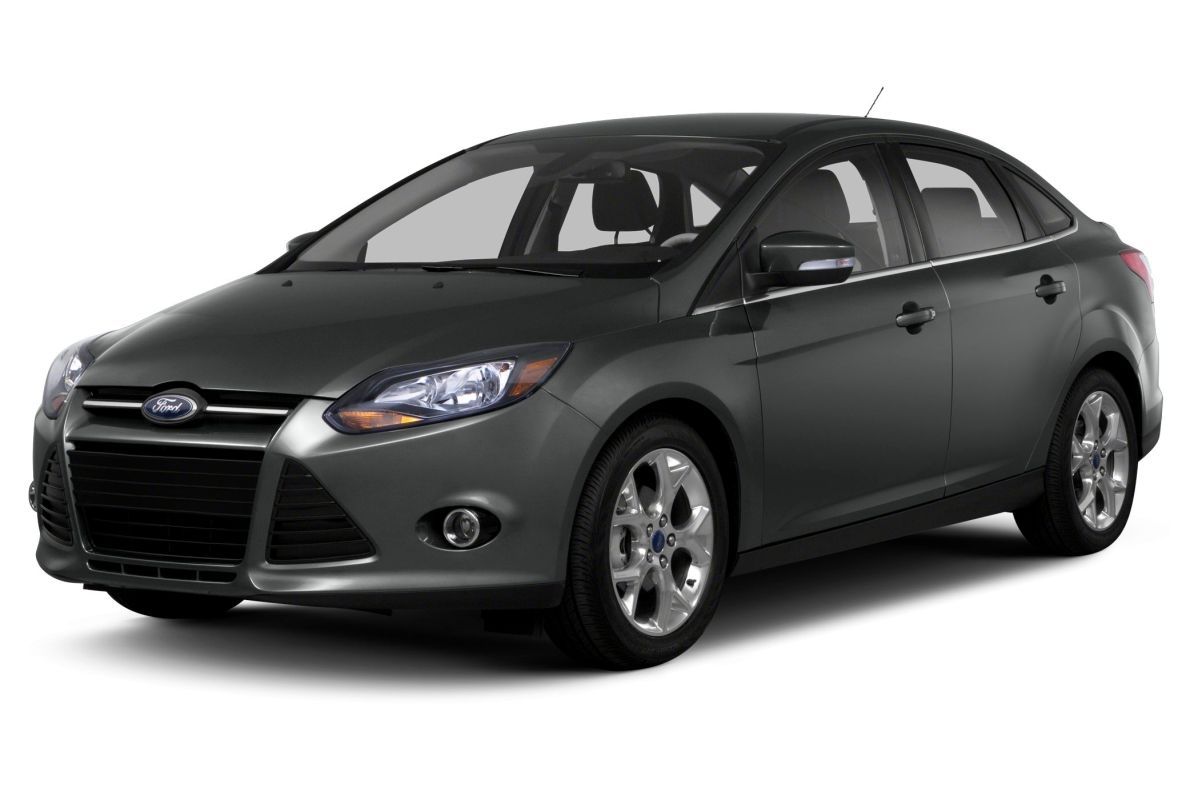
Is a Used Focus Worth Buying? Ford Focus Common Problems and Failures
Ford Focus has been one of Ford’s most popular compact cars since its introduction in 1998. It has earned a strong reputation for its handling, practical interior, relatively low running costs, and wide availability of spare parts.
However, the Focus is not equally reliable across every generation, engine, transmission, and model year. Some versions are very durable when properly maintained, while others have well-known problem areas that can turn an otherwise affordable used car into an expensive ownership experience.
The most important point when buying a used Focus is therefore not simply the model year. The engine, transmission, maintenance history, and previous repairs can be more important than the badge itself.
If you are considering a second-hand Focus, the transmission, steering system, electrical equipment, engine cooling system, suspension, and overall maintenance history deserve particular attention.
Ford Focus Generations and Engines
The first-generation Focus was introduced in 1998 and remained in production in many markets through the early 2000s. Depending on the market, it was available with 1.4, 1.6, 1.8 and 2.0-liter gasoline engines, as well as a 1.8-liter turbo diesel. A 1.6-liter gasoline engine could also be paired with an automatic transmission.
The first generation received a facelift around 2001. Today, the age of these cars is itself an important consideration. Even a mechanically reliable first-generation Focus can have age-related problems involving wiring, rubber components, seals, suspension parts, cooling systems, and interior equipment.
The second-generation Focus arrived in the mid-2000s and was sold through approximately 2010 in many markets. Engine availability varied considerably by country, but 1.6-liter gasoline and diesel engines were particularly common. Larger engines, including 2.0-liter diesel versions, were also offered in some markets.
The second generation received a facelift around 2008 and is generally regarded as one of the more straightforward generations to maintain, although individual engine and transmission combinations should still be checked carefully.
The third-generation Focus was introduced for the 2011 model year in many markets and remained in production until the late 2010s. This generation introduced newer gasoline and diesel engines, including Ford's EcoBoost gasoline engines and TDCi diesel engines. Depending on the market, manual and automatic transmissions were available.
The third-generation Focus is particularly important for used-car buyers because some versions were equipped with Ford's PowerShift dual-clutch automatic transmission. The transmission can be the single most important factor when evaluating a used Focus from this period.
The fourth-generation Focus was introduced in 2018. It brought a more modern platform, updated engines, improved driver-assistance technology, and new automatic transmissions. However, because many fourth-generation cars are newer, purchase decisions should focus more heavily on service history, engine/transmission specification, accident history, and electronic equipment than on old age-related complaints associated with earlier generations.
So, Is a Used Ford Focus Worth Buying?
Yes, a used Ford Focus can be a very good buy, but choosing the right version is critical.
The Focus has several advantages that make it attractive on the second-hand market:
-
Good road handling and steering characteristics
-
Generally comfortable suspension
-
Good availability of parts
-
Large number of independent repair specialists
-
Many engine and body-style options
-
Reasonable fuel consumption with suitable engines
-
Strong aftermarket support
-
Good practicality in hatchback, sedan, and wagon versions
The biggest warning concerns are certain automatic transmissions, electrical problems on older cars, steering-system faults on some generations, and neglected diesel engines.
A well-maintained manual-transmission Focus can be considerably less troublesome than a neglected automatic version with a problematic transmission.
PowerShift Dual-Clutch Transmission Problems
PowerShift is one of the most important issues to investigate when buying a used Focus.
Ford introduced dual-clutch PowerShift transmissions to provide the fuel economy of a manual gearbox with the convenience of an automatic. The system uses two clutches to control the odd and even gear sets.
In theory, this provides fast gear changes and efficient operation. In practice, some PowerShift applications developed serious reliability problems.
The exact transmission differs by market and model. The widely discussed dry-clutch DPS6/6DCT250 transmission was used in various Ford vehicles, including certain Focus models. It is particularly important not to assume that every automatic Focus uses the same PowerShift system.
Common symptoms reported with affected PowerShift transmissions include:
-
Shuddering when moving away
-
Jerking during low-speed driving
-
Delayed engagement of Drive or Reverse
-
Harsh gear changes
-
Hesitation during acceleration
-
Unexpected clutch slipping
-
Transmission warning messages
-
Loss of drive
-
Excessive clutch wear
-
TCM-related faults
-
Oil contamination of the clutch assembly in some applications
One of the reasons these transmissions became problematic is that the clutch and transmission control system are sensitive to operating conditions and component wear. Clutch contamination, actuator problems, software issues, clutch wear, and transmission control module faults can produce similar symptoms.
A test drive is therefore extremely important.
Do not only drive the car on an open road. Test it in traffic, on an incline, during parking maneuvers, in reverse, and during repeated stop-and-go acceleration.
If the car shudders noticeably when pulling away, hesitates before moving, or produces inconsistent gear changes, the transmission should be professionally diagnosed before purchase.
A PowerShift Focus is not automatically a bad car, but buying one without a proper transmission inspection is a significant risk.
Steering and EPAS Problems
Some Focus models use Electric Power-Assisted Steering rather than a conventional hydraulic system.
Electric power steering has several advantages. It does not require hydraulic fluid, a conventional power-steering pump, or many of the components found in older hydraulic systems. It can also be integrated with electronic stability and driver-assistance systems.
However, electronic steering introduces additional components that can fail.
Depending on the Focus generation and market, faults can involve:
-
Steering torque sensors
-
Steering control modules
-
Electric steering motors
-
Wiring and connectors
-
Battery or charging-system voltage
-
Steering column components
-
Software or calibration issues
A steering fault can produce a heavy steering wheel and a warning message. In some cases, the problem can temporarily disappear after cycling the ignition, but a temporary recovery should not be considered a repair.
This is especially important because steering assistance is a safety-related system.
If a used Focus has a history of intermittent power-steering failure, the vehicle should not be purchased simply because the steering feels normal during a short test drive. The fault codes and steering system should be checked with appropriate diagnostic equipment.
It is also important to correct one common misconception: not every EPAS problem means that the entire steering column must automatically be replaced. The correct repair depends on the specific system, fault code, model year, and component involved.
Ignition Switch and Key Problems on Older Focus Models
Early Focus models can suffer from age-related ignition and key problems.
Some owners have reported difficulties turning the key, removing the key, or starting the vehicle. Problems may involve the ignition lock cylinder, ignition switch, key wear, or related mechanical components.
These problems are particularly relevant to very old Focus models because the vehicle may now be more than two decades old.
If the key is difficult to insert, turn, or remove, do not ignore it.
A worn key can sometimes be mistaken for a failed ignition cylinder. Conversely, replacing the electrical ignition switch will not necessarily fix a mechanically worn lock cylinder.
Before buying an older Focus, operate the ignition several times and make sure the key turns smoothly from the locked position to the starting position.
Engine Misfires, Ignition Coils and Spark Plugs
Gasoline Focus models can develop the usual ignition-system problems associated with high mileage and age.
Spark plugs and ignition coils are particularly important because a weak ignition system can cause:
-
Rough idle
-
Engine hesitation
-
Misfires under acceleration
-
Reduced power
-
Increased fuel consumption
-
Check Engine Light illumination
A vehicle may drive reasonably well during a gentle test drive while still having an ignition problem that becomes obvious under heavy acceleration.
Therefore, a used Focus should be tested both at low load and under moderate-to-heavy acceleration.
If diagnostic trouble codes such as P0300, P0301, P0302, P0303 or P0304 are present, the cause should be identified rather than simply clearing the codes.
EcoBoost Engine Considerations
Some later Focus models use EcoBoost gasoline engines. These engines can provide excellent performance and fuel economy, but turbocharged engines generally require more careful maintenance than simple naturally aspirated engines.
When inspecting a used EcoBoost Focus, pay attention to:
-
Oil-change history
-
Correct oil specification
-
Coolant level and condition
-
Turbocharger operation
-
Oil leaks
-
Boost-related faults
-
Misfires
-
Cooling-system condition
-
Evidence of overheating
-
Timing-system condition
The exact engine code matters because Ford used different EcoBoost engines in different markets and years.
A generic statement such as "all EcoBoost Focus engines are unreliable" is misleading. Their condition and maintenance history vary considerably.
Diesel Focus Problems
The diesel Focus can be economical and durable when used appropriately, but diesel engines introduce additional components that can become expensive as mileage increases.
Depending on the engine and market, particular attention should be paid to:
-
Diesel particulate filter
-
EGR system
-
Turbocharger
-
Injectors
-
High-pressure fuel system
-
Dual-mass flywheel
-
Clutch
-
Intake system
-
Cooling system
A diesel Focus that has spent most of its life on short urban trips may be a worse purchase than a higher-mileage diesel that has been regularly driven at operating temperature on longer journeys.
If the car has poor acceleration, excessive smoke, difficult starting, abnormal turbocharger noise, or repeated DPF warnings, a professional inspection is strongly recommended.
Ford Focus Wheel Nut Problems
One unusual Ford issue concerns two-piece capped wheel nuts.
Some Ford vehicles have used wheel nuts consisting of a steel base with a decorative outer cap. Over time, the outer section can swell, deform, or corrode.
When this happens, a socket that originally fitted the nut may no longer fit properly.
This becomes particularly frustrating when you have a flat tire and discover that the factory wheel wrench cannot remove the wheel nuts.
However, this should not be presented as a problem affecting every Focus or every Ford vehicle. The design and wheel-nut specification vary by model, year, market, and wheel configuration.
If you are buying a used Focus, check the condition of the wheel nuts and make sure the correct factory or suitable replacement wrench fits them.
Door Lock and Door Wiring Problems
Door-related electrical problems can occur on older Focus models.
Depending on the generation, problems can involve:
-
Door-lock actuators
-
Door-latch switches
-
Door wiring
-
Window regulators
-
Central locking
-
Door-open warning signals
-
Interior lights
A door-open warning that remains illuminated can be caused by a faulty latch switch or wiring problem rather than an actual door that is physically open.
Before buying a used Focus, test every door, the central locking system, power windows, interior lighting, and remote-control functions.
It is also important to distinguish Focus problems from problems affecting other Ford models.
For example, some well-known Ford door-latch recalls involved Fiesta and other Ford models and should not automatically be described as Focus-specific failures.
MyFord Touch and Infotainment Problems
Certain third-generation Focus models were equipped with Ford's MyFord Touch infotainment system.
The system provided navigation, Bluetooth, telephone integration, audio controls, and other functions, but it developed a reputation for slow operation and occasional software-related problems.
Owners have reported symptoms such as:
-
Frozen screen
-
Black screen
-
Slow response
-
System restarting
-
Bluetooth connection problems
-
Phone synchronization problems
-
Audio-system glitches
-
Navigation problems
-
Touchscreen failures
Some software updates improved the system, but an older vehicle may still have unresolved hardware or software issues.
When inspecting a used Focus equipped with MyFord Touch, test every function instead of checking only whether the screen turns on.
Electrical and Battery-Related Problems
Modern Focus models contain a significant amount of electronic equipment.
A weak battery or charging-system problem can sometimes create a surprisingly large number of apparently unrelated fault codes.
Symptoms may include:
-
Multiple warning lights
-
Start-stop system failure
-
Steering warnings
-
Infotainment problems
-
Central locking issues
-
Random electronic faults
-
Difficult starting
-
Communication errors between control modules
This is why battery voltage and charging-system condition should be checked before diagnosing complicated electronic problems.
On an older used Focus, poor electrical connections, corroded grounds, damaged wiring, and low battery voltage can sometimes imitate much more expensive module failures.
Cooling System Problems
The cooling system deserves careful inspection, particularly on older or high-mileage Focus models.
Look for:
-
Coolant leaks
-
Low coolant level
-
Cracked expansion tanks
-
Damaged hoses
-
Thermostat problems
-
Radiator leaks
-
Cooling-fan problems
-
Signs of previous overheating
An overheating engine should be treated as a major warning during a used-car inspection.
Do not assume that a seller's explanation of "just a thermostat" is correct without diagnosis. An overheating problem can originate from several different components, and continued overheating can cause expensive engine damage.
Timing Belt and Timing Chain Maintenance
One of the most important questions when buying a used Focus is whether the engine uses a timing belt or timing chain.
The answer depends on the exact engine.
A timing belt has a scheduled replacement interval that should be followed according to the engine manufacturer's maintenance requirements. A timing chain does not mean "maintenance-free forever"; chain tensioners, guides, and the chain itself can wear.
When buying an older Focus, ask for documentation showing when the timing belt was replaced if the engine uses one.
If there is no proof of replacement and the engine is approaching or beyond the recommended interval, the potential cost should be included in the purchase decision.
Clutch and Dual-Mass Flywheel Problems
Manual-transmission Focus models generally avoid many of the complications associated with certain PowerShift transmissions, but they are not maintenance-free.
A worn clutch can cause:
-
Engine speed rising without corresponding acceleration
-
Difficulty engaging gears
-
Juddering
-
High clutch engagement point
-
Burning smell
-
Noise during operation
Some diesel Focus models also use a dual-mass flywheel.
A worn dual-mass flywheel may produce:
-
Rattling noises
-
Vibration
-
Clunking during engine shutdown
-
Vibration when starting
-
Abnormal noise at idle
Replacing a clutch and dual-mass flywheel together can be expensive, so these components should be checked carefully on higher-mileage diesel cars.
Suspension and Wheel Bearing Problems
The Focus is known for good handling, but suspension components naturally wear with mileage.
On a used Focus, inspect:
-
Front control-arm bushings
-
Ball joints
-
Stabilizer links
-
Shock absorbers
-
Top mounts
-
Rear suspension components
-
Wheel bearings
-
Springs
-
Tire wear
Uneven tire wear can also indicate alignment problems or worn suspension components.
A wheel bearing may produce a humming or growling noise that increases with road speed. Suspension wear can create knocking noises, excessive body movement, or poor stability over uneven roads.
Brake System Inspection
The braking system is generally straightforward, but wear should be assessed before purchase.
Check:
-
Brake-disc condition
-
Brake-pad thickness
-
Brake-fluid condition
-
Parking brake operation
-
ABS warning light
-
Brake pedal feel
-
Uneven braking
If the ABS warning light remains illuminated after the engine starts, the car should be scanned before purchase.
Common Problems by Focus Generation
The first-generation Focus is now old enough that age-related deterioration is often more important than a specific factory defect. Ignition components, suspension, cooling systems, wiring, door hardware, and interior equipment should be inspected carefully.
The second-generation Focus is generally a sensible used-car choice, particularly when paired with a well-maintained manual transmission. Nevertheless, diesel components, suspension parts, cooling systems, and electrical equipment can become expensive with high mileage.
The third-generation Focus requires the most careful specification-based research. Certain automatic versions equipped with PowerShift deserve particular caution. EPAS, infotainment, electrical systems, EcoBoost engines, and diesel emissions components should also be inspected according to the exact version.
The fourth-generation Focus is newer and generally benefits from more modern engineering, but it should still be inspected for electronic faults, transmission behavior, service history, accident damage, and engine-specific issues.
Which Focus Should You Avoid?
Rather than saying that every Focus from a particular year should automatically be avoided, it is better to identify the combinations that deserve additional scrutiny.
Be especially cautious with:
-
Cars equipped with a problematic or poorly maintained PowerShift transmission
-
Vehicles with unexplained transmission shudder
-
Cars with repeated steering-system warnings
-
Vehicles with a history of overheating
-
Neglected turbocharged engines
-
High-mileage diesel cars with DPF, EGR, injector, or turbocharger problems
-
Cars with no maintenance documentation
-
Vehicles with multiple unexplained electrical faults
-
Cars that have had warning lights repeatedly cleared before sale
The often-repeated lists naming specific years such as 2012, 2013, 2014, 2000, 2001, 2002 and 2003 as universally "bad Focus years" should be treated with caution.
Complaint databases can be useful for identifying patterns, but they do not mean that every vehicle from a particular year has the same defect. A specific engine/transmission combination and the vehicle's maintenance history are much more useful when evaluating an individual used Focus.
What Should You Check Before Buying a Used Focus?
A professional pre-purchase inspection is strongly recommended.
At minimum, check the following:
Engine
-
Cold start behavior
-
Idle quality
-
Oil leaks
-
Coolant leaks
-
Exhaust smoke
-
Engine noises
-
Oil level and condition
-
Cooling-system operation
Transmission
-
Smooth engagement
-
Gear-change quality
-
Clutch operation
-
Reverse engagement
-
Shuddering
-
Delayed engagement
-
Transmission warning messages
Steering
-
Steering weight
-
Steering warning lights
-
Unusual noises
-
Steering wheel alignment
-
EPAS fault history
Electrical system
-
Battery
-
Alternator
-
Central locking
-
Windows
-
Lights
-
Instrument cluster
-
Infotainment
-
Air conditioning
-
Parking sensors and cameras
Suspension and brakes
-
Knocking noises
-
Shock absorbers
-
Bushings
-
Wheel bearings
-
Brake discs and pads
-
Tire condition
Diagnostic scan
A complete diagnostic scan is one of the most valuable steps.
Do not scan only the engine ECU. A proper inspection should check the relevant control modules for stored, pending, and history faults.
This is particularly important on a Focus with suspected PowerShift, EPAS, ABS, or electronic problems.
Is a High-Mileage Ford Focus a Bad Buy?
Not necessarily.
A 200,000-km Focus with complete maintenance records can be a much better purchase than a 120,000-km car with an unknown history.
Mileage should be evaluated together with:
-
Service records
-
Engine condition
-
Transmission condition
-
Clutch condition
-
Timing-belt history where applicable
-
Cooling-system condition
-
Suspension condition
-
Accident history
-
Previous ownership
-
Type of use
A high-mileage highway car can sometimes be mechanically healthier than a low-mileage vehicle that spent its entire life in heavy city traffic.
Manual or Automatic Focus?
For buyers who prioritize simplicity and lower transmission risk, a well-maintained manual Focus is generally the safer choice, provided the clutch and dual-mass flywheel are in good condition where applicable.
Automatic versions can be more comfortable in city traffic, but the exact transmission must be identified before buying.
This distinction is particularly important for Focus models equipped with PowerShift. A smooth test drive is not enough; transmission history and diagnostic inspection are highly valuable.
The Advantages of a Used Ford Focus
The Focus still has several strong points in the second-hand market.
Driving dynamics:
One of the Focus's strongest characteristics is its handling. The steering and suspension are generally designed to provide a more engaging driving experience than many conventional compact cars.
Parts availability:
Because the Focus has been sold in large numbers, replacement parts and aftermarket components are generally easy to find.
Engine variety:
Depending on the generation and market, buyers can choose between naturally aspirated gasoline engines, turbocharged gasoline engines, and diesel engines.
Practicality:
Hatchback, sedan, and station-wagon versions provide different levels of cargo capacity and everyday usability.
Running costs:
A properly selected engine and transmission combination can provide reasonable fuel consumption and maintenance costs.
The Disadvantages of a Used Ford Focus
The biggest disadvantage is the variation between different versions.
A buyer who simply searches for "Ford Focus" without checking the exact engine and transmission can easily end up comparing completely different ownership experiences.
The main disadvantages can include:
-
PowerShift transmission concerns on affected versions
-
Electrical and electronic faults as vehicles age
-
EPAS-related steering problems on some versions
-
Expensive diesel emissions-system repairs
-
Turbocharger and injector costs on high-mileage diesels
-
Clutch and dual-mass flywheel expenses
-
Age-related problems on first- and second-generation cars
-
Increasing repair costs as mileage rises
Final Verdict: Is a Used Focus Worth Buying?
A used Ford Focus can absolutely be worth buying, but the specific version matters enormously.
The Focus is not a car that should be judged simply by saying "Ford Focus is reliable" or "Ford Focus is unreliable." The generations contain different engines, transmissions, electronic systems, and known problem areas.
For a used-car buyer, the most important priorities should be:
-
Identify the exact engine and transmission.
-
Check the complete maintenance history.
-
Be particularly careful with PowerShift-equipped cars.
-
Test the steering system for warning lights or abnormal operation.
-
Scan the vehicle's electronic control modules.
-
Check cooling-system and engine condition.
-
Inspect suspension, brakes, clutch, and wheel bearings.
-
Verify timing-belt maintenance where applicable.
-
Check for accident repairs and poor-quality modifications.
-
Never buy solely because the car has low mileage.
If you find a well-maintained Focus with a suitable engine, a healthy transmission, clean diagnostic history, and documented servicing, it can still be one of the more sensible used compact cars to consider.
On the other hand, a cheap Focus with an unidentified transmission problem, steering warning, overheating history, multiple electronic faults, or no maintenance records can quickly become much more expensive than its purchase price suggests.