TR
TR EN
EN

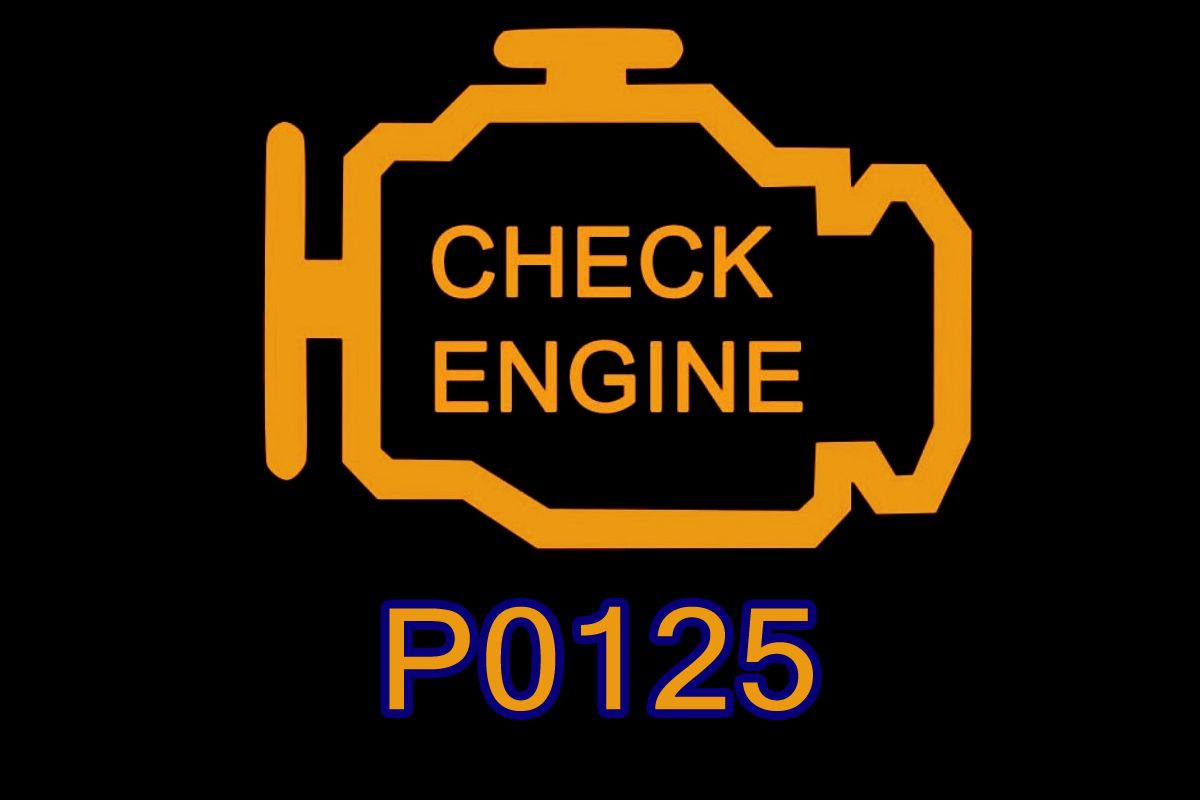
P0125 Insufficient Coolant Temperature for Closed-Loop Fuel Control
P0125 is an OBD-II diagnostic trouble code that indicates the engine control module (ECM/PCM) has determined that the engine did not reach the temperature required for normal closed-loop fuel control within the expected time or operating conditions.
In simple terms, the engine is taking too long to warm up, or the ECM is receiving information that makes it believe the engine has not reached the required operating temperature.
This does not automatically mean there is not enough coolant in the engine. The wording can be misleading. P0125 is primarily about engine temperature and fuel-control strategy, not simply coolant quantity.
What Does “Closed-Loop Fuel Control” Mean?
When an engine is cold, the ECM uses different fuel-control strategies because fuel behaves differently at low temperatures.
As the engine warms up, the ECM can increasingly rely on oxygen sensor feedback to fine-tune the air-fuel mixture. This is known as closed-loop fuel control.
A simplified sequence is:
Cold engine → warm-up strategy → oxygen sensor reaches operating conditions → engine reaches required temperature → closed-loop fuel control
If the ECM determines that the engine is not getting warm enough, or is taking too long to reach the expected temperature, it may store P0125.
The exact temperature and time criteria are manufacturer-specific.
Why Does the ECM Care About Engine Temperature?
Engine coolant temperature affects much more than the temperature gauge on the dashboard.
The ECM uses coolant temperature information for:
-
Fuel injection
-
Cold-start enrichment
-
Ignition timing
-
Idle control
-
Cooling fan operation
-
Emissions control
-
Closed-loop fuel control
-
Automatic transmission strategies
-
EVAP operation
-
Thermostat monitoring
-
Engine protection strategies
If the ECM believes the engine is still cold when it should already be warm, it may continue using fuel and control strategies intended for warm-up.
That can increase fuel consumption and emissions.
The Most Common Cause: A Thermostat That Is Stuck Open
A thermostat stuck in the open position is one of the classic causes of P0125.
The thermostat controls coolant circulation between the engine and radiator.
During a cold start, the thermostat should restrict coolant flow through the radiator so the engine can warm up relatively quickly.
Once the engine reaches its intended operating temperature, the thermostat opens progressively and allows more coolant to pass through the radiator.
If the thermostat is stuck open, coolant can circulate through the radiator too early.
The result can be:
-
Slow warm-up
-
Engine temperature remaining below normal
-
Poor fuel economy
-
Heater performance that takes longer to become warm
-
Temperature dropping during highway driving
-
P0125
This is particularly noticeable in cold weather or during sustained high-speed driving.
Other Possible Causes of P0125
A thermostat is not the only possible cause.
Faulty Engine Coolant Temperature Sensor
The ECT sensor tells the ECM how hot the engine coolant is.
If the sensor is inaccurate, the ECM may believe the engine is colder than it really is.
For example, the actual coolant temperature could be normal while the sensor reports a much lower temperature.
ECT sensor wiring or connector problem
The sensor itself may be functioning correctly while the electrical circuit is not.
Possible problems include:
-
Damaged wiring
-
Corroded terminals
-
Loose connector
-
Poor electrical contact
-
Short or open circuit
-
Water or coolant contamination
-
Harness damage
Low coolant level
Insufficient coolant can affect temperature measurement and coolant circulation.
However, low coolant should not automatically be assumed to be the cause of P0125. The cooling system should be inspected for leaks and the actual temperature behavior should be evaluated.
Cooling system problems
Other cooling-system problems can also influence warm-up and temperature regulation.
These can include:
-
Air trapped in the cooling system
-
Incorrect coolant mixture
-
Coolant circulation problems
-
Water pump problems
-
Radiator-related issues
-
Cooling fan operating when it should not
-
Cooling fan control problems
A cooling fan that runs continuously can prevent the engine from reaching its expected operating temperature in some circumstances.
What Symptoms Can P0125 Cause?
P0125 may produce relatively mild symptoms, especially when the engine is still running normally.
Common symptoms include:
-
Check Engine Light
-
Increased fuel consumption
-
Engine takes a long time to warm up
-
Temperature gauge stays lower than normal
-
Heater takes longer to produce hot air
-
Poor cabin heating
-
Slight hesitation during warm-up
-
Rough running while cold
-
Increased emissions
-
Reduced engine performance in some vehicles
In some cases, the driver may notice almost nothing other than the Check Engine Light.
Pay Attention to the Temperature Gauge
The dashboard temperature gauge can provide a useful clue, although it should not be treated as a precision diagnostic instrument.
If the vehicle normally reaches its usual operating position but the ECM reports a much lower temperature, an ECT sensor or circuit problem becomes more suspicious.
If the gauge itself stays noticeably below its normal position, a thermostat that is stuck open becomes a strong possibility.
However, the dashboard gauge and the ECM may use different processing strategies, so live diagnostic data is more reliable for diagnosis.
A Simple Real-World Example
Imagine a vehicle is started on a cold morning.
After several minutes of normal driving, the engine should progressively approach its normal operating temperature.
Instead, the engine remains unusually cool.
At highway speed, the temperature may even remain low or fall further because the radiator receives a large amount of cooling airflow.
The ECM notices that the engine has been running long enough and under conditions where it should have reached the required temperature, but the reported coolant temperature is still too low.
P0125 is then stored.
In this situation, a thermostat that is stuck open would be a logical suspect.
Now consider a different scenario.
The engine physically reaches normal temperature, but the ECT sensor continues reporting an unrealistically low temperature.
The ECM again believes the engine has not warmed up sufficiently.
The same P0125 code can therefore be caused by a temperature measurement problem rather than a real cooling problem.
How to Diagnose P0125
The best diagnosis starts with determining whether the engine is actually running too cold.
Begin by scanning for all stored and pending codes. Other coolant-temperature, thermostat, sensor or electrical codes can provide important clues.
Then examine the freeze-frame information for P0125.
Useful information includes:
-
Engine coolant temperature
-
Engine RPM
-
Vehicle speed
-
Engine load
-
Intake air temperature
-
Engine run time
-
Ambient temperature
-
Fuel trims
The conditions under which the code was set can help distinguish a genuine warm-up problem from a sensor problem.
Check the ECT Reading From a Cold Engine
One of the most useful checks is to look at ECT live data before starting a cold engine.
After the vehicle has been sitting long enough to reach ambient temperature, the reported coolant temperature should generally be reasonably close to the surrounding temperature.
It does not need to be exactly identical.
If the outside temperature is around 20°C but the scanner reports something dramatically different, the ECT sensor or its circuit deserves investigation.
This is often more useful than immediately replacing the thermostat.
Monitor the Warm-Up Process
Next, monitor ECT as the engine warms.
A healthy cooling system should show a logical temperature increase.
Look for:
-
Temperature rising progressively
-
No unexplained sudden drops
-
No implausible jumps
-
Normal operating temperature being reached within the expected period
If the temperature rises very slowly and remains low during normal driving, the thermostat becomes more suspicious.
If the reported temperature suddenly jumps between unrealistic values, an electrical or sensor problem may be more likely.
How a Stuck-Open Thermostat Behaves
A thermostat problem often has a recognizable pattern.
The engine may warm relatively slowly while driving.
The temperature can remain below its normal operating range, particularly during:
-
Cold weather
-
Highway driving
-
Long downhill sections
-
Light engine loads
The cabin heater may also take longer to become properly hot.
If the vehicle has an accessible coolant-temperature live-data parameter, watching the temperature during different driving conditions can provide a strong clue.
Inspect the Cooling System
Before replacing parts, check the basic cooling system.
Look for:
-
Correct coolant level
-
Visible coolant leaks
-
Damaged hoses
-
Signs of previous coolant leakage
-
Incorrect coolant mixture
-
Air in the cooling system
-
Cooling fan operation
-
Water pump-related symptoms
If coolant is low, finding why the coolant is low is more important than simply topping it up.
A recurring coolant loss indicates another problem that needs to be identified.
Check the ECT Sensor Circuit
If the temperature reported by the scanner does not make sense, inspect the ECT sensor and its circuit.
Check for:
-
Loose connector
-
Corroded terminals
-
Damaged wires
-
Wiring touching hot engine components
-
Coolant contamination
-
Poor terminal tension
-
Open or short circuits
The ECT sensor can also be tested for resistance at known temperatures when the vehicle manufacturer provides the appropriate specifications.
There is no universal ECT resistance value that applies to every vehicle.
Don't Automatically Replace the Thermostat
Because a stuck-open thermostat is a common cause of P0125, it can be tempting to replace it immediately.
That is not always the correct approach.
If live data shows that the ECT value is clearly incorrect from a cold start, replacing a thermostat may not solve anything.
Likewise, if the ECT data is accurate and the engine genuinely takes too long to warm up, then the thermostat becomes much more relevant.
The diagnostic sequence should therefore be:
Determine actual temperature → verify ECT data → observe warm-up behavior → inspect thermostat and cooling system → repair the confirmed cause.
Can a Low Coolant Level Cause P0125?
It can contribute to abnormal coolant-temperature behavior, but P0125 does not literally mean “coolant level is low.”
This distinction is important.
A vehicle can have a normal coolant level and still store P0125 because of:
-
A stuck-open thermostat
-
An inaccurate ECT sensor
-
An ECT circuit problem
-
Cooling fan control issues
-
Other cooling-system problems
Conversely, a low coolant level can exist without immediately producing P0125.
Always check coolant level, but don't stop the diagnosis there.
Can a Bad ECT Sensor Cause P0125?
Yes.
If the ECT sensor reports a temperature lower than the actual engine temperature, the ECM may believe the engine has not reached the temperature required for closed-loop fuel control.
This can lead to:
-
Extended warm-up strategy
-
Incorrect fueling
-
Increased fuel consumption
-
Higher emissions
-
Poor drivability during warm-up
The sensor should therefore be evaluated using live data and, when appropriate, electrical testing rather than replaced solely because P0125 is present.
Can P0125 Increase Fuel Consumption?
Yes.
If the ECM believes the engine is colder than it actually is, it may maintain fuel strategies associated with engine warm-up for longer than necessary.
The result can be increased fuel consumption.
A thermostat that is genuinely keeping the engine too cool can produce the same type of effect because the engine really is failing to reach its intended operating temperature.
The exact fuel-control strategy varies by vehicle.
Is P0125 an Overheating Code?
No.
P0125 generally indicates that the engine is not reaching the expected temperature quickly enough or is being reported as too cool for the required fuel-control strategy.
It should not be interpreted as an overheating code.
However, the cooling system should still be inspected carefully because a vehicle can potentially have more than one cooling-system problem.
If the vehicle actually overheats, shows a temperature warning, loses coolant rapidly or produces steam, the situation is much more serious and driving should be stopped.
Can You Drive With P0125?
In many cases, a vehicle with P0125 can still be driven if:
-
The engine runs normally
-
Coolant level is correct
-
There is no overheating
-
There are no significant drivability problems
-
There are no coolant leaks
However, continued operation with an engine that consistently runs too cold is not ideal.
Long-term consequences can include increased fuel consumption, increased emissions and potentially accelerated contamination or wear depending on the cause and engine design.
If the vehicle has coolant loss, overheating, severe rough running or other major symptoms, it should not simply be driven because P0125 itself may appear relatively mild.
What Should Be Repaired?
The correct repair depends on what testing finds.
It could involve:
-
Thermostat replacement
-
ECT sensor replacement
-
Wiring repair
-
Connector repair
-
Cooling-system leak repair
-
Correcting coolant level or mixture
-
Cooling fan control repair
-
Cooling-system bleeding
-
Water pump or other cooling-system repair
The code alone cannot identify which component needs replacement.
A Practical Diagnostic Approach
For P0125, an efficient diagnostic process is more useful than replacing parts based on probability.
Start with the coolant level and visible condition of the cooling system.
Then use a scan tool to examine ECT data from a cold start.
If the initial ECT value is implausible, investigate the sensor and circuit.
If the initial reading is reasonable but the engine warms extremely slowly, investigate the thermostat and cooling system.
If the engine reaches normal temperature but the ECM still reports an unusually low temperature, return to the ECT sensor and its electrical circuit.
This approach separates a real warm-up problem from a false temperature reading.
Final Takeaway
P0125 means the ECM has determined that the engine has not reached the temperature required for its expected closed-loop fuel-control strategy within the specified conditions.
The most common suspects include a thermostat that is stuck open, an inaccurate ECT sensor, ECT wiring problems, low coolant or another cooling-system issue.
The important diagnostic question is not simply:
“What part causes P0125?”
It is:
“Is the engine actually too cold, or is the ECM being told that it is too cold?”
Answering that question with live temperature data and a proper warm-up check usually leads to a much more accurate repair and helps prevent unnecessary thermostat or sensor replacement.