TR
TR EN
EN

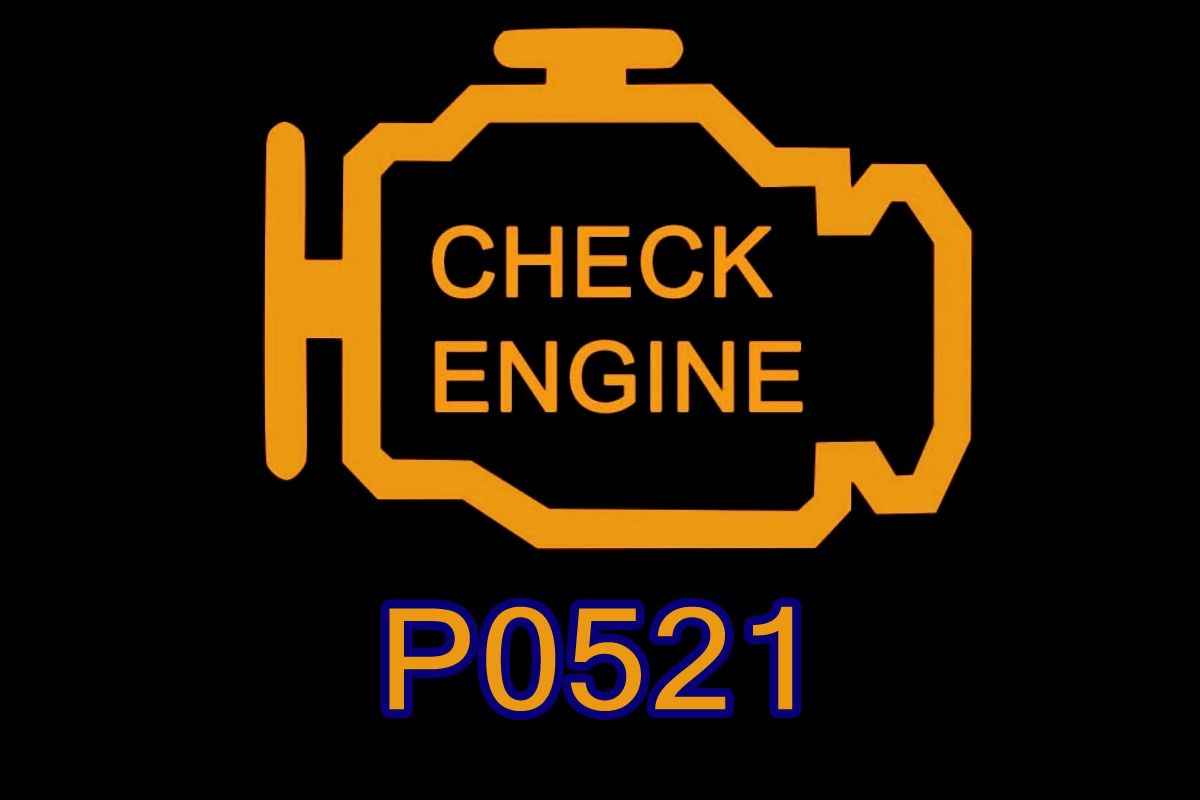
P0521 Engine Oil Pressure Sensor/Switch Range/Performance
P0521 is an OBD-II diagnostic trouble code indicating that the ECM/PCM has detected an oil pressure sensor or switch signal that is outside the expected range or does not behave as expected during operation.
The important phrase in this code is “Range/Performance.”
P0521 does not automatically mean that the engine oil pressure is too low or too high. It means that the signal being received from the oil-pressure monitoring system is considered implausible, inconsistent, or outside the expected operating characteristics.
The problem may be electrical, sensor-related, wiring-related, or genuinely mechanical.
What Does P0521 Mean?
The engine control module needs information about engine oil pressure to determine whether the lubrication system is operating correctly.
Depending on the vehicle, this information can come from:
-
A simple oil-pressure switch
-
A variable oil-pressure sensor
-
A three-wire pressure transducer
-
An electronically monitored pressure system
When the ECM sees an oil-pressure signal that does not correspond correctly to the expected engine operating conditions, it can store P0521.
In simple terms:
The oil-pressure signal is present, but its value or behavior does not make sense to the ECM.
This is different from P0522, where the input is specifically detected as low, and P0523, where the input is specifically detected as high.
What Does "Range/Performance" Mean?
“Range/Performance” generally means that the ECM is receiving a signal but does not consider the signal to be plausible.
For example, the sensor might report an oil-pressure value that:
-
Is too high or too low for the current engine condition
-
Does not change correctly with engine RPM
-
Changes too slowly
-
Changes too quickly
-
Remains fixed
-
Fluctuates unexpectedly
-
Does not agree with another parameter used by the ECM
-
Does not follow the manufacturer's expected pressure-to-signal relationship
Therefore, P0521 is often more difficult to diagnose than a simple open or short circuit.
The circuit may be electrically intact while the information being reported is incorrect.
P0521 Does Not Automatically Mean a Bad Sensor
The oil-pressure sensor is an obvious suspect, but it is not the only possibility.
A sensor can report an implausible value because of:
-
Sensor internal failure
-
Wiring resistance
-
Poor ground
-
Incorrect reference voltage
-
Connector corrosion
-
Oil contamination
-
Intermittent wiring
-
Incorrect replacement sensor
-
Genuine abnormal oil pressure
This is why replacing the sensor immediately is not always the correct repair.
How the Oil Pressure Sensor Works
Many modern vehicles use a variable pressure sensor.
A common design has three circuits:
-
Reference voltage
-
Ground
-
Signal
The sensor converts oil pressure into an electrical output.
As engine operating conditions change, oil pressure normally changes as well.
The ECM can monitor the sensor output and determine whether the reported pressure is plausible.
For example, the ECM may expect oil pressure behavior to change when:
-
Engine RPM increases
-
Engine RPM decreases
-
Engine temperature changes
-
The engine starts
-
The engine reaches operating temperature
If the signal does not respond as expected, P0521 may be triggered.
However, the exact sensor technology varies between manufacturers, so universal voltage or resistance values should not be used.
Some Vehicles Use an Oil Pressure Switch
Not every vehicle has a variable pressure sensor.
Some systems use a simple pressure switch.
In this type of system, the switch may simply change electrical state when oil pressure crosses a predetermined threshold.
The ECM then interprets the switch state according to engine operating conditions.
This means that the diagnostic procedure for P0521 can be completely different from a three-wire variable pressure sensor system.
The first step should therefore always be determining which type of oil-pressure monitoring system the vehicle actually uses.
Common Symptoms of P0521
Possible symptoms include:
-
Check Engine Light
-
Oil pressure warning light
-
Oil pressure warning message
-
Incorrect oil-pressure reading
-
Oil-pressure gauge behaving abnormally
-
Engine performance changes
-
Variable valve timing problems
-
Reduced engine power
-
Additional engine-management codes
Some vehicles may have no noticeable drivability symptoms at all.
The ECM may simply store the code because the oil-pressure signal failed its plausibility test.
Common Causes of P0521
Faulty oil-pressure sensor
The sensor may become inaccurate or intermittent.
It may still produce a voltage, but the voltage may no longer correspond correctly to actual oil pressure.
This is a classic situation where the circuit can appear electrically functional while the sensor is still defective.
Wiring resistance
A damaged wire can introduce resistance into the signal circuit.
Possible causes include:
-
Corrosion
-
Partially broken conductor
-
Poor repair
-
Chafing
-
Heat damage
-
Connector resistance
The ECM may receive a signal that is technically present but inaccurate.
Poor electrical connection
A loose or corroded terminal can cause the signal to fluctuate.
This can produce a range/performance fault rather than a straightforward high or low code.
Incorrect sensor
An incorrect aftermarket or incompatible sensor can produce an output curve that does not match the ECM's expectations.
The sensor may physically fit the engine while having different electrical characteristics.
Reference-voltage problem
If the sensor uses a regulated reference voltage, an unstable or incorrect reference can distort the pressure signal.
If several sensors are reporting unusual values at the same time, investigate the shared reference circuit.
Sensor ground problem
A poor ground can change the voltage seen by the ECM and make an otherwise healthy sensor appear incorrect.
Actual abnormal oil pressure
Unlike a simple electrical high-input or low-input fault, P0521 can sometimes be associated with a genuine mechanical oil-pressure condition.
Possible mechanical causes include:
-
Low oil level
-
Incorrect oil viscosity
-
Oil pump wear
-
Oil pressure relief valve problem
-
Restricted oil pickup
-
Restricted oil passage
-
Excessive bearing clearance
-
Incorrect oil filter
-
Variable oil pump control problem
The exact possibilities depend on the engine.
Can Low Oil Level Cause P0521?
Yes, it can potentially contribute to P0521, depending on the vehicle's monitoring strategy.
If the oil level is significantly low, the actual oil pressure can become abnormal, particularly under:
-
Hard acceleration
-
Cornering
-
High RPM
-
Heavy braking
-
Hot-engine conditions
The oil-pressure signal may then behave in a way that the ECM considers implausible.
However, checking oil level should not replace electrical diagnosis.
Can High Oil Pressure Cause P0521?
Yes, a genuine high-pressure condition can potentially cause the pressure signal to fall outside the expected operating range.
Possible causes may include:
-
Sticking pressure relief valve
-
Incorrect oil viscosity
-
Oil pump control problem
-
Restricted oil passage
-
Incorrect filter
-
Oil pump problem
Again, the code alone cannot establish that the mechanical oil pressure is actually high.
Diagnosing P0521 Correctly
The most important objective is to determine whether the problem is:
Sensor signal problem
or
Actual oil-pressure problem
A systematic diagnosis can separate the two.
1. Check the Engine Oil Level and Condition
Start with the basics.
Verify:
-
Correct oil level
-
Correct oil specification
-
Correct viscosity
-
Correct oil filter
-
No obvious oil leakage
-
No contamination
If the engine has recently received an oil change, verify that the correct oil and filter were installed.
An incorrect oil specification can affect oil pressure and engine-management behavior.
2. Scan All Control Modules
Do not diagnose P0521 in isolation.
Look for additional codes involving:
-
Oil pressure
-
Oil temperature
-
Variable valve timing
-
Camshaft timing
-
Engine sensors
-
System voltage
-
5-volt reference
-
Communication
Multiple sensor codes can point toward a common electrical problem.
3. Check Freeze-Frame Data
Freeze-frame information can show when the ECM detected the abnormal pressure signal.
Check:
-
Engine RPM
-
Engine coolant temperature
-
Oil temperature
-
Vehicle speed
-
Engine load
-
System voltage
-
Reported oil pressure
For example, if the reported pressure suddenly becomes implausible only at a particular RPM, that information can help identify whether the problem is electrical or mechanical.
4. Check Live Oil-Pressure Data
If the vehicle provides oil-pressure information through the scan tool, monitor it from engine startup through different operating conditions.
Observe whether the reported value:
-
Changes after startup
-
Responds to RPM
-
Responds to engine temperature
-
Remains stuck
-
Suddenly jumps
-
Drops unexpectedly
-
Becomes implausible
A sensor that reports exactly the same pressure under very different operating conditions may deserve further investigation.
Check the Sensor Connector
Inspect the oil-pressure sensor connector carefully.
Look for:
-
Oil contamination
-
Corrosion
-
Loose terminals
-
Bent pins
-
Water intrusion
-
Broken locking tabs
-
Damaged wiring
Because the sensor is installed on the engine, the connector and harness are exposed to heat, vibration and oil.
Check Reference Voltage and Ground
If the vehicle uses a variable pressure sensor, test the reference and ground according to the manufacturer's wiring diagram.
Do not assume every vehicle uses the same pin arrangement.
The ground should also be checked under operating conditions because excessive resistance may not be obvious from a simple continuity test.
Voltage-drop testing is often more informative.
Test the Signal Circuit
The pressure sensor signal should be compared with the manufacturer's specifications.
If the signal changes incorrectly as engine conditions change, investigate:
-
Sensor
-
Wiring
-
Connector
-
Reference
-
Ground
An oscilloscope can be useful when the signal is intermittent or unstable.
Perform a Mechanical Oil Pressure Test
If the electrical system appears correct—or if there are symptoms suggesting a real lubrication problem—measure the oil pressure with a mechanical gauge.
This provides an independent reference.
The most useful comparison is:
Mechanical oil pressure
versus
Sensor output
versus
Scan-tool reported pressure
If the mechanical pressure is correct but the scan tool reports an implausible value, the sensor or electrical circuit becomes the primary suspect.
If the mechanical pressure itself is abnormal, the engine lubrication system requires further investigation.
Why a Mechanical Pressure Test Matters
Replacing an oil-pressure sensor without verifying actual pressure can lead to two different mistakes.
The first is unnecessary parts replacement.
The second is more serious:
A genuine engine lubrication problem can be incorrectly blamed on the sensor.
If an engine actually has low oil pressure caused by worn bearings or a damaged oil pump, installing a new sensor will not solve the problem.
This is why P0521 should sometimes be treated as both an electrical diagnosis and a mechanical verification problem.
P0521 After Replacing the Oil Pressure Sensor
If the code appears immediately after a sensor replacement, check the installation before assuming another component has failed.
Verify:
-
Correct sensor part number
-
Correct sensor type
-
Correct connector
-
Correct pin configuration
-
Wiring condition
-
Sensor ground
-
Reference voltage
-
Signal circuit
An aftermarket sensor with an incorrect pressure-to-voltage characteristic can cause P0521 even though it is physically compatible with the engine.
Wiring Problems Can Be Intermittent
P0521 can be particularly difficult when the problem is intermittent.
A damaged wire may behave normally when the vehicle is stationary but become unstable when:
-
The engine moves on its mounts
-
The harness vibrates
-
Engine temperature rises
-
The vehicle hits bumps
-
The connector moves
A controlled wiggle test while monitoring live data can sometimes reproduce the fault.
The test should be performed carefully and according to appropriate service procedures.
P0521 and Variable Valve Timing
Oil pressure is important to many variable valve timing systems.
If the ECM receives unreliable oil-pressure information, it may alter or restrict certain engine-control strategies.
If P0521 appears together with camshaft or variable valve timing codes, do not treat the oil-pressure sensor as an isolated component.
Investigate the relationship between:
-
Actual oil pressure
-
Oil temperature
-
VVT operation
-
Oil control valves
-
Camshaft position
-
Engine timing
A lubrication problem can affect several systems at once.
Can P0521 Cause Engine Damage?
P0521 itself does not necessarily mean that the engine is being damaged.
If the fault is caused by a sensor or wiring problem while actual oil pressure is normal, the engine can still have proper lubrication.
However, because the code concerns a critical engine parameter, it should not simply be ignored.
If the vehicle also has:
-
Oil pressure warning light
-
Ticking or knocking
-
Abnormal engine noise
-
Low oil level
-
Confirmed low oil pressure
-
Sudden pressure fluctuations
the engine should be investigated immediately.
Can You Drive With P0521?
If the engine operates normally and there are no signs of a real lubrication problem, short-term operation may be possible while the fault is diagnosed.
However, continuing to drive indefinitely without determining whether the oil pressure is actually correct is not recommended.
If an oil-pressure warning lamp comes on, stop the engine and verify the oil-pressure condition rather than assuming the sensor is responsible.
P0521 vs. P0522 and P0523
The nearby oil-pressure codes describe different electrical conditions.
P0520 – Engine Oil Pressure Sensor/Switch Circuit Malfunction
A general fault in the oil-pressure sensor/switch circuit.
P0521 – Engine Oil Pressure Sensor/Switch Range/Performance
The signal is present but is outside the expected range or does not behave correctly.
P0522 – Engine Oil Pressure Sensor/Switch Circuit Low Voltage
The electrical signal is detected as too low.
P0523 – Engine Oil Pressure Sensor/Switch Circuit High Voltage
The electrical signal is detected as too high.
P0524 – Engine Oil Pressure Too Low
This code is more directly associated with an excessively low oil-pressure condition.
The key difference is that P0521 is a plausibility/performance diagnosis. The ECM is essentially saying:
“I am receiving an oil-pressure signal, but I do not believe the signal is behaving correctly.”
Final Diagnostic Summary
P0521 – Engine Oil Pressure Sensor/Switch Range/Performance means the ECM/PCM has detected an oil-pressure signal that does not behave within the expected range or performance characteristics.
The code does not automatically prove that the oil-pressure sensor is defective, and it does not automatically prove that the engine has low or high oil pressure.
Possible causes include a failing sensor, incorrect sensor, wiring resistance, poor connector contact, reference-voltage problem, sensor-ground problem, intermittent wiring, or a genuine mechanical oil-pressure problem.
The most reliable diagnostic procedure is to check the oil level and specification, scan for related codes, examine freeze-frame and live data, inspect the sensor circuit, verify reference and ground, and perform a mechanical oil-pressure test when necessary.
The most important diagnostic question is:
Does the sensor report an implausible pressure because the sensor/circuit is wrong, or because the engine's actual oil pressure is genuinely outside the expected range?
That distinction is what makes P0521 a range/performance diagnosis rather than simply a “bad oil pressure sensor” code.