TR
TR EN
EN

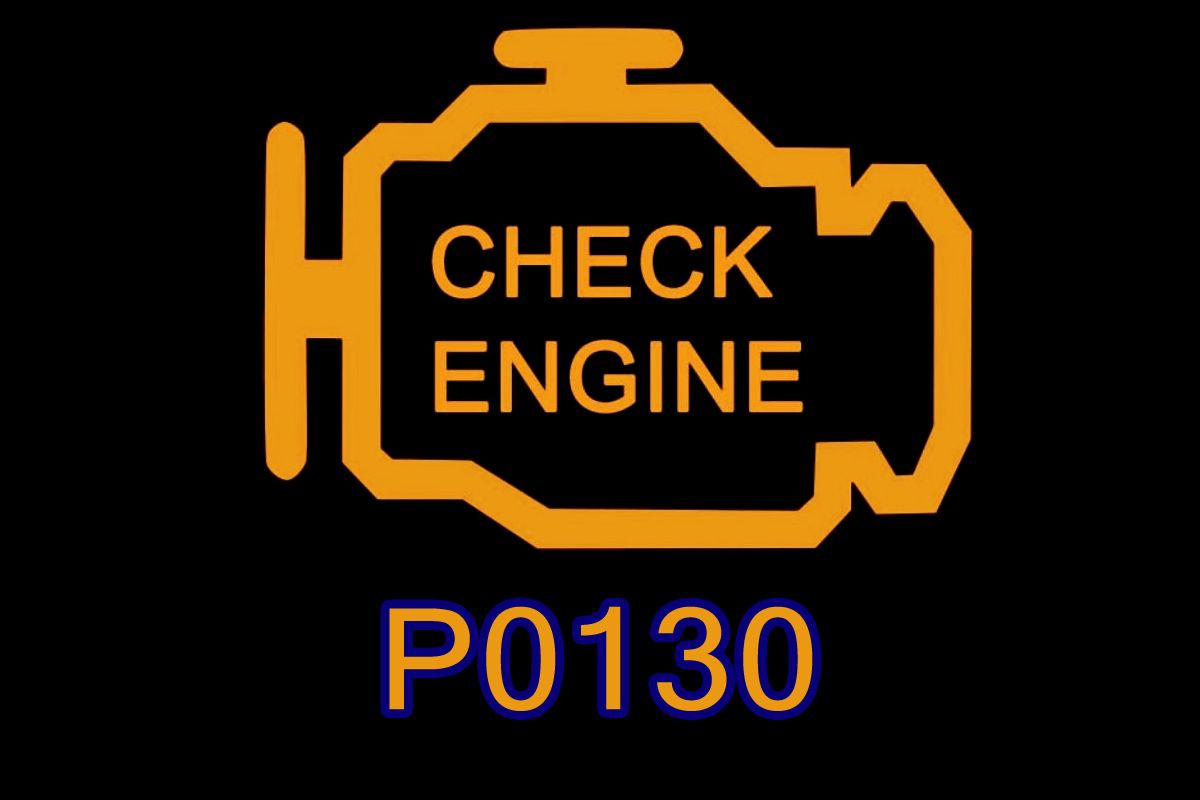
P0130 O2 Sensor Circuit (Bank 1, Sensor 1)
P0130 is an OBD-II diagnostic trouble code indicating that the engine control module (ECM/PCM) has detected a problem with the oxygen sensor circuit for Bank 1, Sensor 1.
This code is one of the fundamental oxygen-sensor circuit faults, but its meaning is broader than simply saying that the O2 sensor has failed.
The ECM is monitoring the electrical signal and operation of the sensor and has determined that the circuit is not behaving as expected. The underlying cause can be the oxygen sensor itself, its wiring, connector, power or ground supply, an exhaust problem, or in some cases an engine operating condition that is causing the sensor signal to behave abnormally.
What Does Bank 1, Sensor 1 Mean?
Understanding the sensor location is essential before starting diagnosis.
Bank 1 refers to the side of the engine containing cylinder number 1.
On an inline four-cylinder engine, there is normally only one cylinder bank, so the oxygen sensor associated with that bank is Bank 1.
On a V6, V8, or another multi-bank engine, there are separate banks, and Bank 1 must be identified according to cylinder numbering.
Sensor 1 generally means the oxygen sensor located upstream of the catalytic converter.
Therefore:
Bank 1, Sensor 1 = upstream oxygen sensor on the cylinder bank containing cylinder #1.
This sensor is particularly important for fuel-control feedback because it monitors the exhaust mixture before the catalytic converter.
What Does the Bank 1 Sensor 1 O2 Sensor Do?
The upstream oxygen sensor gives the ECM information about the oxygen content of the exhaust gas.
The ECM uses this information to determine whether combustion is occurring with a relatively:
-
Rich mixture
-
Lean mixture
-
Stoichiometric mixture
The ECM can then adjust fuel delivery using closed-loop fuel control.
For a conventional narrowband oxygen sensor, the signal changes rapidly as the exhaust mixture moves between lean and rich conditions.
Modern vehicles can also use wideband air-fuel ratio sensors, which operate differently from traditional narrowband O2 sensors.
This distinction matters because not every sensor that is commonly called an “O2 sensor” behaves the same way electrically.
P0130 Does Not Automatically Mean a Bad O2 Sensor
This is the most important diagnostic point.
The code identifies a problem with the O2 sensor circuit, not necessarily a defective sensor.
Possible causes include:
-
Failed oxygen sensor
-
Damaged sensor wiring
-
Open circuit
-
Short circuit
-
Poor connector contact
-
Corroded terminals
-
Sensor heater power problem
-
Sensor ground/reference problem
-
Exhaust leak
-
Fuel-system problem
-
Vacuum or intake leak
-
Engine misfire
-
Incorrect air-fuel mixture
-
Contaminated sensor
-
ECM/PCM problem
Consequently, replacing the sensor without testing the circuit can result in an unnecessary repair.
Symptoms of P0130
The symptoms can vary considerably depending on the vehicle and the exact fault.
Possible symptoms include:
-
Check Engine Light
-
Poor fuel economy
-
Rough idle
-
Hesitation
-
Poor acceleration
-
Engine surging
-
Unstable idle
-
Increased emissions
-
Rich-running symptoms
-
Lean-running symptoms
-
Difficult starting in some cases
-
Reduced engine performance
Some vehicles may continue to drive almost normally.
If the ECM cannot trust the upstream oxygen-sensor signal, it may use substitute values or alternative fuel-control strategies.
Why the Upstream Sensor Is So Important
The upstream oxygen sensor is part of the engine's fuel-control feedback system.
The ECM does not simply inject a fixed amount of fuel and leave it unchanged.
Instead, it considers information from multiple sensors, including:
-
O2/A/F sensor
-
MAF sensor
-
MAP sensor
-
Intake-air temperature sensor
-
Engine coolant temperature sensor
-
Throttle position
-
Engine speed
-
Engine load
It then adjusts fuel delivery based on the information available.
A faulty Bank 1 Sensor 1 signal can therefore affect fuel control throughout a wide range of operating conditions.
Diagnosing P0130
A good diagnosis starts by determining what the ECM is actually seeing.
Begin with a complete scan.
Do not look only at P0130.
Check for:
-
Pending codes
-
Stored codes
-
Misfire codes
-
Fuel-trim codes
-
MAF/MAP codes
-
Fuel-pressure codes
-
O2 heater codes
-
Other sensor circuit codes
Additional DTCs can significantly change the diagnostic direction.
Check the Freeze-Frame Data
Freeze-frame data can reveal the conditions under which the ECM detected the problem.
Useful parameters include:
-
Engine RPM
-
Vehicle speed
-
Engine load
-
Coolant temperature
-
Intake-air temperature
-
Short-term fuel trim
-
Long-term fuel trim
-
MAF
-
MAP
-
O2/A/F sensor readings
-
Fuel pressure where available
-
Battery voltage
For example, if P0130 occurs only after the engine reaches operating temperature, the sensor heater and closed-loop operation deserve attention.
If it occurs immediately after startup, wiring, power supply, or a sensor circuit problem may be more suspicious.
Inspect the O2 Sensor Wiring First
The upstream oxygen sensor is usually installed close to the exhaust manifold or exhaust system.
This exposes its wiring to:
-
High temperatures
-
Vibration
-
Water
-
Road debris
-
Oil contamination
-
Exhaust heat
Inspect the harness carefully.
Look for:
-
Melted insulation
-
Burn marks
-
Broken wires
-
Chafing
-
Connector damage
-
Corrosion
-
Loose terminals
-
Wires touching the exhaust
-
Previous repair work
A wire that has melted against the exhaust can create a short circuit or intermittent electrical problem.
Check the Connector and Terminals
A connector can look visually acceptable while having a poor electrical connection.
Check for:
-
Pushed-back terminals
-
Loose terminal tension
-
Corrosion
-
Moisture
-
Contamination
-
Damaged locking mechanism
A poor terminal connection can create intermittent resistance in the circuit.
This is particularly important if P0130 appears intermittently.
Oxygen Sensor Heater Circuit
Many oxygen sensors contain an internal heater.
The heater allows the sensor to reach its operating temperature quickly so the ECM can begin using its signal.
The heater circuit is separate from the actual sensing element, although both are contained within the same sensor assembly.
A heater problem can therefore prevent the sensor from operating correctly even when the sensing element itself is functional.
Depending on the vehicle, inspect:
-
Heater power
-
Heater ground/control
-
Fuse
-
Relay
-
Wiring
-
Connector
-
Heater resistance/current
Do not use a universal heater resistance value. Sensor designs differ, and manufacturer specifications should be followed.
If a separate heater DTC is present, it should be considered during the diagnosis.
Check the O2 Sensor Signal
Live-data monitoring can be extremely useful.
With the engine fully warmed up and under the appropriate operating conditions, observe the Bank 1 Sensor 1 signal.
For a conventional narrowband sensor, the signal should respond to changes in the air-fuel mixture.
The exact voltage range and switching behavior depend on the sensor and vehicle.
Do not assume that every oxygen sensor should produce the same voltage pattern.
A wideband air-fuel sensor, for example, cannot be diagnosed correctly using the same interpretation used for a conventional narrowband sensor.
A Sensor Signal That Is Stuck Does Not Prove Sensor Failure
Suppose the scanner shows a sensor signal that remains apparently fixed.
The sensor may be faulty, but several other possibilities exist.
The engine itself may actually be operating continuously rich or lean.
Possible causes include:
-
Fuel-pressure problem
-
Injector problem
-
Vacuum leak
-
Intake-air leak
-
MAF problem
-
MAP problem
-
Exhaust leak
-
Misfire
-
Evaporative-emission problem
-
Unmetered air
-
Fuel contamination
Therefore, the O2 signal should be interpreted together with fuel trims and other engine data.
Fuel Trims Can Help
Short-term fuel trim (STFT) and long-term fuel trim (LTFT) can provide useful supporting information.
If the ECM is consistently adding fuel, it may indicate that the engine is running lean.
If it is consistently removing fuel, a rich condition may be present.
However, fuel trims are supporting evidence, not proof that the oxygen sensor is defective.
A faulty sensor can influence fuel trims, but a genuine engine mixture problem can also cause unusual fuel-trim values.
The diagnostic task is to determine which condition came first.
Check for Exhaust Leaks
An exhaust leak upstream of the oxygen sensor can introduce outside air into the exhaust stream.
That additional oxygen can cause the sensor to report a leaner condition than the engine is actually producing.
Potential leak points include:
-
Exhaust manifold
-
Manifold gasket
-
Flex section
-
Exhaust flange
-
Sensor mounting area
-
Cracks near the sensor
This is particularly important when the sensor appears to be reporting a persistent lean condition.
An exhaust leak can therefore create misleading O2-related diagnostic information without the sensor itself being defective.
Check for Engine Misfires
A misfire can also distort oxygen-sensor readings.
When combustion does not occur correctly, oxygen can pass into the exhaust.
The O2 sensor may detect this oxygen and report conditions that do not represent normal combustion.
Therefore, if P0130 appears together with misfire codes such as P0300 or cylinder-specific misfire codes, the misfire should be investigated rather than simply replacing the oxygen sensor.
Intake and Vacuum Leaks
Unmetered air entering the engine can produce a lean mixture.
Potential sources include:
-
Intake manifold gasket
-
Vacuum hoses
-
PCV system
-
Brake-booster hose
-
Intake duct
-
Throttle-body gasket
-
Cracked intake components
If the engine is genuinely running lean, the O2 sensor may be correctly reporting that condition.
Replacing the sensor would not solve the underlying problem.
MAF and MAP Sensor Problems
The ECM relies on airflow and pressure information to calculate engine load and fuel requirements.
If a MAF or MAP sensor provides incorrect information, the resulting fuel mixture can become abnormal.
The oxygen sensor may then report the consequences.
For this reason, P0130 should be considered in the broader context of engine management.
If other airflow or pressure-related codes are present, they should be investigated as part of the same diagnostic process.
Testing With an Oscilloscope
For difficult cases, an oscilloscope can provide considerably more information than a basic scan tool.
It can reveal:
-
Signal switching
-
Slow response
-
Dropouts
-
Electrical noise
-
Intermittent faults
-
Wiring disturbances
-
Signal abnormalities under changing load
A scope can be particularly useful when the fault does not remain active long enough for a conventional voltage test to capture it.
The test procedure must match the sensor type. A conventional narrowband O2 sensor and a wideband air-fuel sensor require different signal interpretation.
What About Sensor Contamination?
Oxygen sensors can become contaminated over time.
Potential contaminants include:
-
Oil
-
Coolant
-
Excessive fuel
-
Silicone compounds
-
Certain chemical deposits
If the engine is consuming oil or coolant, installing a new sensor without addressing the underlying problem may result in another sensor failure later.
A contaminated sensor should therefore trigger a search for the source of the contamination.
Could Low Battery Voltage Cause P0130?
Low system voltage can interfere with sensor and heater operation.
Check:
-
Battery condition
-
Charging voltage
-
Engine grounds
-
ECM power supply
-
Sensor power supply
This becomes especially important when several unrelated sensor codes appear simultaneously.
A single sensor code with otherwise stable system voltage is less suggestive of a global power problem.
When Should the O2 Sensor Be Replaced?
Replacement becomes justified when testing demonstrates that:
-
The sensor is not responding correctly,
-
The sensor circuit has correct power/reference/ground as applicable,
-
Wiring and connectors are healthy,
-
There is no relevant exhaust leak,
-
The engine is operating correctly,
-
Fuel pressure and airflow are within specification,
-
And the sensor itself fails the manufacturer's diagnostic criteria.
At that point, replacing the Bank 1 Sensor 1 sensor is reasonable.
The replacement part should match the vehicle's required sensor type and specification.
A generic sensor that does not have the correct characteristics can create additional problems.
Is P0130 Safe to Drive With?
A vehicle with P0130 may remain driveable, particularly if the engine is running normally.
However, prolonged driving with an incorrect air-fuel feedback signal can cause:
-
Poor fuel economy
-
Increased emissions
-
Poor drivability
-
Excessively rich operation
-
Excessively lean operation
-
Catalytic-converter damage in severe cases
If the engine is misfiring badly or the Check Engine Light is flashing, driving should be minimized because severe misfire can rapidly damage the catalytic converter.
Common Diagnostic Mistakes
Several mistakes are common with P0130.
The first is assuming:
P0130 = bad oxygen sensor.
The code does not prove that.
Other mistakes include:
-
Replacing the sensor without checking wiring
-
Ignoring the sensor heater
-
Failing to inspect the exhaust for leaks
-
Ignoring fuel trims
-
Ignoring MAF/MAP problems
-
Overlooking engine misfires
-
Using generic O2 sensor voltage specifications
-
Testing a wideband sensor as though it were a narrowband sensor
-
Replacing the catalytic converter unnecessarily
-
Performing only a continuity test on the wiring
-
Ignoring battery and ground problems
Repairing P0130
The correct repair depends on the actual cause.
Possible repairs include:
-
Replacing the Bank 1 Sensor 1 oxygen sensor
-
Repairing damaged sensor wiring
-
Replacing damaged connector terminals
-
Repairing the sensor heater circuit
-
Correcting an exhaust leak
-
Repairing a vacuum or intake leak
-
Correcting fuel-pressure problems
-
Repairing an injector or fuel-control problem
-
Correcting MAF/MAP sensor problems
-
Repairing an engine misfire
-
Correcting a power or ground problem
-
Updating ECM software where manufacturer information identifies a relevant software issue
After the repair, clear the DTC and verify sensor operation under the conditions required for the vehicle's oxygen-sensor monitor to run.
Final Diagnostic Perspective
P0130 identifies a problem involving the Bank 1 Sensor 1 oxygen-sensor circuit, but it does not tell you that the sensor itself is necessarily defective.
Because Bank 1 Sensor 1 is normally the upstream sensor used heavily for fuel-control feedback, problems in this circuit can have a noticeable effect on engine operation.
The correct diagnostic approach is to establish whether the problem is electrical, sensor-related, exhaust-related, or caused by a genuine air-fuel mixture problem.
Check the sensor circuit, heater, wiring, connector, live data, fuel trims, exhaust system, and engine operating conditions before replacing the sensor.