TR
TR EN
EN

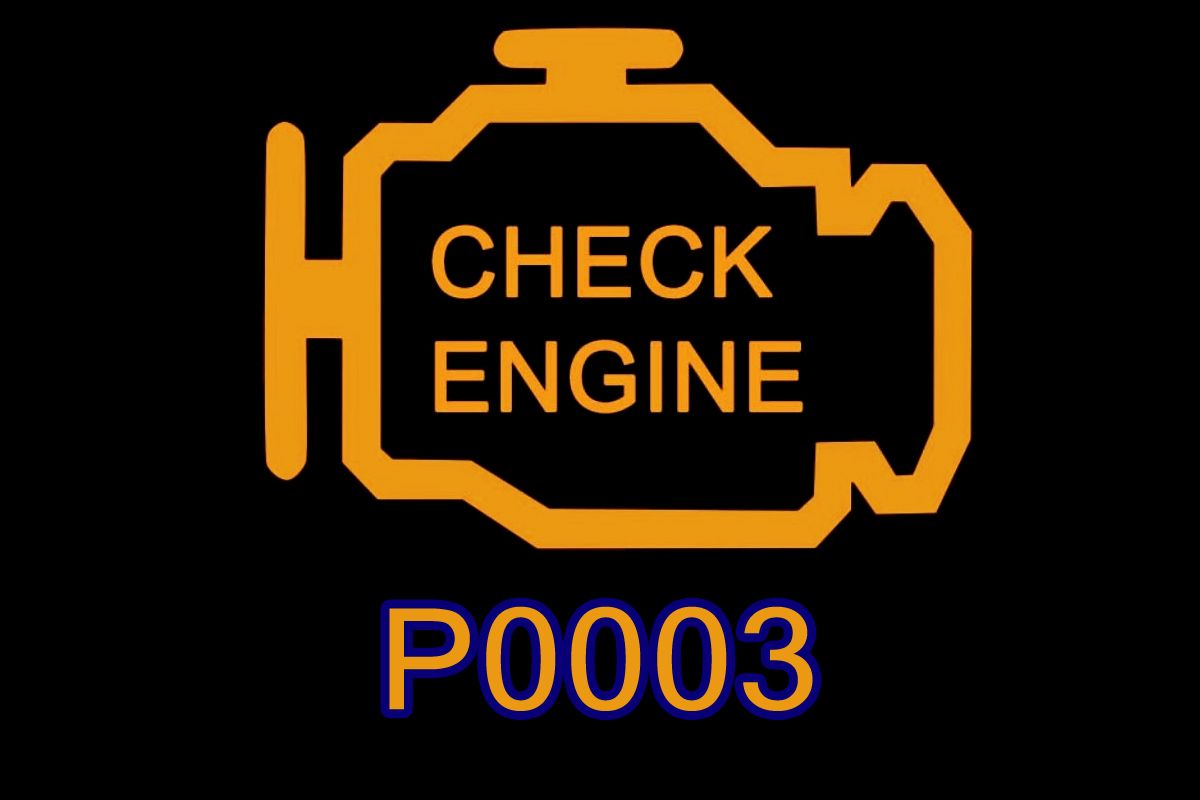
P0003 Fuel Volume Regulator Control Circuit Low Input
The P0003 trouble code indicates that the engine control module (ECM) has detected a lower-than-expected electrical signal in the fuel volume regulator control circuit, which can be related to damaged wiring, a poor electrical connection, a faulty fuel volume regulator, an incorrect power or control signal, or a problem within the circuit used to regulate fuel delivery.
The Important Part of P0003 Is “Low Input”
P0003 is an electrical code, so the first thing to understand is what the ECM is actually seeing.
The fuel volume regulator is controlled through an electrical circuit, and the ECM expects that circuit to operate within a specific range. When the detected input or control voltage falls below the expected level, the ECM can store P0003.
This does not automatically mean that fuel pressure is low.
It also does not prove that the fuel volume regulator has failed.
The code tells us that the electrical condition of its control circuit is too low.
Where the Fuel Volume Regulator Fits Into the System
The fuel volume regulator is used in certain fuel-injection systems to control how much fuel is supplied to the pump or high-pressure fuel system.
By regulating fuel volume, the engine management system can adjust fuel delivery according to the engine's requirements instead of allowing the fuel system to operate at maximum output continuously.
Depending on the engine, the regulator may be located on or near the high-pressure fuel pump, although the exact arrangement varies between manufacturers.
The system generally involves the regulator, wiring, connectors, fuel pump, fuel pressure monitoring, and ECM control.
What Can Make the Electrical Signal Too Low?
There are several ways the ECM can end up seeing a low input.
An open or damaged circuit
A broken wire can prevent the expected electrical signal from reaching the regulator or returning to the ECM.
A wire can also be damaged internally while its insulation still looks intact.
Poor connector contact
A loose, corroded, contaminated, or damaged terminal can increase resistance or interrupt the circuit.
Sometimes simply moving the harness can make an intermittent fault appear or disappear.
Short to ground
If the regulator's control wire contacts ground, the circuit voltage can be pulled lower than expected.
This is one of the possibilities that should be investigated when P0003 appears.
Faulty fuel volume regulator
An internal electrical problem within the regulator can alter the circuit's expected electrical characteristics.
The regulator should therefore be tested rather than automatically replaced.
Power supply problem
Depending on the vehicle's electrical design, a problem with the power supply, fuse, relay, or shared circuit can affect the regulator.
ECM control problem
A fault in the ECM's control circuitry is possible, although it should generally be considered only after the regulator and external wiring have been verified.
P0003 Is Not Simply a “Low Fuel Pressure” Code
This distinction is worth emphasizing because it can prevent an unnecessary fuel-system repair.
P0003 describes an electrical low-input condition.
A vehicle can theoretically have normal fuel pressure while P0003 is stored.
Conversely, the vehicle can have genuinely low fuel pressure for a completely different reason.
If the engine is experiencing fuel-pressure problems, the technician should measure the actual fuel pressure rather than assuming that P0003 itself proves the pressure is low.
What Will the Driver Experience?
The effect of P0003 depends on how the fault affects fuel-volume control.
Some vehicles may continue to operate with only a Check Engine Light.
If fuel delivery becomes insufficient under certain operating conditions, the driver may notice:
-
Hard starting
-
Extended cranking
-
Hesitation
-
Poor acceleration
-
Reduced engine power
-
Rough running
-
Misfires
-
Stalling
-
Intermittent starting problems
-
Engine failing to start
A vehicle that runs normally at light load but develops problems during strong acceleration can provide an important clue that fuel delivery is being affected under higher demand.
Look at What Happened Before the Code Appeared
The circumstances surrounding the first appearance of P0003 can be surprisingly useful.
If the code appeared after engine-bay or fuel-system work, inspect the connectors and wiring that may have been disturbed.
If it appeared after water exposure, corrosion or moisture in a connector becomes more relevant.
If the fault is intermittent, pay particular attention to harness movement, terminal tension, and wiring damage.
If the engine suddenly developed hard starting or stalling, the actual fuel supply and pressure should be evaluated along with the electrical circuit.
This type of history can help narrow the diagnosis before components are replaced.
How P0003 Should Be Tested
A proper diagnosis starts with identifying exactly how the particular vehicle controls its fuel volume regulator.
The technician should first retrieve all stored and pending trouble codes and examine the freeze-frame information.
The wiring diagram can then be used to determine how the regulator is powered and controlled.
The circuit may need to be checked for:
-
Correct supply voltage
-
Correct control signal
-
Continuity
-
Excessive resistance
-
Short to ground
-
Short to power
-
Damaged terminals
-
Proper connector contact
The regulator itself can then be tested according to the manufacturer's specifications.
Don't Use a Universal Resistance Value
Fuel volume regulators do not all use the same electrical design.
For that reason, there is no single resistance or voltage specification that can be applied to every vehicle with P0003.
A resistance value that appears acceptable on one engine could be completely wrong for another.
The manufacturer's service information should be used when measuring the regulator and its control circuit.
What About the Fuel Pump?
The fuel pump should not automatically be replaced because P0003 contains the word “fuel.”
The fuel volume regulator and the fuel pump are related, but they are not necessarily the same failed component.
On some designs, the regulator may be integrated into a pump assembly. Even then, the electrical circuit should be tested before replacing the complete assembly.
If the problem is a broken control wire, installing a new pump will not repair it.
A Simple Diagnostic Example
Consider a vehicle that starts normally but stores P0003 after a period of driving.
A technician could discover that the regulator itself passes its electrical test, but the control wire has excessive resistance because of corrosion inside a connector.
Replacing the regulator would accomplish nothing.
Repairing the connector could restore the circuit and permanently eliminate the fault.
This illustrates why P0003 should be treated as a circuit diagnosis rather than a parts-replacement instruction.
Is P0003 Serious?
The seriousness depends on how much the fault interferes with fuel control.
If the vehicle runs normally with a steady Check Engine Light, it may still be possible to drive it to a repair facility.
More caution is appropriate if there is:
-
Severe power loss
-
Engine stalling
-
Repeated misfires
-
Difficult starting
-
Long cranking
-
An engine that suddenly cuts out while driving
If fuel delivery becomes unreliable, the vehicle can eventually become difficult or impossible to start.
What Can Fix P0003?
The repair depends on the actual cause.
Possible repairs include:
-
Repairing damaged wiring
-
Removing a short to ground
-
Repairing a corroded connector
-
Restoring proper electrical contact
-
Correcting a power-supply problem
-
Replacing a faulty fuel volume regulator
-
Repairing the regulator control circuit
-
Diagnosing an ECM control fault
The correct repair should be confirmed by testing before parts are replaced.
P0003 in Simple Terms
P0003 means the ECM has detected a low electrical input or control condition in the fuel volume regulator circuit.
It does not automatically mean the fuel pump is bad, the fuel pressure is low, or the regulator must be replaced.
The most useful diagnostic approach is to follow the circuit from the ECM to the regulator, check its power and control signals, inspect the wiring and connectors, test the regulator itself, and only then move toward more expensive fuel-system components.
That approach turns P0003 from a vague “fuel problem” into a much more specific electrical circuit diagnosis.