TR
TR EN
EN

What Does the “Reduced Engine Power” Warning Mean? Why Does It Happen?
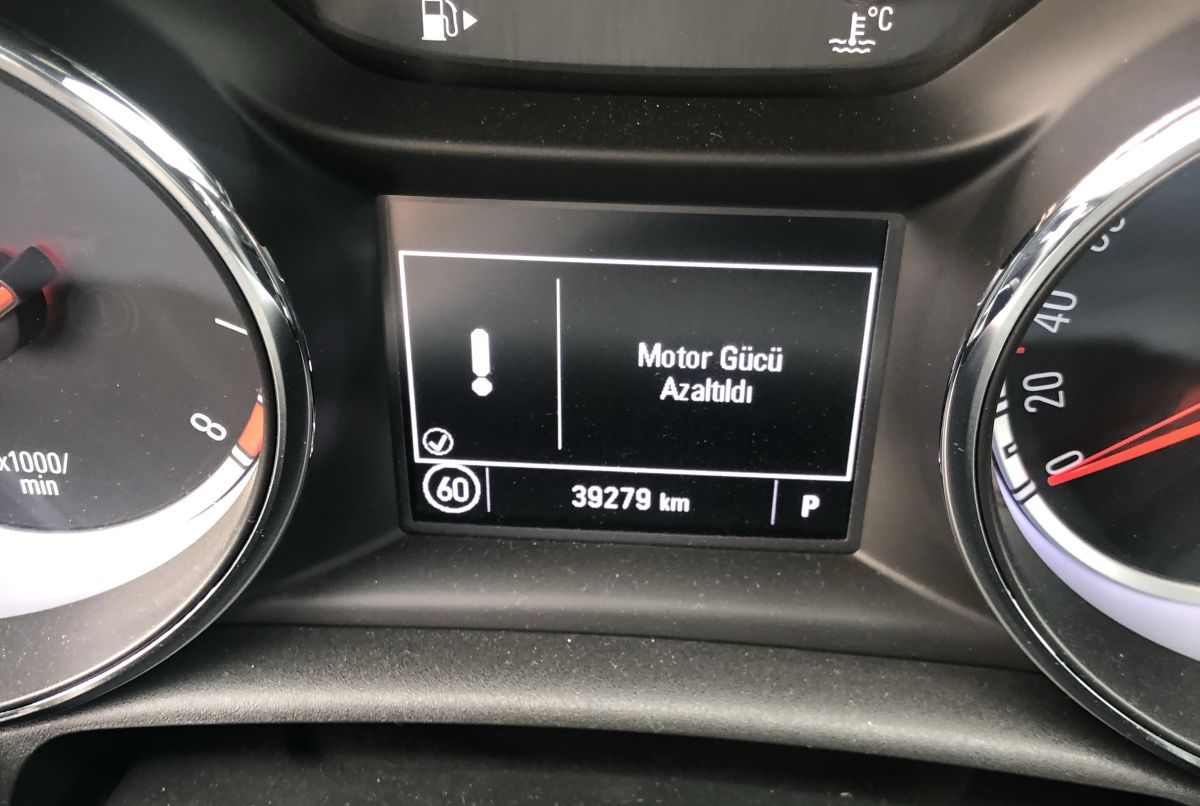
The “Reduced Engine Power” warning is a message used by some modern vehicles to indicate that the engine control system has deliberately limited engine output.
When this warning appears, the vehicle may still run and move, but acceleration can become noticeably weaker. In some cases, the accelerator pedal may feel less responsive, the engine may refuse to rev beyond a certain point, or the vehicle may enter a limp-home mode.
Importantly, “Reduced Engine Power” is not the name of a specific component failure. It is generally a result of the engine control unit detecting a condition that could affect engine operation, emissions, drivability, or component protection.
What Happens When Engine Power Is Reduced?
The engine control unit (ECU) continuously monitors numerous sensors, actuators, electrical circuits, and operating conditions.
If the ECU detects a fault that could make normal engine operation unsafe or unreliable, it may intentionally reduce torque.
Depending on the vehicle, this can involve:
-
Limiting throttle opening
-
Limiting accelerator response
-
Restricting engine RPM
-
Reducing fuel injection
-
Altering ignition timing
-
Limiting turbocharger boost
-
Disabling certain engine functions
-
Limiting transmission torque requests
-
Activating limp-home mode
The exact strategy varies between manufacturers and engine-management systems.
Therefore, two vehicles displaying a similar “Reduced Engine Power” message can have completely different underlying problems.
Is “Reduced Engine Power” the Same as Limp Mode?
They are closely related, but they are not necessarily identical terms.
Reduced Engine Power describes the condition in which the ECU limits available engine torque.
Limp mode, fail-safe mode, or limp-home mode describes a broader protective strategy in which the vehicle operates with restricted functionality after detecting a fault.
A vehicle can therefore have reduced power without entering the most severe form of limp mode.
For example, the ECU may allow the engine to continue operating normally at light throttle but restrict maximum torque when the accelerator is pressed aggressively.
The Electronic Throttle Body Is a Common Cause
One of the most important systems associated with reduced engine power is the electronic throttle control system.
Unlike an old-fashioned mechanical throttle cable, an electronic throttle system typically uses:
-
Accelerator pedal position sensors
-
Throttle position sensors
-
An electronic throttle motor
-
ECU control
-
Wiring and connectors
The accelerator pedal does not mechanically open the throttle. Instead, the pedal position is converted into an electrical signal.
The ECU interprets that signal and commands the throttle motor to achieve the requested engine torque.
If the ECU sees an implausible relationship between the requested and actual throttle positions, it may reduce engine power.
Possible causes include:
-
Throttle motor failure
-
Throttle position sensor fault
-
Throttle plate sticking
-
Carbon contamination
-
Damaged wiring
-
Poor electrical connections
-
Connector problems
-
Low system voltage
-
Internal throttle electronics failure
However, a reduced-power warning does not automatically mean the throttle body must be replaced.
The complete electronic throttle system needs to be tested.
Accelerator Pedal Sensor Problems
The accelerator pedal assembly is another important possibility.
Modern accelerator pedals commonly contain two position-sensor circuits. The ECU compares their signals to make sure they agree within an expected range.
If the two signals disagree, become intermittent, or fall outside their expected relationship, the ECU may determine that accelerator input cannot be trusted.
Possible symptoms include:
-
Poor accelerator response
-
Sudden loss of power
-
Engine refusing to increase RPM
-
Intermittent reduced-power warnings
-
Power returning after restarting
-
Warning appearing during aggressive acceleration
-
Engine responding normally at light throttle but failing under heavy pedal input
A faulty accelerator pedal does not necessarily have to fail completely.
A sensor or wiring problem may occur only at a particular pedal position.
Wiring and Connector Problems Can Cause the Same Warning
Electrical faults are frequently overlooked when diagnosing reduced engine power.
A sensor may be perfectly functional while the signal reaching the ECU is intermittent.
Possible electrical problems include:
-
Broken or partially broken wires
-
Corroded terminals
-
Loose connectors
-
Poor ground connections
-
Damaged wiring insulation
-
Water intrusion
-
Connector pin tension problems
-
High electrical resistance
-
Intermittent open circuits
-
Short circuits
This is particularly important when the warning occurs only under certain conditions.
For example, an engine vibration or movement during hard acceleration can move the wiring harness enough to create an intermittent connection.
In such a case, replacing the throttle body or accelerator pedal without testing the wiring may not solve the problem.
Low Battery Voltage Can Trigger Reduced Power
Modern engine-management systems are highly dependent on stable electrical voltage.
A weak battery, charging-system problem, poor ground connection, or voltage drop can cause multiple electronic systems to behave incorrectly.
Potential symptoms include:
-
Multiple warning lights
-
Intermittent sensor faults
-
Electronic throttle faults
-
Communication errors
-
Difficulty starting
-
Reduced engine power
-
Warning messages that disappear after restarting
This is why battery and charging voltage should be checked when an apparently unrelated collection of electronic faults appears simultaneously.
A voltage problem should not automatically be blamed, however. The actual voltage behavior should be measured under the relevant conditions.
Mass Air Flow and Intake Air Sensors
The ECU needs accurate information about the amount of air entering the engine.
Depending on the engine, this information may come from a MAF sensor, MAP sensor, intake-air-temperature sensor, or a combination of sensors.
A faulty or contaminated sensor can cause the ECU to calculate incorrect engine load.
Possible consequences include:
-
Poor acceleration
-
Hesitation
-
Rough running
-
Incorrect fueling
-
Reduced engine power
-
Increased fuel consumption
-
Check Engine Light
The sensor itself is not always the problem.
Air leaks, wiring faults, contamination, intake restrictions, and incorrect sensor readings caused by other conditions can produce similar symptoms.
Turbocharger and Boost Problems
On turbocharged engines, reduced engine power can occur when the ECU detects that actual boost does not match the expected boost.
Possible causes include:
-
Boost leaks
-
Damaged hoses
-
Wastegate problems
-
Variable-geometry turbocharger problems
-
Boost-control solenoid faults
-
MAP sensor problems
-
Turbocharger mechanical failure
-
Intake restrictions
-
Exhaust restrictions
The ECU may intentionally reduce torque to protect the engine or turbocharger.
A vehicle may therefore feel normal under light acceleration but lose substantial power when higher boost is requested.
Fuel System Problems
Insufficient fuel delivery can also lead to reduced power.
Possible causes include:
-
Weak fuel pump
-
Restricted fuel filter
-
Low fuel pressure
-
High-pressure fuel-pump problems
-
Fuel-pressure regulator problems
-
Faulty fuel-pressure sensor
-
Injector problems
-
Wiring problems
Under heavy acceleration, the engine requires more fuel.
A marginal fuel system may therefore appear normal during gentle driving but fail when engine load increases.
This is an important diagnostic clue.
Ignition Problems Can Reduce Engine Power
Misfires can cause the ECU to reduce engine torque.
Possible ignition-related causes include:
-
Worn spark plugs
-
Incorrect spark plug type
-
Incorrect spark plug gap
-
Ignition coil failure
-
Coil wiring problems
-
Poor electrical connections
-
Moisture around ignition components
If a severe misfire occurs, the ECU may reduce engine output to protect the catalytic converter and prevent further damage.
A vehicle with reduced power accompanied by flashing or severe Check Engine Light behavior should not be driven aggressively.
EGR and Emissions-System Problems
On some diesel and gasoline engines, emissions-related faults can trigger power limitation.
Potential causes include:
-
EGR valve problems
-
EGR position-sensor faults
-
DPF restriction
-
DPF pressure-sensor problems
-
SCR/AdBlue system faults
-
NOx sensor problems
-
Exhaust temperature sensor problems
The exact response depends on the vehicle's engine-management strategy.
Some systems progressively limit engine performance rather than immediately causing a complete loss of power.
Catalytic Converter or Exhaust Restriction
A restricted exhaust can prevent the engine from expelling exhaust gases efficiently.
At low engine load, the vehicle may appear relatively normal.
At higher RPM and load, however, the restriction can become much more noticeable.
Possible symptoms include:
-
Weak acceleration
-
Engine struggling at high RPM
-
Excessive exhaust backpressure
-
Poor fuel economy
-
Engine overheating
-
Reduced engine power
A restricted catalytic converter is only one possible explanation, so it should be confirmed through appropriate testing rather than replacing the converter based solely on a reduced-power warning.
Engine Temperature Problems
The ECU may also reduce engine output if it detects excessive engine temperature or another condition that could damage the engine.
Possible causes include:
-
Low coolant level
-
Cooling-system leak
-
Thermostat problems
-
Cooling fan failure
-
Water pump problems
-
Temperature sensor faults
-
Radiator restrictions
Power reduction can be a protective strategy.
If the temperature gauge is high or an overheating warning appears together with reduced power, continuing to drive can cause serious engine damage.
Transmission Problems Can Also Be Involved
The engine and transmission control systems communicate with each other.
A transmission fault can sometimes result in torque limitation.
For example, the vehicle may reduce engine torque during a transmission protection strategy.
Possible causes can include:
-
Transmission pressure problems
-
Solenoid faults
-
Clutch problems
-
Transmission overheating
-
Sensor faults
-
Communication problems
-
Internal transmission faults
Therefore, reduced engine power does not necessarily mean that the engine itself has a mechanical failure.
Why Does the Warning Sometimes Disappear After Restarting?
This is a common source of confusion.
When the ignition is switched off, the vehicle may exit the temporary fail-safe strategy when it is restarted.
If the original fault is no longer detected, normal engine performance may temporarily return.
However, the ECU may still retain a diagnostic trouble code (DTC) in memory.
This means:
The warning disappearing after a restart does not mean the underlying fault has been repaired.
If the fault is intermittent, it may return later when the same operating conditions occur again.
Why Does It Happen Only During Hard Acceleration?
This is an especially useful diagnostic clue.
Different engine components operate under different loads.
During aggressive acceleration:
-
Throttle demand increases
-
Accelerator pedal position changes rapidly
-
Fuel demand increases
-
Intake airflow increases
-
Turbo boost may increase
-
Engine vibration increases
-
Electrical loads can change
-
Transmission torque demand increases
A marginal sensor, connector, wire, fuel system, or boost-control component may therefore behave normally during gentle driving but fail under high load.
This is why intermittent reduced-power problems should ideally be diagnosed while monitoring live data under the conditions that actually trigger the warning.
Can a Dirty Throttle Body Cause Reduced Engine Power?
Yes, it can in some circumstances.
Carbon deposits can interfere with throttle-plate movement or affect the relationship between commanded and actual throttle position.
However, cleaning the throttle body does not automatically solve every electronic throttle problem.
If a problem appears after the throttle body has been removed, cleaned, or reinstalled, the technician should also verify:
-
Connector installation
-
Wiring condition
-
Throttle-body mounting
-
Air leaks
-
Throttle position readings
-
Accelerator pedal readings
-
Adaptation or relearn requirements
-
Stored fault codes
Some vehicles require a throttle or idle adaptation procedure after certain repairs.
Does a Reduced Power Warning Mean the Engine Is Damaged?
Not necessarily.
The warning can be caused by a relatively simple electrical or sensor problem.
For example:
-
A damaged connector
-
A failing accelerator pedal sensor
-
A throttle position sensor fault
-
Low system voltage
-
A wiring problem
can all potentially cause power limitation.
On the other hand, the same warning can accompany more serious problems such as fuel-pressure loss, severe misfire, overheating, turbocharger problems, or transmission faults.
The warning itself does not tell you the severity.
The stored DTCs and operating data are much more informative.
Which Fault Codes Can Be Associated With Reduced Engine Power?
There is no single universal OBD-II code for the message.
Depending on the vehicle, related codes may involve:
-
Throttle actuator control
-
Accelerator pedal position
-
Throttle position
-
MAF/MAP sensors
-
Fuel pressure
-
Misfire
-
Turbocharger boost
-
EGR
-
DPF
-
Engine temperature
-
Transmission communication
-
CAN communication
-
System voltage
For example, a throttle actuator code such as P2100 can be associated with an electronic throttle-control problem and may result in reduced engine performance.
But even when a code identifies a particular circuit, the code does not necessarily prove that the named component itself is defective.
A circuit code can be caused by the component, wiring, power supply, ground, connector, or control system.
Why Reading the Fault Codes Is Essential
The “Reduced Engine Power” message is only the visible result of the vehicle's diagnostic strategy.
The important information is stored in the control modules.
A proper diagnostic procedure should include:
-
Scan all relevant control modules.
-
Record current, stored, and pending DTCs.
-
Check freeze-frame data when available.
-
Examine live sensor data.
-
Compare redundant sensor signals.
-
Check battery and charging voltage.
-
Inspect relevant wiring and connectors.
-
Reproduce the fault under controlled conditions.
-
Check mechanical systems when indicated.
-
Clear codes only after recording the diagnostic information.
Simply clearing the fault code and returning the vehicle to the customer is not a repair.
Why Replacing Parts at Random Is a Bad Idea
Reduced engine power can be caused by many different systems.
Replacing the throttle body, accelerator pedal, ECU, MAF sensor, fuel pump, or another component without testing can become expensive very quickly.
A better approach is to determine what the ECU saw that caused it to activate the power-limiting strategy.
For example, if the ECU detects an accelerator-pedal signal mismatch, the technician should first determine whether:
-
The pedal sensor is faulty
-
The reference voltage is correct
-
The ground is good
-
The signal is stable
-
The wiring is intact
-
The connector is secure
-
The ECU is receiving the expected signal
Only after those possibilities have been evaluated should component replacement be considered.
Can an ECU Cause Reduced Engine Power?
Yes, an ECU or its software can theoretically be involved, but it should generally be considered only after more common causes have been properly investigated.
Problems involving:
-
ECU power supply
-
ECU grounds
-
Communication circuits
-
Software/calibration
-
Internal ECU faults
can produce unusual symptoms.
However, replacing or reprogramming an ECU should not be the first response to a reduced-power warning.
Before replacing an ECU, its power supply, grounds, communication circuits, inputs, outputs, and software should be properly evaluated.
Can You Continue Driving With the Warning?
It depends on the symptoms and the reason for the power reduction.
If the vehicle has only a mild and temporary reduction in power and there are no signs of overheating, severe misfire, oil-pressure problems, abnormal noises, or other serious warnings, it may sometimes be possible to drive carefully to a repair facility.
However, the vehicle should not be driven normally or aggressively until the cause is identified.
Stop driving and seek professional assistance if you experience:
-
Severe loss of power
-
Engine shaking or severe misfire
-
High engine temperature
-
Low oil-pressure warning
-
Smoke
-
Burning smell
-
Loud mechanical noise
-
Severe knocking
-
Transmission malfunction
-
Flashing Check Engine Light
-
Vehicle becoming difficult to control in traffic
A power-limited vehicle can also create a safety problem if it cannot accelerate when merging or overtaking.
The Most Important Point About “Reduced Engine Power”
The “Reduced Engine Power” message should be treated as a symptom, not a diagnosis.
The vehicle is essentially telling the driver:
The engine-management system has detected a condition serious enough to limit available torque.
The actual cause could be electronic throttle control, accelerator pedal sensors, wiring, voltage supply, fuel delivery, airflow measurement, turbocharging, ignition, emissions equipment, cooling, transmission control, or another related system.
The most effective diagnosis is therefore not to start replacing parts. It is to identify the exact fault code, examine freeze-frame and live data, reproduce the problem under the conditions in which it occurs, and test the relevant circuit or mechanical system.
Once the underlying fault is corrected, the ECU can normally restore normal engine operation and the reduced-power strategy can be cleared according to the manufacturer's diagnostic procedure.